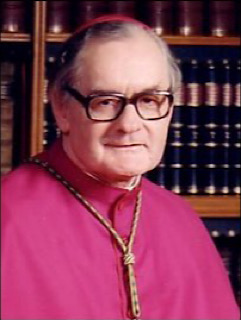
McNamara and Newman are particularly outspoken on the issue of a proposed anti-abortion amendment to the Constitution of Ireland. While other bishops advocate people vote with their conscience in the referendum on the issue, McNamara and Newman instruct Catholics that they have a duty to “vote yes” to the referendum.
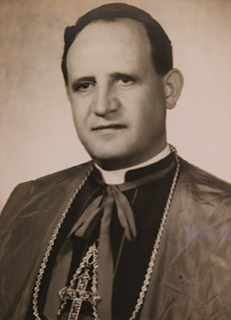
In 1984, the Archdiocese of Dublin becomes vacant when Archbishop Ryan is given a senior appointment in the Roman Curia. Ryan is expected to be made a cardinal as a result of the appointment but dies suddenly in office before a consistory can be held. McNamara’s selection to replace the more liberal Ryan in Dublin creates media reports linking his appointment to the ongoing tensions between the papal nuncio in Ireland, Archbishop Gaetano Alibrandi, and the liberal Fine Gael–Labour Partycoalition under Garret FitzGerald. Relations between Alibrandi and the coalition break down, with the government requesting that Alibrandi be removed because of his suspected closeness to Irish republicans in Sinn Féin and to the opposition Fianna Fáil party and in particular its leader, Charles Haughey. Critics accused Alibrandi of engineering McNamara’s appointment in the belief that the outspoken McNamara can help derail the coalition’s liberal policies on divorce and contraception.
McNamara, as expected, takes a far more outspoken stance of issues than had Ryan previously. While the coalition succeeds in liberalising the law on contraception, its efforts to amend the constitution on divorce are defeated.
McNamara’s service in Dublin is short-lived. Already suffering from what proves to be terminal cancer, he dies on April 8, 1987 after a three year battle with the disease, months after the Fine Gael minority government is defeated in the 1987 Irish general election. He is succeeded as archbishop by a university lecturer, Desmond Connell.
In the early 2000s, amid growing scandals within the Catholic Church in Ireland about clerical sex abuse, it is revealed that as archbishop McNamara had sought legal advice as to the Church’s liability arising from such abuse.
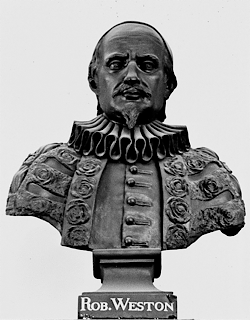
From 1546 to 1549, Weston is a principal of Broadgates Hall (afterwards Pembroke College), and at the same time deputy reader in civil law at the university, under Dr. John Story. He is not a clergyman, and his later appointment to two lucrative deaneries greatly troubles his conscience.
On January 12, 1559, Weston is created Dean of the Arches and is a commissioner for administering the oaths required of ecclesiastics under the Act of Uniformity 1558. He is consulted in regard to the Queen’s Commission issued on December 6, 1559, for confirming Matthew Parker as Archbishop of Canterbury and is included in a commission issued on November 8, 1564, to inquire into complaints of piratical depredations committed at sea on the subjects of the King of Spain.
The Lord Deputy of Ireland, Sir Henry Sidney, requests that Weston be nominated for the post of Lord Chancellor of Ireland in succession to Hugh Curwen, Archbishop of Dublin, in April 1566. After a year, on June 10, 1567, Queen Elizabeth I tells Sidney that after good deliberation she has made the “choice for the supply of room of Chancellor by naming thereunnto our trusty well-beloved Doctor Weston, dean of the arches here, a man for his learning and approved integrity thoroughly qualified to receive and possess the same” and “that for some increase of his living whilst he remaineth in our service there she was pleased to give unto him the Deanery of St. Patrick’s, whereof the Bishop of Armagh, Adam Loftus, is now dean and yet to leave it at our order, as we know he will.”
Weston arrives in Dublin early in August and is sworn into office on August 8, 1567. He is conscientious in performing his duties, and greatly respected for his integrity, although ill-health (he is plagued by gout and gallstones) hampers his effectiveness. He is appalled by the laziness and inefficiency of many of the Irish judges and urges Elizabeth I to replace them with Englishmen wherever possible. He is equally shocked at the poverty and ignorance of many of the Protestant clergy in Ireland. His zeal for reform leads him, though a layman, to become an effective leader of the Church of Ireland for a few years. He cooperates with Adam Loftus, now Archbishop of Dublin, in purging the Archdiocese of Dublin of crypto-Catholics, but is opposed to the persecution of the Roman Catholic majority, or any efforts to forcibly convert them.
Weston dies on May 20, 1573, and is buried beneath the altar in St. Patrick’s Cathedral, Dublin, “leaving behind him an excellent character for uprightness, judgment, learning, courtesy, and piety.”
Weston marries Alice Jenyngs, daughter of Richard Jenyngs of Great Barr, Staffordshire. They have a son, John, and three daughters, of whom most of known of Alice, who marries firstly Hugh Brady, Bishop of Meath, by whom she has numerous children including Luke and Nicholas, and secondly Sir Geoffrey Fenton, by whom she is the mother of Catherine, who marries Richard Boyle, 1st Earl of Cork, and of Sir William Fenton.
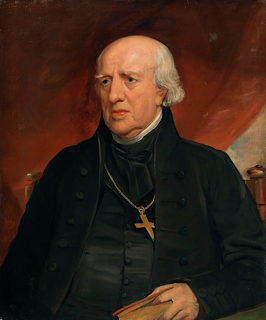
Troy receives his early education at Liffey Street, Dublin. At the age of sixteen he joins the Dominican Order and proceeds to their house of San Clemente at Rome. Historian Edward D’Alton notes that he is “amenable to discipline, diligent in his studies, and talented.” He makes rapid progress, and while still a student is appointed to give lectures in philosophy. Subsequently, he teaches theology and canon law, and finally becomes prior/rector of the convent in 1772.
When Thomas Burke, the Bishop of Ossory, dies in 1776, the priests of the diocese recommend one of their number, Father Molloy, to Rome for the vacant see, and the recommendation is endorsed by many of the Irish bishops. But Troy, who is held in high esteem at Rome, has already been appointed Bishop of Ossory. He is consecrated at Leuven in June 1777 by the nuncio to Flanders, Archbishop (later Cardinal) Ignazio Busca.
Troy arrives at Kilkenny in August 1777 and for the next nine years he Labour a hard for the spiritual interests of his diocese. Maddened by excessive rents and tithes, and harried by grinding tithe-proctors, farmers have banded themselves together in a secret society called the “Whiteboys,” so called from the white smocks the members wear in their nightly raids. They attack landlords, bailiffs, agents, and tithe-proctors, and often commit fearful outrages. Bishop Troy frequently and sternly denounces them, declaring any who join the secret society to be excommunicated. He has no sympathy with oppression, but he had lived long in Rome, and does not fully appreciate the extent of misery in which the poor Catholic masses live.
Troy is ready to condemn all violent efforts for reform, and has no hesitation in denouncing not only all secret societies in Ireland, but also “our American fellow-subjects, seduced by specious notions of liberty.” This makes him unpopular. He is zealous in correcting abuses in his diocese and in promoting education. So well is this recognized at Rome that in 1781, in consequence of some serious troubles which have arisen between the primate and his clergy, Troy is appointed Administrator of Armagh. He holds this office until 1782.
Upon the death of Archbishop John Carpenter of Dublin in 1786, Troy is appointed to succeed him. At Dublin, as at Ossory, he shows his zeal for religion, his sympathy with authority, and his distrust of popular movements, especially when violent means are employed. Though his circular, issued on March 15, 1792, disavowing the authority of any ecclesiastical power to absolve subjects from their allegiance, is believed to influence the concession in that year of the relaxations embodied in Langrishe’s Act, and the extension of the franchise to Roman Catholics in 1793, he declines to associate himself with John Keogh and other Catholic reformers in their demands for further relief.
In early 1798, the French Directory conquers Rome, and establishes the Roman Republic. Its ally in Ireland, the Society of United Irishmen, starts a rebellion in May 1798. Troy issues a sentence of excommunication against all those of his flock who decide to join the rebellion. In a pastoral read in all the churches, he speaks of the clerical organisers of the rebellion as “vile prevaricators and apostates from religion, loyalty, honour, and decorum, degrading their sacred character, and the most criminal and detestable of rebellious and seditious culprits.” Hus action at this time appears to endanger his life. But the influence he has acquired with the government enables him to moderate the repressive measures taken by the authorities. Believing that Catholic emancipation can never be conceded by the Irish parliament, he is one of the most determined supporters of the Union.
In 1799, Troy agrees to accept the veto of government on the appointment of bishops in Ireland, and even when the other bishops, feeling they have been tricked by Pitt and Castlereagh, repudiate the veto, he continues to favour it. However, in 1809, he recommends Daniel Murray be appointed his coadjutor. Murray is an uncompromising opponent of the veto, and while Troy’s coadjutor, makes trips in 1814 and 1815 to Rome concerning the controversy.
In April 1815, Archbishop Troy lays the foundation of St. Mary’s Pro-Cathedral in Marlborough Street, Dublin, but does not live to see it completed. He dies in Dublin on May 11, 1823, at the age of eighty-four. He dies very poor, leaving scarce sufficient to pay for his burial, and is interred in the unfinished St. Mary’s Pro-Cathedral.
In the administration of his diocese and in his private life, Troy is eminently zealous, pious, and charitable. Although his cordial relations with the government expose him to many suspicions and accusations, there is no ground for questioning the integrity of his motives and conduct, which are inspired by his views of the interest of his church. His distrust of revolutionary tendencies in civil affairs is fully aligned with the policy of the Vatican throughout his career. John D’Alton speaks of Troy as “a truly learned and zealous pastor, … a lover and promoter of the most pure Christian morality, vigilant in the discharge of his duty, and devotedly solicitous not only for the spiritual good of those consigned to his charge, but also for the public quiet of the state.”
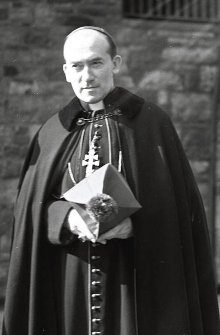
Ordained in 1924, the theology in which McQuaid is trained is conservative — strongly neo-scholastic and hostile to modernism and liberalism. His hatred of the French Revolution is expressed in several pastorals and speeches throughout his career. He also regards Protestantism as a fundamental error from which Irish Catholics should be quarantined as much as possible.
Appointed Dean of Studies at Blackrock College, McQuaid becomes a prominent figure in Catholic education and chairs the Catholic Headmasters’ Association for several years. In 1931 he is appointed president of Blackrock College, in which capacity he becomes acquainted with Éamon de Valera, the future Irish Taoiseach whose sons attend the school. In 1936, while drafting a new Irish constitution, de Valera consults McQuaid, although he rejects McQuaid’s draft “One, True Church” clause which states, among other things, that the Catholic Church is the one true church in Ireland.
When McQuaid is appointed Archbishop of Dublin in 1940, the appointment of a priest from the regular clergy causes considerable surprise. Irish government archives reveal that de Valera, as is suspected at the time, presses McQuaid’s claims at the Vatican. However, it is doubtful whether the Vatican needs much persuasion. There is a dearth of potential episcopal talent and McQuaid has an outstanding reputation as a Catholic educationalist.
Once appointed, McQuaid proves to be one of the ablest administrators in the history of the Irish Church. In the first two years of his episcopate, he sets up the Catholic Social Service Conference to alleviate the poverty and distress in Dublin which is aggravated by the war, and the Catholic Social Welfare Bureau to help the thousands of Irish emigrants going to Britain for war work. These two organizations fill a much-needed gap and continue to exist after the war. The expansion of Dublin city and its suburbs during his episcopate requires the building of new churches, schools, and hospitals. Meeting these demands also necessitates a considerable increase in the number of clergies, secular and regular, whose numbers more than double in the period from 1941 to 1972.
Given his previous career, the importance McQuaid assigns to education is not surprising. He is critical of the low priority accorded to education by successive governments and is particularly critical of the poor and pay conditions of teachers. His intervention in the primary teachers’ strike in 1946 is poorly received by the government and marks the souring of his relationship with de Valera. During his episcopate the number of primary schools increases by a third while the number of secondary schools more than double but, as with social welfare, the government increasingly assumes a dominant role in education from the 1960s onwards. Almost immediately after his appointment in 1940, he takes a hardline stand against the attendance of Catholic students at Trinity College Dublin (TCD). The ban lasts until 1970, when the increase in student numbers renders it untenable and he accedes reluctantly.
McQuaid has a formidable list of achievements in health care, especially maternity and pediatric services, physical and mental handicap services, and the treatment of alcoholism. It is ironic, therefore, that the most controversial episode of his career occurs in this area — the Irish hierarchy’s rejection in 1951 of a free mother-and-child health service. This leads to the resignation of the Minister for Health, Dr. Noël Browne, and is a watershed in Church-State relations in Ireland. With Irish tuberculosis and infant mortality statistics ranking among the highest in the world, the hierarchy, and particularly McQuaid, lose considerable support by lining up with the conservative medical establishment to resist efforts at socialized medicine.
From various pastorals that McQuaid issues at the time, it is clear that he does not see the need for the Second Vatican Council. As its deliberations proceed, his unease grows, and he becomes increasingly preoccupied with the issue of episcopal power and independence that he believes are being threatened by the Council. In the areas of liturgical reform, greater lay participation, and ecumenism, he is slow in implementing the Vatican II reforms. His views on ecumenism had always been lukewarm and had led to allegations that he was anti-Protestant. His personality and policies are criticized by a more assertive Dublin laity, but being a shy, reserved man who increasingly feels the isolation of office, he never responds to such comments. In 1968 the reaction to Humanae vitae causes open rebellion in the Dublin diocese, the force of which catches him unaware. His last pastoral as archbishop in 1971 betrays his anger and bemusement at the response to Humanae vitae in Dublin.
At the age of 75, McQuaid submits his resignation to the Vatican, and it is accepted. His resignation is announced in January 1972, when he is replaced by Dermot Ryan. McQuaid dies in Loughlinstown, County Dublin, the following year on April 7, 1973. He is buried in St. Mary’s Pro-Cathedral in Dublin, the seat of the Roman Catholic Archdiocese of Dublin.
McQuaid’s substantial archives are released by the Dublin Diocesan Archives in the late 1990s. In 1999 journalist John Cooney publishes a hostile biography of McQuaid, which makes controversial allegations of sexual abuse against McQuaid. The allegations are based on tenuous evidence gathered by McQuaid’s nemesis from the 1951 Mother and Child controversy, Dr. Noël Browne, who had died in 1997. No corroborating evidence is produced or has since emerged.
This is a challenging time for the Catholic Church in Ireland, then led by Cardinal William Conway, as it adjusts to both the internal changes generated by the Second Vatican Council and the wider social changes. He is ill-suited to coping with these changes and in particular the violence in Northern Ireland. It is widely assumed that he sees to it that the more overtly nationalistTomás Ó Fiaich is appointed to Armagh in 1977 after the death of Cardinal Conway. The journalist and authorEd Moloney in his book on the Irish Republican Army (IRA) asserts that Alibrandi’s “sympathy for the IRA was a constant source of friction with the government in London.”
Alibrani plays a major role in the 1971 decision by the Vatican to accept the resignation of John Charles McQuaid as Archbishop of Dublin. This comes as a shock to McQuaid, who expected that he would be allowed to remain for some time after the normal retirement age of 75.
In many of the episcopal appointments made while Alibrandi is nuncio, he favours doctrinally “sound,” right-of-centre priests and in the case of the Archdiocese of Dublin picks two priests, Kevin McNamara and Desmond Connell, who are notably ill-suited. In a profile of the Archbishop at the time of his retirement, T. P. O’Mahony observes in The Tablet, “although he rarely gave interviews, and never overtly intervened in policy-making or in public controversies, it is beyond dispute that Archbishop Alibrandi wielded considerable influence behind the scenes.”
The respected academic and church historian Dermot Keogh assessing this period argues that “there was a general view that the best candidates had not been appointed…that a number were not up to the job, that most of the appointees shared a defensive attitude to matters of church and state.”
Alibrandi has “a very testy relationship with three Taoisigh – Jack Lynch, Liam Cosgrave and Garret FitzGerald.” After reaching the retirement age of 75, he returns to his home town in Sicily where he dies on July 3, 2003. His funeral Mass was celebrated on Saturday in Castiglione di Sicilia by Archbishop Paolo Romeo, Apostolic Nuncio to Italy. A memorial Mass for Archbishop Alibrandi will be celebrated by Archbishop Giuseppe Lazzarotto, Apostolic Nuncio to Ireland, on Friday, 11 July at 19.30 in the Church of Our Lady Help of Christians, Navan Road, Dublin.
It is reported in September 2012 during the second Dr. Garret FitzGerald Memorial Lecture at University College Cork (UCC) by Seán Donlon, former secretary general at the Department of Foreign Affairs, that “It came to our [Department of Foreign Affairs] attention that a substantial amount in three bank accounts in Dublin [held by the archbishop] were way in excess of what was needed to run the nunciature. The source [of the money] appeared to be South America.” Donlon goes on to say, “Because of its size, we thought it appropriate to ask if the funds belonged to the Holy See.” When contacted for an answer, Alibrandi “quickly answered ‘no’ and that they belonged to ‘family’. When it was pointed out to him that the money was then liable under Irish taxation law to DIRT, he said he would retire shortly and the accounts would be closed.”
O’Connell is selected by Fine Gael for the 2016 Irish general election to “recapture” their seat in Dublin Bay South from Lucinda Creighton, who had left the party in 2013 over her objection to the party’s position on abortion and in 2015 founded Renua, an anti-abortion party. During the campaign, O’Connell called Creighton’s anti-abortion views “incredibly sanctimonious” and suggests that Creighton is an “out of touch career politician” whose views on abortion are borne out of a lack of connection with the real world. The Irish Independent refers to these comments as O’Connell “tearing strips off” of Creighton. In the election, O’Connell is elected, while Creighton loses her seat.
In her time in the Dáil, O’Connell campaigns in favour of abortion rights as well as pushing for more funding for healthcare services in Ireland.
In October 2016, O’Connell responds to comments by the Archbishop of DublinDiarmuid Martin that TDs should remember their faith when legislating for abortion in Ireland by stating, “I don’t see why the archbishop’s views are in any way relevant. I don’t see why Archbishop Martin should be getting involved in women’s health issues. It is the same as asking my four-year-old. They [the Church] are entitled to their opinion, but I don’t put any weight in them. I don’t see what involvement the Catholic Church should have in women’s health issues”.
In November 2017, O’Connell confronts Barry Walsh, a member of Fine Gael’s executive council, with a dossier of tweets documenting that he repeatedly and frequently derogates women politicians, often calling them bitches, including fellow members of Fine Gael. After the leader of Fine Gael and TaoiseachLeo Varadkar comments that Walsh should resign, he does so.
O’Connell loses her seat at the 2020 Irish general election, placing 5th in the 4-seat constituency. In an August 2020 interview, she attributes her loss, in part, to being the running mate of the Minister for Housing, Eoghan Murphy, in an election fought over an ongoing housing crisis in Ireland.
On May 7, 2021, O’Connell declares she will not seek to be the Fine Gael candidate for the 2021 Dublin Bay South by-election. She suggests she will not be able to win a party selection again due to her relationship with the Fine Gael leadership souring in the meantime, partially because of her vocal support of Simon Coveney over Leo Varadkar in the 2017 Fine Gael leadership election. She also suggests many local Fine Gael branch members in Dublin South Bay regard her as an outsider and a “parachute candidate” due to the fact she is originally from County Westmeath, and have turned against her over this. The Phoenix offers the view that O’Connell would not be nominated because she has turned the Fine Gael leadership against her while lobbying for her sister, Mary Newman Julian, to be the party’s candidate in a 2018 Seanad by-election. In particular, a meeting between her and Simon Coveney in which her expectations are read as entitled is cited as hurting her relationships. Fine Gael’s candidate in the by-election is James Geoghegan, who had previously left the party to join Lucinda Creighton in Renua, but returns to Fine Gael after that party collapsed. He loses the by-election to Labour‘s Ivana Bacik, a senator for Dublin University and veteran pro-choice campaigner.
In October 2024, O’Connell leaves Fine Gael to contest the next general election in Dublin Bay South as an independent candidate. She fails to be elected or to achieve the one-quarter of the quota necessary to recoup her election expenses.
O’Connell states her family, the Newmans, have been “involved in Fine Gael since the 1960s,” starting when her maternal grandfather ran for Fine Gael as a councillor. Her father, Michael Newman, is also a Fine Gael councillor while Fine Gael minister Patrick Cooney is considered a family friend. O’Connell states that growing up, she and her family were greatly influenced by the progressive politics of Fine Gael leader Garret FitzGerald. Her sister, Mary Newman Julian, is also active in politics and contests elections for the Dáil in Tipperary and for Seanad Éireann, while another sister, Theresa Newman, works for a period as O’Connell’s political adviser in Leinster House. Her brother-in-law, Hugh O’Connell, is a prominent political journalist and editor who has worked for several Irish publications.
In 2018, during debates in the Dáil regarding abortion, O’Connell discloses personal details of a traumatic pregnancy she herself had experienced. During the pregnancy, she is told her child has only a 10% chance of survival. This prompts her to consider terminating the pregnancy. Ultimately, she decides to continue the pregnancy. The child is born with organs outside of the body but survives the birth. She cites the difficult decisions made during that pregnancy as having greatly informed her views on abortion.
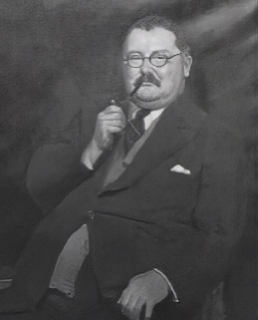
Smyllie is born on March 20, 1893, at Hill Street, Shettleston, Glasgow, Scotland. He is the eldest of four sons and one daughter of Robert Smyllie, a Presbyterian printer originally from Scotland who is working in Sligo, County Sligo, at the time, and Elisabeth Follis, originally from Cork, County Cork. His father marries in Sligo on July 20, 1892, and later becomes proprietor and editor of the unionistSligo Times. Smyllie attends Sligo Grammar School in 1906 and enrolls at Trinity College Dublin (TCD) in 1911.
After two years at TCD, Smyllie’s desire for adventure leads him to leave university in 1913. Working as a vacation tutor to an American boy in Germany at the start of World War I, he is detained in Ruhleben internment camp, near Berlin, during the war. As an internee, he is involved in drama productions with other internees. Following his release at the end of the war, he witnesses the German revolution of 1918–1919. During this period, he encounters revolutionary sailors from Kiel who temporarily make him a representative of the Workers’ and Soldiers’ Council, and he observes key events including the looting of the Kaiser’s Palace and violent clashes between rival factions in Berlin. It is also during this period that he secures a personal interview with David Lloyd George at the Paris Convention of 1919. This helps Smyllie gain a permanent position with TheIrish Times in 1920, where he quickly earns the confidence of editor John Healy. Together, they take part in secret but unsuccessful attempts to resolve the Irish War of Independence.
Smyllie contributes to the Irishman’s Diary column of the paper from 1927. In 1927, he publishes an exclusive report outlining a draft government including both Labour Party and Fianna FáilTDs, signaling the volatile politics of the early state years.
Smyllie’s knowledge of languages (particularly the German he had learned during his internment) led to numerous foreign assignments. His reports on the rise of National Socialism in 1930s Germany are notably prescient and instill in him a lasting antipathy towards the movement.
When Healy dies in 1934, Smyllie becomes editor of TheIrish Times and also takes on the role of Irish correspondent for The Times (London), a position that brings significant additional income. Under Healy’s leadership, The Irish Times shifted from representing the Anglo-Irish ascendancy to becoming an organ of liberal, southern unionism, and eventually becomes a critical legitimising force in the Irish Free State. Smyllie enthusiastically supports this change. He establishes a non-partisan profile and a modern Irish character for the erstwhile ascendancy paper. For example, he drops “Kingstown Harbour” for “Dún Laoghaire.” He also introduces the paper’s first-ever Irish-language columnist. He is assisted by Alec Newman and Lionel Fleming, recruits Patrick Campbell and enlists Flann O’Brien to write his thrice-weekly column “Cruiskeen Lawn” as Myles na gCopaleen. As editor, he introduces a more Bohemian and informal style, establishing a semi-permanent salon in Fleet Street’s Palace Bar. This becomes a hub for journalists and literary figures and a source of material for his weekly column, Nichevo.
One of Smyllie’s early political challenges as editor concerns the Spanish Civil War. At a time when Irish Catholic opinion is strongly pro-Franco, he ensures TheIrish Times coverage is balanced and fair, though advertiser pressure eventually forces the withdrawal of the paper’s young reporter, Lionel Fleming, from the conflict. His awareness of the looming European crisis earns him the Order of the White Lion of Czechoslovakia in 1939. However, during World War II, he clashes with Ireland’s censorship authorities, especially under Minister Frank Aiken. He challenges their views both publicly and privately, though his relationship with the editor of the Irish Independent, Frank Geary, is cold, reducing the effectiveness of their joint opposition to censorship.
During the 1943 Irish general election, Smyllie uses the paper to promote the idea of a national government that could represent Ireland with authority in the postwar world. He praises Fine Gael’s proposal for such a government and criticises Éamon de Valera for dismissing it as unrealistic. This leads to a public exchange between de Valera and Smyllie, with the latter defending The Irish Times’s role as a constructive voice for Ireland’s future rather than a partisan interest.
Following the war, Smyllie’s editorial stance shifts toward defending Ireland’s neutrality and diplomatic position. When Winston Churchill accuses de Valera of fraternising with Axis powers, Smyllie counters by revealing Ireland’s covert collaboration with the Allies, such as military and intelligence cooperation, despite official neutrality. In the same period, he continues to oppose censorship, particularly the frequent banning of Irish writers by the Censorship of Publications Board. This opposition features prominently in a controversy on TheIrish Times letters page in 1950, later published as the liberal ethic. The paper also adopts a critical stance toward the Catholic Church, notably during the 1951 resignation of Minister for HealthNoël Browne amid opposition from bishops and doctors to a national Mother and Child Scheme. His editorials suggest the Catholic Church is effectively the government of Ireland, though he maintains a cordial relationship with Archbishop of Dublin, John Charles McQuaid, who invites him annually for dinner.
Smyllie is also wary of American foreign policy, showing hostility particularly during the Korean War. American diplomats in Dublin allege that Smyllie is “pro-communist“. Despite growing readership among an educated Catholic middle class, TheIrish Times’s circulation in 1950 remains under 50,000, far below the Irish Independent and the Fianna Fáil-aligned The Irish Press.
In later years, Smyllie’s health declines, prompting a quieter lifestyle. He moves from his large house in Pembroke Park, Dublin, to Delgany, County Wicklow. As he does not drive, he becomes less present in the newspaper office in D’Olier Street, contributing to a decline in the paper’s dynamism. His health deteriorates further, resulting in frequent absences from his editorial duties, though he retains his position despite management attempts to limit his authority, especially over finances. He dies of heart failure on September 11, 1954.
In 1925, Smyllie marries Kathlyn Reid, eldest daughter of a County Meath landowner. They have no children.
Smyllie is an eccentric: he hits his tee shots with a nine iron, speaks in a curious mix of Latin phrases and everyday Dublin slang, and weighs 22 stone (308 lbs.; 140 kg) yet still cycles to work wearing a green sombrero.
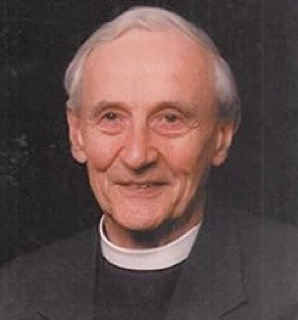
He is appointed Dean of Cork in 1952. Consecrated a bishop, he serves as Bishop of Cork, Cloyne and Ross, between 1952 and 1956. At forty-two, he is the youngest Church of Ireland clergyman appointed to a bishopric since John Gregg in 1915. He serves as Archbishop of Dublin from 1956 to 1969. During this time, he maintains a courteous relationship with John Charles McQuaid, his Roman Catholic counterpart as Archbishop of Dublin. From 1969 to 1980, he serves as Archbishop of Armagh.
Alongside CardinalWilliam Conway, Simms chairs the first official ecumenical meeting between the leaders of Ireland’s Protestant Churches and the Catholic Church in Ballymascanlon Hotel, Dundalk, County Louth, on September 26, 1973, an important meeting amidst the increasing violence in Northern Ireland. The meeting is protested by Ian Paisley.
Simms is a scholar, and publishes research on topics including the history of the Church of Ireland, and theological reflections on key texts including the Book of Kells, Saint Patrick’s Breastplate, and the Sarum Primer. He is also a fluent speaker of the Irish language.
Simms is also an accomplished journalist, and the author of many newspaper obituaries. His weekly Thinking Aloud column in The Irish Times is a popular reflection, and runs continuously for thirty-eight years. He also works on the research, preparation, and even performs the presentation, of a number of television programmes.
In 1978, Simms is made an honorary fellow of Trinity College Dublin.
Simms is the uncle of mathematician David J. Simms. In 1941, he marries Mercy Felicia Gwynn. They have five children. He dies in Dublin on November 15, 1991. He is interred with his wife in the cemetery attached to St. Maelruain’s Church, Tallaght, County Dublin.
Ryan is Professor of Oriental Languages at University College Dublin before his appointment by Pope Paul VI as Archbishop of Dublin and Primate of Ireland on December 29, 1971. Maintaining his connection and interest in oriental studies, he serves as chairman of the trustees of the Chester Beatty Library from 1978 to 1984.
During his term, Ryan consolidates much of the expansion of the archdiocese which had taken place during the term of his predecessor. He also oversees the fuller implementation of the reforms of Vatican II. He is particularly interested in liturgical reform.
Ryan also takes a traditional stand on social issues, including poverty, family life and opposition to abortion. He strongly promotes the Eighth Amendment of the Constitution of Ireland in 1983, granting the equal right to life to mother and unborn.
As Archbishop, Ryan gives the people of Dublin a public park on a site earmarked by his predecessors for a proposed cathedral. It is named “Archbishop Ryan Park” in his honour. The land, at Merrion Square, is a gift from the archbishop to the city of Dublin.
Ryan dies at the age of 60 in Rome on February 21, 1985, following a heart attack. He is buried in St. Mary’s Pro-Cathedral.
Gray meets her husband, Edmund Dwyer Gray, in September 1868 when she witnesses him saving five people from a wrecked schooner during a storm in Killiney Bay, near Dún Laoghaire. She later meets him, and the couple are married in 1869. They had four children, with three surviving to adulthood: Edmund, Mary and Sylvia. She places both of her daughters in convents after their education and the early death of their father, supposedly as she fears they will harm her chances of remarrying.
Gray is a noted hostess during her husband’s political career, in particular while he is Lord Mayor of Dublin. Following his death in 1888, she holds over 40% of the shares in her husband’s newspaper, the Freeman’s Journal. While she is not involved in the day-to-day running of the company, she does exert influence over the newspaper. When Charles Stewart Parnell‘s party splits, the paper sides with Parnell at Gray’s consent. She is one of a number of prominent Catholic women in Dublin who continue to support Parnell. In 1891, she appears with Parnell in public, leading to the Archbishop of Dublin describing her as “a rock of scandal.”
It is only when the Freeman’s Journal‘s circulation and revenue suffers after the establishment of an anti-Parnell newspaper, the National Press, that Gray’s loyalty to Parnell wavers. Influenced by her son, she decides that the Freeman’s Journal will abandon its relationship with Parnell. This decision is formalised at a special general meeting to the Freeman company on September 21, 1891, seeing the pro-Parnell board replaced with one that includes her son and Captain Maurice O’Conor. The Freeman’s Journal and the National Press merge in March 1892, after which Gray is bought out of the company with her son and O’Conor stepping down from the board, thus ending the Gray family’s 50-year relationship with the Freeman’s Journal.
Gray marries Captain O’Conor in November 1891. A Captain, and later a Major, with the Connaught Rangers, he is a relative of Charles Owen O’Conor and George Moore. She is twelve years his senior, and the couple has no children. They live on Inisfale Island on Lough Allen, County Leitrim. She lives the last thirty years of her life there, with failing eyesight and eventual blindness. She dies there April 15, 1927. O’Conor dies in a hotel in Dún Laoghaire on January 3, 1941, in poor circumstances.