John M. Oxx, retired Irish trainer of thoroughbred racehorses, is born on July 14, 1950. By the end of the 2009 season he had trained thirty-five Group One winners over his career, including the winners of eleven Classic races. He is best known as the trainer of Sinndar and Sea The Stars.
Oxx has been widely praised for the care and undemonstrative authority with which he approaches the training and racing of his horses. He is particularly known for being highly selective when choosing when and where his horses will run.
Oxx is the son of John Oxx Sr., who is himself a successful trainer, winning eight Irish classic races. In 1950, his father purchases Currabeg, at the southwestern end of the Curragh in County Kildare, where Oxx Jr. takes over training. He graduates from University College, Dublin, as a veterinary surgeon in 1973, and works as his father’s assistant before taking over the stable in 1979. In that year he has his first win and his first Group win with Orchestra.
The Aga Khan begins to support Oxx’s yard with a number of yearlings after Eurobird’s win in 1987. When he decides to withdraw his racehorses from England following Aliysa’s disqualification in the Epsom Oaks of 1989, he establishes a significant presence in Oxx’s yard. Without a budget of his own to spend on yearlings, Oxx continues to be reliant on horses bred by owners with whom he has an association. In some years, he concedes, “you wouldn’t have anything remotely near Group One standard.”
Many of Oxx’s major race wins have come from Aga Khan-owned horses, beginning with Manntari’s victory in the Vincent O’Brien National Stakes at the Curragh in 1993, and continuing with Timarida’s win in the Irish Champion Stakes at Leopardstown Racecourse in 1996, followed by Ebadiyla’s victory in the 1997 Irish Oaks. He also wins that race with Winona the following year. In 2000, he trains the Aga Khan’s brilliant Sinndar to wins in the Epsom Derby, the Irish Derby, and the Prix de l’Arc de Triomphe, making the colt the only horse ever to win that trio of races and at the time one of only three Irish-based horses to ever win the Arc.
Oxx comes to wider public attention when guiding Sea The Stars through a famous 2009 season in which he wins Group One races in England, Ireland and France, his six consecutive triumphs including the 2000 Guineas Stakes, the Epsom Derby and the Prix de l’Arc de Triomphe. He is typically understated when assessing the role of the trainer in the career of a great horse like Sea The Stars. “You can’t give them ability they don’t have,” he tells The Independent newspaper. “Really, it’s just a case of not messing it up – not to overtax the horse too soon, or ask it to do stupid things as a two-year-old. If you mind him sufficiently when he’s young, hopefully his ability will blossom.”
In an interview with The Observer, Oxx says of Sea The Stars: “I was always reading about racing and great horses of the past. So when you grow up with the history of racing and the history of breeding, the landmark horses that come along over a century, and more – to train one that’s in that league gives you the greatest satisfaction.”
Oxx serves as chairman of the Irish National Stud from 1985 to 1990. He is chairman of the Irish Racehorse Trainers’ Association from 1986 to 1991 and from 1993 to 1996. He serves on numerous other racing bodies and is chairman of the Racing Academy and Centre of Education. In 2008, he is given the Irish Racehorse Trainers’ Association Hall of Fame award.
Oxx marries Caitriona O’Sullivan in 1974. They have three children.
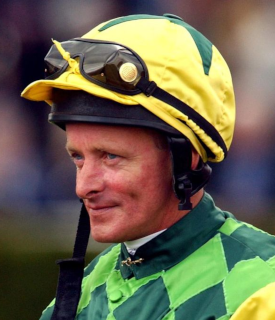
Patrick (Pat) James John Eddery, flat racingjockey and trainer, is born on March 18, 1952, in Newbridge, County Kildare, near the Curragh Racecourse. He is the fifth of twelve children of Jimmy Eddery, a jockey who is Irish Flat Champion in 1954 and 1955, and who rides Panaslipper to win the Irish Derby in 1955. His mother, Josephine, is the daughter of Jack Moylan, also a jockey. His brother Paul goes on to become a successful jockey also. He initially attends the Patrician Brothers’ Primary School in Newbridge, later enrolling in Oatlands Primary School in Stillorgan when the family moves to Blackrock, Dublin.
Devoted from his earliest years to riding horses, Eddery has little interest in school. He begins his career on his fourteenth birthday as an apprentice jockey in Ireland (1966–67) with the stable of Seamus McGrath. In 1967, he moves to England where he is apprenticed to Frenchie Nicholson until 1972. After riding for more than a season without success, he records his first win on April 24, 1969, at Epsom Downs Racecourse on a horse named Alvaro, trained by Major Michael Pope. Alvaro provides Eddery with six wins in succession during the 1969 season.
Eddery finishes the 1971 season as champion apprentice with seventy-one winners, and in 1972 has his first Derby ride, the 50–1 chance Pentland Firth, who finishes third behind Roberto and Rheingold. In 1972 he also has his first victory in a Group 1 race via Erimo Hawk, when awarded the Ascot Gold Cup following the disqualification of Rock Roi for interference.
Eddery rides for the Newmarket trainer Geoffrey Barling in 1972 before becoming the stable jockey for leading trainer, Peter Walwyn, later that year. For Walwyn, he wins his first two English classic races on Polygamy (Oaks) and Grundy (Derby) and is Champion Jockey in four consecutive seasons from 1974 to 1977. While under retainer with Walwyn, he clinches the first of these titles when just twenty-two years old, a record in the post-war era. In 1975, after winning the Irish Derby on Grundy, he rides the horse to a hard-fought victory over Bustino in the King George VI and Queen Elizabeth Stakes at Ascot in what is described by many at the time as “the race of the century.”
Eddery remains as stable jockey to Walwyn for eight years, before joining the Ballydoyle racehorse training facility of legendary Irish trainer Vincent O’Brien, for whom he rides a string of big-race winners, including the brilliant Golden Fleece, owned by Robert Sangster, in the 1982 Epsom Derby.
The O’Brien–Eddery combination experiences controversial defeat in the 1984 Epsom Derby when Eddery rides then unbeaten 2000 Guineas Stakes-winner El Gran Senor and seems to be cruising to victory in the final furlong, only to be caught on the line and beaten by a short head by Secreto, trained by O’Brien’s son David. He later admits that he should have won the race, but when the horses in front of him fell away early in the straight he was left in front too soon and was unable to repel Secreto’s late challenge. He later wins the Irish Derby on El Gran Senor, beating the subsequent Prix de L’Arc de Triomphe winner, Rainbow Quest. During 1984, he also partners the O’Brien-trained and subsequent outstanding stallion, Sadler’s Wells, to two of his three Group 1 successes.
The 1980s represent the pinnacle of Eddery’s career and include victories in the 1983 Arlington Million in Chicago on Tolomeo, the 1985 Breeders’ Cup Turf at Aqueduct Racetrack, New York, on Pebbles, and the 1986 Japan Cup on Jupiter Island, the latter two horses being trained by Clive Brittain. He also has four victories in the Prix de l’Arc de Triomphe: on Detroit in 1980, Rainbow Quest in 1985, the great Dancing Brave, on whom he also wins the King George VI and Queen Elizabeth Stakes in 1986, and Trempolino in 1987. The field for the 1986 ‘Arc’ is extremely strong and Dancing Brave’s late winning run a thrilling spectacle. The race is voted “the greatest ever horserace” in a poll conducted by the Racing Post in 2022.
Rainbow Quest and Dancing Brave are both owned by the Saudi Prince Khalid Abdullah, whose Juddmonte Farms is by then one of the world’s largest racing and breeding organisations. In 1987, Eddery becomes Abdullah’s retained jockey. Highlights of their association, which lasts until 1994, include Quest for Fame winning the 1990 Epsom Derby, and Zafonic, winner of the 1993 2000 Guineas Stakes.
Meanwhile, Eddery continues to win the jockeys’ championships, a task made easier by being retained by Juddmonte in England rather than commuting regularly to Ireland to ride for Vincent O’Brien. His highest seasonal total of wins is 209 in 1990, which is the first time a jockey has exceeded 200 since Sir Gordon Richards in 1952. His epic battle for the championship in 1987 with American Steve Cauthen is particularly intense, with Cauthen securing the title with 197 winners and Eddery coming close at 195. The title would have been shared at 196 winners apiece but for a successful objection by the rider of the third horse to the winner after the last definitive race between Eddery and Cauthen when they finished first and second, respectively. In 1988, Eddery retains the title with 183 winners from just over 480 rides, a remarkable strike rate of over thirty-eight per cent. He wins the championship for the eleventh and final time in 1996. His final classic win is on Silver Patriarch in the St. Leger Stakes of 1997.
Eddery rides major winners outside Europe and the United States, including Jupiter Island in the 1986 Japan Cup, and French Glory in the Canadian International Stakes. He teams up with Lester Piggott, Joe Mercer and French jockeys Freddie Head and Yves Saint-Martin to take part in a series of challenge races under the Ritz Club Challenge Trophy at Singapore and other Asian cities starting in 1983 for several years. His overall total of winners in the UK, Ireland, mainland Europe and overseas, exceeds 6,000. Although fiercely competitive on the racetrack, he is popular with fellow jockeys, trainers, owners and racegoers, who respond to his good-natured personality, courtesy and sense of humour.
Eddery has a distinctive riding style that is not classically elegant but undoubtedly effective and strong in a finish. He rides a number of truly outstanding racehorses including Dancing Brave, El Gran Senor and Pebbles, but maintains that the brilliant and undefeated Derby winner, Golden Fleece, is the greatest of all the horses he partnered throughout his career.
Eddery continues to ride into his fifties, finally retiring in 2003. He is appointed an honorary Order of the British Empire (OBE) in 2005. He sets up an owners’ syndication business and takes out a training licence but has difficulty adjusting to life out of the saddle and becomes increasingly dependent upon alcohol. His training career meets with limited success, though he does train Hearts of Fire to win the Group 1 Gran Criterium of Italy in 2009.
Eddery marries Carolyn Mercer in November 1978. She is the daughter of flat jockey Manny Mercer, niece of jockey Joe Mercer, and granddaughter of jockey Harry Wragg. They have two daughters, Nichola and Natasha, and a son Harry. He has a son from an extramarital relationship, Toby Atkinson, who also becomes a jockey. The marriage with Carolyn breaks down in 2008 and the couple divorces in 2009.
Shortly after his marriage breaks down, Eddery begins living with Emma Owen, a former stable employee, at his 100-acre Musk Hill stud farm near Aylesbury, Buckinghamshire. He becomes progressively estranged from his children due to his continued alcoholism.
Eddery dies of a heart attack at the age of 63 on November 10, 2015. He leaves his £1.3 million estate to Emma Owen. His funeral takes place on December 8, 2015, and his remains are cremated at Oxford. Throughout his career, Eddery rode the winners of 4,632 British flat races, a figure exceeded only by Sir Gordon Richards and was UK Champion Jockey on eleven occasions and Irish Champion Jockey once. A plaque in his honour is unveiled by his children Nichola, Natasha and Harry at Ascot Racecourse in 2016, where he had been champion jockey at the Royal meeting on six occasions. He is inducted into the Qipco British Champions Series Hall of Fame in 2021, the second jockey after Lester Piggott to be so honoured.
(From: “Eddery, Patrick (Pat) James John” by P. Gerry McKenna, Dictionary of Irish Biography, http://www.dib.ie, September 2022)
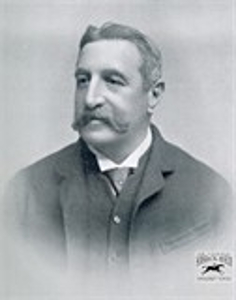
John Gubbins, breeder and owner of racehorses, is born on December 16, 1838 at the family home in Kilfrush, County Limerick. He is fourth son of Joseph Gubbins by his wife Maria, daughter of Thomas Wise of Cork.
Of three surviving brothers and five sisters, the third brother, Stamer, breeds horses at Knockany after distinguishing himself in the Crimean War. He dies at the age of 46 on August 7, 1879, after a horse falls on him while “schooling” over fences.
John Gubbins, after being educated privately, inherits the Knockany property from his brother and purchases the estate of Bruree, County Limerick. A fortune is also left him by an uncle, Francis Wise of Cork. Settling at Bruree in 1868, he builds kennels and stables and purchases horses and hounds. He hunts the Limerick country with both stag and fox hounds, and is no mean angler, until forced to stop by the operations of the Land League in 1882.
From his youth he takes a keen interest in horse racing. At first his attention is mainly confined to steeplechasers, and he rides many winners at Punchestown Racecourse and elsewhere in Ireland. He is the owner of Seaman when the horse wins the grand hurdle race at Auteuil, but sells him to Lord Manners before he wins the Grand National at Liverpool in 1882. Usna is another fine chaser in his possession. Buying the stallions Kendal and St. Florian, he breeds, from the mare Morganette, Galtee More by the former and Ard Patrick by the latter. Galtee More wins the 2000 Guineas Stakes and the St. Leger Stakes as well as the Epsom Derby in 1897, and is afterwards sold to the Russian government who later pass him on to the Prussian government. The Prussian government also purchases Ard Patrick just days before he wins the Eclipse Stakes in 1903, when he defeats Sceptre and Rook Sand after an exceptionally exciting contest.
Other notable horses bred by John Gubbins are Blairfinde, winner of the Irish Derby, and Revenue. In 1897 he heads the list of winning owners and is third in the list in 1903. In 1903 Gubbins is rarely seen on a racecourse due to failing health and sells his horses in training. In 1905, however, his health apparently improving, he sends some yearlings to Cranborne, Dorset, to be trained by Sir Charles Nugent, but before these horses can run he dies of bronchitis at Bruree on March 20, 1906. His final instructions are, “As I aspired to breed fast horses, please see that my hearse is pulled at speed on my final journey.” Gubbins is buried in the private burial ground at Kilfrush.
In 1889 he marries Edith, daughter of Charles Legh, of Addington Hall, Cheshire. She predeceases him without issue. His estates pass to his nephew, John Norris Browning, a retired naval surgeon.


 seamus dubhghaill