seamus dubhghaill

Promoting Irish Culture and History from Little Rock, Arkansas, USA


Leave a comment

Birth of Patrick “Patsy” Touhey

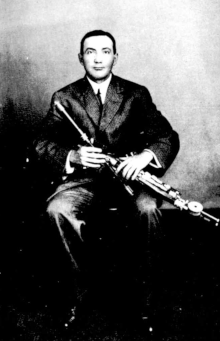
Patrick “Patsy” J. Touhey, a celebrated player of the uilleann pipes, is born on February 26, 1865, in Cahertinny, Bullaun, Loughrea, County Galway. His innovative technique and phrasing, his travels back and forth across the United States to play on the variety and vaudeville stage, and his recordings make his style influential among Irish American pipers. He can be seen as the greatest contributor to a distinctive American piping style.

According to Chief Francis O’Neill of the Chicago Police Department, in his seminal work O’Neill’s Irish Minstrels and Musicians, Touhey is the third generation of accomplished pipers stemming from his grandfather, Michael Twohill (the original spelling, b. ca. 1800), his father James and his uncle Martin, who are considered accomplished players. The family arrives in Boston around 1868, and his father arranges for his instruction from Bartley Murphy of County Mayo. However, at the age of ten Patsy loses his father and later lays the pipes aside.

In his late teens Touhey strays into a Bowery music hall where John Eagan, the “White Piper” of Galway, is engaged. Enthralled by Eagan’s virtuosity, he takes up the pipes again, and under the instruction of Eagan and Billy Taylor of Philadelphia soon becomes a master.

Touhey and Eagan tour the northeastern United States with “Harrigan’s Double Hibernian Co., Irish and American Tourists” in 1885 and 1886. This is his apparent introduction to theatrical life. Harrigan’s company stars Jeremiah “Jere” Cohan, the father of George M. Cohan, later a famous songwriter and showman. Despite a persistent legend, there is no evidence that Touhey plays publicly for the step-dancing of George M. Cohan, who is seven or eight years old at the time. Between 1886 and 1895 he appears in several theatre productions including “Inshavogue” and “The Ivy Leaf.” At the 1893 World’s Columbian Exposition in Chicago, he plays at the Irish Village, one of two rival Irish pavilions, and is later engaged for the 1904 World’s Fair in St. Louis (Louisiana Purchase Exposition). From about 1896 until 1921 he plays in vaudeville skits, trading jokes with his wife, Mary, and their on and off partner Charles Henry Burke. The shows include slapstick, low-brow gags, Irish nostalgia, and a piping finale to which Mary Touhey dances.

Chicago Police Chief Francis O’Neill, a prominent compiler of Irish dance tunes, calls Touhey “the genial wizard of the Irish pipers . . . A stranger to jealousy, his comments are never sarcastic or unkind, neither does he display any tendency to monopolize attention in company when other musicians are present.”

Touhey lives on Bristow Street in the Bronx, New York City, from at least 1900 until 1908. He and Mary live in rural East Haddam, Connecticut from 1908 to 1919, then in Freeport, New York from 1919 to 1922. In 1922 he moves back to the Bronx. He dies suddenly in his home at 1175 Concourse, New York, on January 10, 1923. He is buried in Saint Raymond’s Cemetery in the Bronx.

A statue of Patsy Touhey is unveiled in 2008 in Loughrea, near the place where he was born. It is a bronze sculpture by James MacCarthy that shows Touhey sitting on a limestone block and playing his pipes. Behind him, on the wall, there are three plaques with portraits of Peter and Vincent Broderick, two other local musicians, and Touhey himself. The statue is a tribute to the musical heritage of Loughrea and Galway, and a reminder of the connection between Ireland and its diaspora.

Recordings made of Tuohy in the 1900s have been digitised and made available on the website of the Irish Traditional Music Archive (ITMA), Dublin.

2 Comments

Monument Honouring Francis O’Neill Unveiled in Trawlebane, County Cork

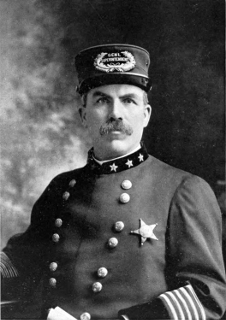
Francis O’Neill (Irish: Proinsias Ó Néill), an Irish-born American police officer and collector of Irish traditional music, is honoured in his native West Cork on March 11, 2000, where Garda Commissioner Patrick Byrne unveils a life-size monument of O’Neill playing a flute adjacent to the O’Neill family homestead in Trawlebane, County Cork. The monument, made by sculptor Jeanne Rynhart, and a commemorative wall are erected through the efforts of the Captain Francis O’Neill Memorial Company.

O’Neill is born in Trawlebane, near Bantry, County Cork, on August 28, 1848. At an early age he hears the music of local musicians, among them Peter Hagarty, Cormac Murphy and Timothy Dowling. At the age of 16, he becomes a cabin boy on an English merchant ship and remains a seaman until 1869. On a voyage to New York City, he meets Anna Rogers, a young emigrant whom he later marries in Bloomington, Illinois. They move to Chicago, and he becomes a Chicago policeman in 1873. He rises through the ranks quickly, eventually succeeding Joseph Kipley as the Chief of Police from 1901 to 1905. He has the rare distinction, in a time when political “pull” counts for more than competence, of being re-appointed three times to the position by two different mayors.

O’Neill is a flautist, fiddler and piper and is part of the vibrant Irish community in Chicago at the time. During his time as chief, he recruits many traditional Irish musicians into the police force, including Patrick O’Mahony, James O’Neill, Bernard Delaney, John McFadden and James Early. He also collects tunes from some of the major performers of the time including Patsy Touhey, who regularly sends him wax cylinders and visits him in Chicago. He also collects tunes from a wide variety of printed sources.

O’Neill retires from the police force in 1905. After that, he devotes much of his energy to publishing the music he has collected. His musical works include:

  • O’Neill’s Music of Ireland (1903), containing 1,850 pieces of music.
  • The Dance Music of Ireland (1907), sometimes called, “O’Neill’s 1001,” because of the number of tunes included.
  • 400 tunes arranged for piano and violin (1915).
  • Waifs and Strays of Gaelic Melody (1922), 365 pieces.
  • Irish Folk Music: A Fascinating Hobby (1910). Appendix A contains O’Farrells Treatise and Instructions on the Irish Pipes, published 1797-1800; appendix B is Hints to Amateur Pipers by Patrick J. Touhy.
  • Irish Minstrels and Musicians (1913), biographies of musicians, including those from whom he collected tunes in Chicago.

O’Neill dies of heart failure at his home in Chicago at the age of 87 on January 26, 1936. He is buried at Mount Olivet Cemetery.

In 2008, Northwestern University Press issues Chief O’Neill’s Sketchy Recollections of an Eventful Life in Chicago, a non-musical memoir edited by Ellen Skerrett and Mary Lesch, a descendant of O’Neill, with a foreword by Nicholas Carolan of the Irish Traditional Music Archive. Carolan himself writes a musical biography of O’Neill, A Harvest Saved: Francis O’Neill and Irish Music in Chicago, which is published in Ireland by Ossian in 1997. An historical biography of O’Neill, The Beat Cop: Chicago’s Chief O’Neill and the Creation of Irish Music, by Michael O’Malley, is published by the University of Chicago Press in 2022.

Chief O’Neill’s life is memorialized in the musical play Music Mad: How Chief O’Neill Saved the Soul of Ireland, which premieres in Chicago in 2012. Written by Adam B. Whiteman with the approval and acceptance of Francis O’Neill’s great-granddaughter, Mary Lesch, the show contains both dramatized content and material from O’Neill’s own writings.

Peter Hagarty and Francis O’Neill are memorialized in the song, Píobaire Bán, written by Tim O’Riordan. It is recorded by Patrick O’Sullivan on the CD One More Time and on O’Riordan’s own CD Taibhse.

In August 2013, the inaugural Chief O’Neill Traditional Music Festival takes place in Bantry, County Cork, just a few miles from Trawlebane. The 2013 event marks the centenary of the publication of O’Neill’s Irish Minstrels and Musicians. The event has taken place annually since.

Chief O’Neill’s Pub and Restaurant in Chicago’s Avondale neighborhood bears his name and displays related memorabilia.

O’Neill’s biographer, Nicholas Carolan, refers to him as “the greatest individual influence on the evolution of Irish traditional dance music in the twentieth century.”


Leave a comment

Birth of Francis O,Neill, Music Collector & Police Officer

francis-oneill

Francis O’Neill, Irish-born American police officer and collector of Irish traditional music, is born in Tralibane, near Bantry, County Cork on August 28, 1848. His biographer Nicholas Carolan refers to him as “the greatest individual influence on the evolution of Irish traditional dance music in the twentieth century.”

At an early age O’Neill hears the music of local musicians, among them Peter Hagarty, Cormac Murphy and Timothy Dowling. At the age of 16, he becomes a cabin boy on an English merchant vessel. On a voyage to New York, he meets Anna Rogers, a young emigrant whom he later marries in Bloomington, Illinois. The O’Neills move to Chicago, and in 1873 he becomes a policeman with the Chicago Police Department. He rises through the ranks quickly, eventually serving as the Chief of Police from 1901 to 1905. He has the rare distinction, in a time when political “pull” counts for more than competence, of being re-appointed twice to the position by two different mayors.

O’Neill is a flautist, fiddler and piper and is part of the vibrant Irish community in Chicago at the time. During his time as chief, he recruits many traditional Irish musicians into the police force, including Patrick O’Mahony, James O’Neill, Bernard Delaney, John McFadden and James Early. He also collects tunes from some of the major performers of the time including Patsy Touhey, who regularly sends him wax cylinders and visits him in Chicago. He also collects tunes from a wide variety of printed sources.

O’Neill retires from the police force in 1905. After that, he devotes much of his energy to publishing the music he has collected. He dies in Chicago, at the age of 87, on January 28, 1936.

In 2000, a life-size monument of Francis O’Neill playing a flute is unveiled next to the O’Neill family homestead in Tralibane, County Cork. The monument, and a commemorative wall are erected through the efforts of the Captain Francis O’Neill Memorial Company.

In 2008, Northwestern University Press issues Captain O’Neill’s Sketchy Recollections of an Eventful Life in Chicago, a non-musical memoir edited by Ellen Skerrett and Mary Lesch, O’Neill’s great-granddaughter, with a foreword by Nicholas Carolan of the Irish Traditional Music Archive. Carolan himself writes a musical biography of O’Neill, A Harvest Saved: Francis O’Neill and Irish Music in Chicago, which is published in Ireland by Ossian in 1997.

In August 2013, the inaugural Chief O’Neill Traditional Music Festival takes place in Bantry, County Cork, just a few miles from Tralibane. The 2013 event marks the centenary of the publication of O’Neill’s Irish Minstrels and Musicians. The event has taken place annually since.