seamus dubhghaill

Promoting Irish Culture and History from Little Rock, Arkansas, USA


Leave a comment

Birth of James Charles Mathew, Irish-Born Judge

James Charles Mathew, Irish-born judge renowned for founding the Commercial Court in England and for his transformative contributions to legal procedure and commercial law, is born on July 10, 1830, at Lehenagh House, Cork, County Cork.

Mathew’s family spends time abroad while his father manages business interests. He comes from a Roman Catholic family. His uncle is Theobald Mathew, the famous temperance campaigner. At the age of fifteen, he enters Trinity College Dublin (TCD), where he excels as a gold medalist and senior moderator, graduating in 1850. He then studies law at Lincoln’s Inn, London, and is called to the English Bar in 1851, building a strong foundation for a legal career despite a slow start at the junior bar.

Initially, Mathew’s legal career progresses slowly, though he is active in debating as a founding member of the Hardwicke Society. He handles numerous jury cases at the Guildhall sittings in London, where he gains experience in commercial law. He becomes treasury counsel during the Tichborne Claimant prosecution in 1873, noted for his composed handling of arguments without quarrel with opposing counsel. Despite opportunities, he refrains from applying for Queen’s Counsel due to a naturally weak voice, though his legal acumen and advocacy are highly respected.

In March 1881, Mathew is appointed to the Queen’s Bench Division of the High Court of Justice and is knighted. He becomes known for his keen judgment, practical approach to legal issues, and eventual standing as one of the best nisi prius judges of his time. In 1895, he persuades fellow judges to establish a Commercial List, the precursor to today’s Commercial Court, and serves as the first judge presiding over it. He advances efficiency in commercial law by minimizing procedural delays, focusing on substantive issues, and producing concise judgments that inspire confidence in the mercantile community.

Mathew also chairs a 1892 royal commission on the evicted tenants in Ireland, despite challenges and disputes with landlords and Edward Carson. His recommendations influence the Wyndham Land Purchase Act (1903). In 1901, he is appointed to the Court of Appeal and continues to emphasize clarity and practicality in legal proceedings until a stroke in 1905 forces his resignation.

Mathew marries Elizabeth Biron in December 1861, with whom he has two sons and three daughters. His family includes notable figures, such as his daughter Elizabeth, who marries Irish MP John Dillon, and his grandson, James Matthew Dillon, a later politician. He has a deep cultural appreciation, enjoying music and literature, and maintains friendships across religious and political divides.

Mathew dies on November 9, 1908, at his London home, aged 78. He is buried in St. Joseph’s Cemetery, Cork. His legacy is most strongly associated with founding the Commercial Court, reforming commercial law procedures, and demonstrating a balanced mixture of legal rigor and practical common sense that influenced generations of judges and barristers. His contributions remain a cornerstone in the evolution of modern English and Welsh commercial law.

Leave a comment

Death of Sir James Charles Mathew, Barrister & Judge

Sir James Charles Mathew, barrister and judge, dies in London on November 9, 1908.

Mathew is born on July 10, 1830, at Lehenagh House, County Cork, eldest son of Charles Mathew, gentleman, of Lehenagh House and Castlelake, County Tipperary, and his wife Mary, daughter of James Hackett of Cork. He is of a Roman Catholic family and his uncle is Fr. Theobald Mathew, the temperance movement campaigner. His initial education is at a private school in Cork. He enters Trinity College Dublin (TCD) in July 1845, graduating BA (1850) as a gold medalist and senior moderator. In Hilary term 1850 he is admitted to the King’s Inns in Dublin. He moves to London, entering Lincoln’s Inn on June 1, 1851, and is called to the English bar in Hilary term 1854.

Mathew is a founding member of the Hardwicke Society, a legal debating society, and builds up a substantial practice as a junior barrister, being much in demand as counsel for jury cases in the Guildhall sittings. Despite being highly regarded by his peers, a certain lack of confidence holds him back and even when vacancies arise, he does not apply to be made a Queen’s Counsel (QC). In 1873, however, he represents the treasury as a junior counsel in the prosecution of the Tichborne claimant, Arthur Orton, in one of the most celebrated legal cases of the day. He is the only counsel for the treasury who does not get into heated arguments in court with Orton’s leading council, Dr. Edward Vaughan Hyde Kenealy.

Mathew possesses an encyclopedic knowledge of legal procedure and in 1881 is made a bencher at Lincoln’s Inn and awarded an honorary doctorate by TCD. Although still only a junior counsel he is appointed a judge in the Queen’s Bench Division in March 1881 and knighted. After the return to office of the Liberal Party in August 1892 he becomes chairman of the commission established to investigate the state of evicted tenants in Ireland. His appointment is perhaps unfortunate, as he is a home ruler in politics and the home rule MP John Dillon is his son-in-law. When the commission begins its hearings on November 7, 1892, he announces that he will not allow witnesses to be cross-examined. This provokes protests from Edward Carson, who had recently been replaced as solicitor general for Ireland. Counsel is ordered to withdraw and eventually two members of the commission resign, while the landlords refuse to cooperate with the proceedings. Despite severe criticism, many of the commission’s recommendations are incorporated in the Wyndham Land Purchase Act of 1903.

Throughout his legal career, Mathew argues for the establishment of a separate commercial court and eventually succeeds in convincing the other members of the bench and also Lord Russell of Killowen, who is appointed Lord Chief Justice in 1894, that such a court be established. As a result of this, he is appointed as the first judge of the Commercial Court when it is set up in 1895. In 1901 he is made a privy councilor and appointed judge in the Court of Appeal.

On December 6, 1905, Mathew is seized with a paralytic stroke at the Athenaeum Club in London, and his resignation is announced on the following day. On November 9, 1908, he dies at his London home, 46 Queen’s Gate Gardens. His remains are returned to Ireland, where they are interred in St. Joseph’s Cemetery, Cork.

Mathew marries Elizabeth Blackmore, eldest daughter of the Rev. Edwin Biron, JP and vicar of Lympne near Hythe, Kent, in December 1861. They have two sons and three daughters. His eldest daughter, Elizabeth Mathew, marries John Dillon. A portrait of Sir James Charles Mathew, by Frank Holl, is in the possession of the family. In 1896 a cartoon portrait of him by ‘Spy’ appears in Vanity Fair.

(From: “Mathew, Sir James Charles” by David Murphy, Dictionary of Irish Biography, http://www.dib.ie | Pictured: Sir James Charles Mathew by Alexander Bassano, half-plate glass negative, 1883, National Portrait Gallery, London)


Leave a comment

Birth of Elizabeth Dillon, Diarist and Nationalist

Elizabeth Dillon, an Irish diarist and nationalist, is born Elizabeth Mathew in England on March 2, 1865.

Dillon is the eldest of five children of Sir James Charles Mathew and Elizabeth Blackmore Mathew. Her family is related to the Butler family, but she does not visit Ireland until 1886. Living in Queen’s Gate Gardens, Kensington, London, she is educated at home. From a young age she attends the ladies’ gallery of the House of Commons, while mixing a busy social life with charitable works.

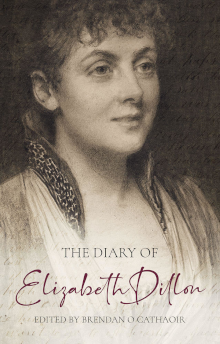
Dillon begins keeping a diary in 1879, which she continues to write until her death. Her ancestor, Mary Mathew, is also a diarist and keeps the diary for the discipline of the daily activity. She soon begins to write for the love of it, and some have surmised she wrote with the intention her diaries would be read by others. She attends lectures in Old English and literature at King’s College, London from late 1882 to 1884, and begins to learn Irish in 1893.

Dillon’s father supports land reform in Ireland, chairs the evicted tenants commission in 1892, and is a huge influence on her politics. She makes her first political reference on February 25, 1883, when she notes the arrest of the Invincibles, and she then regularly comments on land reform. She travels to Ireland for the first time in August 1886, staying in Killiney, County Dublin. In October 1886, she meets John Dillon and begins to follow the Plan of Campaign so that she can discuss it with him during his visits to the Mathew house in London.

During this time, John Dillon is deeply immersed in politics and is imprisoned on a number of occasions. Being a careful follower of Irish politics, she becomes an anti-Parnellite. She confronts John Dillon in autumn 1895 about their relationship, saying that they can no longer meet as they had become the subject of gossip. He proposes within two weeks, and they are married on November 21, 1895, in Brompton Oratory. They are busy and often apart, with Dillon spending time in a warm climate due to his ill health. She tries to accompany him when she can, but the couple’s large family makes that difficult. They have one daughter and five sons, John Dillon (1896-1970), Anne Elizabeth Dillon (born October 29, 1897), Theobald Wolfe Tone (1898-1946), Myles, James, and Brian.

Finances are strained until John’s uncle Charles bequeaths him his house, 2 North Great George’s Street, Dublin in 1898, and a business in Ballaghaderreen, County Mayo is bequeathed him by a cousin, Anne Deane, in 1905. Dillon runs the business successfully, while also carrying out duties as a politician’s wife such as opening the Belfast ladies’ branch of the United Irish League in June 1905. Her busy life results in her neglecting her diary.

Dillon dies on May 14, 1907, in Dublin, having given birth to a stillborn daughter that morning. Pneumonia is given as the cause of death, but it could have been medical incompetence. She is buried in the family vault in Glasnevin Cemetery. Her husband writes of her death in June 1907, A short narrative of the illness and death of my dearest love. Trinity College Dublin holds her diary and correspondence. Her diaries, edited by Brendan Ó Cathaoir, are published in 2019.