seamus dubhghaill

Promoting Irish Culture and History from Little Rock, Arkansas, USA


Leave a comment

The Battle of Doire Leathan

The Battle of Doire Leathan takes place on September 14, 1590, at Doire Leathan (English: Derrylahan), a townland and hamlet located between Kilcar and Carrick in southwestern County Donegal in the Irish province of Ulster.

Doire Leathan is on the eastern shores of Teelin Bay, being just across from the village of Teelin. The battle is part of the ongoing succession dispute for the leadership of the Gaelic lordship of O’Donnell. A combined force of Irish clans and Scottish Redshank mercenaries hired by Iníon Dubh (pronounced “In-neen Doo”) defeat and kill Sir Domhnall Ó Domhnaill (Sir Donnell O’Donnell). The Tanist of Tír Conaill, Sir Domhnall’s younger half-brother and Iníon Dubh’s son, Red Hugh O’Donnell, is still imprisoned in Dublin Castle, but later rises following a subsequent escape to lead Clan O’Donnell and is a prominent figure during the Nine Years’ War.

According to the Annals of the Four Masters, “The son of O’Donnell, i.e. Donnell, the son of Hugh, son of Manus, son of Hugh Duv, son of Hugh Roe, son of Niall Garv, son of Turlough of the Wine, attempt to depose his father, after he had grown weak and feeble from age, and after his other son had been imprisoned in Dublin; so that Donnell brought under his power and jurisdiction that part of Tirconnell from the mountain westwards, i.e. from Bearnas to the River Drowes; and also the people of Boylagh and Tir-Boghaine. It was a cause of great anguish and sickness of mind to Ineenduv, the daughter of James Mac Donnell, that Donnell should make such an attempt, lest he might attain the chieftainship of Tirconnell in preference to her son, Hugh Roe, who was confined in Dublin, and who she hoped would become chief, whatever time God might permit him to return from his captivity; and she, therefore, assembled all the Kinel-Connell who were obedient to her husband, namely, O’Doherty, with his forces; Mac Sweeny-na dTuath (Owen Oge), with his forces; and Mac Sweeny Fanad, with his forces; with a great number of Scots along with them. After Donnell O’Donnell had received intelligence that this muster had been made to oppose him, he assembled his forces to meet them. These were they who rose up to assist him on this occasion: Mac Sweeny Banagh (Donough, the son of Mulmurry); a party of the Clan Sweeney of Munster, under the conduct of the three sons of Owen, the son of Mulmurry, son of Donough, son of Turlough, and their forces; and O’Boyle (Teige Oge, the son of Teige, son of Turlough), with all his forces, assembled. The place where the son of O’Donnell happened to be stationed along with these chieftains was Doire-leathan at the extremity of Tir-Boghaine, to the west of Gleann Choluim Cille. The other party did not halt until they came to them to that place; and a battle ensued between them, which was fiercely fought on both sides. The Scots discharged a shower of arrows from their elastic bows, by which they pierced and wounded great numbers, and, among the rest, the son of O’Donnell himself, who, being unable to display prowess or defend himself, was slain at Doire-leathan, on one side of the harbour of Telinn, on the 14th of September. Seldom before that time had his enemies triumphed over him; and the party by whom he was slain had not been by any means his enemies until they encountered on this occasion; and although this Donnell was not the rightful heir of his father, it would have been no disgrace to Tirconnell to have elected him as its chief, had he been permitted to attain to that dignity. In this conflict were slain along with Donnell the three sons of Owen, son of Mulmurry, son of Donough above mentioned, together with two hundred others, around Donnell.”

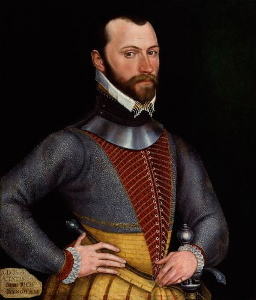
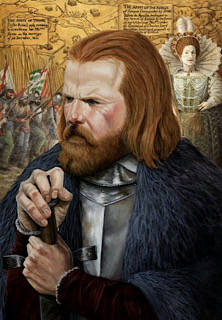
(Pictured: Hugh Roe O’Donnell, otherwise known in history and lore as Red Hugh O’Donnell)

Leave a comment

The Battle of Glentaisie

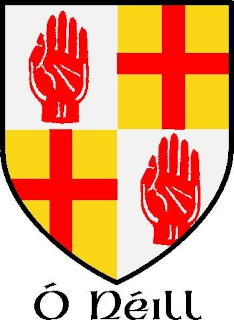
The Battle of Glentaisie is fought in the north of Ulster on May 2, 1565. The result is a victory for Shane O’Neill over the Clan MacDonald of Dunnyveg. The conflict is a part of the political and military struggle for control of the north of Ireland, involving the English and occasionally the Scots. Although the MacDonalds are a Scottish family, based principally on the island of Islay in the Hebrides, they have long been associated with the Gaelic polity rather than the Kingdom of Scotland.

O’Neill assembles his army for the attack on the MacDonnells at the tower house of Feadan, at Fathom Mountain, near Newry. Traditionally, he “kept Easter” at Feadan, and an assembly of his clan would be unremarked until its size draws notice.

The MacDonnells expect O’Neill’s sizeable army to take some weeks to reach their territory on the Antrim coast. They start gathering as many warriors in the Highlands and Islands as they can muster. However, O’Neill advances with unprecedented speed. Within a week his army arrives at Edenduffcarrick.

Sorley Boy MacDonnell gathers a small holding force at a forward base at Cloughdonaghy. He attempts to stop O’Neill’s advancing army at Knockboy, a wooded pass in the hills above Broughshane. O’Neill sweeps Sorley’s ambush away, takes Cloughdonaghy and sends a force of cavalry to seize James MacDonald of Dunnyveg’s recently constructed Red Bay Castle. With the landing beaches at Waterfoot and Cushendall now controlled by O’Neill’s army, the first several hundred of MacDonnell’s men are compelled to land farther north. They land at Ballycastle beach to await the locally raised MacDonnnell army. Their plan is to await the arrival of their brother Alexander, the MacDonnell seneschal of Cantyre, who is assembling a second army composed from late comers to James of Dunnyveg’s army.

O’Neill does not permit the MacDonnells any time for their reinforcement to arrive. His advance guard continues to press the retreating MacDonnell army, who fall back from the beach through Ballycastle. They are driven past the area of the modern Diamond and well away from the river Tow, denying them the necessary water supply for a sizeable army.

Both armies set up camp for the night. O’Neill’s army occupies land at the centre of modern Ballycastle, between the modern Diamond and the river Tow, giving them full access to water. The combined MacDonnell army of around five hundred men occupy the exposed higher ground at Ramon, the ridge at the head of modern Castle Street, Ballycastle, where the Presbyterian Church now stands, with only a small well for their needs.

At very first light, O’Neill attacks uphill with a sudden onslaught led by his heavy Gallowglass infantry. By forgoing the customary exchange of spears, darts, and arrows by the light infantry kernagh and Scots archers that customarily precede the usually decisive deployment of the Gallowglass corrughadh, or battalions, O’Neill surprises the MacDonnell army. The MacDonnell leaders try to rally their men, but after a violent interlude of some confusion, they break and flee over Knocklayd mountain in the direction of Glenshesk, heading back toward the beach at Cushendun. James of Dunnyveg is seriously wounded in the early fighting and his brother Angus MacDonnell is killed.

The attempt to flee by the old mountain road between Greenan and Ballypatrick Forest in an attempt to reach a possible landing place for their birlinns at Cushendun beach is finally stopped at a hollow at Legacapple. Sorley Boy and James are both taken prisoner. James dies of his wounds two months later at Castle Crocke, near Strabane. Their brother Alistair Og MacDonnell had landed at Rathlin, with the final levies raised in the Highlands and Islands, reputed to be nine hundred men. However, in the immediate aftermath of O’Neill’s decisive victory, Alistair can achieve nothing without a base on the mainland. O’Neill marches on along the north coast to mop up the MacDonnell garrisons and deny Alistair any foothold from which to launch a MacDonnell recovery. Dunseverick and Dunluce fall within a few days, and Alistair returns to Scotland.


5 Comments

The Battle of Ardnaree

The Battle of Ardnaree, a battle in the Tudor conquest of Ireland, is fought at Ardnaree, now a suburb of Ballina, County Mayo, on September 23, 1586. The result is a victory for the English over the Mac Philbins and Burkes. The conflict is a part of the political and military struggle, involving the English and occasionally the Scots, for control of northern Ireland. The anglicised version of the name Ardnaree can be translated to Árd na ríogh, meaning the hill of the kings.

The Mac Philbins and Mayo Burkes are in rebellion against the brutal English rule. An Irish-Scottish mercenary army, led by Donnell Gorm MacDonnell of Carey and Alexander Carragh MacDonnell of Glenarm, sons of the deceased James MacDonald, 6th of Dunnyveg, are invited into Connacht by the Burkes to attack English settlements and forces. The mercenary army is fronted at Sligo, Coolony and Ballingafad by English forces for over fourteen days.

Sir Richard Bingham, governor of Connacht, follows the mercenary force to Ardnaree, where the mercenary force has camped on the east bank of the River Moy. Bingham’s forces surround the camp at night and attack the occupants. During the battle 1,000 mercenaries are killed, including Donnell Gorm MacDonnell of Carey and Alexander Carragh MacDonnell of Glenarm. Also slaughtered are some 1,000 men, women and children in the camp.

Richard Bingham goes on to hang the leaders of the Burkes, with the former lands of Mac Philbins and Mayo Burkes given to English settlers.

(Pictured: Sir Richard Bingham, governor of Connacht)