seamus dubhghaill

Promoting Irish Culture and History from Little Rock, Arkansas, USA


Leave a comment

Death of Political Economist John Elliott Cairnes

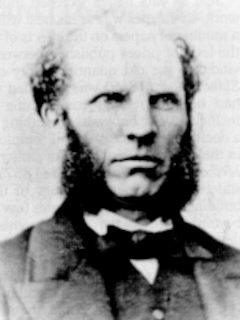
John Elliott Cairnes, Irish-born political economist, dies at the age of 51 at Blackheath, LondonEngland, on July 8, 1875. He has been described as the “last of the classical economists.”

Cairnes is born on December 26, 1823, at CastlebellinghamCounty Louth, the son of William Elliott Cairnes (1787–1863) of Stameen, near Drogheda, and Marianne Woolsey, whose mother is the sister of Sir William Bellingham, 1st Baronet of Castlebellingham. William decides upon a business career, against the wishes of his mother, Catherine Moore of Moore Hall, Killinchy, and becomes a partner in the Woolsey Brewery at Castlebellingham. In 1825, he starts on his own account in Drogheda, making the Drogheda Brewery an unqualified success. He is remembered for his great business capacity and for the deep interest he takes in charity.

After leaving school, Cairnes spends some years in the counting house of his father at Drogheda. His tastes, however, lay altogether in the direction of study, and he is permitted to enter Trinity College Dublin, where he takes the degree of BA in 1848, and six years later that of MA. After passing through the curriculum of Arts, he engages in the study of Law and is called to the Irish bar. But he lacks a desire to pursue the legal profession, and over some ensuing years, he devotes himself to writing in various publications about social and economic questions and treatises that relate to Ireland. He focuses mostly on political economy, which he studies thoroughly.

While residing in Dublin, Cairnes makes the acquaintance of the Archbishop of Dublin Richard Whately, who conceives a very high respect for Cairnes’ character and abilities. In 1856, a vacancy occurs in the chair of political economy at Dublin, founded by Whately, and Cairnes receives the appointment. In accordance with the regulations of the foundation, the lectures of his first year’s course are published. The book appears in 1857 with the title Character and Logical Method of Political Economy. It follows up on and expands John Stuart Mill‘s treatment in the Essays on some Unsettled Questions in Political Economy and forms an admirable introduction to the study of economics as a science. In it the author’s peculiar powers of thought and expression are displayed to the best advantage. Logical exactness, precision of language, and firm grasp of the true nature of economic facts, are the qualities characteristic of this as of all his other works. If the book had done nothing more, it would still have conferred inestimable benefit on political economists by its clear exposition of the true nature and meaning of the ambiguous term law. To the view of the province and method of political economy expounded in this early work the author always remains true, and several of his later essays, such as those on Political Economy and LandPolitical Economy and Laissez-Faire, are but reiterations of the same doctrine. His next contribution to economical science is a series of articles on the gold question, published partly in Fraser’s Magazine, in which the probable consequences of the increased supply of gold attendant on the Australian and Californian gold discoveries are analysed with great skill and ability. And a critical article on Michel Chevalier‘s work, On the Probable Fall in the Value of Gold, appears in the Edinburgh Review for July 1860.

In 1861, Cairnes is appointed to the professorship of jurisprudence and political economy in Queens College Galway, and in the following year he publishes his admirable work The Slave Power, one of the finest specimens of applied economic philosophy. The inherent disadvantages of the employment of slave labour are exposed with great fullness and ability, and the conclusions arrived at have taken their place among the recognised doctrines of political economy. The opinions expressed by Cairnes as to the probable issue of American Civil War are largely verified by the actual course of events, and the appearance of the book has a marked influence on the attitude taken by serious political thinkers in England towards the Confederate States of America.

During the remainder of his residence at Galway, Cairnes publishes nothing beyond some fragments and pamphlets, mainly upon Irish questions. The most valuable of these papers are the series devoted to the consideration of university education. His health, at no time very good, is still further weakened in 1865 by a fall from his horse. He is ever afterwards incapacitated from active exertion and is constantly liable to have his work interfered with by attacks of illness.

In 1866, Cairnes is appointed professor of political economy in University College, London. He is compelled to spend the session 1868–1869 in Italy, but on his return continues to lecture until 1872. During his last session he conducts a mixed class, ladies being admitted to his lectures. His health soon renders it impossible for him to discharge his public duties. He resigns his post in 1872 and retires with the honorary title of professor emeritus of political economy. In 1873 his own university confers on him the degree of LL.D.

Cairnes dies at the age of 51 at Blackheath, London, England, on July 8, 1875.

Leave a comment

Birth of Political Economist John Elliott Cairnes

John Elliott Cairnes, Irish-born political economist, is born on December 26, 1823, at Castlebellingham, County Louth. He has been described as the “last of the classical economists.”

Cairnes is the son of William Elliott Cairnes (1787–1863) of Stameen, near Drogheda, and Marianne Woolsey, whose mother is the sister of Sir William Bellingham, 1st Baronet of Castlebellingham. William decides upon a business career, against the wishes of his mother, Catherine Moore of Moore Hall, Killinchy, and becomes a partner in the Woolsey Brewery at Castlebellingham. In 1825, he starts on his own account in Drogheda, making the Drogheda Brewery an unqualified success. He is remembered for his great business capacity and for the deep interest he takes in charity.

After leaving school, Cairnes spends some years in the counting house of his father at Drogheda. His tastes, however, lay altogether in the direction of study, and he is permitted to enter Trinity College Dublin, where he takes the degree of BA in 1848, and six years later that of MA. After passing through the curriculum of Arts, he engages in the study of Law and is called to the Irish bar. But he lacks a desire to pursue the legal profession, and over some ensuing years, he devotes himself to writing in various publications about social and economic questions and treatises that relate to Ireland. He focuses mostly on political economy, which he studies thoroughly.

While residing in Dublin, Cairnes makes the acquaintance of the Archbishop of Dublin Richard Whately, who conceives a very high respect for Cairnes’ character and abilities. In 1856, a vacancy occurs in the chair of political economy at Dublin, founded by Whately, and Cairnes receives the appointment. In accordance with the regulations of the foundation, the lectures of his first year’s course are published. The book appears in 1857 with the title Character and Logical Method of Political Economy. It follows up on and expands John Stuart Mill‘s treatment in the Essays on some Unsettled Questions in Political Economy and forms an admirable introduction to the study of economics as a science. In it the author’s peculiar powers of thought and expression are displayed to the best advantage. Logical exactness, precision of language, and firm grasp of the true nature of economic facts, are the qualities characteristic of this as of all his other works. If the book had done nothing more, it would still have conferred inestimable benefit on political economists by its clear exposition of the true nature and meaning of the ambiguous term law. To the view of the province and method of political economy expounded in this early work the author always remains true, and several of his later essays, such as those on Political Economy and Land, Political Economy and Laissez-Faire, are but reiterations of the same doctrine. His next contribution to economical science is a series of articles on the gold question, published partly in Fraser’s Magazine, in which the probable consequences of the increased supply of gold attendant on the Australian and Californian gold discoveries are analysed with great skill and ability. And a critical article on Michel Chevalier‘s work, On the Probable Fall in the Value of Gold, appears in the Edinburgh Review for July 1860.

In 1861, Cairnes is appointed to the professorship of jurisprudence and political economy in Queens College Galway, and in the following year he publishes his admirable work The Slave Power, one of the finest specimens of applied economic philosophy. The inherent disadvantages of the employment of slave labour are exposed with great fullness and ability, and the conclusions arrived at have taken their place among the recognised doctrines of political economy. The opinions expressed by Cairnes as to the probable issue of American Civil War are largely verified by the actual course of events, and the appearance of the book has a marked influence on the attitude taken by serious political thinkers in England towards the Confederate States of America.

During the remainder of his residence at Galway, Cairnes publishes nothing beyond some fragments and pamphlets, mainly upon Irish questions. The most valuable of these papers are the series devoted to the consideration of university education. His health, at no time very good, is still further weakened in 1865 by a fall from his horse. He is ever afterwards incapacitated from active exertion and is constantly liable to have his work interfered with by attacks of illness.

In 1866 Cairnes is appointed professor of political economy in University College, London. He is compelled to spend the session 1868–1869 in Italy, but on his return continues to lecture until 1872. During his last session he conducts a mixed class, ladies being admitted to his lectures. His health soon renders it impossible for him to discharge his public duties. He resigns his post in 1872 and retires with the honorary title of professor emeritus of political economy. In 1873 his own university confers on him the degree of LL.D.

Cairnes dies at the age of 51 at Blackheath, London, England, on July 8, 1875.

Leave a comment

Death of Frank Hugh O’Donnell, Writer, Journalist & Politician

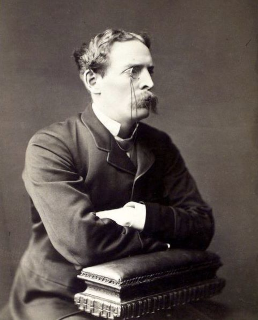
Frank Hugh O’Donnell, Irish writer, journalist and nationalist politician, dies in London on November 2, 1916.

O’Donnell is born in an army barracks in Devon, England, where his father, Sergeant Bernard MacDonald, is stationed. His mother, Mary Kain, is a native of Ballybane, close to Galway city. He is educated at the Erasmus Smith School in Galway, Coláiste Iognáid (the “Jes”), and later enrolls in Queen’s College Galway, where he studies English literature, history and political economy. While a student at the college, he acquires a considerable reputation as an orator, and is a frequent contributor to meetings of the college’s Literary and Debating Society, of which he becomes vice-auditor for the 1864–65 session.

Even in his student days, O’Donnell seems to be quick to voice his opinions, and revells in controversy. In November 1866, addressing the Literary and Debating Society on the question “Was the character of Warren Hastings as Governor-General of India praiseworthy?” he causes uproar by denouncing “the principle and the system which have lain at the root of the international and intercolonial policy of England, from the days when Elizabeth, the Infamous, chartered for profit two of the first ships which opened the African slave trade.” His remarks cause the chairman of the meeting, Professor Thomas Moffett, to prevent him from continuing his speech, stating that “such an epithet ought not to be applied to any predecessor of our present gracious Queen.” O’Donnell regards such action as an unwarranted restriction on his freedom of speech, and in a letter published in the local press gives an early example of his high-flown literary style:

“I hold that Debating Societies are the nurseries of independent thought, and the training schools of sober criticism. I believe in the power and impartiality of an enlightened studenthood … I have followed the mind of Austin. I have sat at the feet of Cairnes. I have drunk of the philosophy of Mill. I claim for Judicial Science, for Economic Science, for the Philosophy of History, a place in the discussions of our society, I pity, and I scorn the formidable confederacy of fools who dare not call a spade a spade.”

This incident, combined with the reluctance of the society to prevent O’Donnell from addressing its meetings, eventually leads to the suspension of the society from the Queen’s College and its temporary migration to rooms in the city of Galway.

O’Donnell graduates from the Queen’s College with an M.A. degree in 1868, winning several gold medals for his academic performance. By this stage, he has begun to style himself ‘Frank Hugh O’Donnell,’ believing himself to be a descendant of Hugh O’Donnell, 2nd Earl of Tyrconnell.

Leaving Galway, O’Donnell moves to London, where he embarks on a career in journalism, following his college contemporary T. P. O’Connor. O’Connor’s knowledge of modern European languages has helped him to establish himself as a correspondent on European affairs, and he assists O’Donnell in developing a similar reputation. He spends a brief period on the staff of The Morning Post.

In the 1874 United Kingdom general election, O’Donnell is elected Member of Parliament (MP) for Galway Borough but is unseated by the courts in what appears to be a politically inspired judgment which uses certain unsavoury campaigning tactics in which O’Donnell had indulged as its basis. He is succeeded in the seat by his election agent, Dr. Michael Francis Ward, who is himself succeeded in 1880 by T. P. O’Connor in an unusual succession, all three having been either auditor or vice-auditor of the Queen’s College Literary and Debating Society in the same era.

In 1875, O’Donnell is a founding member of the Constitutional Society of India, a group promoting political autonomy for India. In 1877, he secures a more permanent election to the House of Commons of the United Kingdom as MP for Dungarvan. He holds the seat until 1885, when the constituency is abolished. He strikes a colourful and controversial figure in parliament and becomes renowned for his declamatory speech-making. He is a prominent obstructionist and claims credit for inventing the tactic of obstructionism which is to yield such results for the Home Rule League under Charles Stewart Parnell. Indeed, he sees himself as a natural leader and becomes disillusioned when Parnell is selected in May 1880 to succeed William Shaw as leader of the Irish Parliamentary Party. He calls the British ‘Imperial pirates’ and inaugurates the Constitutional Society of India. Its aim is Home Rule for India, “Mr. O’Donnell’s grand passion in politics was a confederation of all the discontented races of the Empire under the lead of the Irish party. He once brought down some scores of dusky students of all the races and creeds of Hindustan to the House of Commons.”

Parnell refuses to let O’Donnell be nominated in 1885. He leaves the Irish Parliamentary Party and conventional politics, but not its general aims of promoting home rule and tenant farmers’ rights. His last and perhaps most important contribution to the fortunes of the party is the libel case he launches against The Times in 1888 over the series “Parnellism and Crime.” Though the case is lost, it results in the establishment of the Parnell Commission which exonerates Parnell from condoning the Phoenix Park Murders and exposes the Pigott Forgeries.

In his later years O’Donnell begins investigating misconduct by both the British Civil Service and the Roman Catholic church in Ireland. His Paraguay on Shannon (1908) is an amusing but serious critique of unethical practices by the Catholic clergy in local politics, education, and their involvement in the Congested Districts Board for Ireland that is financed by Parliament in order to improve the depressed economy of western Ireland. Parliament believes that by improving the living standards of the Irish peasant class, they can “kill Home Rule with kindness.”

After careful investigation, O’Donnell accuses members of the Catholic clergy of illegally diverting Government money earmarked for economic development into new Cathedrals, parish churches, and other ecclesiastical building projects. He argues that the British Government needs to provide better oversight of how the Congested Districts Board’s funds are being used. He believes that “in Ireland material ruin has accompanied clerical despotism.” His hostility to the Church draws the ire of Catholic historians who systematically undermine his credibility.

Ernest Belfort Bax writes that O’Donnell’s “matter is better than his manner.”

O’Donnell dies a bachelor in London on November 2, 1916, and is buried in Glasnevin Cemetery, Dublin.