Gallagher is commissioned to write essays for The Irish Times, the Irish Medical Times and various journals. She takes up writing screenplays and stage plays. The result is a prolific list of productions which have been staged around the world as well as broadcast by RTÉ and the BBC.
Gallagher varies work from plays to speech therapy, as well as working with prisoners, and this leads her to be a visiting lecturer at universities across the globe. She is deeply involved in the organisations of her craft, leading her to being a member of Irish PEN, both on its committee and as vice president, on the Irish Writers’ Union committee as well as a council member of the Society of Irish Playwrights. Over the years she wins a number of awards including the Arts Council and European Script Fund Awards, the MHA TV Script Award, and the EU Theatre Award.
Gallagher’s husband is Gerhardt Gallagher. They live in Dublin and have three children, Mia, Donnacha, and Etain. In 2012 she is diagnosed with cancer and kidney disease. She dies on January 15, 2018.
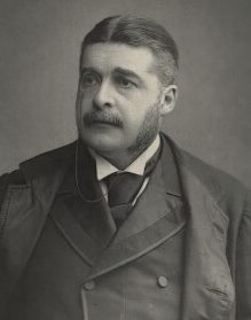
In 1866 Sullivan composes a one-act comic opera, Cox and Box, which is still widely performed. He writes his first opera with W. S. Gilbert, Thespis, in 1871. Four years later, the impresarioRichard D’Oyly Carte engages Gilbert and Sullivan to create a one-act piece, Trial by Jury (1875). Its box office success leads to a series of twelve full-length comic operas by the collaborators. After the extraordinary success of H.M.S. Pinafore (1878) and The Pirates of Penzance (1879), Carte uses his profits from the partnership to build the Savoy Theatre in 1881, and their joint works become known as the Savoy operas. Among the best known of the later operas are The Mikado (1885) and The Gondoliers (1889). Gilbert breaks from Sullivan and Carte in 1890, after a quarrel over expenses at the Savoy. They reunite in the 1890s for two more operas, but these do not achieve the popularity of their earlier works.
Sullivan’s infrequent serious pieces during the 1880s included two cantatas, The Martyr of Antioch (1880) and The Golden Legend (1886), his most popular choral work. He also writes incidental music for West End productions of several Shakespeare plays and holds conducting and academic appointments. Sullivan’s only grand opera, Ivanhoe, though initially successful in 1891, has rarely been revived. In his last decade Sullivan continues to compose comic operas with various librettists and writes other major and minor works.
Sullivan’s health is never robust. From his thirties kidney disease obliges him to conduct sitting down. He dies at the age of 58 of heart failure, following an attack of bronchitis, at his flat in London on November 22, 1900. Sullivan’s wishes are to be buried in Brompton Cemetery with his parents and brother, but by order of the Queen he is buried in St. Paul’s Cathedral.
Arthur Sullivan is regarded as Britain’s foremost composer. His comic opera style serves as a model for generations of musical theatre composers that follow, and his music is still frequently performed, recorded and pastiched.


 seamus dubhghaill