

The Statutes of Kilkenny, a series of thirty-five acts aiming to curb the decline of the Hiberno-Norman Lordship of Ireland, are passed at Kilkenny on February 18, 1366.
By the middle decades of the 13th century, the Hiberno-Norman presence in Ireland is perceived to be under threat, mostly due to the dissolution of English laws and customs among English settlers. These English settlers are described as “more Irish than the Irish themselves,” referring to their taking up Irish law, custom, costume, and language.
The statutes attempt to prevent this “middle nation,” which is neither true English nor Irish, by reasserting English culture among the English settlers.
There are also military threats to the Norman presence, such as the failed invasion by Robert the Bruce‘s brother Edward Bruce in 1315, which is defended by the Irish chief Domhnall Ó Néill in his Remonstrance to Pope John XXII, complaining that “For the English inhabiting our land…are so different in character from the English of England…that with the greatest propriety they may be called a nation not of middle medium, but of utmost, perfidy.” Further, there was the de Burgh or Burke Civil War of 1333–1338, which leads to the disintegration of the estate of the Earldom of Ulster into three separate lordships, two of which are in outright rebellion against the crown.
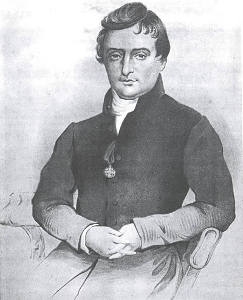
The prime author of the statutes is Lionel of Antwerp, better known as the Duke of Clarence, and who is also the Earl of Ulster. In 1361, he has been sent as viceroy to Ireland by Edward III to recover his own lands in Ulster if possible and to turn back the advancing tide of the Irish. The statutes are enacted by a parliament that he summons in 1366. The following year, he leaves Ireland.
The statutes begin by recognizing that the English settlers have been influenced by Irish culture and customs. They forbid the intermarriage between the native Irish and the native English, the English fostering of Irish children, the English adoption of Irish children, and use of Irish names and dress. Those English colonists who do not know how to speak English are required to learn the language on pain of losing their land and belongings, along with many other English customs. The Irish pastimes of “hockie” and “coiting” are to be dropped and pursuits such as archery and lancing are to be taken up, so that the English colonists will be more able to defend against Irish aggression, using English military tactics.
Other statutes require that the English in Ireland be governed by English common law, instead of the Irish March law or Brehon law and ensures the separation of the Irish and English churches by requiring that “no Irishman of the nations of the Irish be admitted into any cathedral or collegiate church…amongst the English of the land.”
The mistrust the English have of the Irish is demonstrated by Statute XV, which forbids Irish minstrels or storytellers to come to English areas, guarding against “the Irish agents who come amongst the English, spy out the secrets, plans, and policies of the English, whereby great evils have often resulted.”
While the Statutes are sweeping in scope and aim, the English never have the resources to fully implement them. Clarence is forced to leave Ireland the following year, and Hiberno-Norman Ireland continues to gain a primarily Irish cultural identity. Only at the beginning of the 17th century would another attempt to colonise Ireland begin to make appreciable gains. The Statutes of Kilkenny ultimately help to create the complete estrangement of the two “races” in Ireland for almost three centuries.
(Pictured: Lionel of Antwerp, 1st Duke of Clarence)


 seamus dubhghaill