seamus dubhghaill

Promoting Irish Culture and History from Little Rock, Arkansas, USA


Leave a comment

Birth of Des Hanafin, Fianna Fáil Politician

Desmond A. HanafinFianna Fáil politician who serves for over 30 years as a member of Seanad Éireann, is born in Thurles, County Tipperary, on September 9, 1930. He opposes social liberalisation, particularly the legalisation of abortion, divorce and same-sex marriage, and is one of the founders of the anti-abortion advocacy group, Pro Life Campaign (PLC).

Hanafin is the son of John Hanafin (1890–1953), a draper and newsagent who serves for many years as a Fianna Fáil councillor for North Tipperary County Council and previously is a member of the Irish Republican Brotherhood (IRB) and an elected Sinn Féin councillor.

Hanafin marries Mona Brady, daughter of J. P. Brady, on August 2, 1958, in Clonmel, County Tipperary. The wedding is followed by a reception at the Galtee Hotel, Cahir, which is attended by various notables including Rev. Father J. J. Hampson, president of Blackrock College. Their first child, Mary Hanafin, is born in June 1959, followed by John Hanafin in September 1960. Mary Hanafin is a former Fianna Fáil TD and government minister, and John Hanafin is a former Fianna Fáil senator.

Hanafin operates the Anner Hotel, located in Thurles during the 1960s. Initially successful, the business fails in 1967, which Mary Hanafin later blames on her father’s excess drinking. Subsequently, Hanafin is a director of the Transinternational Oil Company.

Hanafin’s first attempt for election to public office proves unsuccessful. In 1953, he seeks to be co-opted to fill the vacancy on North Tipperary County Council created by the death of his father. In the event councillors co-opt a Labour Party nominee, Michael Treacy, by eleven votes to seven.

Hanafin is elected a member of North Tipperary County Council in 1955, polling 934 first preference votes. Subsequently, in 1956, drawing support from the Clann na Poblachta representatives, he is elected Chairman of the County Council.

In 1957, Hanafin conducts a three-month tour of the United States, during which he is commissioned a Kentucky colonel by then Kentucky Governor Albert Benjamin “Happy” Chandler, Sr.. He is also awarded the freedom of Louisville, Kentucky, and is received by Mayor Richard J. Daley of Chicago.

Hanafin is re-elected to North Tipperary County Council in 1960, polling 797 first preference votes. In 1961, he votes against the Fianna Fáil nominee for Chair of the County Council, Thomas F. Meagher, and in favour of the Clann na Poblachta nominee, Michael F. Cronin, who is elected by 10 votes to 9. In 1964, he controversially votes in favour of Jeremiah Mockler, “a former school mate,” who is elected by 10 votes to 9 to the office of Rate Collector for Borrisokane, County Tipperary.

Hanafin holds the seat until 1985. He is first elected to Seanad Éireann in 1969 and retains his seat until the 1993 Seanad election at which he loses his seat by one vote. He regains his seat in the 1997 elections, and in 2002 announces his retirement from politics. He unsuccessfully contests the 1977 and 1981 Irish general elections for the Tipperary North constituency. He is a chief fundraiser of the Fianna Fáil party for many years.

In May 2015, Hanafin accuses “Yes” campaigners in the same-sex marriage referendum of spreading a “palpable climate of fear,” and calls for a “No” vote.

Hanafin opposes the legalisation of divorce, which is introduced in 1995, and attempts to overturn the referendum result in the Supreme Court, but is refused by the court.

An opponent of abortion, Hanafin is one of the promoters of the constitutional amendment that enshrines the legal ban on abortion in the Constitution of Ireland. He is co-founder, chairman and later honorary president of the Pro Life Campaign.

Hanafin dies in County Tipperary at the age of 86 on June 22, 2017. A Requiem Mass is held at the Cathedral of the Assumption, Thurles, on June 25, with burial afterward in St. Patrick’s Cemetery.

Leave a comment

Death of Fr. Abram Joseph Ryan, Poet & Priest

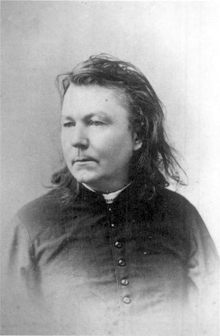
Abram Joseph Ryan, Irish American poet, active proponent of the Confederate States of America, and a Catholic priest, dies in Louisville, Kentucky on April 22, 1886. He has been called the “Poet-Priest of the South” and, less frequently, the “Poet Laureate of the Confederacy.”

Ryan is born Matthew Abraham Ryan in Hagerstown, Maryland on February 5, 1838, the fourth child of Irish immigrants Matthew Ryan and his wife, Mary Coughlin, both of Clogheen, County Tipperary, and their first to be born in the United States.

In 1840 the family relocates to Ralls County, Missouri, and then, in 1846, to St. Louis, where the father opens a general store. Ryan is educated at St. Joseph’s Academy, run by the De La Salle Brothers. Showing a strong inclination to piety, he is encouraged by his mother and teachers to consider becoming a priest. He decides to test a calling to the priesthood and on September 16, 1851, at the age of 13, enters the College of St. Mary’s of the Barrens, near Perryville, Missouri, a minor seminary for young candidates for the priesthood. By the time of his graduation in 1855, he has decided to pursue Holy Orders.

Ryan then enters the Vincentians, taking the oath of obedience to the Congregation. He does three more years of study at the college during the course of which, on June 19, 1857, he receives minor orders. In 1858, shortly after the death of his father, he is sent to the Seminary of Our Lady of the Angels near Niagara Falls, New York.

As a Southerner, Ryan feels out of place at the seminary, and soon begins to express his opposition to the abolitionist movement then gaining popularity in the Northeastern United States. He then joins in the sentiment expressed by the Catholic bishops and editors of the nation in that period, who feel threatened by the anti-Catholic opinions expressed by the leadership of the Abolitionists. His writings in that period begin to express suspicion of Northern goals. Possibly for that reason, he is sent back to St. Mary of the Barrens.

During the winter of 1860, Ryan gives a lecture series through which he starts to gain notice as a speaker. His abilities as a preacher gain wide approval, and his superiors decide to have him ordained a priest earlier than is the normal age under church law. On September 12, 1860, he is ordained a priest at his home parish in St. Louis, with the ordination being performed by the Bishop of St. Louis, Peter Richard Kenrick.

In the Fall of 1861, soon after the start of the American Civil War, Ryan is transferred back to the Seminary of Our Lady of the Angels in New York. After a couple of bouts of illness, he declares himself fit to teach again in April 1862, but his superiors instead transfer him to parish duties in LaSalle, Illinois. After arriving there, he realizes that he will not be able to express his strong views in support of the Confederacy. Frustrated, and feeling ignored by his immediate superior, he requests his release from his oath of obedience. Upon his release he returns home, where he and his brother David intend to enlist in the Confederate States Army.

Ryan makes sporadic early appearances as a freelance chaplain among Confederate troops from Louisiana and begins making appearances in Tennessee in 1862. He begins full-time pastoral duties in Tennessee in late 1863 or early 1864. Though he never formally joins the Confederate Army, he clearly is serving as a freelance chaplain by the last two years of the conflict, with possible appearances at the Battle of Lookout Mountain and the Battle of Missionary Ridge near Chattanooga, and well-authenticated service at the Battle of Franklin and the subsequent Battle of Nashville. Some of his most moving poems —”In Memoriam” and “In Memory of My Brother”— come in response to his brother’s death, who died while serving in uniform for the Confederacy in April 1863, likely from injuries suffered during fighting near Mount Sterling, Kentucky.

On June 24, 1865, Ryan’s most famous poem, “The Conquered Banner,” appears in the pages of the New York Freeman’s Journal over his early penname “Moina.” Starting in 1865, he moves from parish to parish throughout the South. Beginning in November 1881 he spends a year in semi-retirement at Biloxi, Mississippi while completing his second book, A Crown for Our Queen. In Augusta, Georgia, he founds The Banner of the South, a religious and political weekly in which he republishes much of his early poetry, along with poetry by fellow-southerners James Ryder Randall, Paul Hamilton Hayne, and Sidney Lanier, as well as an early story by Mark Twain.

In 1879, Ryan’s work is gathered into a collected volume of verse, first titled Father Ryan’s Poems and subsequently republished in 1880 as Poems: Patriotic, Religious, Miscellaneous. His collection sells remarkably well for the next half-century. His work also finds a popular following in his family’s ancestral home of Ireland. An article about his work appears in Irish Monthly during his life, and a decade after his death, yet another collection of his poetry is published in Dublin by The Talbot Press under the title Selected Poems of Father Abram Ryan.

In 1880 Ryan’s old restlessness returns, and he heads north for the twofold object of publishing his poems and lecturing. He dies April 22, 1886, at a Franciscan friary in Louisville, Kentucky, but his body is returned to St. Mary’s in Mobile, Alabama for burial. He is interred in Mobile’s Catholic Cemetery. In recognition of his loyal service to the Confederacy, a stained-glass window is placed in the Confederate Memorial Hall in New Orleans in his memory. In 1912 a local newspaper launches a drive to erect a statue to him. Dedicated in July 1913, it includes a stanza from “The Conquered Banner” below an inscription that reads: “Poet, Patriot, and Priest.”