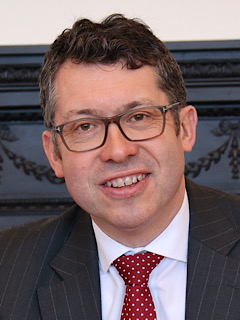
Mullen is first elected to Seanad Éireann (the Irish Senate) in 2007 for the National University of Ireland constituency, and has been continuously re-elected in 2011, 2016, 2020, and 2025, often topping the poll among NUI graduates. In 2018, he founds the Human Dignity Alliance, an anti-abortion political party. He is also affiliated with the European Christian Political Party (ECPP).
Mullen has built his career around social conservative causes:
Anti-abortion advocacy: He opposes the repeal of the Eighth Amendment and seeks stronger protections for conscientious objection among medical staff.
Opposition to same-sex marriage: He is prominent during the 2015 referendum opposing constitutional changes related to marriage.
Human rights and palliative care: He introduces bills and motions promoting hospice care and the protection of vulnerable adults.
Freedom of conscience and family values: He advocates policies emphasizing parental rights in education, ethical protections, and support for families.
International advocacy: He criticizes human rights abuses in China, the treatment of religious minorities, and European Union (EU) bureaucratic overreach, while seeking Ireland’s engagement on human dignity standards internationally.
A lifelong practicing Roman Catholic, Mullen emphasizes the principle of human dignity in both politics and daily life, integrating faith and reason in his ethical framework. He maintains a connection to Irish culture and the Irish language, and has engaged in public discussions on moral and social issues, grounding his positions in Catholic teaching without seeking to impose religious law.
In summary, Mullen is a long-standing independent Irish senator influential in debates on social policy, ethics, and human rights. His career is marked by consistent advocacy for pro-life positions, family integrity, and freedom of conscience, alongside active engagement in European and international policy discussions on human dignity and social justice.
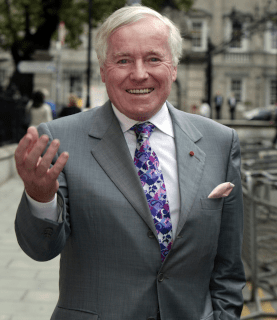
Hanafin marries Mona Brady, daughter of J. P. Brady, on August 2, 1958, in Clonmel, County Tipperary. The wedding is followed by a reception at the Galtee Hotel, Cahir, which is attended by various notables including Rev. Father J. J. Hampson, president of Blackrock College. Their first child, Mary Hanafin, is born in June 1959, followed by John Hanafin in September 1960. Mary Hanafin is a former Fianna Fáil TD and government minister, and John Hanafin is a former Fianna Fáil senator.
Hanafin operates the Anner Hotel, located in Thurles during the 1960s. Initially successful, the business fails in 1967, which Mary Hanafin later blames on her father’s excess drinking. Subsequently, Hanafin is a director of the Transinternational Oil Company.
Hanafin’s first attempt for election to public office proves unsuccessful. In 1953, he seeks to be co-opted to fill the vacancy on North Tipperary County Council created by the death of his father. In the event councillors co-opt a Labour Party nominee, Michael Treacy, by eleven votes to seven.
Hanafin is elected a member of North Tipperary County Council in 1955, polling 934 first preference votes. Subsequently, in 1956, drawing support from the Clann na Poblachta representatives, he is elected Chairman of the County Council.
Hanafin is re-elected to North Tipperary County Council in 1960, polling 797 first preference votes. In 1961, he votes against the Fianna Fáil nominee for Chair of the County Council, Thomas F. Meagher, and in favour of the Clann na Poblachta nominee, Michael F. Cronin, who is elected by 10 votes to 9. In 1964, he controversially votes in favour of Jeremiah Mockler, “a former school mate,” who is elected by 10 votes to 9 to the office of Rate Collector for Borrisokane, County Tipperary.
Hanafin holds the seat until 1985. He is first elected to Seanad Éireann in 1969 and retains his seat until the 1993 Seanad election at which he loses his seat by one vote. He regains his seat in the 1997 elections, and in 2002 announces his retirement from politics. He unsuccessfully contests the 1977 and 1981 Irish general elections for the Tipperary North constituency. He is a chief fundraiser of the Fianna Fáil party for many years.
In May 2015, Hanafin accuses “Yes” campaigners in the same-sex marriage referendum of spreading a “palpable climate of fear,” and calls for a “No” vote.
Hanafin opposes the legalisation of divorce, which is introduced in 1995, and attempts to overturn the referendum result in the Supreme Court, but is refused by the court.
An opponent of abortion, Hanafin is one of the promoters of the constitutional amendment that enshrines the legal ban on abortion in the Constitution of Ireland. He is co-founder, chairman and later honorary president of the Pro Life Campaign.
Hanafin dies in County Tipperary at the age of 86 on June 22, 2017. A Requiem Mass is held at the Cathedral of the Assumption, Thurles, on June 25, with burial afterward in St. Patrick’s Cemetery.
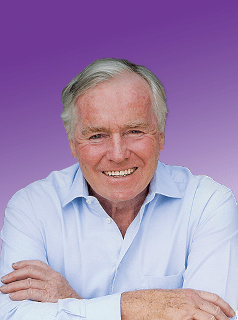
Quinn founds the national supermarket chain Superquinn (originally Quinn’s Supermarkets), of which he remains non-executive president for some years after his family sells out their interest in August 2005 for over €400 million. Superquinn is known for its focus on customer service and pioneers a number of innovations, including Ireland’s first supermarket loyalty card in 1993, SuperClub. It also introduces self-scanning of goods by customers in a number of its outlets. Superquinn becomes the first supermarket in the world to guarantee the absolute traceability of all its beef from pasture to plate, using DNA TraceBack, a system developed at Trinity College, Dublin by IdentiGEN.
Quinn becomes the chairman of the Interim Board for Posts and serves as chairman of its successor An Post (the Irish postal administration) until 1989. He also serves on several other public authorities and boards. From 1993 to 1998, he chairs the steering committee which oversees the development of the Leaving Certificate Applied. In 2006, he is appointed an Adjunct Professor in Marketing at National University of Ireland Galway. He is also chairman of Springboard Ireland.
Quinn is a former President of EuroCommerce, the Brussels-based organisation which represents the retail, wholesale and international trade sectors in Europe. He also serves on the board of directors of CIES, the Food Business Forum based in Paris, as well as the American-based Food Marketing Institute.
In 2009, Quinn works with independent shops and helps them to revamp, modernise and stave off stiff competition from multi-national retailers. It airs as RTÉ‘s six-part television series, Feargal Quinn’s Retail Therapy. A second series airs in 2011, and a third series airs in 2012. In 2011, he fronts RTÉ’s Local Heroes campaign in Drogheda, County Louth, which is an assembled team of experts to kick-start the local economy. It airs as RTÉ One‘s six-part television series, Local Heroes – A Town Fights Back.
Quinn is first elected as a senator in 1993 from the National University of Ireland constituency and is re-elected in 1997, 2002, 2007 and 2011. He is a member of the Joint Oireachtas Committee on European Affairs, the Joint Committee on Finance and Public Service and is an Oireachtas member of the National Economic and Social Forum, along with the Joint Committee on Jobs and Innovation.
Quinn is one of the co-founders and is a driving force behind Democracy Matters – a civil society group that is formed to oppose the Government’s plans to abolish Seanad Éireann. In May 2013, with Senators Katherine Zappone and Mary Ann O’Brien, he introduces the Seanad Bill 2013 to reform the system of electing the elected members of Seanad Éireann (as provided for in Article 18.10 of the Constitution of Ireland) through a one-person, one vote franchise. The Seanad Bill 2013 succeeds in being passed at Second Stage in the Seanad. During the Seanad abolition referendum campaign, the Bill demonstrates to the electorate, in a very palpable way, that reform of the Seanad is achievable if they vote for its retention. In a referendum held in October 2013 on the Abolition of Seanad Éireann, the people vote to retain the Seanad by 51.7%.
In 2014, Quinn reveals that since being first elected to Seanad Éireann, he has donated his entire salary to charity and in more recent years he has refused to accept any salary. In March 2015, he opposes the Marriage Equality bill in the Seanad, and votes ‘No’ in the referendum. He serves as Chairman of the Independent Alliance. He does not contest the 2016 Seanad election.
Quinn dies peacefully at his home in Howth, County Dublin, on April 24, 2019, following a short illness. His funeral Mass takes place at St. Fintan’s Church in Sutton, north County Dublin. In attendance is PresidentMichael D. Higgins, a representative for TaoiseachLeo Varadkar, Minister for Children Katherine Zappone, Senator Michael McDowell, and a host of other current and former politicians, business figures, and past colleagues of the “Superquinn family.” Fittingly, the coffin is carried from the church to the tune of Frank Sinatra’s “My Way.”
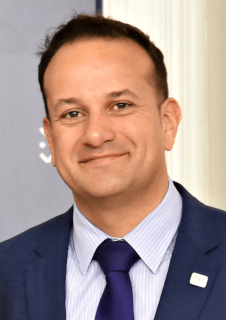
In May 2017, Kenny announces that he is planning to resign as Taoiseach and Fine Gael leader. Varadkar stands in the leadership election to replace him. Although more party members vote for his opponent, Simon Coveney, he wins by a significant margin among Fine Gael members of the Oireachtas and is elected leader on June 2. Twelve days later, he is appointed Taoiseach, and at 38 years of age becomes the youngest person to hold the office. He is Ireland’s first, and the world’s fourth, openly gay head of government and the first Taoiseach of Indian heritage.
In 2020, Varadkar calls a general election to be held in February. While polls in 2019 have suggested a favourable result for Fine Gael, they ultimately come in third in terms of seats and votes, behind Fianna Fáil and Sinn Féin, with 35 seats, a loss of 15 seats for the party from the previous general election, when it had finished in first position. He resigns and is succeeded by Micheál Martin as Taoiseach. He is subsequently appointed Tánaiste and Minister for Enterprise, Trade and Employment as part of a three-party coalition composed of Fianna Fáil, Fine Gael and the Green Party.
Quinn founds the national supermarket chain Superquinn (originally Quinn’s Supermarkets), of which he remains non-executive president for some years after his family sells out their interest in August 2005 for over €400 million. Superquinn is known for its focus on customer service and pioneers a number of innovations, including Ireland’s first supermarket loyalty card in 1993, SuperClub. It also introduces self-scanning of goods by customers in a number of its outlets. Superquinn becomes the first supermarket in the world to guarantee the absolute traceability of all its beef from pasture to plate, using DNA TraceBack, a system developed at Trinity College, Dublin by IdentiGEN.
Quinn becomes the chairman of the Interim Board for Posts and serves as chairman of its successor An Post (the Irish postal administration) until 1989. He also serves on several other public authorities and boards. From 1993 to 1998, he chairs the steering committee which oversees the development of the Leaving Certificate Applied. In 2006, he is appointed an Adjunct Professor in Marketing at National University of Ireland Galway. He is also chairman of Springboard Ireland.
Quinn is a former President of EuroCommerce, the Brussels-based organisation which represents the retail, wholesale and international trade sectors in Europe. He also serves on the board of directors of CIES, the Food Business Forum based in Paris, as well as the American-based Food Marketing Institute.
In 2009, Quinn works with independent shops and helps them to revamp, modernise and stave off stiff competition from multi-national retailers. It airs as RTÉ‘s six-part television series, Feargal Quinn’s Retail Therapy. A second series airs in 2011, and a third series airs in 2012. In 2011, he fronts RTÉ’s Local Heroes campaign in Drogheda, County Louth, which is an assembled team of experts to kick-start the local economy. It airs as RTÉ One‘s six-part television series, Local Heroes – A Town Fights Back.
Quinn is first elected as a senator in 1993 from the National University of Ireland constituency and is re-elected in 1997, 2002, 2007 and 2011. He is a member of the Joint Oireachtas Committee on European Affairs, the Joint Committee on Finance and Public Service and is an Oireachtas member of the National Economic and Social Forum, along with the Joint Committee on Jobs and Innovation.
Quinn is one of the co-founders and is a driving force behind Democracy Matters – a civil society group that is formed to oppose the Government’s plans to abolish Seanad Éireann. In May 2013, with Senators Katherine Zappone and Mary Ann O’Brien, he introduces the Seanad Bill 2013 to reform the system of electing the elected members of Seanad Éireann (as provided for in Article 18.10 of the Constitution of Ireland) through a one-person, one vote franchise. The Seanad Bill 2013 succeeds in being passed at Second Stage in the Seanad. During the Seanad abolition referendum campaign, the Bill demonstrates to the electorate, in a very palpable way, that reform of the Seanad is achievable if they vote for its retention. In a referendum held in October 2013 on the Abolition of Seanad Éireann, the people vote to retain the Seanad by 51.7%.
In 2014, Quinn reveals that since being first elected to Seanad Éireann, he has donated his entire salary to charity and in more recent years he has refused to accept any salary. In March 2015, he opposes the Marriage Equality bill in the Seanad, and votes ‘No’ in the referendum. He serves as Chairman of the Independent Alliance. He does not contest the 2016 Seanad election.
Quinn dies peacefully at his home in Howth, County Dublin, on April 24, 2019, following a short illness. His funeral Mass takes place at St. Fintan’s Church in Sutton, Dublin. In attendance is PresidentMichael D. Higgins, a representative for TaoiseachLeo Varadkar, Minister for Children Katherine Zappone, Senator Michael McDowell, and a host of other current and former politicians, business figures, and past colleagues of the “Superquinn family.” Fittingly, the coffin is carried from the church to the tune of Frank Sinatra’s “My Way.”