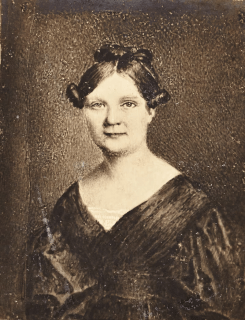
Lady Harriet Kavanagh, Irish artist, traveler, and antiquarian, described as a “woman of high culture and of unusual artistic power,” is born Lady Harriet Margaret Le Poer Trench on October 13, 1799. She is believed to be the first Irish female traveler to Egypt.
Kavanagh is the second daughter of Richard Le Poer Trench and Henrietta Margaret Le Poer Trench (née Staples), with three brothers and three sisters. She marries Thomas Kavanagh of Borris House, County Carlow, on February 28, 1825, as his second wife. The couple has four children, three sons Charles, Thomas, Arthur, and one daughter, Harriet or “Hoddy.”
Kavanagh’s third son, Arthur MacMorrough Kavanagh, is born without fully formed limbs. Some attribute the disability to a peasant’s curse, while others speculate it is due to Lady Kavanagh taking laudanum during her pregnancy. She refuses to treat her son differently to his siblings, and with the help of local doctor Francis Boxwell, raises him as a normal child. During his initial education, she teaches Arthur herself, teaching him to paint and then write by holding brushes and pens in his mouth. With the help of the surgeon Sir Philip Crampton, she has a mechanical wheelchair constructed for Arthur, and also encourages him to ride horses and engage in other outdoor activities. Her husband dies after twelve years of marriage, in 1837.
In 1846, Kavanagh takes her children to learn French in Saint-Germain-en-Laye, later traveling to Rome. As an antiquarian, she also wants to visit Egypt and the Holy Land, setting off on the long journey from Marseille in October 1846. Accompanying her are her daughter, Harriet, her two sons, Thomas and Arthur, their tutor, the Rev. David Wood, and a maid, Miss Hudson. In Cairo, she hires two feluccas with Arab crews, and visits archaeological sites along the Nile, such as Thebes, Karnak, and the Nubia region. From there, she visits sites of biblical interest, including Tyre, Sidon, and Roda Island. She negotiates with Bedouin chiefs in Aqaba, hiring camels and Bedouin guides to travel to Hebron. She visits harems and a slave market and records the journey’s incidents in her diary, including her son Arthur’s accidental near drowning when he falls off their boat while fishing.
While visiting Jerusalem in Easter 1847, Kavanagh bears witness to a confrontation over the control of holy places between Roman and Orthodox Catholics priests. She goes on to visit Petra, the Sinai Peninsula, Beirut, Smyrna, and Constantinople. The group spends a second winter in Egypt before traveling to the Black Sea before returning to Marseilles in April 1848. Much of these journeys are conducted on horse or camel-back, with one desert crossing taking 36 days. She later comments on her travels as a woman, stating “quite enough danger to make it a very exciting business.”
In 1850 and 1852, Kavanagh travels to Corfu, returning to Borris with samples of Greek lace. She teaches a number of her tenants to copy these designs, which lead to the establishment of a local lace-making industry. She is elected to the Kilkenny Archaeological Society in 1851.
Kavanagh moves to Ballyragget Lodge, County Kilkenny, in 1860, dying there on July 14, 1885. She is buried in St. Mullin’s Abbey, Borris in County Carlow. She documented her travels in journals, with drawings and paintings of the sites she visited. These are held by the Kavanagh family, along with an oil portrait and a self-portrait. Her collection of roughly 300 Egyptian antiquities were donated to the Royal Society of Antiquaries of Ireland after her death. These collections were later moved to the National Museum of Ireland and form a core element of the Museum’s Egyptian collection. Copies of two of her watercolours, a self-portrait, and a landscape are on display in the Museum.
Stoney is born into an old-established Anglo-Irish scientific family at 40 Wellington Road, Ballsbridge, Dublin, on January 6, 1869. The daughter of George Johnstone Stoney, FRS, an eminent physicist who coins the term “electron” in 1891 as the “fundamental unit quantity of electricity,” and his wife and cousin, Margaret Sophia Stoney. One of her two brothers, George Gerald, is an engineer and a Fellow of the Royal Society (FRS). One of her two sisters, Florence Stoney, is a radiologist and receives an OBE. Her cousin is the Dublin-based physicist George Francis FitzGerald FRS (1851–1901), and her uncle Bindon Blood Stoney FRS is Engineer of Dublin Port, renowned for building a number of the main Dublin bridges and developing the Quayside.
Stoney demonstrates considerable mathematical talent and gains a scholarship at Newnham College, Cambridge, where she achieves a First in the Part I Tripos examination in 1893. However, she is not awarded a University of Cambridge degree as women are excluded from graduation until 1948. During her time at Newnham, she is in charge of the College telescope. She is later awarded a BA and an MA from Trinity College Dublin, after they accept women in 1904.
Following the 1876 Medical Act, it is illegal for academic institutions to prevent access to medical education based on gender. The first medical school for women in Britain is established in 1874 by Dr. Sophia Jex-Blake in anticipation of this law. The London School of Medicine for Women quickly becomes part of the University of London, with clinical teaching at the Royal Free Hospital. Stoney’s sister Florence is a student at the school, graduates in medicine with honours in 1895 (MB BS) and obtains her MD in 1898. Meanwhile, Stoney gains an appointment as a physics lecturer at the school in 1899. Her first tasks are to set up a physics laboratory and design the physics course. The laboratory is planned for 20 students, and the course content is pure physics, as required by university regulations. It includes mechanics, magnetism, electricity, optics, sound, heat and energy. In her obituary in The Lancet, an ex-student of hers notes: “Her lectures on physics mostly developed into informal talks, during which Miss Stoney, usually in a blue pinafore, scratched on a blackboard with coloured chalks, turning anxiously at intervals to ask ‘Have you taken my point?’. She was perhaps too good a mathematician … to understand the difficulties of the average medical student, but experience had taught her how distressing these could be”.
In 1901, the Royal Free Hospital appoints Florence into a new part-time position of medical electrician. The following April, the two sisters open a new x-ray service in the electrical department. During their time at the Royal Free Hospital, the two sisters actively support the women’s suffrage movement, though oppose the direct violent action with which it is later associated.
During her time at the school, Stoney also plays a central role in the British Federation of University Women (BFUW). She is elected treasurer, in her absence, at the first executive meeting on October 9, 1909, a position she holds until the end of May 1915. She becomes increasingly engaged with the political lobbying of the Federation. At the executive meeting on October 19, 1912, she proposes the names of two members for a subcommittee to secure the passing into law of a bill to enable women to become barristers, solicitors or parliamentary agents. The legislation is eventually enacted after the war within the Sex Disqualification (Removal) Act 1919.
Stoney resigns her post at the school in March 1915 and it is recorded that “with due regret and most unwillingly a change is desirable in the physics lectureship.” She is offered £300 on tendering her resignation.
Both Stoney and Florence offer their services to the British Red Cross at the War Office in London, to provide a radiological service to support the troops in Europe, on the day Britain declares war. Their offer is refused, because they are women. Florence sets up her own unit with the Women’s Imperial Service League and spends the next 6 months in Europe. Stoney organises supplies from London where she also serves on the League’s committee. Florence returns to London at the time Stoney resigns from the London School of Medicine for Women. She contacts the Scottish Women’s Hospitals (SWH), an organisation formed in 1914 to give medical support in the field of battle and financed by the women’s suffrage movement. The organisation has gained agreement to set up a new 250-bed tented hospital at Domaine de Chanteloup, Sainte-Savine, near Troyes (France), funded by the Cambridge women’s colleges of Girton and Newnham and it becomes her role to plan and operate the x-ray facilities. She establishes stereoscopy to localise bullets and shrapnel and introduces the use of x-rays in the diagnosis of gas gangrene, interstitial gas being a mandate for immediate amputation to give any chance of survival.
The hospital is near the front line and, in her own words, by September 1915, “the town had been evacuated, the station had been mined, and we heard the heavy guns ever going at nighttime.” The unit is entirely female, except for two part-time male drivers, and her technical assistant, Mr. Mallett.
They are assigned to the Corps Expéditionnaire d’Orient and ordered to move to Serbia. After boarding the steamship Mossoul in Marseille, they reach Salonika (known as Thessaloniki in modern Greece) on November 3, where they take the night train north to Ghevgheli (now Gevgelija in modern North Macedonia), on the Serbian side of the Greek border. They set up a hospital in an unused silk factory where they treat 100 patients with injuries ranging from frostbite to severe lung and head wounds. Following defeats at the hands of Bulgarian forces, Stoney and her staff retreat to Salonika by December 6, 1916. Eleven days later, they have re-established the hospital on a drained low swamp by the sea, and by New Year’s Day 1917 she has the lights on and the x-rays working. Despite the lack of equipment and resources, she establishes an electrotherapy department and various equipments for the muscular rehabilitation of the soldiers in their care. She also assists with problems on two British hospital ships, on which the x-ray systems have been damaged during a storm and gives support to the SWH unit in Ostrovo (now Arnissa on Lake Vegoritida formerly lake Ostrovo in Northern Greece), which arrives during September 1916. She has a break for sick leave in December 1917 and returns the following summer. She applies for an appointment as an army camp radiologist in Salonika, but her demand is blocked by the War Office.
In October 1917, Stoney returns to France to lead the x-ray departments at the SWH hospitals of Royaumont and Villers-Cotterêts. In March 1918, she has to supervise a camp closure and retreat for the third time, when Villers-Cotterêts is overrun by the German troops. During the final months of the war the fighting intensifies and there is a steep increase in workload. In the month of June alone the x-ray workload peaks at over 1,300, partly because of an increased use of fluoroscopy.
On returning to England, Stoney takes a post as lecturer in physics in the Household and Social Science department at King’s College for Women which she holds until retirement in 1925. After leaving King’s she moves to Bournemouth, where she lives with her sister Florence, who is suffering from spinal cancer, dying in 1932.
During her retirement, Stoney resumes her work with the BFUW for which she had acted as the first treasurer before the war. She becomes one of the earliest (and oldest) members of the Women’s Engineering Society and plays an active part in the organisation until shortly before her death. She travels widely and, in 1934, she speaks to the Australian Federation of University Women on the subject of women in engineering, highlighting the contribution made by women workers during the war. In 1936, she establishes the Johnstone and Florence Stoney Studentship in the BFUW, for “research in biological, geological, meteorological or radiological science undertaken preferably in Australia, New Zealand or South Africa.” The studentship is now administered by Newnham College, Cambridge, and supports clinical medical students going abroad for their elective period. The declaration of Trust is dated February 11, 1942 and the Johnstone And Florence Stoney Studentship Fund Charity is registered on March 25, 1976.
Stoney dies on June 25, 1938, at age 69, and obituaries are printed in both the scientific and medical press – Nature, The Lancet, The Woman Engineer and national newspapers in England, The Times and Australia.
Stoney is remembered for her considerable bravery and resourcefulness in the face of extreme danger, and her imagination in contributing to clinical care under the most difficult conditions of war. As a strong advocate of education for women, she enables young graduate women to spend time on research overseas and another to enable physicists to enter medical school thanks to the fund she created. Through her work and engagements, she is remembered as a pioneer of medical physics.
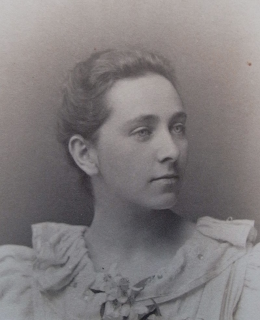
(Pictured: Edith Anne Stoney during her time in Cambridge in the early 1890s)

 seamus dubhghaill