seamus dubhghaill

Promoting Irish Culture and History from Little Rock, Arkansas, USA


Leave a comment

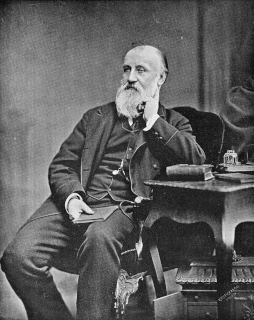
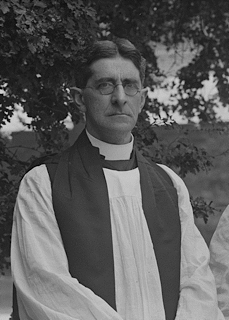
Death of John Gregg, Church of Ireland Archbishop of Armagh

John Allen Fitzgerald Gregg, Church of Ireland Archbishop of Armagh, dies at his home in Dún Laoghaire, County Dublin, on May 2, 1961.

Gregg is born on July 4, 1873, at North Cerney, Gloucestershire, England, into a distinguished family, youngest and only son among four children of the Rev. John Robert Gregg, vicar of Deptford, Kent, and Sarah Caroline Frances Gregg (née French), sister of Thomas Valpy French, Bishop of Lahore, India (in Pakistan since 1947). His grandfather, John Gregg, is Bishop of Cork. He is educated at Bedford School, enters Christ’s College, Cambridge, on a foundation scholarship in 1891, and graduates BA in 1894, distinguishing himself in sport and scholarship and winning the Hulsean prize in 1896 for his thesis Decian persecution (1897), taking his MA in 1897, BD in 1909, and DD in 1929. From the University of Dublin he graduates BD ad eundem in 1911 and DD in 1913.

His uncle Robert Gregg, Archbishop of Armagh, welcomes his decision to enter the church, but not his proposal to settle in Ireland, warning him that he will “find it very rough.” Ordained deacon at St. Luke’s Church, Belfast in 1896, he is successively appointed curate at Ballymena, County Antrim in 1896, curate and residentiary preacher at Saint Fin Barre’s Cathedral in Cork, County Cork, in 1899, and rector of St Michael’s, Blackrock, Cork from 1906 to 1912. On his appointment as Archbishop King’s professor of divinity at Trinity College Dublin (TCD) in 1911, he moves to Dublin and becomes canon of St. Patrick’s Cathedral, Dublin, chaplain to the Lord Lieutenant of Ireland from 1912 to 1915, and examining chaplain to the Archbishop of Dublin from 1913 to 1915, before joining the episcopal bench as Bishop of Ossory, Ferns and Leighlin from 1915 to 1920.

Though Gregg is instinctively conservative, his awareness of contemporary trends make him responsive to demands for change: he supports the resolution for women to hold parochial office and presents a petition to the General Synod in 1914, signed by 1,400 women. Though the motion is lost, he perseveres undaunted, and a bill for the ecclesiastical enfranchisement of women is finally carried in 1920. A unionist, he is also one of three Anglican and seventeen Catholic bishops to sign the declaration against partition in 1917, which is organised by the Catholic Bishop of DerryCharles McHugh.

From the 1920s the Irish church is dominated by Gregg, first as Archbishop of Dublin (1920–39) and later as Archbishop of Armagh and Primate of All Ireland (1939–59). He provides stability to the church during a turbulent period of political and social change and is outspoken in defence of its interests, pragmatically espousing policies that will lead to the greater integration of the Protestant community into the new Irish state, as in his acceptance of the teaching of compulsory Irish in national schools. Despite a declining Protestant community in the south of Ireland, he maintains the unity of the church, overcoming the political division of the country into two entities. He regrets constitutional change but pledges the loyalty of the church to the Irish Free State. While recognising that the Protestant ethos is different from that of the majority of Irishmen, he maintains that “whatever our religious or political outlook may be, here is our home, and we have a right to be here.” He is elected to the first Irish Free State senate, and is subsequently consulted by Éamon de Valera, who later describes him as “a most learned and kindly gentleman, and . . . a highly valued friend,” in framing the text of the 1937 constitution. In 1949, he adapts, albeit with sadness, the state prayers to fit the republican form of government, observing that “the republic is a fact” and that “in our prayers, above all, there must be reality.”

Gregg is an able administrator, and his courage and integrity in facing difficult situations and his scholarship and devotion to the church earn him respect in the councils of the wider Anglican communion. He is known as “the churchman’s bishop” for his emphasis on doctrinal orthodoxy, ecclesiastical discipline, and loyalty to the clergy. Though conservative in his approach to church unity, he seeks closer relations between the Christian churches and frequently visits the reformed churches of the Iberian Peninsula, where a portrait plaque is unveiled in 1950 in St. John’s Church, Vila Nova de Gaia, Portugal. A baptistry in St. Paul’s Cathedral, Lisbon, is dedicated to his memory. Well known in England as a writer and preacher, he is appointed select preacher at the University of Cambridge (1916, 1930, 1936) and the University of Oxford (1946, 1947) and supports the institution of annual theological lectures at Queen’s University Belfast (QUB). His publications include Epistle of St. Clement of Rome (1899) and The Primitive Faith and Roman Catholic Developments (1909) – a minor classic which is used as a textbook for ordinands of the Church of England. He writes the introduction and notes to the revised version of the Wisdom of Solomon for the Cambridge Bible for Schools (1909) and publishes sermons and articles in religious journals. Elected Member of the Royal Irish Academy (MRIA) in 1914, he is elected to honorary fellowship in 1934 by Christ’s College, Cambridge, is awarded an honorary Doctor of Divinity (DD) in 1949 by QUB, and is created Order of the Companions of Honour (CH) in 1957.

A commanding figure, tall, thin, with raven-black hair, piercing eyes, and fine features, Gregg has an air of sacerdotal austerity, lightened on occasion by his dry sense of humour. He maintains a well regulated daily timetable and keeps a diary, writing his most personal thoughts in Greek. He makes time for recreation, a daily walk of two miles, tennis, and (from 1929) sailing, and holidays in Ireland and on the Continent. He has a great love of English literature and church music. In 1959, he retires to the Woodhouse, Rostrevor, County Down. Though incapacitated by blindness, deafness, and lameness, he never complains, and according to his wife, his life of prayer is enriched. He dies on May 2, 1961, at his home and is buried in Enniskerry, County Wicklow, beside his first wife and son.

Gregg marries Anna Alicia Jennings on November 26, 1902. They have two sons and two daughters. Anna dies in 1945. On January 22, 1947, he marries secondly Leslie Alexandra, daughter of the Rev. T. J. McEndoo, dean of Armagh, who officiates at the marriage of his daughter and of his archbishop.

(From: “Gregg, John Allen Fitzgerald” by Helen Andrews, Dictionary of Irish Biography, http://www.dib.ie, October 2009)

Leave a comment

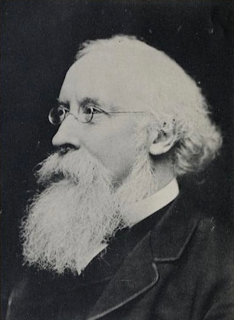
Death of Charles Villiers Stanford, Composer & Conductor

Sir Charles Villiers Stanfordcomposer, music teacher, and conductor, dies at his home in London on March 29, 1924, following a stroke almost two weeks earlier.

Stanford is born in Dublin into a well-off and highly musical family on September 30, 1852, the only son of John James Stanford, a prominent Dublin lawyer, Examiner to the Court of Chancery in Ireland and Clerk of the Crown for County Meath, and his second wife, Mary (née Henn). He is educated at the University of Cambridge before studying music in Leipzig and Berlin. He is instrumental in raising the status of the Cambridge University Musical Society, attracting international stars to perform with it.

While still an undergraduate, Stanford is appointed organist of Trinity College, Cambridge. In 1882, at the age of 29, he is one of the founding professors at the Royal College of Music, where he teaches composition for the rest of his life. From 1887 he is also Professor of Music at Cambridge. As a teacher, he is skeptical about modernism and bases his instruction chiefly on classical principles as exemplified in the music of Johannes Brahms. Among his pupils are rising composers whose fame go on to surpass his own, such as Gustav Holst and Ralph Vaughan Williams. As a conductor, he holds posts with the Bach Choir and the Leeds Triennial Music Festival.

Stanford composes a substantial number of concert works, including seven symphonies, but his best-remembered pieces are his choral works for church performance, chiefly composed in the Anglican tradition. He is a dedicated composer of opera, but none of his nine completed operas has endured in the general repertory. Some critics regard him, together with Hubert Parry and Alexander Mackenzie, as responsible for a renaissance in music from the British Isles. However, after his conspicuous success as a composer in the last two decades of the 19th century, his music is eclipsed in the 20th century by that of Edward Elgar as well as former pupils.

In September 1922, Stanford completes the sixth Irish Rhapsody, his final work. Two weeks later he celebrates his 70th birthday and thereafter his health declines. On March 17, 1924, he suffers a stroke and dies on March 29 at his home in London, survived by his wife and children. He is cremated at Golders Green Crematorium on April 2 and his ashes are buried in Westminster Abbey the following day.

Stanford’s last opera, The Travelling Companion, composed during World War I, is premiered by amateur performers at the David Lewis Theatre, Liverpool in 1925 with a reduced orchestra. The work is given complete at Bristol in 1928 and at Sadler’s Wells Theatre, London, in 1935.

Stanford receives many honours, including honorary doctorates from University of Oxford (1883), University of Cambridge (1888), Durham University (1894), University of Leeds (1904), and Trinity College, Dublin (1921). He is knighted in 1902 and in 1904 is elected a member of the Prussian Academy of Arts, Berlin.


Leave a comment

Birth of Whitley Stokes, Irish Lawyer & Celtic Scholar

Whitley StokesCSICIEFBA, Irish lawyer and Celtic scholar, is born at 5 Merrion Square, Dublin, on February 28, 1830.

Stokes is a son of William Stokes (1804–78), and a grandson of Whitley Stokes, a physician and anti-Malthusian (1763–1845), each of whom is Regius Professor of Physic at Trinity College Dublin (TCD). His sister, Margaret Stokes, is a writer and archaeologist.

Stokes is educated at St. Columba’s College where he is taught the Irish language by Denis Coffey, author of Primer of the Irish Language. Through his father he comes to know the Irish antiquaries Samuel FergusonEugene O’CurryJohn O’Donovan and George Petrie. He enters Trinity College Dublin in 1846 and graduates with a BA in 1851. His friend and contemporary Rudolf Thomas Siegfried (1830–63) becomes assistant librarian at TCD in 1855, and the college’s first professor of Sanskrit in 1858. Stokes likely learns both Sanskrit and comparative philology from Siegfried, thus acquiring a skill-set rare among Celtic scholars in Ireland at the time.

Stokes qualifies for the bar at Inner Temple. His instructors in the law are Arthur CayleyHugh McCalmont Cairns, and Thomas Chitty. He becomes an English barrister on November 17, 1855, practicing in London before going to India in 1862, where he fills several official positions. In 1865 he marries Mary Bazely by whom he has four sons and two daughters. One of his daughters, Maïve, compiles a book of Indian Fairy Tales in 1879 when she is 12 years old, based on stories told to her by her Indian ayahs and a man-servant. It also includes some notes by Mrs. Mary Stokes. Mary dies while the family is still living in India. In 1877, Stokes is appointed legal member of the viceroy’s council, and he drafts the codes of civil and criminal procedure and does much other valuable work of the same nature. In 1879 he becomes president of the commission on Indian law. Nine books he writes on Celtic studies are published in India. He returns to settle permanently in London in 1881 and marries Elizabeth Temple in 1884. In 1887 he is made a Companion of the Order of the Star of India (CSI), and two years later an Order of the Indian Empire (CIE). He is an original fellow of the British Academy, an honorary fellow of Jesus College, Oxford and foreign associate of the Institut de France.

Stokes is perhaps most famous as a Celtic scholar, and in this field he works both in India and in England. He studies Irish, Breton and Cornish texts. His chief interest in Irish is as a source of material for comparative philology. Despite his learning in Old Irish and Middle Irish, he never acquires Irish pronunciation and never masters Modern Irish. In the hundred years since his death he continues to be a central figure in Celtic scholarship. Many of his editions have not been superseded during this time and his total output in Celtic studies comes to over 15,000 pages. He is a correspondent and close friend of Kuno Meyer from 1881 onwards. With Meyer he establishes the journal Archiv für celtische Lexicographie and is the co-editor, with Ernst Windisch, of the Irische Texteseries. In 1876 his translation of Vita tripartita Sancti Patricii, along with a written introduction, is published.

In 1862 Stokes is awarded the Cunningham Medal by the Royal Irish Academy.

Stokes dies at his London home, 15 Grenville Place, Kensington, on April 13, 1909, and is buried in Paddington Old Cemetery, Willesden Lane, where his grave is marked by a Celtic cross. Another Celtic cross is erected as a memorial to him at St. Fintan’s Cemetery, Sutton, Dublin. The Gaelic League newspaper An Claidheamh Soluis calls him “the greatest of the Celtologists” and expresses pride that an Irishman has excelled in a field which is at that time dominated by continental scholars. In 1929 the Canadian scholar James F. Kenney describes him as “the greatest scholar in philology that Ireland has produced, and the only one that may be ranked with the most famous of continental savants.”

A conference entitled “Ireland, India, London: The Tripartite Life of Whitley Stokes” takes place at the University of Cambridge on September 18-19, 2009. The event is organised to mark the centenary of Stokes’s death. A volume of essays based on the papers delivered at this conference, The Tripartite Life of Whitley Stokes (1830–1909), is published by Four Courts Press in autumn 2011.

In 2010 Dáibhí Ó Cróinín publishes Whitley Stokes (1830–1909): The Lost Celtic Notebooks Rediscovered, a volume based on the scholarship in Stokes’s 150 notebooks which had been resting unnoticed at the Leipzig University LibraryLeipzig since 1919.


Leave a comment

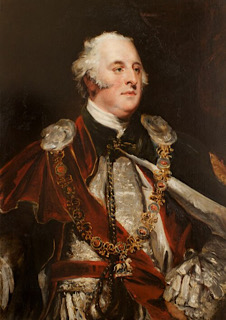
Birth of John Pratt, 1st Marquess Camden

John Jeffreys Pratt, 1st Marquess Camden, a British politician, is born at Lincoln’s Inn FieldsLondon, on February 11, 1759. He is styled Viscount Bayham from 1786 to 1794 and known as the 2nd Earl Camden from 1794 to 1812. He serves as Lord Lieutenant of Ireland in the revolutionary years 1795 to 1798 and as Secretary of State for War and the Colonies between 1804 and 1805.

Pratt is born the only son of the barrister Charles Pratt, 1st Earl Camden, and Elizabeth, daughter of Nicholas Jeffreys, of The Priory, Brecknockshire, Wales. He is baptised on the day Halley’s Comet appears. In 1765, his father is created Baron Camden, at which point he becomes The Hon. John Pratt. He is educated at the University of Cambridge (Trinity College).

In 1780, Pratt is elected Member of Parliament for Bath and obtains the position of Teller of the Exchequer the same year, a lucrative office which he keeps until his death, although after 1812 he refuses to receive the large income arising from it. He serves under William Perry, 2nd Earl of Shelburne, as Lord of the Admiralty between 1782 and 1783 and in the same post under William Pitt the Younger between 1783 and 1789, as well as a Lord of the Treasury between 1789 and 1792.

In 1786, Pratt’s father is created Earl Camden, at which point he becomes known by one of his father’s subsidiary titles as Viscount Bayham.

In 1793, Pratt is sworn of the Privy Council. In 1794 he succeeds his father as 2nd Earl Camden, and the following year he is appointed Lord Lieutenant of Ireland by Pitt.

As an opponent of parliamentary reform and of Catholic emancipation, Pratt’s term of office is one of turbulence, culminating in the Irish Rebellion of 1798. His refusal in 1797 to reprieve the United Irishman William Orr, convicted of treason on the word of one witness of dubious credit (and for which his own sister, Frances Stewart, Marchioness of Londonderry, petitions him), arouses great public indignation. To break the United Irish conspiracy, he suspends habeas corpus and unleashes a ruthless martial law campaign to disarm and break up the republican organization.

Pratt resigns from office in June 1798, to be replaced with Charles Cornwallis, 1st Marquess Cornwallis, who oversees the military defeat of the rebellion. In 1804, Pratt becomes Secretary of State for War and the Colonies under Pitt, and in 1805 Lord President of the Council, an office he retains until 1806. He is again Lord President from 1807 to 1812, after which date he remains for some time in the cabinet without office. In 1812 he is created Earl of Brecknock and Marquess Camden.

The enforced resignation from the Cabinet of Robert Stewart, Viscount Castlereagh, the stepson of his sister Frances (Lady Londonderry), to whom he has always been personally close, in September 1809, leads to a series of bitter family quarrels, when it becomes clear that Pratt has known for months of the plan to dismiss Stewart, but has given him no warning. Stewart himself regards Pratt as “a weak friend,” not an enemy, and they are eventually reconciled. Other members of the Stewart family, however, never forgive Pratt for what they regard as his disloyalty.

Pratt is also Lord Lieutenant of Kent between 1808 and 1840 and appoints himself Colonel of the Cranbrook and Woodsgate Regiment of Local Militia in 1809. He is Chancellor of the University of Cambridge between 1834 and 1840. He is made a Knight of the Garter in 1799 and elected a Fellow of the Society of Antiquaries of London in 1802.

Pratt marries Frances, daughter of William Molesworth, in 1785. She dies at Bayham AbbeySussex, in July 1829. He survives her by eleven years and dies at SealKent, on October 8, 1840, aged 81. He is succeeded by his only son, George.

The family owns and lives in a house located at 22 Arlington Street in St. James’s, a district of the City of Westminster in central London, which adjoins The Ritz Hotel. In the year of his death, he sells the house to Henry Somerset, 7th Duke of Beaufort.


Leave a comment

Death of Arthur Hill, 3rd Marquess of Downshire

Arthur Blundell Sandys Trumbull Hill, 3rd Marquess of Downshire KP, an Anglo-Irish peer, styled Viscount Fairford from 1789 until 1793 and Earl of Hillsborough from 1793 to 1801, dies on September 12, 1845, in Blessington, County Wicklow.

Hill is born in Hanover Square, on October 8, 1788, the eldest son of Arthur Hill, 2nd Marquess of Downshire, and his wife, Mary Sandys. He becomes Marquess of Downshire on the early death of his father in 1801. He is educated at Eton College and Christ Church, Oxford, gaining his MA in 1809 and a DCL in 1810.

During his early political career, Hill is identified with the Whigs and supports the reform of Parliament. After the Grey Ministry comes to power, he receives a succession of appointments, becoming Colonel of the South Down Militia on March 25, 1831, and carrying the second sword at the coronation of William IV on September 8. He is appointed a deputy lieutenant of Berkshire on September 20, Lord Lieutenant of Down on October 17 (a new office replacing the Governor of Down), and finally a Knight of the Order of St Patrick on November 24, 1831. He receives an honorary LL.D. from the University of Cambridge on July 6, 1835.

Hill is a very strong supporter of the Irish language, and is president of the Ulster Gaelic Society (est. 1830). In this capacity he plays an important role in helping preserve records of the language, poetry, folk and song collections and much else.

Hill is disliked by Elizabeth Smith, diarist at Baltyboys HouseCounty Wicklow, who feels snubbed by him when she and her husband first move into the area. Writing of him after his death she recalls “The late Lord never called upon me when I first came here although the Colonel waited upon him. The Colonel never went near him again.”

High-minded, if also at times high-handed in manner and self-important, Hill works hard himself and expects all his employees and tenants to be equally conscientious. Naturally, he is often disappointed. He is particularly concerned about his failure, despite all efforts and exhortations, to make his southern estates as efficient and well behaved as those in the north. Though an absentee owner in the south, he visits both Blessington and Edenderry regularly. It is during one of these periodic tours of inspection that he drops dead at Blessington on September 12, 1845. He is buried in St. Malachy Parish Churchyard at Royal Hillsborough, County Down. The funeral attracts an enormous crowd of mourners and is reported at some length in The Illustrated London News. His memory is perpetuated in an impressive pillar monument, with his statue on top, erected at Hillsborough in 1848.


Leave a comment

Birth of Standish Hayes O’Grady, Celticist & Antiquarian

Standish Hayes O’Grady (Irish: Anéislis Aodh Ó Grádaigh), Celticist and antiquarian, is born on May 19, 1832, in Erinagh House, Castleconnell, County Limerick.

O’Grady is the son of Admiral Hayes O’Grady and his wife, Susan Finucane. His father is one of the chiefs of the Cinél Donnghaile, the collective name of the O’Gradys. He is a nephew of Standish O’Grady, 1st Viscount Guillamore, and a cousin of the novelist Standish James O’Grady, with whom he is sometimes confused. As a child he is fostered in Coonagh, County Limerick, an Irish-speaking area. There he learns Irish and comes into contact with the Gaelic manuscript tradition, listening to stories read aloud from manuscripts in farmers’ houses during wakes or while carding wool. He maintains this interest in the literary tradition throughout his life.

O’Grady receives his secondary education in Rugby School in Rugby, Warwickshire, England, his name appearing in the school register for August 1846. Subsequently he attends Trinity College Dublin (TCD) from 1850 to 1854 but does not graduate. He is critical of an education system that makes no mention of Irish history and legend. During his student days he becomes a friend of the leading scholars and antiquarians, John O’DonovanGeorge Petrie and Eugene O’Curry, as well as the bookseller and publisher, John O’Daly. At this time he begins copying Gaelic manuscripts under their direction. He purchases from O’Daly in 1853 a collection in Irish of “tales and other pieces, in prose and verse” which he presents to the British Museum in 1892. He is a founding member of the Ossianic Society in 1853 and becomes its president in 1856. O’Curry attacks him publicly in a review in The Tablet, questioning his ability as a scholar. The publication of the society’s third volume prompts the review.

In 1857 O’Grady moves to the United States where he remains for thirty years. In 1901 he contributes an essay on Anglo-Irish Aristocracy to a collection entitled Ideals in Ireland edited by Augusta, Lady Gregory.

O’Grady is competent in a number of languages including Arabic and Scots Gaelic, and the University of Cambridge awards him a Doctor of Letters degree in 1893.

O’Grady is a bachelor all his life and dies on October 16, 1915, in his home in Ballinruan, Hale, Cheshire, England. He is buried in Altrincham cemetery.


Leave a comment

Death of Sir Robert Prescott Stewart, Organist, Conductor & Composer

Sir Robert Prescott Stewart, organist, conductor, composer, teacher, and academic, dies in Dublin on March 24, 1894. He is one of the most influential (classical) musicians in 19th-century Ireland.

Stewart is born on December 16, 1825, the second of two sons of Charles Frederick Stewart of 6 Pitt Street (now Balfe Street), Dublin, librarian of King’s Inns. Nothing is known of his mother other than that she studies music with one of the Logier family, presumably the noted military musician and piano teacher Johann Bernhard Logier, a resident of Dublin from 1809.

Stewart is educated at Christ Church Cathedral school in Dublin, where he is a chorister. He begins to accompany choral services in his early teens, and in 1844 is appointed organist of Christ Church Cathedral and the Trinity College Dublin (TCD) chapel. In addition, in 1852 he becomes de facto organist of St. Patrick’s Cathedral, and holds all three positions concurrently for the rest of his life.

Stewart’s first conducting appointment is with the Dublin University Choral Society in 1846, to which he later adds similar appointments in Dublin, Bray, and Belfast. He is active as a teacher, both privately and from 1869 at the Royal Irish Academy of Music (RIAM), and as a critic with the Dublin Daily Express. On occupying the University of Dublin‘s chair of music in 1862, he takes steps to formalise requirements for the music baccalaureate, introducing examinations in a modern language, Latin (or a second modern language), English (literature and composition), arithmetic, and music history. As a result, though not until 1878, similar examinations are introduced at the University of Oxford and the University of Cambridge. In his professorial capacity he delivers in the 1870s public lectures on Bach, Handel, Wagner, church music, music education, organology, and, most notably, Irish music, in which he reveals an uncanny knowledge of the wire-strung harp and the uilleann pipes. He also contributes entries on Irish music and musicians to the first edition of George Grove‘s A Dictionary of Music and Musicians.

By all accounts, Stewart is a very adept musician, having perfect pitch, a formidable memory, and astonishing facility in transposition. Apparently an autodidact, he is the first Irish organist to cultivate pedal technique, while in the art of improvisation both Joseph Robinson and Sir John Stainer hold him to be the equal of Mendelssohn.

Intent on broadening his musical horizons, Stewart travels widely. From 1851 he is a regular visitor to London, and from 1857 makes frequent trips to Continental Europe, attending the Beethoven and Schumann festivals at Bonn in 1871 and 1873 respectively and Wagner’s first Bayreuth Festival in 1876. On the initiative of the Dublin University Choral Society, he is conferred with the simultaneous degrees of Mus.B. and Mus.D. at a special ceremony on April 9, 1851. On February 28, 1872, he is knighted at Dublin Castle by John Poyntz Spencer, 5th Earl Spencer, a social climb that Stewart, who has no independent income, can afford only by accumulating professional appointments and by relentless private teaching. In addition to successive townhouses in the vicinity of Merrion Square, he owns a smaller property on Bray Esplanade, named Holyrood.

Among Stewart’s compositions, his disciple James Culwick lists about forty part songs (of which several win prizes), more than twenty solo songs, fifteen anthems, several church services, a quantity of shorter liturgical music, and sixteen choral cantatas with orchestra. Three of the cantatas set texts by John Francis Waller: the 24-movement A Winter Night’s Wake (1858), The Eve of St. John (1860) and Inauguration Ode for the Opening of the National Exhibition of Cork (1852) for the opening of the Irish Industrial Exhibition in Cork. Other occasional pieces are Who Shall Raise the Bell? (The Belfry Cantata) for the inauguration of Trinity College campanile in 1854, Ode to Shakespeare (1870) for the Birmingham Triennial Music Festival, Orchestral Fantasia (1872) for the Boston Peace Festival, How Shall We Close Our Gates? (1873) for the Dublin Exhibition and Tercentenary Ode (1892) for the tercentenary of Trinity College Dublin.

Though Stewart destroys many of his works, his surviving music is consistently well crafted, and the rapid decline in the popularity of the odes is at least partly attributable to the tawdry and ephemeral character of their texts. Yet despite his esteem for Wagner, he never shakes off the conservative stylistic influences of Handel, Beethoven, and Mendelssohn, and the posthumous performance of his music has been restricted almost entirely to the Dublin cathedrals.

In August 1846 Stewart marries Mary Emily Browne, the daughter of Peter Browne of Rahins House, Castlebar, County Mayo. They have four daughters, of whom the eldest dies in 1858. Following Mary’s death on August 7, 1887, he marries on August 9, 1888, Marie Wheeler of Hyde, Isle of Wight, the daughter of Joseph Wheeler of Westlands, Queenstown (now Cobh).

Stewart dies in Dublin on March 24, 1894, and is buried at Mount Jerome Cemetery alongside his first wife and eldest daughter. Portraits of him are in the possession of the Dublin University Choral Society and the Royal Irish Academy of Music (RIAM), and his statue, erected on Leinster Lawn in 1898, still stands.

(From: “Stewart, Sir Robert Prescott” by Andrew Johnstone, Dictionary of Irish Biography, http://www.dib.ie, October 2009)

Leave a comment

Death of Louise Gavan Duffy, Educator & Irish Language Enthusiast

Louise Gavan Duffy, educator, Irish language enthusiast and a Gaelic revivalist, dies in Dublin on October 12, 1969. She sets up the first Gaelscoil in Ireland. She is also a suffragist and Irish nationalist who is present in the General Post Office, the main headquarters during the 1916 Easter Rising.

Duffy is born in Nice, France, on July 17, 1884, the daughter of the Irish nationalist Sir Charles Gavan Duffy, one of the founders of The Nation and his third wife, Louise (née Hall) from Cheshire, England. Her mother dies when she is four. She is then raised in Nice by her Australian half-sisters from her father’s second marriage. It is a well-to-do and culturally vibrant home where she is exposed to political figures and ideas.

Duffy’s brother George Gavan Duffy, one of the signatories to the Anglo-Irish Treaty in 1921, is an Irish politician, barrister and judge. Her half-brother Sir Frank Gavan Duffy is the fourth Chief Justice of the High Court of Australia, sitting on the bench from 1913 to 1935. Another brother works most of his life as a missionary in the French colony of Pondicherry.

Duffy’s first visit to Ireland is in 1903, at the age of 18, when her father dies and is buried in Glasnevin Cemetery. This is when she first hears Irish spoken. She finds a grammar book in a bookshop and becomes curious. Her father was not an Irish speaker, though her grandmother in the early 1800s was likely fluent.

Duffy spends the years between 1903 and 1907 between France and England. She takes courses through Cusack’s College in London so that she can matriculate.

Duffy decides to continue her studies in Dublin but cannot afford to move until she receives a small inheritance from her grandmother on the Hall side of the family. Once in Ireland in 1907, at the age of 23, she begins her university studies, taking arts. She lives in the Women’s College, Dominican Convent, as women are not allowed to attend lectures in the Royal University of Ireland. She goes occasionally to the Gaeltacht to learn Irish. Graduating in 1911 with a Bachelor of Arts from University College Dublin (UCD), she is one of the first women to do so.

Given the lack of teachers, even without a full qualification, Duffy then teaches in Patrick Pearse‘s St. Ita’s school for girls in Ranelagh. She studies with the Dominicans again in Eccles Street, gaining a Teaching Diploma from Cambridge University.

A supporter of women’s suffrage, Duffy speaks at a mass meeting in Dublin in 1912 in favour of having the Home Rule bill include a section to grant women the vote. She also joins the Irish republican women’s paramilitary organisation Cumann na mBan, as a founding member in April 1914, serving on the provisional committee with Mary Colum, as a co-secretary.

Duffy is aware that being a suffragist and a nationalist are not necessarily the same thing, realising her involvement in Cumann na mBan is in support of nationalism. When St. Ita’s closes due to funding problems in 1912, she takes the opportunity to complete her qualifications. After receiving her Cambridge teacher’s diploma in 1913, she returns to UCD to study for a Master of Arts degree.

Duffy is in fact working on her master’s thesis during the Easter break in 1916 when the rumour comes to her that the Rising has begun in Dublin city centre. She walks to the Rebel headquarters in the GPO where she tells Pearse, one of the leaders, that she does not agree with the violent uprising.

Duffy spends all of Easter week working in the GPO kitchens with other volunteers like Desmond FitzGerald and a couple of captured British soldiers, ensuring the volunteers are cared for. The women in the GPO are given the opportunity to leave under the protection of the Red Cross on the Thursday as the shelling of the building has caused fires, but almost all of them refuse. In the end, she is among the second group of the people to leave the GPO on the Friday, tunnelling through the walls of the buildings to avoid coming under fire.

Duffy’s group makes it to Jervis Street Hospital where they spend the night. The next day, Saturday, Pearse formally surrenders. She heads for Jacob’s Biscuit Factory, another volunteer position, on the morning after the surrender, to see what is happening. There she finds a holdout of volunteers who are unaware of the surrender or that the fighting is over.

After 1916 Duffy is elected to the Cumann na mBan’s executive and in 1918 is one of the signatories to a petition for self-determination for Ireland which is presented to President Woodrow Wilson by Hanna Sheehy-Skeffington. During her time in the GPO, she had collected names of the volunteers and promised to take messages to their families. This possibly influences her in being involved in the National Aid Association and Volunteers Dependants Fund. In the aftermath of the rebellion there are 64 known dead among the volunteers, while 3,430 men and 79 women are arrested. Families need support. These organisations are able to arrange funding from the United States.

In 1917, Duffy co-founds and runs Scoil Bhríde, as a secondary school for girls in Dublin through the medium of Gaelic. It is still in operation as a primary school. Her co-founder is Annie McHugh, who later marries Ernest Blythe. The end of the Rising leads to the Irish War of Independence (1919-21). During this time, she is mostly focused on the school. However, it is raided by the military and Duffy later admits it is in fact used for rebel meetings and to safeguard documents. In October 1920, the Irish leader Michael Collins meets Archbishop Patrick Clune there in secret. In an effort to support the nationwide boycott of the police, the Royal Irish Constabulary (RIC), in 1920, she has a leaflet sent to all branches of Cumann na mBan which states in part that the RIC are the “eyes and ears of the enemy. Let those eyes and ears know no friendship.”

The war ends with the Anglo-Irish Treaty in 1921. The result is the Irish Civil War which lasts until 1923. Duffy is a supporter of the Treaty, which her brother had signed, and as such she leaves Cumann na mBan and joins Cumann na Saoirse, in which she is instrumental in founding as an Irish republican women’s organisation which supports the Pro-Treaty side.

Once the civil war is over, Duffy leaves the political arena and returns to education. She especially needs to focus on funding in the early years of the school. She works with UCD’s Department of Education from 1926, once Scoil Bhríde is recognised as a teacher training school. She publishes educational documents like School Studies in The Appreciation of Art with Elizabeth Aughney and published by UCD in 1932.

Until her retirement, Duffy also lectures on the teaching of French. She retires as principal in 1944.

Once retired, Duffy gives much of her time to the Legion of Mary and to an association which works with French au pairs in Dublin. In 1948 she is awarded an honorary Doctor of Laws by the National University of Ireland.

Recognising the importance of her first-hand experience and with a good political understanding, Duffy records her memories of the events in which she has taken part. In 1949, she gives an account of her life in relation to nationalist activities to the Bureau of Military History. She is involved in a Radio Éireann broadcast in 1956 about the women in the Rising. In 1962, she takes part in the RTÉ TV program Self Portrait broadcast on March 20, 1962. In March 1966 she gives a lecture in UCD to mark the 50th anniversary of the Rising which is published in The Easter rising, 1916, and University College Dublin (1966).

Duffy dies, unmarried, on October 12, 1969, aged 85, and is interred in the family plot in Glasnevin Cemetery.

In 2014, An Post issues a stamp to commemorate the centenary of the founding of Cumann na mBan. In 2016, for the centenary, a documentary is produced, discussing seven of the women, including Duffy, who were involved in the Easter Rising.


Leave a comment

Birth of Sir Shane Leslie, 3rd Baronet

Sir John Randolph Leslie, 3rd Baronet, Anglo-Irish diplomat and writer commonly known as Sir Shane Leslie, is born in Glaslough, County Monaghan, on September 24, 1885. He is a first cousin of Sir Winston Churchill. In 1908, he becomes a Roman Catholic and supports Irish Home Rule.

Leslie is born into a wealthy Anglo-Irish landowning family. His father is Sir John Leslie, 2nd Baronet, and his mother, Leonie Jerome, is the sister of Winston Churchill’s mother, Jennie. Both are daughters of Leonard W. Jerome. His ancestor, The Right Reverend John Leslie, Bishop of the Isles, moves from Scotland to Ireland in 1633 when he is made Bishop of Raphoe in County Donegal and is made Bishop of Clogher in 1661. Bishop Leslie is a vocal opponent of Oliver Cromwell.

Together with his brother Norman, Leslie’s early education begins at home where a German governess, Clara Woelke, is their first teacher. As children the brothers have more contact with servants than they have with their parents. His own daughter, Anita, says, “In my parents’ view schools performed the same functions that kennels did for dogs. They were places where pets could be conveniently deposited while their owners travelled.”

Leslie is educated at Ludgrove School, then Eton College and King’s College, Cambridge. While at Cambridge University he becomes a Roman Catholic and a supporter of Irish Home Rule. He adopts an anglicised Irish variant of his name (“Shane”). Not overly impressed by Eton, as a lower boy he and his roommates occupy “an old, battered warren betwixt the chapel cemetery and Wise’s horse yard … [T]he food was wretched and tasteless … As for thrashings which tyrannised rather than disciplined our house, they were excessive. Bullying was endemic and Irish boys were ridiculed, especially on St Patrick’s Day.”

Leslie refuses to send his own sons to Eton. They are educated at Roman Catholic Benedictine schools: Jack at Downside School and Desmond at Ampleforth College.

In the January 1910 United Kingdom general election Leslie stands as the Irish Parliamentary Party (IPP) candidate for the Londonderry City constituency, losing by just 57 votes. In the second general election later that year he is again narrowly defeated by the Unionist candidate.

Before World War I, Leslie travels extensively and in 1912 he marries Marjorie Ide, the youngest daughter of Henry Clay Ide, then United States ambassador to Spain and former Governor-General of the Philippines. His parents and other family members move temporarily to London at the outbreak of war.

During the war Leslie is in a British Ambulance Corps, until invalided out. He is then sent to Washington, D.C. to help the British Ambassador, Sir Cecil Spring Rice, soften Irish American hostility toward England and obtain American intervention in the war in the aftermath of the 1916 Easter Rising in Dublin and the execution of its leaders. But he also looks to Ireland for inspiration when writing and edits a literary magazine that contains much Irish verse. He becomes a supporter of the ideals of Irish nationalism, although not physical force republicanism.

In the 1918 United Kingdom general election in Ireland, the Irish Parliamentary Party loses massively to Sinn Féin, putting an end to Leslie’s political career, but as the first cousin of Winston Churchill he remains a primary witness to much that is said and done outside the official record during the negotiation of the Anglo-Irish Treaty of 1921. Disappointed, he feels unwanted in Ireland and abandoned by the British. Like many members of the landed gentry from the 1880s who were obliged to turn to other occupations, he can no longer rely on income from landholdings.

Leslie writes extensively, in a wide range of styles, in verse, prose, and polemic, over several decades. His writings include The End of a Chapter (1916), while hospitalised during World War I, The Oppidan (1922), a roman à clef about his life and contemporaries at Eton, an edition of the Letters of Herbert Cardinal Vaughan to Lady Herbert of Lea (1942), and a biography Mrs. Fitzherbert: a life chiefly from unpublished sources (1939), together with an edition of her letters (with Maria Anne Fitzherbert), The letters of Mrs. Fitzherbert and connected papers; being the second volume of the life of Mrs. Fitzherbert (1944). He also writes Mark Sykes: His Life and Letters (1923), a biography of the English traveler, Conservative Party politician and diplomatic advisor. He advises budding novelist Scott Fitzgerald on the title of his first novel, they share correspondence with the future Mnsg. William A. Hemmick, who is Fitzgerald’s teacher at the Newman School.

A passionate advocate of reforestation, Leslie finds the business of running an estate uncreative and boring, and transfers the estate entailed to him to his eldest son, John Norman Leslie, who succeeds as the 4th Baronet. He transfers St. Patrick’s Purgatory on Lough Derg to the Roman Catholic Bishop of Clogher, Eugene O’Callaghan.

The wealth of the Leslies wanes by the 1930s following the Wall Street crash of 1929 and a farm that is loss making. In his unpublished memoirs, Leslie writes “a gentleman’s standing in his world was signalled by his list of clubs and it was worth paying hundreds of pounds in subs.” They continue to maintain their lifestyle, involving attendance at the London season and the entertainment of distinguished visitors, including Anthony Eden at Glaslough. At the outbreak of World War II in 1939 he joins the Home Guard. He spends the remainder of his life between Glaslough and London.

Leslie’s first wife, Marjorie, dies on February 8, 1951. On May 30, 1958, at the Catholic Church of St. Peter & Edward, Westminster, he marries Iris Carola Frazer, who is the daughter of Charles Miskin Laing and Etheldreda Janet Laing.

Leslie dies at the age of 85 at 15b Palmeira Court, Hove, East Sussex, on April 14, 1971. A Requiem Mass is held for him in Westminster Cathedral on October 12, 1971.


Leave a comment

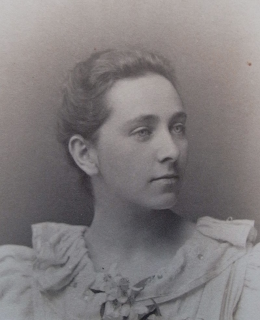
Death of Edith Anne Stoney, First Woman Medical Physicist

Edith Anne Stoney, considered to be the first woman medical physicist, dies in Bournemouth, England, on June 25, 1938.

Stoney is born into an old-established Anglo-Irish scientific family at 40 Wellington Road, Ballsbridge, Dublin, on January 6, 1869. The daughter of George Johnstone Stoney, FRS, an eminent physicist who coins the term “electron” in 1891 as the “fundamental unit quantity of electricity,” and his wife and cousin, Margaret Sophia Stoney. One of her two brothers, George Gerald, is an engineer and a Fellow of the Royal Society (FRS). One of her two sisters, Florence Stoney, is a radiologist and receives an OBE. Her cousin is the Dublin-based physicist George Francis FitzGerald FRS (1851–1901), and her uncle Bindon Blood Stoney FRS is Engineer of Dublin Port, renowned for building a number of the main Dublin bridges and developing the Quayside.

Stoney demonstrates considerable mathematical talent and gains a scholarship at Newnham College, Cambridge, where she achieves a First in the Part I Tripos examination in 1893. However, she is not awarded a University of Cambridge degree as women are excluded from graduation until 1948. During her time at Newnham, she is in charge of the College telescope. She is later awarded a BA and an MA from Trinity College Dublin, after they accept women in 1904.

After briefly working on gas turbine calculations and searchlight design for Sir Charles Algernon Parsons, she takes a mathematics teaching post at the Cheltenham Ladies’ College.

Following the 1876 Medical Act, it is illegal for academic institutions to prevent access to medical education based on gender. The first medical school for women in Britain is established in 1874 by Dr. Sophia Jex-Blake in anticipation of this law. The London School of Medicine for Women quickly becomes part of the University of London, with clinical teaching at the Royal Free Hospital. Stoney’s sister Florence is a student at the school, graduates in medicine with honours in 1895 (MB BS) and obtains her MD in 1898. Meanwhile, Stoney gains an appointment as a physics lecturer at the school in 1899. Her first tasks are to set up a physics laboratory and design the physics course. The laboratory is planned for 20 students, and the course content is pure physics, as required by university regulations. It includes mechanics, magnetism, electricity, optics, sound, heat and energy. In her obituary in The Lancet, an ex-student of hers notes: “Her lectures on physics mostly developed into informal talks, during which Miss Stoney, usually in a blue pinafore, scratched on a blackboard with coloured chalks, turning anxiously at intervals to ask ‘Have you taken my point?’. She was perhaps too good a mathematician … to understand the difficulties of the average medical student, but experience had taught her how distressing these could be”.

In 1901, the Royal Free Hospital appoints Florence into a new part-time position of medical electrician. The following April, the two sisters open a new x-ray service in the electrical department. During their time at the Royal Free Hospital, the two sisters actively support the women’s suffrage movement, though oppose the direct violent action with which it is later associated.

During her time at the school, Stoney also plays a central role in the British Federation of University Women (BFUW). She is elected treasurer, in her absence, at the first executive meeting on October 9, 1909, a position she holds until the end of May 1915. She becomes increasingly engaged with the political lobbying of the Federation. At the executive meeting on October 19, 1912, she proposes the names of two members for a subcommittee to secure the passing into law of a bill to enable women to become barristers, solicitors or parliamentary agents. The legislation is eventually enacted after the war within the Sex Disqualification (Removal) Act 1919.

Stoney resigns her post at the school in March 1915 and it is recorded that “with due regret and most unwillingly a change is desirable in the physics lectureship.” She is offered £300 on tendering her resignation.

Both Stoney and Florence offer their services to the British Red Cross at the War Office in London, to provide a radiological service to support the troops in Europe, on the day Britain declares war. Their offer is refused, because they are women. Florence sets up her own unit with the Women’s Imperial Service League and spends the next 6 months in Europe. Stoney organises supplies from London where she also serves on the League’s committee. Florence returns to London at the time Stoney resigns from the London School of Medicine for Women. She contacts the Scottish Women’s Hospitals (SWH), an organisation formed in 1914 to give medical support in the field of battle and financed by the women’s suffrage movement. The organisation has gained agreement to set up a new 250-bed tented hospital at Domaine de Chanteloup, Sainte-Savine, near Troyes (France), funded by the Cambridge women’s colleges of Girton and Newnham and it becomes her role to plan and operate the x-ray facilities. She establishes stereoscopy to localise bullets and shrapnel and introduces the use of x-rays in the diagnosis of gas gangrene, interstitial gas being a mandate for immediate amputation to give any chance of survival.

The hospital is near the front line and, in her own words, by September 1915, “the town had been evacuated, the station had been mined, and we heard the heavy guns ever going at nighttime.” The unit is entirely female, except for two part-time male drivers, and her technical assistant, Mr. Mallett.

They are assigned to the Corps Expéditionnaire d’Orient and ordered to move to Serbia. After boarding the steamship Mossoul in Marseille, they reach Salonika (known as Thessaloniki in modern Greece) on November 3, where they take the night train north to Ghevgheli (now Gevgelija in modern North Macedonia), on the Serbian side of the Greek border. They set up a hospital in an unused silk factory where they treat 100 patients with injuries ranging from frostbite to severe lung and head wounds. Following defeats at the hands of Bulgarian forces, Stoney and her staff retreat to Salonika by December 6, 1916. Eleven days later, they have re-established the hospital on a drained low swamp by the sea, and by New Year’s Day 1917 she has the lights on and the x-rays working. Despite the lack of equipment and resources, she establishes an electrotherapy department and various equipments for the muscular rehabilitation of the soldiers in their care. She also assists with problems on two British hospital ships, on which the x-ray systems have been damaged during a storm and gives support to the SWH unit in Ostrovo (now Arnissa on Lake Vegoritida formerly lake Ostrovo in Northern Greece), which arrives during September 1916. She has a break for sick leave in December 1917 and returns the following summer. She applies for an appointment as an army camp radiologist in Salonika, but her demand is blocked by the War Office.

In October 1917, Stoney returns to France to lead the x-ray departments at the SWH hospitals of Royaumont and Villers-Cotterêts. In March 1918, she has to supervise a camp closure and retreat for the third time, when Villers-Cotterêts is overrun by the German troops. During the final months of the war the fighting intensifies and there is a steep increase in workload. In the month of June alone the x-ray workload peaks at over 1,300, partly because of an increased use of fluoroscopy.

Stoney’s war service is recognised by several countries, and she is awarded the Médaille des épidémies du ministère de la Guerre and the Croix de Guerre from France, the Order of St. Sava from Serbia, and the Victory Medal and British War Medal from Britain.

On returning to England, Stoney takes a post as lecturer in physics in the Household and Social Science department at King’s College for Women which she holds until retirement in 1925. After leaving King’s she moves to Bournemouth, where she lives with her sister Florence, who is suffering from spinal cancer, dying in 1932.

During her retirement, Stoney resumes her work with the BFUW for which she had acted as the first treasurer before the war. She becomes one of the earliest (and oldest) members of the Women’s Engineering Society and plays an active part in the organisation until shortly before her death. She travels widely and, in 1934, she speaks to the Australian Federation of University Women on the subject of women in engineering, highlighting the contribution made by women workers during the war. In 1936, she establishes the Johnstone and Florence Stoney Studentship in the BFUW, for “research in biological, geological, meteorological or radiological science undertaken preferably in Australia, New Zealand or South Africa.” The studentship is now administered by Newnham College, Cambridge, and supports clinical medical students going abroad for their elective period. The declaration of Trust is dated February 11, 1942 and the Johnstone And Florence Stoney Studentship Fund Charity is registered on March 25, 1976.

Stoney dies on June 25, 1938, at age 69, and obituaries are printed in both the scientific and medical press – Nature, The Lancet, The Woman Engineer and national newspapers in England, The Times and Australia.

Stoney is remembered for her considerable bravery and resourcefulness in the face of extreme danger, and her imagination in contributing to clinical care under the most difficult conditions of war. As a strong advocate of education for women, she enables young graduate women to spend time on research overseas and another to enable physicists to enter medical school thanks to the fund she created. Through her work and engagements, she is remembered as a pioneer of medical physics.

(Pictured: Edith Anne Stoney during her time in Cambridge in the early 1890s)