seamus dubhghaill

Promoting Irish Culture and History from Little Rock, Arkansas, USA


Leave a comment

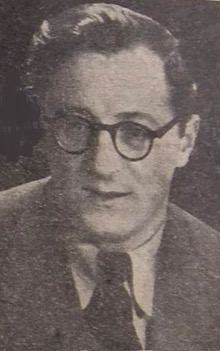
Death of Leslie Daiken, Copywriter, Editor & Writer

Leslie Herbert Daiken, an Irish advertising copywriter, editor, and writer on children’s toys and games, dies in London on August 15, 1964.

Born Leslie Yodaiken into a RussianJewish family in Portobello, Dublin, Daiken is the son of Samuel and Rosa Yodaiken. His father is a dealer in rubber and scrap metal, with premises in Dublin and Glasgow, and he is educated at two independent fee-paying schools, St. Andrew’s College and Wesley College, and then in 1930 he enters Trinity College Dublin. In his first year, one of his lecturers in French literature was Samuel Beckett. He is an active member of the Dublin University Socialist Society and a founding member of the college’s Gaelic Society.

In 1932, and again in 1933, as Yodaiken he wins the Vice-Chancellor’s Prize for English Prose, and while at Trinity, he publishes short stories and verse in ChoiceThe Dublin Magazine, and The New English Weekly.

In 1933, Daiken is present at the house of Charlotte Despard in Eccles Street, Dublin, also used as a Workers’ College, when it is attacked by a mob of Blueshirts. He leads the immediate defence of the building, which is saved on that occasion by the intervention of Irish Republican Army (IRA) men posing as the police.

In 1934, as Yodaiken, he graduates with a BA from Trinity in English and French Literature, with a Second Class degree. After graduating, Daiken works briefly as a schoolteacher in Dublin. In April 1935, his short story “Angela” is published in The New English Weekly under the pen name of Ned Kiernan. That year, he migrates to London.

Soon after his arrival in London, Daiken is one of the three founders of a duplicated publication called Irish Front, together with two other poets, Charles Donnelly and Ewart Milne.

In England, Daiken starts to shorten his surname from Yodaiken to Daiken, for his publications, but he does not make this change formally until doing so by deed poll in 1943.

In December 1935, The Irish Times reviews a production in Camden Town of Ireland Unfree, a stage version by Daiken of Patrick Pearse’s poem “The Rebel.” It states that “Mr. Daiken carries Pearse’s theme beyond his idealistic conclusion to the revolutionary viewpoint of the Irish workers.”

Daiken keeps up his links with leftist Irish writers and dissidents and edits the collection of working-class political verse Goodbye Twilight: songs of the struggle in Ireland (1936), illustrated by Harry KernoffThe Irish Press describes this as “forty young poets with blazing eyes and clenched fists.” In another review, Louis MacNeice calls the book a “collection of proletarian poems – some communist, some Irish republican, and all written in a defiant spirit of opposition … a violent reaction against Yeats and all that he stood for.”

Daiken does not go to fight in the Spanish Civil War, although his Irish Front colleague Charles Donnelly does, and is killed; but he is active in fundraising for the Connolly Column, the Irish section of the International Brigades. He is also a contributor to the branch of Republican Congress in London, an Irish republican and Marxist-Leninist pressure group which aims to engage Irish emigrants working in the city on socialist issues.

In 1939, Mairin Mitchell is highly critical of the Irish leftists, and in particular Daiken, for their views on the Molotov–Ribbentrop Pact, and writes to Desmond Ryan in September, “Brian O’Neill, Bloomsbury, and Daiken will sing Russia right or wrong.”

In October 1939, at the time of the wartime National Registration Act, Daiken is living in a studio at Old Castle Wharf, Twickenham, and describes himself as “Script-writer and advertising copywriter.”

During World War II, Daiken enlists in the Corps of Signals of the Irish Army, a neutral force, and also works for Reuters as a correspondent on education. In 1944, he edits They Go, the Irish, a collection of essays, including one from Seán O’Casey. In 1945, a collection of his verse is published under the title Signatures of All Things. In the summer of that year, Samuel Beckett gives Daiken his unpublished novel Watt, in the hope that he can find a publisher for it, but he fails to do so. They continue to write to each other and meet in London and Paris in the 1950s. He also keeps up with another friend from Trinity, Con Leventhal.

After he becomes a father in 1945, Daiken’s main interest moves on from political activism to children’s games and toys, and by 1951 the basement of his London home has become a toy museum. He writes on the subject and makes television and radio programmes for the BBC about it. His film One potato, two potato, a compilation of children’s street rhymes, wins the Festival Mondial du Film prize in 1958. His radio play The Circular Road is about a Jewish-Irish child.

In the 1950s Daiken founds the National Toy Museum and Institute of Play, today part of the Toy Collection at Hove Museum of Creativity.

Daiken returns to Ireland many times as a visitor. In the early 1960s he completes a radio play about the Jewish community of Dublin in the 1920s, which is broadcast on RTÉ.

In October 1963, Conor Cruise O’Brien, Vice Chancellor of the University of Ghana, recruits Daiken as a lecturer in education, and not long before his death he makes a film called The Piano about teaching white and black children in a school in Africa. He dies on August 15, 1964, while spending the summer vacation at home in London, leaving an estate valued at £3,865. He is cremated. His widow survives him until 1981.

In a tribute to Daiken, his 1930s communist associate Brian O’Neill writes, “He was always busy, always with a half dozen irons in the fire, always trying to give a hand to some Irish writer who needed it.”

In the early 1990s, Katrina Goldstone interviews Daiken’s brother, Aubrey Yodaiken, and later reports: “I was left with a faint sense of melancholy, as my interviewee had become distressed speaking about his brother, Leslie Daiken, and recalling his irrepressible and exasperating personality, his many projects, half-started novels…”

Aubrey Yodaiken is distressed by the lack of appreciation of his brother’s many cultural efforts and by the fact that his “scattershot literary endeavours” seem to have come to naught.

The National Library of Ireland holds a collection of Daiken’s papers, in particular his publications and correspondence, presented to it in 1995 by his elder daughter, by then Melanie Cuming, and his younger brother, Aubrey Yodaiken. The papers are mostly in English, French, German, Dutch, Italian, Hebrew, and Irish.


Leave a comment

Death of John Joe Rice, Sinn Féin Politician & Republican Activist

John Joe Rice, Sinn Féin politician and republican activist who serves as a Teachta Dála (TD) for the Kerry South constituency from 1957 to 1961, dies on July 24, 1970.

Rice is born in Cork, County Cork, on June 19, 1893, but is raised in the townland of Kilmurry near Kenmare, County Kerry. He is the son of George Rice, a draper’s assistant, and Ellen Rice (née Ring). After national school he becomes a clerk with the Great Southern and Western Railway company working at stations in Kenmare, Killorglin, and Killarney.

Rice joins the Irish Volunteers in 1913 but does not take part in the 1916 Easter Rising. For a time, he shares lodgings in Rock Street, Tralee, with Austin Stack, and like Stack he is a Gaelic Athletic Association (GAA) member, playing hurling with Kenmare. At the outbreak of the Irish War of Independence (1919-1921), he becomes Officer Commanding of the 5th Battalion of the Kerry No. 2 Brigade. He also holds the post of second in command of that brigade, under Humphrey Murphy. On April 26, 1921, he attends the meeting in Kippagh, County Tipperary, that sees the establishment of the First Southern Division. After the truce, Murphy is transferred to command Kerry No. 1 Brigade, and Rice becomes commanding officer of Kerry No. 2.

Rice opposes the Anglo-Irish Treaty and leads the brigade throughout the Irish Civil War (1922-1923). When Michael Collins comes to Killarney on April 22, 1922, to speak in favour of the agreement, he is met at the train station by a group of fifty men, led by Rice, who attempt to prevent him from speaking. The meeting goes ahead despite several attempts by the group to stop it. During the civil war he leads his men into Limerick, briefly seizing Rathkeale, but for the most part they are on the defensive. In September he commands a force of seventy republicans to take Kenmare. This is a rare and morale-boosting success. When the First Southern Division council meets on February 26-28, 1923, he is one of only two senior officers, among a group of eighteen, who feel that it is worth fighting on.

Shortly after the civil war, Rice marries Nora Aherne, a Cumann na mBan member; they have one son, George. After the war he continues to be active in the Irish Republican Army (IRA) and Sinn Féin. He attends IRA executive meetings in 1923 and is involved in attempts to reorganise the IRA in 1924. He is a delegate to the Sinn Féin ardfheis in 1926, opposing the proposal of Éamon de Valera that abstention be a matter of policy rather than principle. He is elected as a Sinn Féin TD for the Kerry South constituency at the 1957 Irish general election. He does not take his seat in the Dáil due to the Sinn Féin policy of abstentionism. He is one of four Sinn Féin TDs elected at the 1957 Irish general election, the others being Ruairí Ó Brádaigh, John Joe McGirl and Eighneachán Ó hAnnluain. During his time as a TD, he campaigns against the Special Powers Act, which grants the Irish state extra abilities to deal with and punish suspected members of the IRA. He is defeated at the 1961 Irish general election.

In 1966, Rice and fellow Kerry Republican John Joe Sheehy are expelled from Sinn Féin, as are many others, by the new Marxist-Leninist party leadership that had recently come into power. This move both foreshadows and fuels the split in 1969/1970 of both the IRA and Sinn Féin, which leads to the creation of the Marxist-Leninist Official IRA and the more traditional but still left-wing Provisional IRA, and in parallel Sinn Féin – The Workers’ Party and “Provisional” Sinn Féin. Rice gives his support to the Provisionals.

Rice drives an oil lorry for a time and then becomes manager of the Tralee branch of Messrs Nash, mineral-water manufacturers and bottlers. He remains in this position until his retirement in 1965. He dies on July 24, 1970, at his son’s residence in Oakview, Tralee.

Rice’s sister, Rosalie, is a member of Cumann na mBan during the 1916 Easter Rising and is arrested for sending a telegram alerting the Irish Republican Brotherhood (IRB) in the United States to the rising. His cousins Eugene and Timothy Ring are members of the IRB and are also involved with the telegram. His grandfather, Timothy Ring, was a Fenian who fought in the uprising. Two of his cousins are members of the Royal Irish Constabulary (RIC) who both help the republican side during the Irish revolutionary period.


2 Comments

Death of Tomás Mac Giolla, Workers’ Party and Sinn Féin Politician

Tomás Mac Giolla, Workers’ Party of Ireland politician who serves as Lord Mayor of Dublin from 1993 to 1994, leader of the Workers’ Party from 1962 to 1988 and leader of Sinn Féin from 1962 to 1970, dies on February 4, 2010. He serves as a Teachta Dála (TD) for the Dublin West constituency from 1982 to 1992.

Mac Giolla is born Thomas Gill in Nenagh, County Tipperary, on January 25, 1924. His uncle T. P. Gill is a Member of Parliament (MP) and member of the Irish Parliamentary Party (IPP) of Charles Stewart Parnell. His father, Robert Paul Gill, an engineer and architect, also stands unsuccessfully for election on a number of occasions. His mother is Mary Hourigan.

Mac Giolla is educated at the local national school in Nenagh before completing his secondary education at St. Flannan’s College in Ennis, County Clare. It is while at St. Flannan’s that he changes to using the Irish language version of his name. He wins a scholarship to University College Dublin where he qualifies with a Bachelor of Arts degree, followed by a degree in Commerce.

A qualified accountant, Mac Giolla is employed by the Irish Electricity Supply Board (ESB) from 1947 until he goes into full-time politics in 1977.

In his early life Mac Giolla is an active republican. He joins Sinn Féin and the Irish Republican Army (IRA) around 1950. He is interned by the Government of Ireland during the 1956–1962 IRA border campaign. He also serves a number of prison sentences in Mountjoy Prison in Dublin.

At the 1961 Irish general election, Mac Giolla unsuccessfully contests the Tipperary North constituency for Sinn Féin. In 1962, he becomes President of Sinn Féin and is one of the people who moves the party to the left during the 1960s. In 1969, Sinn Féin splits, and he remains leader of Official Sinn Féin. It is also in 1962 that he marries May McLoughlin who is also an active member of Sinn Féin as well as Cumann na mBan, the women’s section of the IRA. In 1977, the party changes its name to Sinn Féin the Workers Party and in 1982 it becomes simply the Workers’ Party.

Mac Giolla is elected to Dublin City Council representing the Ballyfermot local electoral area in 1979 and at every subsequent local election until he retires from the council in 1997. In the November 1982 Irish general election, he is elected to Dáil Éireann for his party. In 1988, he steps down as party leader and is succeeded by Proinsias De Rossa. He serves as Lord Mayor of Dublin from 1993 to 1994 and remains a member of Dublin Corporation until 1998.

While president Mac Giolla is regarded as a mediator between the Marxist-Leninist wing headed by Sean Garland and the social democratic wing of Prionsias De Rossa. At the 1992 special Ardfheis he votes for the motion to abandon democratic centralism and to re-constitute the party much as the Italian Communist Party became the Democratic Party of the Left. However, the motion fails to reach the required two-thirds majority. Following the departure of six Workers’ Party TDs led by De Rossa to form the new Democratic Left party in 1992, Mac Giolla is the sole member of the Workers’ Party in the Dáil. He loses his Dáil seat at the 1992 Irish general election by a margin of just 59 votes to Liam Lawlor of Fianna Fáil.

In 1999, Mac Giolla writes to the chairman of the Flood Tribunal calling for an investigation into revelations that former Dublin Assistant City and County Manager George Redmond had been the official supervisor at the election count in Dublin West and was a close associate of Liam Lawlor. In 2003, Redmond is convicted of corruption by a Dublin court but subsequently has his conviction quashed due to conflicting evidence.

In his eighties Mac Giolla continues to be active and is a member of the group which campaigns to prevent the demolition of No. 16 Moore Street in Dublin city centre, where the surrender after the Easter Rising was completed. He also serves on the Dublin ’98 committee to commemorate the 200th anniversary of the Irish Rebellion of 1798.

Tomás Mac Giolla dies in Beaumont Hospital in Beaumont, Dublin on February 4, 2010, after a long illness.

(Pictured: Tomás Mac Giolla, former president of the Workers’ party and lord mayor of Dublin in 2007, by Niall Carson, PA Wire, Press Association Images)


Leave a comment

Birth of Tomás Mac Giolla, Irish Workers’ Party Politician

tomas-mac-giolla

Tomás Mac Giolla, Workers’ Party of Ireland politician who serves as Lord Mayor of Dublin from 1993 to 1994, leader of the Workers’ Party from 1962 to 1988 and leader of Sinn Féin from 1962 to 1970, is born Thomas Gill in Nenagh, County Tipperary on January 25, 1924. He serves as a Teachta Dála (TD) for the Dublin West constituency from 1982 to 1992.

Mac Giolla’s uncle T. P. Gill is a Member of Parliament (MP) and member of the Irish Parliamentary Party (IPP) of Charles Stewart Parnell. His father, Robert Paul Gill, an engineer and architect, also stands unsuccessfully for election on a number of occasions. His mother is Mary Hourigan.

Mac Giolla is educated at the local national school in Nenagh before completing his secondary education at St. Flannan’s College in Ennis, County Clare. It is while at St. Flannan’s that he changes to using the Irish language version of his name. He wins a scholarship to University College Dublin where he qualifies with a Bachelor of Arts degree, followed by a degree in Commerce.

A qualified accountant, Mac Giolla is employed by the Irish Electricity Supply Board (ESB) from 1947 until he goes into full-time politics in 1977.

In his early life Mac Giolla is an active republican. He joins Sinn Féin and the Irish Republican Army (IRA) around 1950. He is interned by the Government of Ireland during the 1956–1962 IRA border campaign. He also serves a number of prison sentences in Mountjoy Prison in Dublin.

At the 1961 Irish general election, Mac Giolla unsuccessfully contests the Tipperary North constituency for Sinn Féin. In 1962, he becomes President of Sinn Féin and is one of the people who moves the party to the left during the 1960s. In 1969, Sinn Féin splits, and he remains leader of Official Sinn Féin. It is also in 1962 that he marries May McLoughlin who is also an active member of Sinn Féin as well as Cumann na mBan, the women’s section of the IRA. In 1977, the party changes its name to Sinn Féin the Workers Party and in 1982 it becomes simply the Workers’ Party.

Mac Giolla is elected to Dublin City Council representing the Ballyfermot local electoral area in 1979 and at every subsequent local election until he retires from the council in 1997. In the November 1982 Irish general election, he is elected to Dáil Éireann for his party. In 1988, he steps down as party leader and is succeeded by Proinsias De Rossa. He serves as Lord Mayor of Dublin from 1993 to 1994 and remains a member of Dublin Corporation until 1998.

While president Mac Giolla is regarded as a mediator between the Marxist-Leninist wing headed by Sean Garland and the social democratic wing of Prionsias De Rossa. At the 1992 special Ardfheis he votes for the motion to abandon democratic centralism and to re-constitute the party much as the Italian Communist Party became the Democratic Party of the Left. However, the motion fails to reach the required two-thirds majority. Following the departure of six Workers’ Party TDs led by De Rossa to form the new Democratic Left party in 1992, Mac Giolla is the sole member of the Workers’ Party in the Dáil. He loses his Dáil seat at the 1992 Irish general election by a margin of just 59 votes to Liam Lawlor of Fianna Fáil.

In 1999, Mac Giolla writes to the chairman of the Flood Tribunal calling for an investigation into revelations that former Dublin Assistant City and County Manager George Redmond had been the official supervisor at the election count in Dublin West and was a close associate of Liam Lawlor. In 2003, Redmond is convicted of corruption by a Dublin court but subsequently has his conviction quashed due to conflicting evidence.

In his eighties Mac Giolla continues to be active and is a member of the group which campaigns to prevent the demolition of No. 16 Moore Street in Dublin city centre, where the surrender after the Easter Rising was completed. He also serves on the Dublin ’98 committee to commemorate the 200th anniversary of the Irish Rebellion of 1798.

Tomás Mac Giolla dies in Beaumont Hospital in Beaumont, Dublin on February 4, 2010, after a long illness.