seamus dubhghaill

Promoting Irish Culture and History from Little Rock, Arkansas, USA


Leave a comment

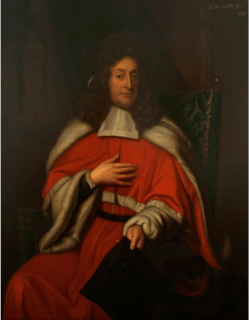
Death of Sir Thomas de Rokeby, Justiciar of Ireland

Sir Thomas de Rokeby, a soldier and senior Crown official in fourteenth-century England and Ireland, who serves as Justiciar of Ireland, dies on April 23, 1357. He is appointed to that office to restore law and order to Ireland, and has considerable early success in this task, but he is recalled to England after the military situation deteriorates. He is later re-appointed Justiciar, and returns to Ireland to take up office, but dies soon afterwards.

The Rokebys are a prominent landowning family from Mortham in North Yorkshire. He is probably the son of Thomas de Rokeby, who dies in 1318. His nephew, also named Thomas, the son of his brother Robert, is closely associated with him in his later years and the elder Thomas is often called “l’oncle” to distinguish him from his nephew.

Rokeby first comes to public attention in 1327 when, after his return from prison in Scotland, he receives the thanks of the new King Edward III for being the squire who had first pointed out the approach of the Scots army during the invasion of the previous July. As a reward he is knighted and given lands worth £100 a year. He sees action against the Scots regularly between 1336 and 1342 and has charge of Stirling Castle and Edinburgh Castle while they are held by the English. He is High Sheriff of Yorkshire from 1342 to 1349. He is one of the English commanders at the Battle of Neville’s Cross in 1346, and it is said, “gave the Scots such a draught as they did not care to taste again.” He is then entrusted with bringing King David II of Scotland as a captive to London, and he receives further grants of land as a reward for his good services.

In 1349 Rokeby is appointed Justiciar of Ireland, and given a large armed retinue to accompany him, as it is recognised by the English Crown that “Ireland is not in good plight or good peace.” While there is some surprise at the appointment of an old soldier to such a sensitive political position, the more informed view is that Rokeby is well suited to the task of enforcing justice by military force. He arrives in December and makes a quick circuit of the south of Ireland, mainly to keep watch on the powerful but troublesome magnate Maurice FitzGerald, 1st Earl of Desmond.

Rokeby is praised by his contemporaries for his regard for justice and his zeal in checking extortion by Crown officials. He undertakes a general overhaul of the Irish administration, aimed particularly at the detection and prevention of corruption and the removal of incompetent officials. Arguably he shows excessive zeal in arresting and imprisoning the Lord High Treasurer of Ireland, Robert de Emeldon, a man who enjoys the King’s personal regard. Admittedly the charges against Emeldon are very serious, including rape, robbery and manslaughter, but the King, out of regard for their long friendship and Emeldon’s record of good service to the Crown in Ireland, had already pardoned Emeldon for killing one Ralph de Byrton, a knight, in 1336. Emeldon is once more pardoned and quickly released.

In November 1351 Rokeby holds a Great Council at Kilkenny. It deals partly with the problem of official corruption already mentioned, partly with the problem of defence of the Pale, and partly with the question of intermarriage and other close contacts between the Anglo-Irish and the Old Irish. Otway-Ruthven notes that little of the legislation is new, apart from the application to Ireland of the English Statute of Labourers of 1351, and that much of it is repeated in the better-known Statutes of Kilkenny of 1366.

In 1353 the Clan MacCarthy of Muskerry, the dominant clan in central County Cork, who had until then been loyal to the English Crown, rebels. Rokeby shows considerable skill in crushing the uprising and succeeds in replacing the rebellious head of the clan, Dermot MacCarthy, with his more compliant cousin Cormac. Cormac’s descendants gain great wealth, extensive lands and the title Earl of Clancarty.

This promising state of good order does not last long. A rebellion by the O’Byrne Clan of Wicklow in 1354 is followed by a general uprising headed by the MacMurrough-Kavanagh dynasty. Although Muirchearteach MacMurrough-Kavanagh, the self-styled King of Leinster, is captured and executed, Rokeby suffers several military defeats. He is unable to suppress the O’Byrnes’ rebellion, and other risings take place in Tipperary, Kildare and Ulster.

Rokeby, now an ageing and discouraged man, is recalled in 1355. His replacement, rather surprisingly, is that Earl of Desmond whom it had been one of his main tasks to keep in check. Desmond dies a year later on July 26, 1356. Rokeby is reappointed Justiciar, and returns to Ireland, only to die soon afterwards on April 23, 1357 at Kilkea Castle.

Rokeby is married and his wife is named Juliana, but little else is known of her. They have no children, and his estates pass to his nephew, the younger Thomas.

(Pictured: Portrait of Sir Thomas de Rokeby, painting by Godfried Schalcken)

Leave a comment

Birth of James Butler, 2nd Earl of Ormond

james-butler-2nd-earl-of-ormond

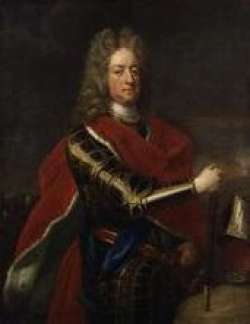
James Butler, 2nd Earl of Ormond, a noble in the Peerage of Ireland, is born in Kilkenny CastleKilkenny on October 4, 1331. He is Lord Justice of Ireland in 1359, 1364, and 1376, and a dominant political leader in Ireland in the 1360s and 1370s. He is usually called The Noble Earl, being a great-grandson, through his mother, of King Edward I of England.

Butler is the son of James Butler, 1st Earl of Ormond and Lady Eleanor de Bohun. He is given in ward on September 1, 1344 to Maurice FitzGerald, 1st Earl of Desmond for the fine of 2306 marks and afterward to John Darcy, 1st Baron Darcy de Knayth.

On May 15, 1346, Butler marries Elizabeth Darcy, daughter of Sir John Darcy and Joan de Burgh. They have five children: James Butler, 3rd Earl of Ormond (1362-1405), Thomas Butler (1359-1396), Justice of Cork, Eleanor Butler (1350-1392), Joan Butler (1360-1393), and Ralph Butler (1356-1367).

In 1362, Butler slays six hundred of Art Óg Mac Murchadha Caomhánach‘s followers at Tiscoffin in what is now County Kilkenny. On April 22, 1364, he is appointed Lord Deputy of Ireland to Lionel of Antwerp, 1st Duke of Clarence. Clarence, from his first arrival in Ireland, places great trust in him, and for a few years it seems that as Deputy he is almost all-powerful.

In the 1360s Butler clashes with Maurice FitzGerald, 4th Earl of Kildare. In 1364 the Irish House of Commons sends a delegation to England, headed by Kildare, to complain of misgovernment, and to ask for the removal of “corrupt” officials, some of whom have links to Butler. A number of these officials are removed, but Butler’s position is not seriously threatened.

Butler is Lord Justice by July 24, 1376, with a salary of £500 per year, in which office he is continued by King Richard II of England. On April 2, 1372, he is made constable of Dublin Castle, with the fee of £18 5s per year. He is summoned to the Parliaments held by Richard II.

James Butler dies October 18, 1382 at Knocktopher Castle in Kilkenny, Leinster, near which he had founded a priory for Carmelite friars in 1356. He is buried in St. Canice’s Cathedral, Kilkenny.


Leave a comment

The Battle of Connor

grave-of-king-edward-de-bruce

The Battle of Connor is fought on September 10, 1315, in the townland of Tannybrake just over a mile north of what is now the modern village of Connor, County Antrim, Northern Ireland. It is part of the Bruce campaign in Ireland.

Edward Bruce lands in Larne, in modern-day County Antrim, on May 26, 1315. In early June, Donall Ó Néill of Tyrone and some twelve fellow northern Kings and lords meet Bruce at Carrickfergus and swear fealty to him as King of Ireland. Bruce holds the town of Carrickfergus but is unable to take Carrickfergus Castle. His army continues to spread south, through the Moyry Pass to take Dundalk.

Outside the town of Dundalk, Bruce encounters an army led by John FitzThomas FitzGerald, 4th Lord of Offaly, his son-in-law Edmund Butler, Earl of Carrick and Maurice FitzGerald, 4th Baron Desmond. The Scottish push them back towards Dundalk and on June 29 lay waste to the town and its inhabitants.

By July 22 Edmund Butler, the Justiciar in Dublin, assembles an army from Munster and Leinster to join Richard Óg de Burgh, 2nd Earl of Ulster, to fight Bruce. De Burgh refuses to let the government troops into Ulster, fearing widespread damage to his land. Bruce is able to exploit their dispute and defeat them separately.

Bruce slowly retreats north, drawing de Burgh in pursuit. Bruce and his O’Neill allies sack Coleraine, destroying the bridge over the River Bann to delay pursuit. Edward sends word to Fedlim Ó Conchobair that he will support his position as king in Connacht if he withdraws. He sends the same message to rival claimant Ruaidri mac Cathal Ua Conchobair. Cathal immediately returns home, raises a rebellion and declares himself king. De Burgh’s Connacht allies under Felim then follow as Felim leaves to defend his throne. Bruce’s force then crosses the River Bann in boats and attacks. The Earl of Ulster withdraws to Connor.

The armies meet in Connor on September 10, 1315. The superior force of Bruce and his Irish allies defeat the depleted Ulster forces. The capture of Connor permits Bruce to re-supply his army for the coming winter from the stores the Earl of Ulster had assembled at Connor. Earl’s cousin, William de Burgh, is captured, as well as, other lords and their heirs. Most of his army retreats to Carrickfergus Castle, which the pursuing Scots put under siege. The Earl of Ulster manages to return to Connacht.

The government forces under Butler do not engage Bruce, allowing him to consolidate his hold in Ulster. His occupation of Ulster encourages risings in Meath and Connacht, further weakening de Burgh. Despite this, and another Scottish/Irish victory at the Battle of Skerries, the campaign is to be defeated at the Battle of Faughart.

(Pictured: Grave of King Edward Bruce, Faughart, County Louth)


2 Comments

Death of Maurice FitzThomas FitzGerald, 1st Earl of Desmond

fitzgerald-coat-of-arms

Maurice FitzThomas FitzGerald, 1st Earl of Desmond, Irish nobleman in the Peerage of Ireland, Captain of Desmond Castle in Kinsale, so-called ruler of Munster, and for a short time Lord Justice of Ireland, dies at Dublin Castle on January 25, 1356.

FitzGerald is the second son of Thomas FitzMaurice FitzGerald, 2nd Baron Desmond by his wife Margaret. His father dies in 1296 when he is still a child. He succeeds his elder brother Thomas FitzGerald, 3rd Baron Desmond as 4th Baron Desmond in 1307, and also inherits great wealth and large estates.

By 1326 FitzGerald’s influence is such that there are rumours of a conspiracy to make him King of Ireland. Modern historians tend to dismiss the story, on the ground that the alleged conspirators were other magnates who were more interested in increasing their own power than aggrandising FitzGerald.

FitzGerald is created Earl of Desmond by Letters Patent dated at Gloucester, England, August 27, 1329, by which patent also the county palatine of Kerry is confirmed to him and his male heirs, to hold of the Crown by the service of one knight’s fee. This is part of a Crown policy of attempting to win the support of the magnates by conferring earldoms on them.

In January 1330 FitzGerald is summoned by Sir John Darcy, Lord Justice of Ireland, to fight armed Irish rebels, with a promise of the King’s pay. It is FitzGerald who introduces the practice of Coigne and Livery, the quartering of troops on the inhabitants of the district they are sent to protect.

Accepting the King’s proposal, in addition to dealing with Munster and Leinster, FitzGerald routs the O’Nolans and O’Murroughs and burns their lands in County Wicklow and forces them to give hostages. He recovers the castle of Ley from the O’Dempsies, and has a liberate of £100 sterling dated at Drogheda August 24, 1335, in return for the expense he has incurred in bringing his men-at-arms, hobelars, and foot-soldiers, from various parts of Munster to Drogheda, and there, with Lord Justice Darcy, disperses the King’s enemies.

In 1331 there are further rumours of an attempt to make him King. Although there seems to be no foundation for them, the Crown takes them seriously enough to imprison FitzGerald for several months. He is released when a number of fellow nobles stand surety for his good behaviour.

In 1339 FitzGerald is engaged against Irish rebels in County Kerry where it is said he slays 1,400 men, and takes Nicholas, Lord of Kerry, prisoner, keeping him confined until he dies as punishment for siding with the rebels against the Crown.

The same year FitzGerald is present in the parliament held in Dublin. He is summoned by Writ dated at Westminster July 10, 1344, with Maurice, Earl of Kildare, and others, to attend the King at Portsmouth “on the octaves of the nativity of the Virgin Mary,” with twenty men-at-arms and fifty hobelars, at his own expense, to assist in the war against Philip V of France.

FitzGerald, who has long been acting “with a certain disregard for the niceties of the law” now decides on open rebellion. In 1345 he presides at an assembly of Anglo-Irish magnates at Callan, County Kilkenny, ignores a summons to attend the Irish Parliament and attacks Nenagh. He is a formidable opponent, and for the next two years his defeat is the main preoccupation of the Crown. He surrenders on a promise that his life will be spared. He is imprisoned and his lands forfeited. He is allowed to go under guard to England to answer the charges against him.

By no means for the last time, the Crown evidently decides that it cannot govern Ireland without the magnates’ support. In 1348 FitzGerald is released and pardoned in 1349. His loyalty does not seem to have been in question during the last years of his life.

In July 1355 FitzGerald is appointed Lord Justice of Ireland for life, dying, however, the following January in Dublin Castle. He is interred in the Church of the Friars-Preachers in Tralee.