
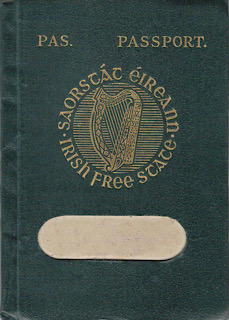
On September 6, 1929, diplomat John V. Fahy criticizes the administrative requirement that Irish Free State passports in the United States be issued via Britain, highlighting early challenges in the Irish Free State’s foreign affairs and consular administration.
Following the establishment of the Irish Free State in 1922, the new state faces significant administrative and diplomatic challenges. One such issue involves the issuance of passports to Irish citizens abroad, particularly in the United States. Despite Ireland’s independence, Irish Free State passports have to be processed through Britain, reflecting lingering complexities in recognition and administrative capacity.
At this time, questions of citizenship are intertwined with the status of Irish citizens as British subjects, and the British Foreign Office insists that passports clearly indicate whether holders are considered British subjects. This creates practical difficulties for the Irish government, which seeks to assert its sovereignty and provide proper documentation to its citizens internationally.
John V. Fahy, an Irish diplomat stationed in the United States, documents his concerns in a memorandum noting that the requirement to route passports through Britain is problematic. The memorandum decries the lack of an independent Irish passport issuance process in the United States, emphasizing the tension between Ireland’s formal independence and the residual administrative dependence on Britain. This memorandum reflects both the everyday bureaucratic hurdles faced by the Free State and the broader issue of Irish identity and sovereignty in international affairs.
Fahy’s memorandum is historically important for several reasons. It illustrates the early difficulties the Irish Free State faces in exercising full consular authority overseas. It highlights the ongoing legal ambiguities surrounding Irish citizenship and the status of Irish Free State passport holders during this period. It provides insight into diplomatic pressures on the emerging Irish state as it navigates recognition and procedural independence from Britain.
In summary, John V. Fahy’s memorandum serves as a notable record of the challenges that confronts Irish diplomats and administrators in asserting the Free State’s sovereignty and managing the practicalities of international travel in the early years of Ireland’s independence.

