
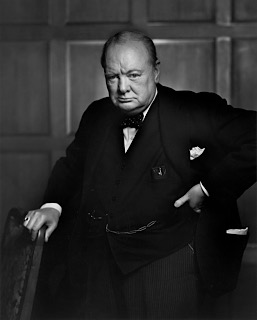
On November 5, 1940, British Prime Minister Winston Churchill addresses the House of Commons of the United Kingdom to report on Britain’s wartime situation after six months in office. While the speech’s main focus is on the resilience of British cities and the ongoing Battle of Britain, he does note the loss of certain overseas ports, including Irish ones, as part of the broader context of Allied shipping losses and strategic vulnerability, bemoaning the fact that the Irish ports had been returned to the Republic of Ireland government in 1938.
Churchill becomes Prime Minister on May 10, 1940, following the fall of France and the evacuation at Dunkirk. By late November, Britain is engaged in the Battle of Britain, with the Luftwaffe targeting industrial centres and ports across the country. The night before the speech, November 4, is the first night in eight weeks without air raids over London, but the Luftwaffe has shifted focus to other strategic locations.
While the Hansard record for November 5, 1940 does not list Irish ports by name, Churchill’s remarks on shipping losses and the vulnerability of ports are part of his broader assessment of the war’s impact on Britain’s global trade and naval operations. “The fact that we cannot use the South and West Coasts of Ireland to refuel our flotillas and aircraft and thus protect the trade by which Ireland as well as Great Britain lives, is a most heavy and grievous burden and one which should never have been placed on our shoulders, broad though they be.”
The loss of Irish ports are relevant because:
- Ireland’s ports, such as Dublin, Cork, and Limerick, are key to Allied supply lines in the Atlantic.
- Their vulnerability to German U-boat attacks and air raids is a growing concern as the Battle of the Atlantic intensifies.
- Churchill’s speech reflects the reality that many ports—both British and Allied—are under threat, disrupting supply chains and naval operations.
In his address, Churchill addresses the broader wartime situation:
- Civilian casualties of 14,000 killed, 20,000 wounded, mostly in London.
- Military losses of approximately 300 killed and 500 wounded.
- Minimal infrastructure damage to vital services like water, fuel, electricity, and gas.
- There are challenges in transportation but they are improving.
- Extensive plans are underway for shelters and winter preparations.
The mention of Irish ports in Churchill’s speech underscores the global nature of the war and the strategic importance of Ireland as a neutral but vital Allied base. The loss of such ports would have implications for naval operations, supply routes, and Britain’s ability to sustain its war effort.
To read the full text of Churchill’s November 5, 1940 speech, it is preserved in the National Churchill Museum’s 1940 speeches collection and in the UK Parliament’s Hansard archives.


