seamus dubhghaill

Promoting Irish Culture and History from Little Rock, Arkansas, USA


Leave a comment

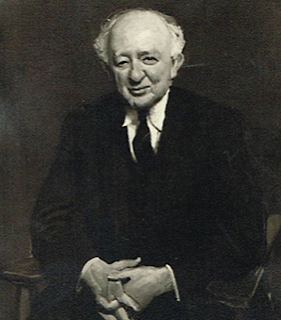
Death of Michael Noyk, Lithuanian-born Irish Republican Lawyer

Michael Noyk, a Lithuanian-born Irish republican lawyer, dies in London on October 22, 1966. He plays a pivotal role in Ireland’s fight for independence, particularly as a solicitor for Sinn Féin and the Irish Republican Army during the Irish War of Independence.

Noyk is born on August 12, 1884, in Telšiai, Lithuania, to a Jewish family. His father is from Kovno and his mother from Berlin. His family moves to Dublin when he is one year old. He is educated at Dublin’s The High School and later attends Trinity College Dublin (TCD) as a sizar in Hebrew, winning a classics scholarship and graduating with a Bachelor of Laws (LLB) in 1907. Shortly after graduation, he becomes a practicing solicitor in Dublin.

Noyk becomes closely associated with the Irish republican movement through his friendship with Arthur Griffith and joins Sinn Féin shortly after the 1916 Easter Rising. He serves as Griffith’s personal solicitor until Griffith’s death in 1922. He is particularly renowned for defending republican prisoners during the Irish War of Independence, including notable figures like General Seán Mac Eoin, Thomas Whelan, Patrick Moran, James Boyce, and Frank Teeling.

Noyk also acts as election agent for Éamon de Valera in the 1917 East Clare by-election and for Constance Markievicz and Seán T. O’Kelly in the 1918 United Kingdom general election in Ireland. His legal expertise extends to organizing and securing offices for the Dáil ministries, including the Department of Finance under Michael Collins, and supporting the operation of the Dáil Courts, which functions as an alternative judicial system to British courts.

During the Irish War of Independence, Noyk frequently coordinates with Michael Collins on intelligence and administrative matters. He helps investigate British officials’ actions that threaten Dáil finances and provides legal cover for IRA operations. On Bloody Sunday (November 21, 1920), he defends IRA members in British court-martials, arranging alibis and expert witnesses to mitigate convictions where possible.

Throughout his career, Noyk demonstrates a delicate balance between legal practice and revolutionary activity. He is involved in confidential operations to protect assets, people, and information vital to the republican cause.

Noyk marries Mabel Stein, the sister of artist Stella Steyn, and they have four children, living for many years on Wellington Road in Dublin. He is also a prominent figure in Dublin social life, involved in sports as a solicitor for Shamrock Rovers Football Club and in horse racing circles.

Noyk dies on October 22, 1966, in Lewisham Hospital, London. His funeral in Dublin is attended by high-ranking Irish political leaders, and he is buried with full military honors by the IRA’s Dublin Brigade at Dolphins Barn Jewish Cemetery.

Noyk is remembered as a key figure in Ireland’s struggle for independence. His legal skill, political activism, and work with Republican courts and the Department of Finance made him an indispensable ally of Michael Collins and a defender of Irish republicans during some of the most turbulent years in Ireland’s history. His life demonstrates the vital role of legal professionals in revolutionary movements, balancing official channels with clandestine support for political aims.


Leave a comment

Birth of Thomas Whelan, One of the “Forgotten Ten”

Thomas Whelan, one of six men executed in Mountjoy Prison, Dublin, on March 14, 1921, is born on October 5, 1898, in Gortrummagh, near Clifden, County Galway.

Whelan is the sixth of thirteen children born to farmer John Whelan and Bridget Price. He attends national school at Beleek and Clifden, before leaving school at the age of 15 to work on his father’s farm. He moves to Dublin at the age of 18, where he finds work as a railway man, and joins the Irish Volunteers as a member of ‘A’ Company, 3rd Battalion, Dublin Brigade. He lives at Barrow Street, Ringsend, Dublin, and works at a train depot.

Whelan is arrested on November 23, 1920, and, on February 1, 1921, is charged with the shooting death of Captain G.T. Baggallay, an army prosecutor who had been a member of courts that sentenced Volunteers to death under the Restoration of Order in Ireland Act on Bloody Sunday (1920).

Whelan is defended at his court-martial by Michael Noyk, through whom he protests his innocence of the charges. As in the case of Patrick Moran, there is eyewitness evidence that Whelan had been at Mass at the time the shooting had taken place.

The prosecution casts doubt on the reliability of the eyewitnesses, arguing that as Catholics they are not neutral. The defence complains that it is unfair to suggest the witnesses “were prepared to come up and perjure themselves on behalf of the prisoner” because “they belonged to a certain class and might hold certain political opinions.”

The military court does, however, trust the evidence of an army officer who lives in the same house as Baggallay and who has identified Whelan as the man covering him with a revolver during the raid. There is also testimony by a soldier who had passed by the house when he heard shots fired. This witness says he saw Whelan outside, attempting to start his motorcycle. Whelan is found guilty of murder and sentenced to death.

In Mountjoy Prison, Whelan is imprisoned with the writer and activist Ernie O’Malley, who describes him as “… smooth-faced, quiet and brown eyed with wavy hair; he smiled quietly and steadily. His voice was soft and when he laughed with the others one knew that the fibre was not as hard and that there was a shade of wistfulness about him.”

Whelan is quoted just before being hanged, “Give the boys my love. Tell them to follow on and never surrender. Tell them I am proud to die for Ireland.”

Whelan is hanged at 6:00 a.m. along with Patrick Moran, the first of six men to be executed in pairs that day. A crowd estimated at 40,000 gathers outside the prison to pray as the executions take place. His mother, Bridget, sees him before his execution and waits outside with the praying crowd holding candles. She tells a reporter that she had left her son “so happy and cheerful you would almost imagine he was going to see a football match.” He is 22 years old at the time of his death.

Following the Two for One policy that decrees the assassination of two members of the Royal Irish Constabulary (RIC) in retaliation for every executed Irish Volunteer, the Irish Republican Army (IRA) in Whelan’s native Clifden ambushes and fatally shoots RIC Constables Charles Reynolds and Thomas Sweeney at Eddie King’s Corner on March 16, 1921. In response to the RIC’s request for assistance over the wireless, a trainload of Black and Tans arrive in Clifden from Galway in the early hours of Saint Patrick’s Day, March 17, 1921, and proceed to “burn, plunder and murder.” During what is now called “The Burning of Clifden,” the Black and Tans kill one local civilian (John McDonnell), seriously injure another, burn down fourteen houses, and damaged several others.

Whelan is one of a group of men hanged in Mountjoy Prison in the period 1920-1921 who are commonly referred to as the Forgotten Ten. In 2001, he and the other nine, including Kevin Barry, are exhumed from their graves in Mountjoy Prison and given a full state funeral. He is now buried in Glasnevin Cemetery, Dublin. An annual commemoration is still held in Clifden in his honor.

(Pictured: Patrick Moran (left) and Thomas Whelan (right) before their executions, Mountjoy Prison, Dublin, March 14, 1921, courtesy of Kilmainham Gaol Museum.)