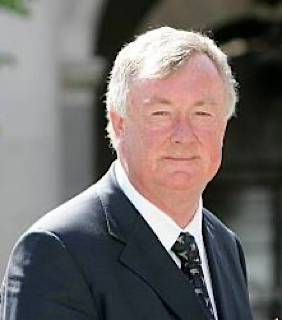
In 2002, the Irish tourism sector faces weaker-than-expected visitor figures. To address this and stimulate short-term revenue, O’Donoghue reallocates €3 million specifically for front-line marketing activities targeted at both domestic and international audiences. At the time, he has recently been appointed Minister for Arts, Sport, and Tourism, a role he holds from June 2002 to 2007.
The funds are intended to bolster promotional campaigns abroad, particularly in major overseas markets such as Britain, France, and the United States, support domestic marketing efforts to encourage local travel and spending, and focus on aggressively promoting Ireland in the British market, identified as having the highest potential return on investment for tourism.
Tourism Ireland, which operates as the official agency promoting the island of Ireland as a tourist destination, welcomes the additional funding. Chief Executive Paul O’Toole emphasizes that the investment will ensure maximum returns for the Irish tourism industry.
Before this funding boost, Irish tourism is a major economic sector. According to governmental reports from 2002, foreign exchange earnings in 2001 reach approximately €3.7 billion, domestic tourism earnings exceed €1.2 billion, and the industry supports nearly 140,000 jobs. The €3 million marketing allocation is part of a strategic effort to enhance Ireland’s international competitiveness and stimulate both short-term visitor numbers and longer-term growth.
While immediate tangible effects of this specific €3 million investment are not detailed in the sources, it reflects Ireland’s broader commitment to tourism promotion. By investing in strategic marketing campaigns in key international markets, the government aims to recover visitor numbers and strengthen Ireland’s profile as a tourist destination.
In conclusion, the July 15, 2002, announcement by Minister John O’Donoghue is a targeted move to energize Irish tourism through immediate marketing action, especially in international markets, during a period of lower-than-expected tourist arrivals.
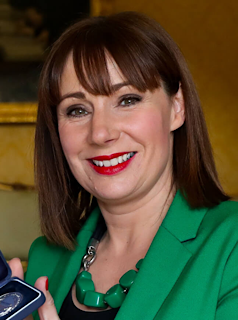
Madigan is a qualified solicitor, who practises in family law for twenty years, prior to her election to Dáil Éireann. She is also certified as a mediator by the Mediators’ Institute of Ireland (MII) and is a previous Council member of the MII. She is a former Specialist Liaison Officer for Family Mediation in the MII.
Madigan is the author of the first book in Ireland on mediation: Appropriate Dispute Resolution in Ireland, a handbook for family lawyers and their clients (Jordan Publishing, 2012). She has also self-published a novel called Negligent Behaviour.
Madigan issues a leaflet in 2014 claiming that providing accommodation for Travellers in her constituency would be “a waste of valuable resources.” When asked about this later, she claims, “Some people won’t want to live beside people in halting sites […] there might be more crime, that there might be anti-social behaviour.”
Madigan is elected to the 32nd Dáil at the 2016 Irish general election as a Fine Gael TD for the Dublin Rathdown constituency, defeating sitting Fine Gael TD Alan Shatter by nearly 1,000 votes. She is appointed Chair of the Committee on Budgetary Oversight in July 2017. She is a member of the Public Accounts Committee. She introduces a private member’s bill to reduce the waiting time for divorce in Ireland from four years to two, which is passed by the Dáil.
On November 30, 2017, Madigan is appointed to the cabinet as Minister for Culture, Heritage and the Gaeltacht, in a reshuffle following the resignation of the TánaisteFrances Fitzgerald.
In 2019, Madigan receives widespread coverage for her role in the personal injury legal claim of Fine Gael politician, Maria Bailey. It is alleged that her law practice, Madigan Solicitors, advised Bailey on her claim, however, Madigan refuses to make any comments on this citing client-solicitor confidentiality. In July 2019, an internal unpublished Fine Gael probe into the affair clears Madigan of any wrongdoing in regard to the claim. In late July 2019, the Irish Independent reports that “it is now known that she advised Ms. Bailey in the early stages of the claim.” It is also reported that her firm would earn €11,500 in fees if the Maria Bailey case were successful.
Madigan is re-elected at the 2020 Irish general election, taking the third seat behind Green Party Deputy Leader Catherine Martin and party colleague Neale Richmond. On July 1, 2020, she is appointed by the new government as Minister of State at the Department of Education with special responsibility for special education and inclusion. On January 14, 2021, she comes under fire for describing children without additional needs as “normal” while speaking in the Dáil. “We all know that even for normal children remote teaching is difficult but for children who have additional needs it is particularly difficult,” she says. Later that day on Twitter, she says she “sincerely apologises for the language she used. It is absolutely not what I meant to say.”
On January 20, 2021, speaking on RTÉ‘s Today with Claire Byrne, Madigan compares children with additional needs not attending school to the mother and baby homes. “We’ve spent the last week talking about mother and baby homes, where our most vulnerable were left to their own devices in less than satisfactory conditions and we’re now allowing further anxiety and upset to be placed on the shoulders of parents whose children desperately need to go back to school.” The Final Report of the Commission of Investigation into Mother and Baby Homes and Related Matters is published the week prior to her comments. She later apologises in a statement: “I am, as are all involved in supporting these children [children with additional needs], passionate about vindicating their rights and in reaching for an analogy I chose poorly. I apologise fully.”
Shortly after the first report of the Creeslough explosion on October 7, 2022, Madigan tweets that she hopes “they find the culprits” and, after being criticised as irresponsible and insensitive, she quickly deletes the tweet.
On March 22, 2024, Madigan announces that she will resign as Minister of State and will not contest the next general election.
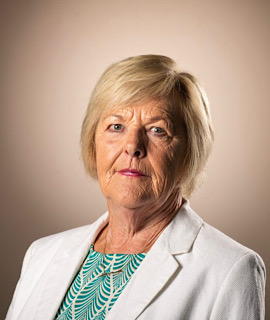
Although born in Cork, Moynihan-Cronin is a native of Killarney, County Kerry. She is educated at St. Brigid’s Secondary School in Killarney, Dominican College Sion Hill in Dublin, and Skerry’s College, Cork. Her father, Michael Moynihan, is a TD for Kerry South from 1981 to 1987 and from 1989 to 1992. She works as a bank official before becoming involved in politics in 1991 when she is elected to Kerry County Council. She is first elected to Dáil Éireann at the 1992 Irish general election as a Labour Party TD for Kerry South, succeeding her father. She is re-elected at every election until 2007.
On October 11, 2005, Moynihan-Cronin announces that she will not stand for re-election at the forthcoming general election due to ill-health. Her decision to retire presents considerable difficulties for the Labour Party to retain her seat, as the party performed poorly at the 2004 Kerry County Council election, failing to elect any councillors within the county. However, on October 28, 2006, she announces that she will stand in the forthcoming general election, having overcome her health difficulties. However, she fails to retain her seat.
In June 2011, Moynihan-Cronin returns to politics when she is co-opted onto Kerry County Council to represent the Killarney area, filling the seat left vacant when Marie Moloney is elected to the 24th Seanad. In 2013, she stands down from the council and is replaced by Sean Counihan.
Wexford Festival Opera (Irish: Féile Ceoldráma Loch Garman), an opera festival that takes place in the town of Wexford in southeastern Ireland, first takes place on October 21, 1951.
Tom Walsh, an avid opera lover, dreamed of staging an opera production in his hometown Wexford. He starts the Wexford Opera Study Circle in 1950, and invites Sir Compton Mackenzie, the founder of the magazine Gramophone and a writer on music, for the inaugural lecture for the circle. Mackenzie and Walsh discuss the idea of a local opera festival, and Mackenzie becomes the first President of the Wexford Festival of Music and the Arts.
The result is that a group of opera lovers, including Dr. Tom Walsh who becomes the festival’s first artistic director, plan a “Festival of Music and the Arts” (as the event is first called) from October 21 to November 4, 1951. The highlight is a production of the 19th century Irish composer Michael William Balfe‘s 1857 The Rose of Castille, a little-known opera whose composer had lived in Wexford.
Setting itself aside from the well-known operas during its early years places Wexford in a unique position in the growing world of opera festivals, and this move is supported by well-known critics such as the influential Desmond Shawe-Taylor of The Sunday Times, who communicates what is happening each autumn season.
Albert Rosen, a young conductor from Prague, begins a long association with the company in 1965, and he goes on to conduct eighteen Wexford productions. He is later appointed Principal Conductor of the RTÉ Symphony Orchestra and is Conductor Laureate at the time of his death in 1997.
In 1967, Walter Legge, the EMI recording producer and founder of the Philharmonia Orchestra is asked to take over the running of the festival, but within a month of the appointment he suffers a severe heart attack and is obliged to withdraw. The 26-year-old former Trinity College Dublin (TCD) student Brian Dickie takes over the running of the Festival. A new era of outstanding singing emerges, with the first operas in Russian and Czech plus a new emphasis on the French repertory as represented by Léo Delibes’ Lakmé in 1970 and Georges Bizet‘s Les pêcheurs de perles in 1971.
In subsequent years the festival is run by Adrian Slack (1979-81), Elaine Padmore (1982-94), Luigi Ferrari (1995-2004), David Agler (2005-19) and Rosetta Cucchi (2020-present).
The festival’s home of so many years, the Theatre Royal, is demolished and replaced by the Wexford Opera House on the same site. The opera house is officially opened on September 5, 2008, in a ceremony with the TaoiseachBrian Cowen, followed by a live broadcast of RTÉ‘s The Late Late Show from the O’Reilly Theatre. The first opera in the new building opens on October 16, 2008. Wexford Opera House provides the festival with a modern venue with a 35% increase in capacity by creating the 771-seat O’Reilly Theatre and a second, highly flexible Jerome Hynes Theatre, with a seating capacity up to 176. The architect is Keith Williams with the Office of Public Works. The acoustics and structure are designed by Arup.
In 2006, because of the closure of the Theatre Royal, a reduced festival takes place in the Dún Mhuire Hall on Wexford’s South Main Street. Only two operas are staged over a period of two weeks, instead of the usual three operas over three weeks. In 2007, the festival takes place in the summer in a temporary theatre on the grounds of Johnstown Castle, a stately home roughly 5 km from the town centre.