seamus dubhghaill

Promoting Irish Culture and History from Little Rock, Arkansas, USA


Leave a comment

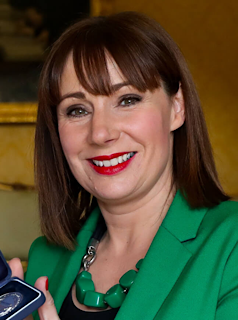
Birth of Josepha Madigan, Fine Gael Politician

Josepha Madigan, former Fine Gael politician, is born in Dublin on May 21, 1970. She serves as Chair of the Committee on Budgetary Oversight from July 2016 to November 2017, Minister for Culture, Heritage, and the Gaeltacht from November 2017 to June 2020, and as Minister of State at the Department of Education from July 2020 to March 2024. She serves as a Teachta Dála (TD) for the Dublin Rathdown constituency from 2016 to 2024.

Madigan attends Mount Anville Secondary School and Trinity College Dublin (TCD). She is married to Finbarr Hayes, and they have two children. Her father, Patrick Madigan, was a Fianna Fáil County Councillor in Dublin, and her mother, Patricia Madigan, was a barrister who had a background in Fine Gael. She and her family live in Mount Merrion, Dublin. She is a survivor of sexual assault.

Madigan is a qualified solicitor, who practises in family law for twenty years, prior to her election to Dáil Éireann. She is also certified as a mediator by the Mediators’ Institute of Ireland (MII) and is a previous Council member of the MII. She is a former Specialist Liaison Officer for Family Mediation in the MII.

Madigan is the author of the first book in Ireland on mediation: Appropriate Dispute Resolution in Ireland, a handbook for family lawyers and their clients (Jordan Publishing, 2012). She has also self-published a novel called Negligent Behaviour.

Madigan serves as a councillor for the local electoral area of Stillorgan on Dún Laoghaire–Rathdown County Council, from May 2014 until her election as a TD in 2016.

Madigan issues a leaflet in 2014 claiming that providing accommodation for Travellers in her constituency would be “a waste of valuable resources.” When asked about this later, she claims, “Some people won’t want to live beside people in halting sites […] there might be more crime, that there might be anti-social behaviour.”

Madigan is elected to the 32nd Dáil at the 2016 Irish general election as a Fine Gael TD for the Dublin Rathdown constituency, defeating sitting Fine Gael TD Alan Shatter by nearly 1,000 votes. She is appointed Chair of the Committee on Budgetary Oversight in July 2017. She is a member of the Public Accounts Committee. She introduces a private member’s bill to reduce the waiting time for divorce in Ireland from four years to two, which is passed by the Dáil.

On November 30, 2017, Madigan is appointed to the cabinet as Minister for Culture, Heritage and the Gaeltacht, in a reshuffle following the resignation of the Tánaiste Frances Fitzgerald.

On March 29, 2018, Fine Gael leader Leo Varadkar appoints Madigan as the coordinator for the party’s Yes campaign in the referendum to repeal the Eighth Amendment.

In 2019, Madigan receives widespread coverage for her role in the personal injury legal claim of Fine Gael politician, Maria Bailey. It is alleged that her law practice, Madigan Solicitors, advised Bailey on her claim, however, Madigan refuses to make any comments on this citing client-solicitor confidentiality. In July 2019, an internal unpublished Fine Gael probe into the affair clears Madigan of any wrongdoing in regard to the claim. In late July 2019, the Irish Independent reports that “it is now known that she advised Ms. Bailey in the early stages of the claim.” It is also reported that her firm would earn €11,500 in fees if the Maria Bailey case were successful.

Madigan is re-elected at the 2020 Irish general election, taking the third seat behind Green Party Deputy Leader Catherine Martin and party colleague Neale Richmond. On July 1, 2020, she is appointed by the new government as Minister of State at the Department of Education with special responsibility for special education and inclusion. On January 14, 2021, she comes under fire for describing children without additional needs as “normal” while speaking in the Dáil. “We all know that even for normal children remote teaching is difficult but for children who have additional needs it is particularly difficult,” she says. Later that day on Twitter, she says she “sincerely apologises for the language she used. It is absolutely not what I meant to say.”

On January 20, 2021, speaking on RTÉ‘s Today with Claire Byrne, Madigan compares children with additional needs not attending school to the mother and baby homes. “We’ve spent the last week talking about mother and baby homes, where our most vulnerable were left to their own devices in less than satisfactory conditions and we’re now allowing further anxiety and upset to be placed on the shoulders of parents whose children desperately need to go back to school.” The Final Report of the Commission of Investigation into Mother and Baby Homes and Related Matters is published the week prior to her comments. She later apologises in a statement: “I am, as are all involved in supporting these children [children with additional needs], passionate about vindicating their rights and in reaching for an analogy I chose poorly. I apologise fully.”

Shortly after the first report of the Creeslough explosion on October 7, 2022, Madigan tweets that she hopes “they find the culprits” and, after being criticised as irresponsible and insensitive, she quickly deletes the tweet.

On March 22, 2024, Madigan announces that she will resign as Minister of State and will not contest the next general election.

Leave a comment

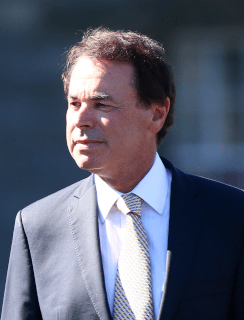
Birth of Alan Shatter, Lawyer, Author & Fine Gael Politician

Alan Joseph Shatter, Irish lawyer, author and former Fine Gael politician who serves as Minister for Justice and Equality and Minister for Defence (2011-14), is born into a Jewish family in Dublin on February 14, 1951. He also serves as a Teachta Dála (TD) for the Dublin South constituency (1981-2002, 2007-16). He leaves Fine Gael in early 2018 and unsuccessfully contests the 2024 Irish general election as an independent candidate for Dublin Rathdown.

Shatter is the son of Reuben and Elaine Shatter, an English couple who meet by chance when they are both on holiday in Ireland in 1947. He is educated at The High School, Dublin, Trinity College Dublin (TCD) and the Europa Institute of the University of Amsterdam. In his late teens, he works for two months in Israel on a kibbutz. He is a partner in the Dublin law firm Gallagher Shatter (1977-2011). As a solicitor he acts as advocate in many seminal and leading cases determined both by the Irish High and Supreme Courts. He is the author of one the major academic works on Irish family law which advocates substantial constitutional and family law reform.

Shatter enters politics at the 1979 Irish local elections, winning a seat on Dublin County Council for the Rathfarnham local electoral area. He retains this seat until 1999, becoming a member of South Dublin County Council in 1994. He is first elected to Dáil Éireann in 1981 as a Fine Gael TD and is re-elected at each subsequent election until he loses his seat in the 2002 Irish general election. He is re-elected at the 2007 Irish general election.

Shatter is Fine Gael Front Bench spokesperson on Law Reform (1982, 1987–88), the Environment (1989–91), Labour (1991), Justice (1992–93), Equality and Law Reform (1993–94), Health and Children (1997–2000), Justice, Law Reform and Defence (2000–02), Children (2007–10) and Justice and Law Reform (2010–11).

On March 9, 2011, Shatter is appointed by Taoiseach Enda Kenny as both Minister for Justice and Equality and Minister for Defence.

Under Shatter’s steerage, a substantial reform agenda is implemented with nearly 30 separate pieces of legislation published, many of which are now enacted including the Personal Insolvency Act 2012, Criminal Justice Act 2011, DNA Database Act, and the Human Rights and Equality Commission Act.

Under Shatter’s guidance, major reforms are introduced in 2011 into Ireland’s citizenship laws and a new Citizenship Ceremony is created. He both devises and pilots Ireland’s first ever citizenship ceremony which takes place in June 2011 and a new inclusive citizenship oath which he includes in his reforming legislation. During his time as Minister, he clears an enormous backlog of citizenship applications, and 69,000 foreign nationals become Irish citizens. Some applications had lain dormant for 3 to 4 years. He introduces a general rule that save where there is some real complication, all properly made citizenship applications should be processed within a six-month period. He also takes steps to facilitate an increased number of political refugees being accepted into Ireland and creates a special scheme to facilitate relations of Syrian families already resident in Ireland who are either caught up in the Syrian civil war, or in refugee camps elsewhere as a result of the Syrian civil war, to join their families in Ireland.

Shatter enacts legislation before the end of July 2011 to facilitate access to financial documentation and records held by third parties in investigations into banking scandals and white-collar crime. The legislation is first used by the Gardaí in September 2011.

During Ireland’s Presidency of the Council of the European Union in 2013, Shatter chairs the Justice and Home Affairs Council (JHA) meetings and, in January 2013, in Dublin Castle, the meeting of EU Defence Ministers. Under his guidance, Ireland plays a more active role than in the past in EU defence matters and in deepening Ireland’s participation in NATO’s partnership for peace. During the Irish Presidency, substantial progress is made at the European Union level in the adoption and development of new legislation and measures across a broad range of Justice and Home Affairs issues.

Shatter implements substantial reform in the Department of Defence and restructures the Irish Defence Forces. He is a strong supporter of the Irish Defence Forces participation in international peacekeeping and humanitarian engagements and is an expert on the Middle East. As a member of the Irish Parliament and as Minister on many occasions, he visits Irish troops participating in United Nations (UN) missions in the Middle East. Under his watch contracts are signed for the acquisition of two new naval vessels with an option to purchase a third. All three naval vessels are now part of the Irish Naval Service and have been actively engaged in recent years in rescuing drowning refugees in the Mediterranean Sea attempting to enter Europe.

As Minister for Defence he enacts legislation to grant a pardon and an amnesty to members of the Irish Defence Forces who deserted during World War II to fight on the allied side against Nazi Germany and gives a state apology for their post-war treatment by the Irish State.

Shatter is the minister responsible for two amendments to the Constitution of Ireland which are passed in referendums: the Twenty-ninth Amendment in 2011 to allow for the reduction of judges’ pay, and the Thirty-third Amendment in 2013 to establish a Court of Appeal. Just prior to his resignation from government, the draft legislation to create the court is published and the court is established and sitting by October 2014.

The jurisdictions of the courts are extended for the first time in 20 years and the maximum civil damages payable for the emotional distress of bereaved relations following a negligent death is increased.

As a politician, Shatter plays a lead role in effecting much of the constitutional and legislative change he advocates. He is a former chairperson of FLAC (the Free Legal Advice Centres), a former chairperson of CARE, an organisation that campaigns for childcare and children’s legislation reform in the 1970s and a former President of the Irish Council Against Blood Sports.

Shatter is a founder member of the Irish Soviet Jewry Committee in 1970 and pioneers a successful all party Dáil motion on the plight of Soviet Jewry (1984) and visits various refuseniks in Moscow in 1985. He is a former chairperson of the Oireachtas Foreign Affairs Committee (1996-97) and initiates the creation of an Ireland/Israel Parliamentary Friendship group in 1997, leading a number of visits to Israel by members of the Dáil Éireann and Seanad Éireann.

Shatter is the author of the satirical book Family Planning Irish Style (1979), and the novel Laura (1989). In 2017 his biography, Life is a Funny Business, is published by Poolbeg Press and in 2019 Frenzy and Betrayal: The Anatomy of a Political Assassination is published by Merrion Press. In 2023, his book Cyril’s Lottery of Life, a comedic book with an English solicitor from a small town as its protagonist, is published.