seamus dubhghaill

Promoting Irish Culture and History from Little Rock, Arkansas, USA


Leave a comment

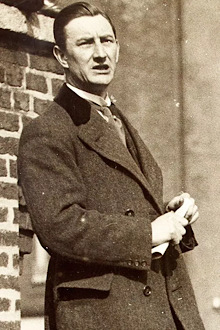
Death of Oscar Traynor, Fianna Fáil Politician & Republican

Oscar TraynorFianna Fáil politician and republican, dies in Dublin on December 14, 1963. He serves as Minister for Justice from 1957 to 1961, Minister for Defence from 1939 to 1948 and 1951 to 1954, Minister for Posts and Telegraphs from 1936 to 1939 and Parliamentary Secretary to the Minister for Defence from June 1936 to November 1936. He serves as a Teachta Dála (TD) from 1925 to 1927 and 1932 to 1961. He is also involved with association football, being the President of the Football Association of Ireland (FAI) from 1948 until 1963.

Traynor is born in Dublin on March 21, 1886, into a strongly nationalist family. He is educated by the Christian Brothers. In 1899, he is apprenticed to John Long, a famous woodcarver. As a young man he is a noted footballer and tours Europe as a goalkeeper with Belfast Celtic F.C. whom he plays with from 1910 to 1912. He rejects claims soccer is a foreign sport calling it “a Celtic game, pure and simple, having its roots in the Highlands of Scotland.”

Traynor joins the Irish Volunteers and takes part in the Easter Rising in 1916, being the leader of the Hotel Metropole garrison. Following this he is interned in Wales. During the Irish War of Independence, he is brigadier of the Dublin Brigade of the Irish Republican Army and leads the disastrous attack on the Custom House in 1921 and an ambush on the West Kent Regiment at Claude Road, Drumcondra on June 16, 1921, when the Thompson submachine gun is fired for the first time in action.

When the Irish Civil War breaks out in June 1922, Traynor takes the Anti-Treaty IRA side. The Dublin Brigade is split, however, with many of its members following Michael Collins in taking the pro-Treaty side. During the Battle of Dublin, he is in charge of the Barry’s Hotel garrison, before making their escape. He organises guerilla activity in south Dublin and County Wicklow, before being captured by Free State troops in September. He is then imprisoned for the remainder of the war.

On March 11, 1925, Traynor is elected to Dáil Éireann in a by-election as a Sinn Féin TD for the Dublin North constituency, though he does not take his seat due to the abstentionist policy of Sinn Féin. He is re-elected as one of eight members for Dublin North in the June 1927 Irish general election but just one of six Sinn Féin TDs. Once again, he does not take his seat. He does not contest the September 1927 Irish general election but declares his support for Fianna Fáil. He stands again in the 1932 Irish general election and is elected as a Fianna Fáil TD for Dublin North.

In 1936, Traynor is first appointed to the Cabinet as Minister for Posts and Telegraphs. In September 1939, he is appointed Minister for Defence and holds the portfolio to February 1948. In 1948, he becomes President of the Football Association of Ireland, a position he holds until his death. He serves as Minister for Defence in several Fianna Fáil governments and as Minister for Justice, where he is undermined by his junior minister, and later TaoiseachCharles Haughey, before he retires in 1961.

Traynor dies in Dublin at the age of 77 on December 14, 1963. He has a road named in his memory, running from the Malahide Road through Coolock to Santry in Dublin’s northern suburbs.

Leave a comment

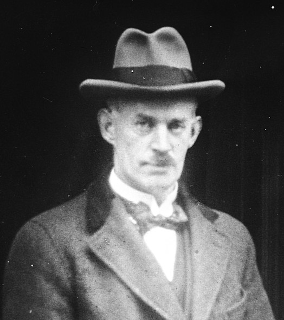
Birth of Eamonn Duggan, Lawyer & Politician

Eamonn Seán Duggan, Irish lawyer and politician, is born in Richhill, County Armagh, on March 2, 1878. He serves as Minister for Home Affairs (Jan 1922-Sep 1922), Minister without portfolio (Sep 1922-Dec 1922), Parliamentary Secretary to the Executive Council (1922-26), Parliamentary Secretary to the Minister for Finance (1926-27) and Government Chief Whip and Parliamentary Secretary to the Minister for Defence (1927-32). He serves as a Teachta Dála (TD) (1918-33) and a Senator (1933-36).

Duggan is the son of William Duggan, a Royal Irish Constabulary (RIC) officer, and Margaret Dunne. He is a cousin of revolutionaries Thomas Burke and Christopher Burke through his mother. His parents meet when his father, a native of County Wicklow, is stationed in Longwood, County Meath, where they marry on October 19, 1874. His father is transferred to County Armagh the following year as officers cannot serve in their wife’s native county.

In 1911, Duggan is living with his parents on St. Brigid’s Road Upper in Drumcondra, Dublin. After his school education, he begins work as a law clerk. During his early years, he becomes heavily involved in politics after he qualifies as a solicitor and sets up a practice at 66 Dame Street in Dublin. He marries Evelyn Kavanagh, and they have one son.

In 1916, as a keen supporter of Irish independence, Duggan is serving in the North Dublin Union in the days approaching the 1916 Easter Rising. One of his close friends, Thomas Allen, is shot while Duggan is at the Four Courts. His efforts to get medical assistance are unsuccessful at Richmond Hospital as the British officer who responds to the call declines the message and does not allow it to go through. Eventually medical assistance is received but it is too late for Allen. In Duggan’s region, the volunteers suffer very few injuries with the most violent fighting taking place on Friday night and Saturday morning.

Duggan suffers the consequences and is subject to court-martial and then sentenced to three years penal servitude. He is interned in Maidstone, Portland and Lewes prisons. Under the general amnesty of 1917, he is released after fourteen months in prison and returns to Dublin where he goes back to studying law.

Duggan is elected to the First Dáil Éireann as a Sinn Féin TD for South Meath following the 1918 United Kingdom general election in Ireland. The Drogheda Independent reports “Never before was a successful candidate accorded such a princely reception.”

Duggan engages in the Irish War of Independence in the role of IRA Director of Intelligence, which comes to an end in November 1920 when he is imprisoned again and is not released until the Anglo-Irish Truce of July 1921. When the truce concludes, he is authorised as one out of the five envoys to discuss and finalise the treaty with the British Prime Minister David Lloyd George. He signs the Anglo-Irish Treaty at 22 Hans Place, London.

Duggan retains numerous ministerial posts in the Cumann na nGaedheal government. In 1921, he plays a role in the Irish delegation throughout the Anglo-Irish discussions, then playing a dominant role in liaising with British officials.

After the post-treaty government, Duggan is appointed the Minister for Home Affairs and shortly afterward he becomes the Parliamentary Secretary for the Executive Council and the Minister for Defence. He continues in various roles as a TD until 1933. These include Government Chief Whip from 1927 to 1932. Until 1933, he is a Cumann na nGaedheal TD for Meath. In 1933, he declines to go forward for the general election but is elected to Seanad in April 1933. He also is involved in local politics in Dún Laoghaire as the chairman of the borough council until his death in 1936.

Duggan writes papers which reflect on his engagement in the Easter Rising. In his letters, he writes about the tough times of imprisonment. He also writes about his participation in Sinn Féin and his triumph in being a candidate for the South Meath constituency. Most of his papers consist of letters to his fiancée and later wife, May Duggan, which are written while in prison. His time as a TD is also included. In one letter, which he writes on April 25, 1916, he references “the whole damn family” consisting of information as to how his volunteers and he are being “treated as princes” by the nuns in the nearby convent, receiving help from the children in the area and building barricades. In his letter, he also writes about morale among his comrades and hearing of rumours about a German who had landed in County Kerry. In the note, he states that the letter should be sent to May Duggan who is his fiancée at the time. At the end of the letter he refers to himself as “Edmund” by which he is also known.

Duggan dies suddenly at his home in Dún Laoghaire, Dublin, on June 6, 1936, at the age of 58, and is buried in Glasnevin Cemetery on the north side of Dublin.


Leave a comment

Birth of Bertie Ahern, 11th Taoiseach of Ireland

Bartholemew Patrick “Bertie” Ahern, former Fianna Fáil politician who serves as Taoiseach from 1997 to 2008, is born in Drumcondra, Dublin, on September 12, 1951. He also serves as Leader of Fianna Fáil (1994-2008), Leader of the Opposition (1994-97), Tánaiste and Minister for Arts, Culture and the Gaeltacht (Nov.1994-Dec.1994), Deputy Leader of Fianna Fáil (1992-94), Minister for Industry and Commerce (Jan. 1993), Minister for Finance (1991-94), Minister for Labour (1987-1991), Government Chief Whip and Minister of State at the Department of Defence (Mar. 1982-Dec. 1982), Lord Mayor of Dublin (1986-1987) and as a Teachta Dála (TD) (1977-2011).

Ahern is educated at St. Patrick’s National School, Drumcondra and at St. Aidan’s Christian Brothers, Whitehall. He receives his third level education at the College of Commerce, Rathmines, part of the Dublin Institute of Technology. He claims or it has been claimed by others in circulated biographies that he was educated at University College Dublin (UCD), and the London School of Economics, but neither university has any records that show Ahern was ever one of their students. He subsequently works in the Accounts Department of Mater Misericordiae University Hospital in Dublin.

By 1972, Ahern has met his future wife, Miriam Kelly, a bank official who lives near the Aherns’ family home. They marry in St. Columba’s Church, Iona Road in 1975. They have two daughters from the marriage, Georgina and Cecelia. Georgina is the wife of Westlife member Nicky Byrne. Cecelia is a best-selling author. The Aherns separate in 1992.

Ahern is elected to the Dáil, the lower house of the Oireachtas, in 1977 as a member of the Fianna Fáil party for the newly created Dublin Finglas constituency. He is elected to the Dublin City Council in 1979, later becoming Lord Mayor of Dublin (1986–87). An assistant whip (1980–81) in the first government of Taoiseach Charles Haughey, he becomes a junior minister in Haughey’s second government (1982) and Minister for Labour in his third (1987–89) and fourth (1989–91) governments.

Ahern’s success in establishing general economic agreements with employers, unions, and farmers in 1987 and 1990 and his role in constructing the first Fianna Fáil coalition government (with the Progressive Democrats) in 1989 confirms his reputation as a skillful negotiator. He is made Minister for Finance in 1991. In the contest to choose Haughey’s successor, Ahern withdraws in favour of Albert Reynolds, and he remains Minister for Finance in each of Reynolds’s two governments (February–November 1992 and 1993–94). In November 1994, following the fall of the Fianna Fáil–Labour Party government, Reynolds resigns, and Ahern is elected party leader. He is set to become Taoiseach in a new coalition with the Labour Party, but at the eleventh-hour Labour opts to join a government with Fine Gael and Democratic Left.

Ahern forms a Fianna Fáil–Progressive Democrats minority government following elections in 1997. Credited with overseeing a thriving economy, he is reelected Taoiseach in 2002. He plays a major role in securing peace in Northern Ireland, participating in the signing of the Good Friday Agreement in 1998 and helping negotiate the return of devolution to Northern Ireland in 2007. On May 15, 2007, he becomes the first Taoiseach to address a joint session of the Parliament of the United Kingdom.

Soon afterward Ahern wins a third term as Taoiseach. He is reelected despite implications of his involvement in an influence-peddling scandal. The Tribunal of Inquiry into Certain Planning Matters & Payments, ultimately better known as the Mahon Tribunal, which is investigating alleged illegal payments by developers to politicians to influence zoning decisions in and around Dublin during the early 1990s, subsequently questions Ahern about his personal finances during his tenure as Minister for Finance. In early April 2008, as the investigation of Ahern’s involvement mounts, he announces that he will step down as Taoiseach and Leader of Fianna Fáil in May. He is succeeded in both posts by Brian Cowen. In the Mahon Tribunal’s final report, issued on March 22, 2012, it indicates that it does not believe Ahern had told the truth when questioned by the commission about alleged financial improprieties, though it does not directly accuse him of corruption. Ahern, threatened with expulsion from Fianna Fáil in the wake of the report, resigns from the party later in March while still maintaining that he had testified truthfully to the tribunal.

Ahern says in April 2018 that he is considering running for President of Ireland in 2025 as an independent candidate. That same month he walks out of an interview with DW News after being questioned on the findings of the Mahon Tribunal.

In October 2018, Ahern is appointed to chair the Bougainville Referendum Commission, which is responsible for preparing an independence referendum in Bougainville, Papua New Guinea, which takes place in December 2019.