seamus dubhghaill

Promoting Irish Culture and History from Little Rock, Arkansas, USA


2 Comments

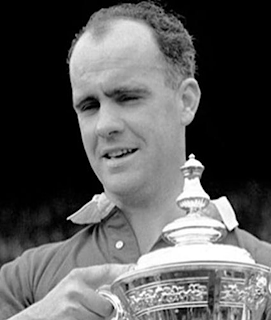
Birth of Billy Whelan, Irish Footballer

William Augustine Whelan, known as Billy Whelan or Liam Whelan, Irish footballer who plays as an inside-forward, is born at 28 St. Attracta’s Road, Cabra, Dublin, on April 1, 1935. He dies at the age of 22, as one of eight Manchester United players who are killed in the Munich air disaster.

Whelan is the fourth of seven children born to John and Elizabeth Whelan. His father is an accomplished centre half-back for Dublin club Brunswick and is instrumental in winning the FAI Junior Shield in 1924. His mother is an avid Shamrock Rovers supporter. His father dies in 1943 when Whelan is just eight years old.

Whelan plays Gaelic games, winning a medal for St. Peter’s national school in nearby Phibsborough. After leaving school at the age of fourteen, he works in Cassidy’s, an outfitter on South Great George’s Street. He is an accomplished Gaelic footballer and hurler, but association football is his first love.

Whelan begins his career at the age of twelve when he joins Home Farm before joining Manchester United as an 18-year-old in 1953. He is capped four times for the Republic of Ireland national football team, including a surprising 4–1 victory against Holland in Rotterdam in 1956, but does not score. His brother John plays for Shamrock Rovers and Drumcondra and his eldest brother Christy plays for Transport.

Whelan makes his first appearance for Manchester United during the 1954–55 season and quickly becomes a regular first-team player. He goes on to make 98 first-team appearances in four seasons at United, scoring 52 goals. He is United’s top scorer in the 1956–57 season, scoring 26 goals in the First Division and 33 in all competitions as United wins their second successive league title and reaches the semi-finals of the 1957-58 European Cup. He also gives a commanding display in the 1957 FA Cup final despite losing 2–1 to Aston Villa. Such is the strength of the competition in the United first team that he is soon being kept out of the side by Bobby Charlton. He is a traveling reserve for United’s ill-fated European Cup match against Red Star Belgrade in Belgrade on February 6, 1958, and is one of eight players to die in the subsequent air crash that destroys Matt Busby‘s young team and claims twenty-three lives. Fellow Irishman Harry Gregg, United’s goalkeeper and a survivor and hero of the Munich air crash, recalls Whelan’s last words as the plane is attempting take-off for the third and final time as “Well, if this is the time, then I’m ready.”

Thousands attend Whelan’s funeral on February 12 in St. Peter’s Church, Phibsborough, Dublin, and line the streets as the funeral procession makes its way to his burial-place in Glasnevin Cemetery. In December 2006 Dublin Corporation unveils a commemorative plaque on a bridge at Faussagh Road, Cabra, which was renamed Liam Whelan Bridge.

Although of a cheerful disposition, Whelan is also modest and shy by nature, and a quietly devout Catholic. He has a particular dislike of swearing and tends to fix a look of pained disappointment on teammates who use bad language. Nobby Stiles admits that he “would rather be caught swearing by the pope than by Billy Whelan.” His religious devotion regularly fuels rumours that he is considering being a priest, although at the time of his death he is engaged to be married to Ruby McCullough.


Leave a comment

Birth of Frank Stapleton, Association Footballer & Manager

Francis Anthony Stapleton, Irish former professional association football player and manager, is born in Dublin on July 10, 1956. He is best remembered for his time at Arsenal, Manchester United and as a pivotal player for the Republic of Ireland national football team. He has also been manager at Bradford City and Major League Soccer (MLS) club New England Revolution.

Stapleton is a distinguished centre-forward, once touted as being among the best in the world in his position, and an exceptionally strong header of the ball. He starts his career with Arsenal, joining them in 1972 as an apprentice, after being turned down by Manchester United. He makes his first-team debut in March 1975, at home to Stoke City, and goes on to form a potent striking partnership with Malcolm Macdonald. The two score 46 goals between them in 1976–77. He is Arsenal’s top scorer for the three following seasons and helps the Gunners reach a trio of FA Cup finals. He scores one of the goals in Arsenal’s 1979 FA Cup Final 3–2 win over Manchester United, and scores 108 goals in 300 appearances in total for the Gunners.

Stapleton moves on to Manchester United in the summer of 1981 for £900,000 as new manager Ron Atkinson begins building a team capable of challenging for silverware after a disappointing 1980–81 season under Dave Sexton. He helps United win the 1983 and 1985 FA Cups. It is in the first of those finals, when he scores against Brighton & Hove Albion, in which he makes history by becoming the first man to score for two different clubs in FA Cup Finals. United finishes in the top four of the league in each of Stapleton’s first five seasons at Old Trafford, and comes close to winning a league title medal in the 1985–86 season after United wins their first ten league games of the season before their form slumps and they finished fourth. Atkinson is sacked and replaced by Alex Ferguson in November 1986, and Stapleton remains a regular member of the first team under the new manager, but he leaves at the end of the season to sign for Ajax. There, he makes just six appearances and scores one goal before quickly being moved to Belgian side Anderlecht at the end of 1987, followed by a three-month loan back to England with Derby County. He then plays for French club Le Havre for a season, before returning to England with Blackburn Rovers in 1989, followed by moves to Aldershot, Huddersfield Town (as player-coach) and Bradford City.

After three seasons as player-manager at Bradford, Stapleton is sacked following their narrow failure to qualify for the Division Two playoffs at the end of the 1993-94 season. He then has a brief spell at Brighton & Hove Albion in the 1994–95 season, playing two games before finally announcing his retirement as a player.

Stapleton also wins 71 caps for the Republic of Ireland national team, scoring a then record 20 goals. He makes his international debut under then player-manager Johnny Giles in a friendly against Turkey in Ankara in 1976 at 20 years of age. He scores after only three minutes of his debut when he heads home a Giles free-kick at the near post. That friendly international finishes 3–3 and marks the start of a magnificent international career for the quiet and reserved Stapleton.

Stapleton is committed to international football insisting that an “international release clause” be inserted to all of his contracts so that he can be released to play in international games for Ireland.

Stapleton plays a significant role in Ireland’s attempt to qualify for the 1982 FIFA World Cup in Spain in 1982. Goals against Cyprus, the Netherlands and France by him in the qualifying matches are not enough as Ireland is denied a place at the World Cup by a superior French goal difference. He is made captain of the national team for the qualifying campaign for the 1986 FIFA World Cup though Ireland fails to emulate their fine performance in the 1982 qualifiers.

Jack Charlton takes over as the Irish manager in 1986 and he keeps Stapleton as captain despite a sometimes uneasy relationship between the two men. Stapleton scores a magnificent diving header in the opening UEFA Euro 1988 qualifier against Belgium in the 2–2 draw at the Heysel Stadium, Brussels, that September. He also scores in the 2–1 defeat by Bulgaria in Sofia on April 1, 1987, with another goal against Luxembourg in the 2–1 victory at Lansdowne Road the following September.

Stapleton captains the Irish team to the 1988 Euro finals and plays in all of their matches during the competition including Ireland’s famous victory against England.

After the 1988 European Championships Stapleton remains on the fringe of the national team during qualification for 1990 FIFA World Cup in Italy making just two appearances late in the campaign. By then, his 20 goals for the Republic had made him the national side’s all-time leading goalscorer, a record which is broken ten years later by Niall Quinn, who is in the early stages of his own international career when Stapleton bows out of the international scene. He does, however, score an 87th-minute goal against Malta in a 3–0 friendly in Valletta just prior to those finals in Italy.

Stapleton moves to the United States to manage Major League Soccer side New England Revolution in 1996. In the 2003–04 season he briefly returns to English football as a specialist coach of Bolton Wanderers. The Bolton manager, Sam Allardyce, wants Stapleton to enhance the skills of the strikers at the club and sees the Irishman as an ideal candidate, given his successful playing career.

Stapleton is appointed assistant manager to former teammate Ray Wilkins with Jordan on September 3, 2014.


4 Comments

Republic of Ireland’s First World Cup Finals Match

The Republic of Ireland plays their first ever match in the finals of the World Cup, drawing 1-1 with England in Cagliari, Sardinia on June 11, 1990.

At Italia ’90 the Irish team is drawn in a very tough Group F that includes European champions the Netherlands, African footballing power Egypt, and England. This is something of a coincidence as the English and the Dutch were also in Ireland’s UEFA Euro 1988 group. The tournament organisers are fearful that this grouping might lead to crowd disorder particularly between the English and Dutch fans. The group is based on the Italian islands of Sicily and Sardinia and security is very tight with alcohol bans in place on match days.

Ireland’s first match at a World Cup finals competition is against their longtime foe England. The English are seeking revenge for their surprise defeat by the Irish in the opening group match at Euro ’88. Once again Bobby Robson‘s English team is expected to beat Ireland and his players underline that by taking an early lead through an eight-minute goal from Gary Lineker. Despite Ireland getting a greater foothold in the second half an equaliser is elusive until an error by Steve McMahon allows Kevin Sheedy to score in the 73rd minute.

Ireland’s next matches are against Egypt and the Netherlands, both played in Palermo and both ending in a draw. The Irish team finishes group play with 0 wins, 0 losses and 3 draws. England registers the only win in the group, beating Egypt. The three European teams progress into the next round.

In the knock-out round Ireland avoids drawing West Germany, the ultimate winner of the 1990 World Cup. They draw Romania as their first opponent and end regulation in yet another draw in Genoa. A penalty shoot-out follows and after the first eight penalties the teams are still tied at 4-4. Irish goalkeeper Packie Bonner blocks Romania’s fifth penalty kick. David O’Leary steps up confidently and sends his kick past the goalkeeper and into the net. Ireland has advanced to the quarterfinals at the first attempt.

Ireland bows out at the quarterfinals stage losing by a single goal to the hosts, Italy, at the Stadio Olimpico in Rome. It is a very strange campaign in that Ireland does not win any of their matches, scores only two goals, and plays in some really poor matches in terms of quality of play. Notwithstanding this the Irish over-achieves which is fully appreciated by the Irish supporters. The green army stays on in the Stadio Olimpico long after the final whistle to laud manager Jack Charlton and his gallant squad.

(From: “Ireland at 1990 World Cup Finals in Italy,” Soccer-Ireland.com, http://www.soccer-ireland.com | Photograph by Ray McManus / SPORTSFILE)