seamus dubhghaill

Promoting Irish Culture and History from Little Rock, Arkansas, USA


Leave a comment

Death of Albert Rosen, Czech/Irish-Naturalized Conductor

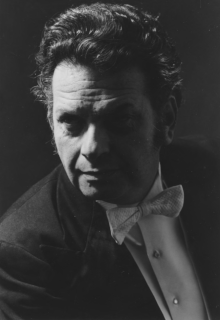
Albert Rosen, Austrian-born and Czech/Irish-naturalised conductor associated with the National Symphony Orchestra of Ireland, the Wexford Festival Opera, the National Theatre in Prague and J. K. Tyl Theatre in Plzeň (Pilsen), dies of lung cancer in Dublin on May 23, 1997. He has a strong affinity with the works of Czech composers such as Bedřich Smetana, Antonín Dvořák, Bohuslav Martinů, and Leoš Janáček.

Rosen is born in Vienna on February 14, 1924. His mother is Czech, while his father’s family is Austrian-Jewish. After Anschluss of Austria in 1938 they move to Bratislava, and after the Slovak version of Nuremberg Laws comes to force in September 1941, he escapes discrimination and genocide via the Danube and the sea to Israel (then Mandatory Palestine). There he works in the Shaʽar_HaGolan kibbutz, manually and as an amateur chorus master, until 1945, when he returns to Bratislava.

In 1946–47 Rosen studies piano, composition and conducting at the Vienna Academy of Music with Joseph Marx and Hans Swarowsky, and continues to study conducting at the Prague Conservatory under Pavel Dědeček and Alois Klíma (1947–48). He starts his career in J. K. Tyl Theatre in Plzeň (Pilsen) as a correpetiteur, assistant conductor and chorus master (1949–52) and conductor (1953–59), participating on the production of 11 operas, 19 ballets and, as the composer of stage music, 17 dramas. In 1960 he is engaged by National Theatre in Prague, to be appointed in 1964 the chief conductor of Smetana Theatre, the National Theatre’s opera stage. He holds this position until 1971, conducting 11 ballets and 9 opera productions.

In 1965 Rosen comes to Ireland for the first time to conduct the National Symphony Orchestra (under its former name, the Radio Telefís Éireann Symphony Orchestra) at the Wexford Festival Opera. This leads to regular appearances at the festival until 1994, conducting 18 Wexford productions, more than anyone else. In 1969 he becomes the orchestra’s chief conductor, until he becomes principal guest conductor in 1981. In 1994 he is honoured with the title Conductor Laureate of the orchestra.

Rosen’s operatic repertoire includes standard works such as Carmen (Bizet), Tosca and Madama Butterfly (Puccini), Il trovatore and Don Carlos (Verdi), Lohengrin (Wagner), Lucrezia Borgia (Donizetti), Otello and L’italiana in Algeri (Rossini), Káťa Kabanová (Janáček), La Wally (Catalani), The Bartered Bride (Smetana), and Salome (Richard Strauss). He also conducted unusual works such as Smetana’s The Two Widows and The Kiss, and Dvořák’s Rusalka, The Devil and Kate and The Jacobin.

In October 1978, in Dublin and Cork, Rosen conducts the National Symphony Orchestra in only the second and third performances of André Tchaikowsky‘s 2nd Piano Concerto, Op. 4, which are the first performances with the composer as soloist. He is to record the work in 1982, again with Tchaikowsky at the piano, but the composer becomes ill and the recording is cancelled. His other work with the NSO includes standard orchestral repertoire as well as major pieces such as Olivier Messiaen‘s Turangalîla-Symphonie and Gustav Mahler‘s Symphony No. 8 (Symphony of a Thousand). In 1992, the orchestra tours ten cities in Germany, having a major success with Die Fledermaus in Stuttgart.

Rosen makes his American debut at the San Francisco Opera in 1980, in Janáček’s Jenůfa. In Australia, he is chief conductor of the West Australian Symphony Orchestra from 1983 until 1985, and the Adelaide Symphony Orchestra in 1986. He conducts the British premiere of Nikolai Rimsky-Korsakov‘s opera Christmas Eve with English National Opera in 1988. He becomes music director of the Irish National Opera in 1993.

Rosen often conducts the National Youth Orchestra of Ireland during the 1990s, in challenging works such as the tone poems and An Alpine Symphony of Richard Strauss. Other opera orchestras he conducts included those of the Welsh National Opera, Scottish Opera, Vancouver Opera, San Diego Opera, and the Dublin Grand Opera Society.

Rosen becomes an Irish citizen by naturalisation. His own conducting students include John Finucane.

Rosen dies at the age of 73 in Dublin on May 23, 1997, of lung cancer.


Leave a comment

Birth of Albert Rosen, Czech/Irish-Naturalized Conductor

Albert Rosen, Austrian-born and Czech/Irish-naturalised conductor associated with the National Symphony Orchestra of Ireland, the Wexford Festival Opera, the National Theatre in Prague and J. K. Tyl Theatre in Plzeň (Pilsen), is born in Vienna on February 14, 1924. He has a strong affinity with the works of Czech composers such as Bedřich Smetana, Antonín Dvořák, Bohuslav Martinů, and Leoš Janáček.

Rosen’s mother is Czech, while his father’s family is Austrian-Jewish. After Anschluss of Austria in 1938 they move to Bratislava, and after the Slovak version of Nuremberg Laws comes to force in September 1941, he escapes discrimination and genocide via the Danube and the sea to Israel (then Mandatory Palestine). There he works in the Shaʽar_HaGolan kibbutz, manually and as an amateur chorus master, until 1945, when he returns to Bratislava.

In 1946–47 Rosen studies piano, composition and conducting at the Vienna Academy of Music with Joseph Marx and Hans Swarowsky, and continues to study conducting at the Prague Conservatory under Pavel Dědeček and Alois Klíma (1947–48). He starts his career in J. K. Tyl Theatre in Plzeň (Pilsen) as a correpetiteur, assistant conductor and chorus master (1949–52) and conductor (1953–59), participating on the production of 11 operas, 19 ballets and, as the composer of stage music, 17 dramas. In 1960 he is engaged by National Theatre in Prague, to be appointed in 1964 the chief conductor of Smetana Theatre, the National Theatre’s opera stage. He holds this position until 1971, conducting 11 ballets and 9 opera productions.

In 1965 Rosen comes to Ireland for the first time to conduct the National Symphony Orchestra (under its former name, the Radio Telefís Éireann Symphony Orchestra) at the Wexford Festival. This leads to regular appearances at the festival until 1994, conducting 18 Wexford productions, more than anyone else. In 1969 he becomes the orchestra’s chief conductor, until he becomes principal guest conductor in 1981. In 1994 he is honoured with the title Conductor Laureate of the orchestra.

Rosen’s operatic repertoire includes standard works such as Carmen (Bizet), Tosca and Madama Butterfly (Puccini), Il trovatore and Don Carlos (Verdi), Lohengrin (Wagner), Lucrezia Borgia (Donizetti), Otello and L’italiana in Algeri (Rossini), Káťa Kabanová (Janáček), La Wally (Catalani), The Bartered Bride (Smetana), and Salome (Richard Strauss). He also conducted unusual works such as Smetana’s The Two Widows and The Kiss, and Dvořák’s Rusalka, The Devil and Kate and The Jacobin.

In October 1978, in Dublin and Cork, Rosen conducts the National Symphony Orchestra in only the second and third performances of André Tchaikowsky‘s 2nd Piano Concerto, Op. 4, which are the first performances with the composer as soloist. He is to record the work in 1982, again with Tchaikowsky at the piano, but the composer becomes ill, and the recording is cancelled. His other work with the NSO includes standard orchestral repertoire as well as major pieces such as Olivier Messiaen‘s Turangalîla-Symphonie and Gustav Mahler‘s Symphony No. 8 (Symphony of a Thousand). In 1992, the orchestra tours ten cities in Germany, having a major success with Die Fledermaus in Stuttgart.

Rosen makes his American debut at the San Francisco Opera in 1980, in Janáček’s Jenůfa. In Australia, he is chief conductor of the West Australian Symphony Orchestra from 1983 until 1985, and the Adelaide Symphony Orchestra in 1986. He conducts the British premiere of Nikolai Rimsky-Korsakov‘s opera Christmas Eve with English National Opera in 1988. He becomes music director of the Irish National Opera in 1993.

Rosen often conducts the National Youth Orchestra of Ireland during the 1990s, in challenging works such as the tone poems and An Alpine Symphony of Richard Strauss. Other opera orchestras he conducts included those of the Welsh National Opera, Scottish Opera, Vancouver Opera, San Diego Opera, and the Dublin Grand Opera Society.

Rosen becomes an Irish citizen by naturalisation. His own conducting students include John Finucane.

Rosen dies at the age of 73 in Dublin on May 23, 1997, of lung cancer.
(Pictured: Albert Rosen conducts the RTÉ Symphony Orchestra in St. Patrick’s Training College in Drumcondra, Dublin, in 1972)


Leave a comment

Birth of Irish Writer Francis Stuart

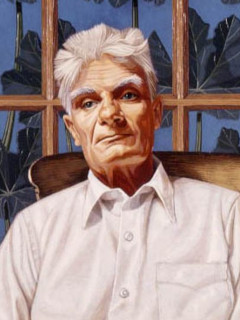
Henry Francis Montgomery Stuart, Irish writer, is born in Townsville, Queensland, Australia on April 29, 1902. He is awarded one of the highest artistic accolades in Ireland, being elected a Saoi of Aosdána, before his death in 2000. His years in Nazi Germany lead to a great deal of controversy.

Stuart is born to Irish Protestant parents, Henry Irwin Stuart and Elizabeth Barbara Isabel Montgomery. His father is an alcoholic and kills himself when Stuart is an infant. This prompts his mother to return to Ireland and Stuart’s childhood is divided between his home in Ireland and Rugby School in England, where he boards.

In 1920, at age 17, Stuart becomes a Catholic and marries Iseult Gonne, daughter of Maud Gonne. Her father is the right-wing French politician Lucien Millevoye, with whom Maud Gonne had had an affair between 1887 and 1899. Because of her complex family situation, Iseult is often passed off as Maud Gonne’s niece in conservative circles in Ireland. Iseult has a brief affair with Ezra Pound prior to meeting Stuart. Pound and Stuart both believe in the primacy of the artist over the masses and are subsequently drawn to fascism, Stuart to Nazi Germany and Pound to Fascist Italy.

Gonne and Stuart have a baby daughter who dies in infancy. Perhaps to recover from this tragedy, they travel for a while in Europe but return to Ireland as the Irish Civil War begins. Unsurprisingly given Gonne’s strong opinions, the couple are caught up on the anti-Treaty Irish Republican Army (IRA) side of the fight. Stuart is involved in gun running and is interned following a botched raid.

After independence, Stuart participates in the literary life of Dublin and writes poetry and novels. His novels are successful, and his writing is publicly supported by W. B. Yeats.

Stuart’s time with Gonne is not an entirely happy time as both he and his wife apparently struggle with personal demons and their internal anguish poisons their marriage. In letters to close friend W. B. Yeats, Maud Gonne characterizes Stuart as being emotionally, financially, and physically abusive towards Iseult.

During the 1930s Stuart becomes friendly with German Intelligence (Abwehr) agent Helmut Clissmann and his Irish wife Elizabeth. Clissmann is working for the German Academic Exchange Service and the Deutsche Akademie (DA). He is facilitating academic exchanges between Ireland and the Third Reich but also forming connections which might be of benefit to the Abwehr. Clissmann is also a representative of the Nazi Auslandorganisation (AO), the Nazi Party’s foreign organisation, in pre-war Ireland.

Stuart is also friendly with the head of the German Legation in Dublin, Dr. Eduard Hempel, largely as a result of Maud Gonne MacBride’s rapport with him. By 1938 he is seeking a way out of his marriage and the provincialism of Irish life. Iseult intervenes with Clissmann to arrange for Stuart to travel to Germany to give a series of academic lectures in conjunction with the DA. He travels to Germany in April 1939 and visits Munich, Hamburg, Bonn and Cologne. After his lecture tour, he accepts an appointment as lecturer in English and Irish literature at Berlin University to begin in 1940. At this time, under the Nuremberg Laws, the German academic system has barred Jews.

In July 1939, Stuart returns home to Laragh, County Wicklow, and after his plans for traveling to Germany are finalised, he receives a visit from his brother-in-law, Seán MacBride, following the seizure of an IRA radio transmitter on December 29, 1939, which had been used to contact Germany. Stuart, MacBride, Seamus O’Donovan, and IRA Chief of Staff Stephen Hayes then meet at O’Donovan’s house. Stuart is told to take a message to Abwehr HQ in Berlin. Upon arrival in Berlin in January 1940, he delivers the IRA message and has some discussion with the Abwehr on conditions in Ireland and the fate of the IRA-Abwehr radio link. Around August 1940, he is asked by Sonderführer Kurt Haller if he will participate in Operation Dove and he agrees, although he is later dropped in favour of Frank Ryan.

Between March 1942 and January 1944 Stuart works as part of the Redaktion-Irland team, reading radio broadcasts containing Nazi propaganda which are aimed at and heard in Ireland. In his broadcasts he frequently speaks with admiration of Adolf Hitler and expresses the hope that Germany will help unite Ireland. He is dropped from the Redaktion-Irland team in January 1944 because he objects to the anti-Soviet material that is presented to him and deemed essential by his supervisors. His passport is taken from him by the Gestapo after this event.

In 1945 Stuart plans to Ireland with a former student Gertrude Meissner. They are arrested and detained by Allied troops. Following their release, Stuart and Meissner live in Germany and then France and England. They marry in 1954 after Iseult’s death and in 1958 they return to settle in Ireland. In 1971 Stuart publishes his best-known work, Black List Section H, an autobiographical fiction documenting his life and distinguished by a queasy sensitivity to moral complexity and moral ambiguity.

In 1996 Stuart is elected a Saoi of Aosdána, a high honour in the Irish art world. Influential Irish language poet Máire Mhac an tSaoi objects strongly, referring to Stuart’s actions during the war and claiming that he holds anti-Semitic opinions. When it is put to a vote, she is the only person to vote for her motion. She resigns from Aosdána in protest, sacrificing a government stipend by doing so. While the Aosdána affair is ongoing, The Irish Times columnist Kevin Myers attacks Stuart as a Nazi sympathiser. Stuart sues for libel and the case is settled out of court. The statement from The Irish Times read out in the High Court accepts “that Mr. Stuart never expressed anti-Semitism in his writings or otherwise.”

For some years before his death Stuart lives in County Clare with his partner Fionuala and in County Wicklow with his son Ian and daughter-in-law Anna in a house outside Laragh village. He dies of natural causes on February 2, 2000, at the age of 97 in County Clare.