seamus dubhghaill

Promoting Irish Culture and History from Little Rock, Arkansas, USA


Leave a comment

The Barebone’s Parliament of 1653

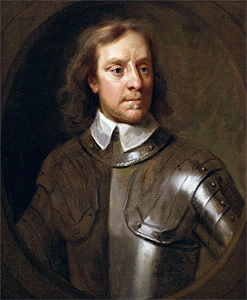
Oliver Cromwell

The Barebone’s Parliament, also known as the Little Parliament, the Nominated Assembly, and the Parliament of Saints, comes into being on July 4, 1653, and is the last attempt of the English Commonwealth to find a stable political form before the installation of Oliver Cromwell (pictured) as Lord Protector. It is an assembly entirely nominated by Oliver Cromwell and the New Model Army‘s Council of Officers. It acquires its name from the nominee for the City of London, Praise-God Barebone. The Speaker of the House is Francis Rous. There are a total of 140 nominees – 129 from England, five from Scotland, and six from Ireland. The Barebone’s Parliament is preceded by the Rump Parliament and succeeded by the First Protectorate Parliament.

The assembly, inspired by the Jewish Sanhedrin, meets for the first time on July 4 in the council chamber at Whitehall. Cromwell opens proceedings with a speech around two hours long. He begins by summing up the “series of Providences” that have brought them to this point, starting with the Short Parliament and singling out 1648 as the “most memorable year that ever this nation saw.”

The assembly then adjourns before sitting in full on the following day. On that day they elect Francis Rous, initially as chairman. He is not known as Speaker until a month later. Henry Scobell is appointed as Clerk. On July 12, the assembly publishes a declaration declaring itself to be the parliament of the Commonwealth of England. This is the first time that it has been formally described as a parliament.

By early September, Cromwell is said to be growing frustrated with the assembly’s in-fighting between different groups. Attendance also begins to fall. Over one hundred members are present at most votes in July, dropping to an average turnout of 70 by October. Various bills inflame conflict between the radical and moderate members – bills to abolish the Court of Chancery, regulate legal fees, tithes, and speeding up the settlement of cases in the Court of Admiralty all become bogged down in conflict. At this point, however, radical members are still mainly outnumbered in votes by moderate and conservative members.

This changes during November and December when debate returns to the question of tithes. On December 6, the committee appointed to consider the question presents their report, covering the question of how unfit ministers are to be ejected, naming commissioners who will have the job of enacting this, and retaining support for tithes in prescribed circumstances. In a defeat for the moderates, the first clause is voted down 56 to 54. Two days later, moderates come to the House and demand that the assembly abdicate its powers, criticising radical members for threatening the well being of the Commonwealth by fomenting disagreement. Rous and around 40 members walk out and go to Cromwell at Whitehall, presenting a document signed by nearly 80 members that declares: “Upon a Motion this day made in the House, that the sitting of this Parliament any longer as now constituted, will not be for the good of the Commonwealth.” Those left in the house are soon confronted by troops requesting that they leave. On December 12, 1653, the members of the assembly vote to dissolve it.


Leave a comment

Creation of The Honourable The Irish Society

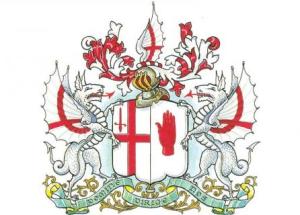
irish-society-coat-of-arms

On January 28, 1613, The Honourable The Irish Society, a consortium of livery companies of the City of London, is created by Royal Charter of James I of England to undertake the Plantation in the North West of Ulster that is then being driven by the English Crown.

Following the Gaelic defeat in the Nine Years’ War in 1603 and the Flight of the Earls in 1607, northwest Ulster is left open to colonisation. James I sets out to defend against a future attack from within or without. He finds that the town of Derry can become either a great asset as a control over the River Foyle and Lough Swilly, or it can become an inviting back door should the people of the area turn against him. He pressures the guilds of the City of London to fund the resettlement of the area, including the building of a new walled city. This results in the creation of the Society.

The city of Derry is renamed Londonderry in recognition of the London origin of the Irish Society. County Coleraine is enlarged and renamed County Londonderry after its new county town. The rural area of the county is subdivided between the Great Twelve livery companies, while the towns and environs of Londonderry and Coleraine are retained by the Irish Society.

In January 1635, the Irish Society, as well as the City of London, are found guilty of mismanagement and neglect of Derry plantation. They are sentenced to a fine of £70,000 and forfeiture of Derry property. The Society is suppressed in 1637 but is revived by Oliver Cromwell in 1650 and again after the Restoration by Londonderry’s 1662 royal charter.

The Society is involved in several controversies over the years including a dispute over fishing rights with the Church of Ireland and Bishop of Derry and a lawsuit brought by The Skinners’ Company in 1832 over the distribution of profits. The Society also has some disputes with the corporations over ownership and development of property. During the 17th and 18th centuries, four of the twelve livery companies sell their estates, with the Irish Society requiring a bond of indemnity in each case. Leases to middlemen granted by the remaining companies expire at various times during the nineteenth century, after which the companies “enormously increased the rental.”

The Society finances the building of the Guildhall in Derry. Construction begins in 1887 and it is opened in July 1890, at a cost of £19,000.

The Society remains in existence today as a relatively small grant-giving charitable body. Its educational grants are funded by its remaining property, including the Walls of Derry, a tourist attraction and heritage site, and fisheries on the River Bann. The Society is based in London, but maintains a “representative” resident in County Londonderry.