seamus dubhghaill

Promoting Irish Culture and History from Little Rock, Arkansas, USA


Leave a comment

John Sutton Appointed Lord Lieutenant of Ireland

john-sutton-coat-of-armsJohn Sutton, 1st Baron Dudley, an English nobleman, is appointed Lord Lieutenant of Ireland on April 30, 1428, serving for two years. A diplomat and councillor of Henry VI, he fights in several battles during the Hundred Years’ War and the Wars of the Roses.

Born on December 25, 1400, Sutton is baptised at Barton-under-Needwood, Staffordshire. His father is Sir John de Sutton V and his mother is Constance Blount, daughter of Sir Walter Blount. He marries Elizabeth de Berkeley, of Beverston, widow of Edward Charleton, 5th Baron Cherleton, sometime after March 14, 1420.

Sutton is summoned to Parliament from February 15, 1440, by writs directed to “Johanni de Sutton de Duddeley militi,” whereby he obtains a Barony by writ as Lord Dudley. He is the first of his family to adopt the surname of Dudley as an pseudonym for Sutton.

As Lord Steward in 1422 Sutton brings home the body of King Henry V to England, and is chief mourner and standard bearer at his funeral. From 1428–1430 he serves as Lord Lieutenant of Ireland. He fights in several campaigns throughout the period of the wars with France, and on several occasions acts as a diplomat in the mid-1440s, when he also meets Charles VII of France. In 1443 he is made a king’s councillor and becomes one of the favourite companions of King Henry VI. In 1451 he becomes a Knight of the Garter. Early on in the Wars of the Roses he is a resolute defender of the House of Lancaster, but changes his allegiance to York before the Battle of Towton in 1461.

At the First Battle of St. Albans in 1455, Sutton takes part with his son Edmund, where he is taken prisoner along with Henry VI. At the Battle of Blore Heath on September 23, 1459 he is again present equally with his son, commanding a wing under Lord Audley. Sutton is wounded and again captured. At Towton in 1461 he is rewarded after the battle for his participation on the side of Edward, Earl of March, son of Richard of York, 3rd Duke of York. On June 28 of that year, Edward IV is proclaimed King in London.

John Sutton dies intestate on September 30, 1487. His will is dated August 17, 1487. The barony is inherited by his grandson, Edward Sutton, 2nd Baron Dudley, son of Sir Edmund Sutton who was the heir but dies after July 6, 1483 but before his father.

(Pictured: Coat of Arms of Sir John Sutton, 1st Baron Dudley, KG)

Leave a comment

Birth of James Hamilton, First Governor of Northern Ireland

james-hamilton

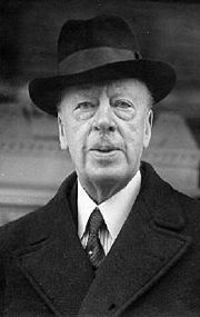
James Albert Edward Hamilton, 3rd Duke of Abercorn, is born in Hamilton Place, Piccadilly, London, on November 30, 1869. Styled Marquess of Hamilton between 1885 and 1913, he is a British peer and Unionist politician. He serves as the first Governor of Northern Ireland, a post he holds between 1922 and 1945. He is a great-grandfather of Diana, Princess of Wales.

Hamilton is the eldest son of James Hamilton, 2nd Duke of Abercorn, and godson of the Prince of Wales. His mother, Lady Mary Anna, is the fourth daughter of Richard Curzon-Howe, 1st Earl Howe. He is educated at Eton College and subsequently serves first in the Royal Inniskilling Fusiliers until 1892 when he joins the 1st Life Guards. He is later transferred as major to the North Irish Horse.

In early 1901 he accompanies his father on a special diplomatic mission to announce the accession of King Edward to the governments of Denmark, Sweden and Norway, Russia, Germany, and Saxony.

In the 1900 general election, Hamilton stands successfully as Unionist candidate for Londonderry City, and three years later he becomes Treasurer of the Household, a post he holds until the fall of Arthur Balfour‘s Conservative administration in 1905. After serving for a time as an Opposition whip, Hamilton succeeds his father as third Duke of Abercorn in 1913. In 1922, he is appointed governor of the newly created Northern Ireland. He also serves as Lord Lieutenant of Tyrone from 1917 until his death, having previously been a Deputy Lieutenant for County Donegal. Abercorn proves a popular royal representative in Northern Ireland and is reappointed to the post in 1928 after completing his first term of office. In 1931, he declines the offer of the governor generalship of Canada, and three years later he is again reappointed governor for a third term. He remains in this capacity until his resignation in July 1945.

Abercorn is made the last non-royal Knight of the Most Illustrious Order of Saint Patrick in 1922. In 1928 he becomes a Knight of the Most Noble Order of the Garter and is also the recipient of an honorary degree from the Queen’s University Belfast. He receives the Royal Victorian Chain in 1945, the same year he is sworn of the Privy Council.

Abercorn marries Lady Rosalind Cecilia Caroline Bingham, only daughter of Charles Bingham, 4th Earl of Lucan and his wife Lady Cecilia Catherine Gordon-Lennox at St. Paul’s Church, Knightsbridge, on November 1, 1894. They have three daughters and two sons.

Abercorn dies at his London home on September 12, 1953, and is buried at Baronscourt in County Tyrone.