
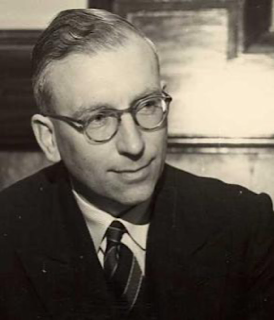
Thomas Kenneth Whitaker, Irish economist, politician, diplomat and civil servant, dies in Blackrock, Dublin, on January 9, 2017, a month after his 100th birthday. He serves as Secretary of Ireland’s Department of Finance from 1956 to 1969, as Governor of the Central Bank of Ireland from 1969 to 1976 and as a Senator from 1977 to 1982, after being nominated by the Taoiseach. He is considered one of the most influential civil servants in the history of the Irish State, with his economic policies greatly influencing the development of modern Ireland.
Whitaker is born in Rostrevor, a small town in the south of County Down, to Roman Catholic parents on December 8, 1916, and is reared in Drogheda, County Louth, in modest circumstances. Neither of his parents are from Ulster. His mother, Jane O’Connor, comes from Ballyguirey East, Labasheeda, County Clare. His father, Edward Whitaker, hails from County Westmeath and is assistant manager of a linen mill. He receives his primary and secondary education at the local CBS in Drogheda. He studies mathematics, Celtic studies and Latin by correspondence course at University of London, and is awarded external degrees in economics: a bachelor’s degree in 1941 and a master’s degree in 1952.
In 1956, Whitaker is appointed Secretary of the Department of Finance, at the age of thirty-nine. His appointment takes place at a time when Ireland’s economy is in deep depression. Economic growth is non-existent, inflation apparently insoluble, unemployment rife, living standards low and emigration at a figure not far below the birth rate. He believes that free trade, with increased competition and the end of protectionism, will become inevitable and that jobs will have to be created by a shift from agriculture to industry and services. He forms a team of officials within the department which produce a detailed study of the economy, culminating in a plan recommending policies for improvement. The plan is accepted by the government and is transformed into a white paper which becomes known as the First Programme for Economic Expansion, and quite unusually is published with his name attached in November 1958. The programme becomes known as the “Grey Book” which many argue brings the stimulus of foreign investment into the Irish economy. However, other reforms such as the Department of Industry and Commerce‘s export profits tax relief introduced in 1956, are opposed by Whitaker.
In 1977, Taoiseach Jack Lynch nominates Whitaker as a member of the 14th Seanad. He serves as a Senator from 1977 to 1981, where he sits as an independent member.
In 1981, Whitaker is nominated to the 15th Seanad by Taoiseach Garret FitzGerald, where he serves until 1982. FitzGerald also appoints him to chair a Committee of Inquiry into the Irish penal system, and he chairs a Parole Board or Sentence Review Group for several years.
Whitaker also serves as Chancellor of the National University of Ireland (NUI) from 1976 to 1996. He was also President of the Royal Irish Academy (RIA) and as such, a member of the Board of Governors and Guardians of the National Gallery of Ireland, from 1985 to 1987. He has a very strong love for the Irish language throughout his career and the collection of Irish poetry, An Duanaire: Poems of the Dispossessed 1600–1900, edited by Seán Ó Tuama and Thomas Kinsella is dedicated to Whitaker. From 1995 to 1996 he chairs the Constitution Review Group, an independent expert group established by the government, which publishes its report in July 1996.
Whitaker receives many national and international honours and tributes for his achievements during his lifetime, most notably the conferral of “Irishman of the 20th Century” in 2001 and Greatest Living Irish Person in 2002. In November 2014, the Institute of Banking confers an Honorary Fellowship on him and creates an annual T. K. Whitaker Scholarship in his name. In April 2015, he is presented with a lifetime achievement award by University College Dublin‘s Economics Society for his outstanding contribution to Ireland’s economic policy.
In November 2016, to mark his centenary year, Dún Laoghaire–Rathdown County Council acknowledges Whitaker’s “outstanding and progressive contribution to Irish public service and to society.” The Cathaoirleach of Dún Laoghaire–Rathdown, Cormac Devlin, presents a special award to Whitaker which is accepted by Ken Whitaker on behalf of his father.
Whitaker marries Nora Fogarty in 1941 and they have six children. After his wife’s death in 1994, he remarries, to Mary Moore in 2005. The couple is invited to Áras an Uachtaráin in 2006 for his 90th birthday by the President of Ireland Mary McAleese. Mary Moore Whitaker dies in 2008. T. K. Whitaker turns 100 in December 2016 and dies a month later on January 9, 2017, having survived both of his wives. He is buried at Shanganagh Cemetery, Shankill, Dublin.
The main administrative building in Dundalk Institute of Technology is named after him, the T.K. Whitaker Building. Whitaker Square in the Grand Canal Dock area of Dublin 2 is named in his honour. The offices of the Economic and Social Research Institute are located on the square.

 seamus dubhghaill