seamus dubhghaill

Promoting Irish Culture and History from Little Rock, Arkansas, USA


Leave a comment

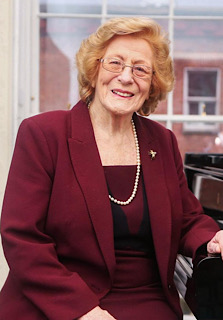
Death of Veronica Dunne, Operatic Soprano & Voice Teacher

Veronica Dunne, Irish operatic soprano and voice teacher also known as Ronnie Dunne, who is described as “an Irish national treasure,” dies on April 5, 2021. After a successful operatic career at the Dublin Opera and the Royal Opera House in London, she focuses on voice teaching in Dublin, where she trains future international singers. The triennial Veronica Dunne International Singing Competition is established in 1995. She receives the National Concert Hall Lifetime Achievement Award in 2014.

Dunne is born in Dublin on August 20, 1927. She is the youngest of three children of a well-to-do family. Her father works as a master builder whose construction firm builds the church in Foxrock, Dublin, in the early 1930s. She begins singing when she is 11 years old. She studies initially in Dublin with Hubert Rooney. She then sells her pony for £125 in order to fund her dream of studying music in Italy. She goes to Rome in 1946 to study with Soldini Calcagni and Francesco Calcatelli. Her family meets with Sarsfield Hogan, the secretary of the Department of Finance at the time, to discuss the issue of her monthly allowance, which would breach foreign exchange controls. Sarsfield permits her to receive the money on the condition that she return to Ireland in the future and teach her young compatriots to sing.

Dunne makes her operatic debut in Dublin in 1948 as Micaëla in Georges Bizet‘s Carmen with the Dublin Grand Opera Society, and appears there in 1949 as Marguerite in Charles Gounod‘s Faust. She wins the Concorso Lirico Milano in 1952, which brings her the role of Mimì in Ruggero Leoncavallo‘s La bohème at the Teatro Nuovo in Milan, which in turn brings her a contract from the Royal Opera House in London, where she first appears as Sophie in Der Rosenkavalier by Richard Strauss. She performs at the house alongside Joan Sutherland and Kathleen Ferrier. In 1958, she appears as Blanche in the first performance at the house of Francis Poulenc‘s Dialogues of the Carmelites. She also performs with the Welsh National OperaScottish Opera, and Wexford Festival Opera. She returns to the stage in 2002 to appear as Countess in Pyotr Ilyich Tchaikovsky‘s The Queen of Spades at the Gaiety Theatre in Dublin.

Dunne gives a number of world premieres of works by contemporary Irish composers including Never to Have Lived is Best (1965) by Seóirse Bodley, as well as Irish Songs (1971) and The Táin (1970) by James Wilson.

Dunne is appointed a voice teacher at the then Dublin College of Music (today Technical University Conservatory of Music and Drama) in 1962. She is awarded an honorific doctorate in 1987. She retires in 1992, but continues to teach at the Leinster School of Music and the Royal Irish Academy of Music. Her students include Patricia Bardon, Orla Boylan, Mary Brennan, Tara Erraught, Lynda Lee, Colette McGahon, Anthony KearnsSuzanne Murphy, and Finbar Wright, who have all sung in the major international opera houses. In 2014, at the age of 87, she continues to teach 39 hours per week.

The triennial Veronica Dunne International Singing Competition, established by the Friends of the Vocal Arts in Ireland in 1995, awards bursaries in her name. Recipients included Orla Boylan, Sarah-Jane Brandon, Tara Erraught, Pumeza Matshikiza and Simon O’Neill. She receives the National Concert Hall Lifetime Achievement Award in 2014.

Dunne marries Peter McCarthy in 1953. The couple has two children.

Dunne dies at the age of 93, on April 5, 2021. Irish President Michael D. Higgins pays tribute to Dunne, saying that she “captivated millions with her singing” and adding, “The legacy she leaves lies in the talents of those scores of others whose talents and performances she unlocked with her enthusiasm, energy and commitment as a teacher and friend.”

Leave a comment

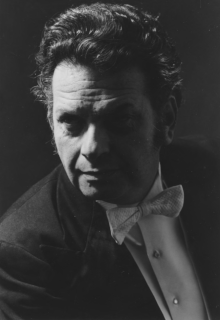
Death of Albert Rosen, Czech/Irish-Naturalized Conductor

Albert Rosen, Austrian-born and Czech/Irish-naturalised conductor associated with the National Symphony Orchestra of Ireland, the Wexford Festival Opera, the National Theatre in Prague and J. K. Tyl Theatre in Plzeň (Pilsen), dies of lung cancer in Dublin on May 23, 1997. He has a strong affinity with the works of Czech composers such as Bedřich Smetana, Antonín Dvořák, Bohuslav Martinů, and Leoš Janáček.

Rosen is born in Vienna on February 14, 1924. His mother is Czech, while his father’s family is Austrian-Jewish. After Anschluss of Austria in 1938 they move to Bratislava, and after the Slovak version of Nuremberg Laws comes to force in September 1941, he escapes discrimination and genocide via the Danube and the sea to Israel (then Mandatory Palestine). There he works in the Shaʽar_HaGolan kibbutz, manually and as an amateur chorus master, until 1945, when he returns to Bratislava.

In 1946–47 Rosen studies piano, composition and conducting at the Vienna Academy of Music with Joseph Marx and Hans Swarowsky, and continues to study conducting at the Prague Conservatory under Pavel Dědeček and Alois Klíma (1947–48). He starts his career in J. K. Tyl Theatre in Plzeň (Pilsen) as a correpetiteur, assistant conductor and chorus master (1949–52) and conductor (1953–59), participating on the production of 11 operas, 19 ballets and, as the composer of stage music, 17 dramas. In 1960 he is engaged by National Theatre in Prague, to be appointed in 1964 the chief conductor of Smetana Theatre, the National Theatre’s opera stage. He holds this position until 1971, conducting 11 ballets and 9 opera productions.

In 1965 Rosen comes to Ireland for the first time to conduct the National Symphony Orchestra (under its former name, the Radio Telefís Éireann Symphony Orchestra) at the Wexford Festival Opera. This leads to regular appearances at the festival until 1994, conducting 18 Wexford productions, more than anyone else. In 1969 he becomes the orchestra’s chief conductor, until he becomes principal guest conductor in 1981. In 1994 he is honoured with the title Conductor Laureate of the orchestra.

Rosen’s operatic repertoire includes standard works such as Carmen (Bizet), Tosca and Madama Butterfly (Puccini), Il trovatore and Don Carlos (Verdi), Lohengrin (Wagner), Lucrezia Borgia (Donizetti), Otello and L’italiana in Algeri (Rossini), Káťa Kabanová (Janáček), La Wally (Catalani), The Bartered Bride (Smetana), and Salome (Richard Strauss). He also conducted unusual works such as Smetana’s The Two Widows and The Kiss, and Dvořák’s Rusalka, The Devil and Kate and The Jacobin.

In October 1978, in Dublin and Cork, Rosen conducts the National Symphony Orchestra in only the second and third performances of André Tchaikowsky‘s 2nd Piano Concerto, Op. 4, which are the first performances with the composer as soloist. He is to record the work in 1982, again with Tchaikowsky at the piano, but the composer becomes ill and the recording is cancelled. His other work with the NSO includes standard orchestral repertoire as well as major pieces such as Olivier Messiaen‘s Turangalîla-Symphonie and Gustav Mahler‘s Symphony No. 8 (Symphony of a Thousand). In 1992, the orchestra tours ten cities in Germany, having a major success with Die Fledermaus in Stuttgart.

Rosen makes his American debut at the San Francisco Opera in 1980, in Janáček’s Jenůfa. In Australia, he is chief conductor of the West Australian Symphony Orchestra from 1983 until 1985, and the Adelaide Symphony Orchestra in 1986. He conducts the British premiere of Nikolai Rimsky-Korsakov‘s opera Christmas Eve with English National Opera in 1988. He becomes music director of the Irish National Opera in 1993.

Rosen often conducts the National Youth Orchestra of Ireland during the 1990s, in challenging works such as the tone poems and An Alpine Symphony of Richard Strauss. Other opera orchestras he conducts included those of the Welsh National Opera, Scottish Opera, Vancouver Opera, San Diego Opera, and the Dublin Grand Opera Society.

Rosen becomes an Irish citizen by naturalisation. His own conducting students include John Finucane.

Rosen dies at the age of 73 in Dublin on May 23, 1997, of lung cancer.


Leave a comment

Birth of Albert Rosen, Czech/Irish-Naturalized Conductor

Albert Rosen, Austrian-born and Czech/Irish-naturalised conductor associated with the National Symphony Orchestra of Ireland, the Wexford Festival Opera, the National Theatre in Prague and J. K. Tyl Theatre in Plzeň (Pilsen), is born in Vienna on February 14, 1924. He has a strong affinity with the works of Czech composers such as Bedřich Smetana, Antonín Dvořák, Bohuslav Martinů, and Leoš Janáček.

Rosen’s mother is Czech, while his father’s family is Austrian-Jewish. After Anschluss of Austria in 1938 they move to Bratislava, and after the Slovak version of Nuremberg Laws comes to force in September 1941, he escapes discrimination and genocide via the Danube and the sea to Israel (then Mandatory Palestine). There he works in the Shaʽar_HaGolan kibbutz, manually and as an amateur chorus master, until 1945, when he returns to Bratislava.

In 1946–47 Rosen studies piano, composition and conducting at the Vienna Academy of Music with Joseph Marx and Hans Swarowsky, and continues to study conducting at the Prague Conservatory under Pavel Dědeček and Alois Klíma (1947–48). He starts his career in J. K. Tyl Theatre in Plzeň (Pilsen) as a correpetiteur, assistant conductor and chorus master (1949–52) and conductor (1953–59), participating on the production of 11 operas, 19 ballets and, as the composer of stage music, 17 dramas. In 1960 he is engaged by National Theatre in Prague, to be appointed in 1964 the chief conductor of Smetana Theatre, the National Theatre’s opera stage. He holds this position until 1971, conducting 11 ballets and 9 opera productions.

In 1965 Rosen comes to Ireland for the first time to conduct the National Symphony Orchestra (under its former name, the Radio Telefís Éireann Symphony Orchestra) at the Wexford Festival. This leads to regular appearances at the festival until 1994, conducting 18 Wexford productions, more than anyone else. In 1969 he becomes the orchestra’s chief conductor, until he becomes principal guest conductor in 1981. In 1994 he is honoured with the title Conductor Laureate of the orchestra.

Rosen’s operatic repertoire includes standard works such as Carmen (Bizet), Tosca and Madama Butterfly (Puccini), Il trovatore and Don Carlos (Verdi), Lohengrin (Wagner), Lucrezia Borgia (Donizetti), Otello and L’italiana in Algeri (Rossini), Káťa Kabanová (Janáček), La Wally (Catalani), The Bartered Bride (Smetana), and Salome (Richard Strauss). He also conducted unusual works such as Smetana’s The Two Widows and The Kiss, and Dvořák’s Rusalka, The Devil and Kate and The Jacobin.

In October 1978, in Dublin and Cork, Rosen conducts the National Symphony Orchestra in only the second and third performances of André Tchaikowsky‘s 2nd Piano Concerto, Op. 4, which are the first performances with the composer as soloist. He is to record the work in 1982, again with Tchaikowsky at the piano, but the composer becomes ill, and the recording is cancelled. His other work with the NSO includes standard orchestral repertoire as well as major pieces such as Olivier Messiaen‘s Turangalîla-Symphonie and Gustav Mahler‘s Symphony No. 8 (Symphony of a Thousand). In 1992, the orchestra tours ten cities in Germany, having a major success with Die Fledermaus in Stuttgart.

Rosen makes his American debut at the San Francisco Opera in 1980, in Janáček’s Jenůfa. In Australia, he is chief conductor of the West Australian Symphony Orchestra from 1983 until 1985, and the Adelaide Symphony Orchestra in 1986. He conducts the British premiere of Nikolai Rimsky-Korsakov‘s opera Christmas Eve with English National Opera in 1988. He becomes music director of the Irish National Opera in 1993.

Rosen often conducts the National Youth Orchestra of Ireland during the 1990s, in challenging works such as the tone poems and An Alpine Symphony of Richard Strauss. Other opera orchestras he conducts included those of the Welsh National Opera, Scottish Opera, Vancouver Opera, San Diego Opera, and the Dublin Grand Opera Society.

Rosen becomes an Irish citizen by naturalisation. His own conducting students include John Finucane.

Rosen dies at the age of 73 in Dublin on May 23, 1997, of lung cancer.

(Pictured: Albert Rosen conducts the RTÉ Symphony Orchestra in St. Patrick’s Training College in Drumcondra, Dublin, in 1972)