seamus dubhghaill

Promoting Irish Culture and History from Little Rock, Arkansas, USA


Leave a comment

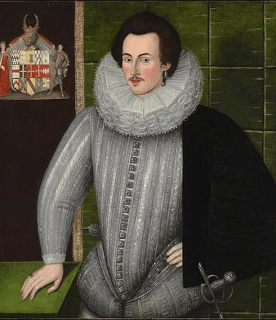
Charles Blount, 8th Baron Mountjoy, Becomes Lord Deputy of Ireland

Charles Blount, 8th Baron Mountjoy, English nobleman and soldier, becomes Lord Deputy of Ireland under Queen Elizabeth I on January 21, 1600.

Blount is born in 1563, the second son of James, 6th Baron Mountjoy, and Catherine, only daughter of Sir Thomas Legh. He is among the most distinguished of the family, succeeding as 8th Baron Mountjoy on the death in 1594 of his unmarried elder brother William, 7th Baron Mountjoy. The good fortune of his youthful and handsome looks find favour with Queen Elizabeth I which arouses the jealousy of Robert Devereux, 2nd Earl of Essex, leading to a duel between the two courtiers, who later become close friends.

Blount is returned to the House of Commons as MP for St. Ives, Cornwall in 1584 and for Bere Alston in 1586 and 1593, before entering the House of Lords in 1594. Between 1586 and 1598, he spends most of his time on the Continent, serving in the Netherlands and Brittany. He joins Lord Essex and Sir Walter Raleigh in their expedition to the Azores in 1597, along with his distant cousin, Sir Christopher Blount.

The downfall of Lord Essex does not damage Blount’s career. After the failure of his rebellion, Essex shocks many by denouncing his sister Penelope, who is Blount’s mistress, as a traitor, which inevitably raises the question of his own possible involvement. But the Crown, anxious to retain Blount’s services, and also to show as much leniency as possible to the defeated rebels, simply ignore the accusation.

On February 24, 1600, Blount lands in Ireland as Lord Deputy following Lord Essex and in the ensuing years brings the Nine Years’ War to an end. The leader of the rebellion, Hugh O’Neill, Earl of Tyrone, writes about Blount’s “refined manners” that he would lose a whole season of campaigning “while waiting until breakfast is prepared to his mind!” Despite this, Blount proves that he is quite qualified to pursue the war.

In early 1600, Blount dispatches Sir Henry Docwra with an army of 4,200 troops to land at Culmore to erect a fortress commanding the shores of Lough Foyle in the northwest of Ulster. To prevent Hugh O’Neill from sending a strong force to repulse Dowcra’s forces, Blount advances in force from Dublin to Newry causing O’Neill to fear a southern advance into Tyrone.

Blount aims to avoid the mistakes of previous Lords-Deputy. After the Battle of Moyry Pass, he has it cleared, and a garrison is established there. It had long been a problem for English forces advancing into Ulster from the south. He also establishes posts with garrisons at Mountnorris and Armagh.

On July 13, 1601, Blount and his army along with Turlough McHenry O’Neill of the Fews who had recently switched to the English side in the war, have a stand-off with Hugh O’Neill’s forces at the River Blackwater. After a few shots in vain from either side, O’Neill’s forces withdraw, and Blount sends his forces to occupy the ruined Blackwater fort destroyed by O’Neill in 1595. Later O’Neill’s forces attack Blount’s camp before withdrawing. In response, the Lord-Deputy sends his forces across the river where they find strong artificially fortified fords, which would have held out against the English.

By July 15, 1601, the Lord-Deputy has secured the surrender of O’Neill’s ally Hugh Magennis. That month, he has a new fort near the old Blackwater fort erected.

Blount reports to the council in England that O’Neill is determined to prevent his forces from advancing into Tyrone and toward Dungannon. As such, he initiates a policy of burning large quantities of corn to induce a famine to drive the rebels out of their strongholds.

Blount sets about trying to entice Hugh’s forces to come out and attack by fetching some materials for the new fort from the Tyrone side of the river as well as burning more corn. Further skirmishes between Blount and O’Neill’s forces ensue during the summer of 1601.

Spanish forces land in Munster in August 1601, forcing Blount to send his forces southward leaving O’Neill remaining in his unbroken heartland of Tyrone. The Spanish arrival culminates in the Siege of Kinsale that December, which sees a major defeat of the rebels and their allies.

O’Neill during this time has also moved south to assist some of his allies, however, after some serious defeats at the hands of the forces of Richard Burke, 4th Earl of Clanricarde of Connacht, he is in no place to offer any effective resistance once Blount marches once more to Tyrone in the summer of 1602.

Blount advances to the location he found the previous summer at the River Blackwater, which commands safe and secure passage into Tyrone, previously inaccessible, and sets about erecting a new fort. Having observed this, O’Neill burns his capital at Dungannon and flees to his last refuge in Glenconkeyne.

Advancing northward through Tyrone, Blount erects a fort in the townland of Magheralamfield, afterward known as Mountjoy Castle. He also christens the new fort at the Blackwater Charlemont Fort after himself.

Once in Tyrone, Blount carries out a campaign of devastation throughout it resulting in the mass hunting of rebels, spoiling of corn, the burning of houses and the killing of churls so as to force the submission of O’Neill and his remaining allies. Most symbolically, Blount has the inauguration site of the O’Neill’s at Tullyhogue Fort destroyed.

On March 30, 1603, six days after the death of Elizabeth and the accession of James I, O’Neill makes peace with Blount, signing the Treaty of Mellifont. Blount continues in office with the more distinguished title of Lord-Lieutenant. He declares amnesty for the rebels and grants them honourable terms, which causes some severe criticism from England. He shows similar moderation in putting down the abortive risings in Cork, Waterford and Wexford, where the aldermen, apparently with some vague idea of gaining greater toleration for Roman Catholics, refuse to proclaim the new King. In Cork, three insurgents are hanged after a summary trial, but the rest are acquitted or pardoned.

As part of the Plantation of Ulster, the majority of the barony of Loughinsholin is detached from County Tyrone and made part of the newly created County Londonderry. The rest of Loughinsholin along with the northern parts of Dungannon barony are merged to create the short-lived barony of Mountjoy. It is later amalgamated with the barony of Dungannon.

On his return to England, Blount serves as one of Sir Walter Raleigh’s judges in 1603, and in the same year King James I appoints him Master-General of the Ordnance as well as creating him Earl of Devonshire, granting him extensive estates. He is one of the founder members of the Spanish Company re-founded by royal charter in 1605.

Toward the end of Blount’s life, on December 26, 1605, at Wanstead House near London, in a ceremony conducted by his chaplain William Laud, afterward Archbishop of Canterbury, he marries his long-time mistress Lady Penelope, formerly wife of Robert Rich, 3rd Baron Rich (later 1st Earl of Warwick) and sister of Robert Devereux, 2nd Earl of Essex.

Blount leaves no legitimate children, and so his hereditary titles become extinct at his death on April 3, 1606, at Savoy House, London.

Leave a comment

The Battle of Moyry Pass

The Battle of Moyry Pass begins on September 20, 1600, ending on October 9, in counties Armagh and Louth, in the north of Ireland, during the Nine Years’ War. It is the first significant engagement of forces following the cessation of arms agreed in the previous year between the Irish leader Hugh O’Neill and the English Crown commander, Robert Devereux, 2nd Earl of Essex.

The battle is fought by the armies of O’Neill and Charles Blount, 8th Baron Mountjoy, a follower of the late Earl of Essex. Mountjoy is determined to pierce O’Neill’s heartland in central and western Ulster by the Moyry Pass. In the course of the two-week assault the English troops establish a garrison near Armagh, taking heavy casualties, and Mountjoy retires with difficulty to Dundalk.

Mountjoy’s strategy for putting down O’Neill’s rebellion is gradually to constrict his territory in Ulster with a ring of fortified garrisons on the borders. To this end, he lands seaborne forces at Derry in the north of the province and at Carrickfergus in the east of Ulster. In September 1600, Mountjoy moves north from Dublin and concentrates at Dundalk in order to mount an expedition further into Ulster and re-establish a garrison at Armagh, which position had been evacuated by the English Crown forces after O’Neill’s victory at the Battle of the Yellow Ford in 1598.

On September 17, 1600, Mountjoy sets out from Dundalk, intending to march to Newry and then on to Armagh. The Moyry Pass (or “Gap of the North”) is the sole point of entry to Ulster as much of the terrain is wooded and mountainous, and it has been well fortified by O’Neill with trenches and barricades. There are three lines of trenches, barricaded with earth and stone, and on the flanks the Irish have made further earth and stone works and “plashed” (twisted) the branches of low-growing trees in order to provide cover for themselves and prevent the English occupying the heights on either side of the Pass.

The English reach the pass on September 20 and set up camp just outside, to the south on Faughart Hill. Taking advantage of a misty day on the 25th, an officer named Thomas Williams (who had commanded the Blackwater Fort during the Battle of the Yellow Ford) makes a sortie into the pass. After heavy fighting he identifies the Irish defence works and returns to the English camp with 12 dead and 30 wounded. For six days heavy rain holds up the fighting, until the weather clears on October 2. The weather is important because the matchlock muskets of the day do not work in wet conditions. On October 2, Sir Samuel Bagnall leads his regiment of infantry into the Pass at the head of four other regiments. The English breach the first barricade, and Thomas Bourke’s regiment leads the way to the second and third lines of defence. The English take the second line only to find themselves in a trap, with gunfire concentrated from three sides. They try to dislodge the Irish from their remaining positions for three more hours before retreating, with the Irish in close pursuit. The English admit 46 killed and 120 wounded, but it is thought that they understated their losses throughout the campaign.

On October 5, Mountjoy sends two regiments on a flanking march over the hill to the west, with one further regiment supported by horsemen advancing up the centre of the Pass. No significant gains are made, and the regiments turn back, reporting casualties of 50 dead and 200 wounded.

By October 9 the privy councilor Geoffrey Fenton complains, “we are now but where we were in the beginning.” Mountjoy retires to Dundalk on either October 8 or 9, but on October 14 word reaches the English camp that O’Neill has abandoned the Pass and retreated to a crannog stronghold at Lough Lurcan. The most likely explanation for O’Neill’s withdrawal from his position of strength is that he is short of ammunition and food and fears a flanking attack on his rear from Newry.

Mountjoy occupies the Moyry Pass on October 17 and dismantles O’Neill’s earthworks. He marches on to Carrickban, just outside Newry, and by Sunday, November 2, sets up camp at Mountnorris, halfway between Newry and Armagh. There he builds an earthwork fort and leaves a garrison of 400 men under the command of Captain Edward Blaney. He then marches back to Dundalk via Carlingford, but is attacked on November 13 by O’Neill, close to the Fathom Pass. Mountjoys men force their way through, and the Lord Deputy claims the army lost 15–20 killed and 60–80 wounded, but a later report suggests the losses are much heavier, with 80 killed.

The battle of Moyry Pass is a stalemate as Mountjoy cannot take the Pass and O’Neill cannot keep it. Mountjoy does establish a garrison at Mountnorris, but has to retire to Dundalk after taking substantial casualties. Mountjoy claims his force lost only 200 men killed and 400 wounded in the fighting from September 20 to November 13, though this may be a considerable underestimate. More, he says, died of disease. The Irish casualties are given by the English as an incredible 900–1,200 killed and wounded, but this is questionable given that the Irish were in a strong defensive position of their own choosing, behind the protection of fieldworks. These figures probably say more about what Mountjoy wanted Queen Elizabeth I to hear than about the actual casualty figures. The following year Mountjoy builds Moyry Castle to secure the pass.

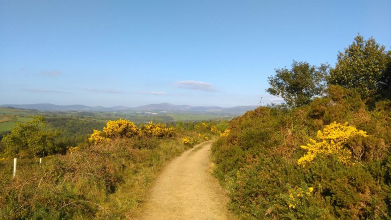
(Pictured: View of the entrance to the Moyry Pass looking north from Faghart Hill)


2 Comments

The Battle of Deputy’s Pass

The Battle of Deputy’s Pass is fought in County Wicklow on May 29, 1599, during the Nine Years’ War in Ireland. A Gaelic Irish force under Felim McFiach O’Byrne ambushes an English army of about 500, under Sir Henry Harington, which is marching from Rathdrum to Wicklow. The English army is routed and loses about 250 men.

The O’Byrnes had been allied to Hugh O’Neill, Earl of Tyrone, since the outbreak of the Nine Years’ War in 1593. Fiach McHugh O’Byrne had worked together with O’Neill, so much that he is described as the earl’s “right arm in Leinster.” However, when Fiach is killed in 1597, the power of the O’Byrnes seems to wane. When Robert Devereux, 2nd Earl of Essex, is appointed Lord Lieutenant of Ireland in 1599, he orders Harrington into County Wicklow to deal with the O’Byrnes and their allies, the O’Tooles.

Harrington’s force consists of five foot companies, but four of them are inexperienced levies recently raised in England. The only experienced foot company is that of Captain Loftus, whose men are mostly Irish. The companies are organised into a regiment under the command of Sir Alexander Radcliffe. To this is added fifty horsemen commanded by Captain Charles Montague. Harrington wants to take his troops out to scout the Irish fortifications on the ford of the Avonmore River at Rathdrum, and possibly to give his raw troops some experience in fieldcraft. His first attempt to view the Irish position on May 28 fails. Harrington returns to his camp about a mile from the ford. A second effort to view the Irish fortifications is made on May 28, but this is turned back due to poor weather. Harrington orders the men to march back to Wicklow town.

The English army stretches out in a column. In the lead is the van, then the baggage, followed by the battle and then the rear. Captain Atherton, the Sergeant Major of the army, has little doubt that the weight of any Irish attack will fall on the rear of the column. Thus, the horse (cavalry) is placed at the rear. The army has marched little over a mile before the Irish shot (musketeers and caliver-men) begin skirmishing with the rear of Harrington’s force. The Irish try to take a ford to block the advance, but the English secure the crossing, with the shot of the English rear skirmishing with the Irish, allowing the rest of the army to pass unhindered.

The march continues two miles to another ford, with the rear continuing to hold O’Byrne’s Irish shot at bay. Again, the English shot secures the crossing, as Irish fire slackens, possibly due to a shortage of gunpowder. Harrington places 40–50 shot behind an earthen bank on the left flank of the column on the far side of the ford. The Irish bring up a stand of pikemen, but their attack is limited to the English left, as the right of the column is shielded by thick gorse bushes. Atherton gathers 60–80 men to counter-attack the Irish pike. The English shot behind the bank is to hold their fire until Atherton attacks, but instead prematurely fires a single volley at the Irish pike then abandons their position. Without the support from their shot, Atherton’s men refuse to charge the Irish, then withdraw to the main body of the English column.

Atherton finds that the English shot have fled the column, abandoning the main stand of English pike. Now exposed to Irish gunfire, the English pike become disordered as they press to make the river crossing. Exploiting the English confusion, the Irish pike charges into the English rear, killing many without resistance. Montague’s English cavalry charges to support the panicking infantry, but the Irish pike square opens, allowing the horse to pass through. The Irish pike spear the English horse as they pass, including Montague who is wounded by a pike thrust into his side. Despite their officer’s best efforts, the English soldiers’ resistance collapses. The rout continues with the Irish slaughtering Harrington’s men to within one and a half miles of Wicklow town. All the English companies lose their colours, except for Captain Loftus, but they are later recovered by the English horse. After the battle, Radcliffe estimates the English army has lost 250 men killed, missing or deserted.

The first English reports suggest that they lost the battle due to the inexperience of most of their troops. Harrington at first blames the English pikemen for refusing to fight, but at the court-martial in July, Harrington, supported by two of his officers (Captains Linley and Mallory) blames Captain Loftus and his Lieutenant Walsh. This is convenient, as Loftus had died from his wounds and could not refute their accusations. Their version is supported by a map drawn of the battle, possibly by Montague (Harrington’s nephew). Loftus and Walsh are found guilty by the court-martial. Loftus is already dead, but Walsh is executed by firing squad. Mallory and Linley are not found guilty, but they are cashiered, losing command of their foot companies. The men in Loftus’ company are sentenced to death but this is commuted to decimation by drawing lots. Even by Elizabethan standards this is deemed overly harsh. Though Harrington is not charged with misconduct, he is never given command of a force this size again.


4 Comments

The Battle of Curlew Pass

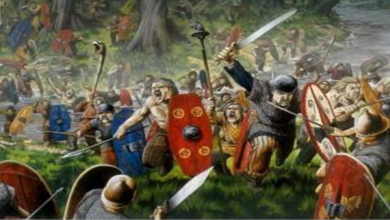
The Battle of Curlew Pass is fought on August 15, 1599, during the campaign of the Earl of Essex in the Nine Years’ War, between an English force under Sir Conyers Clifford and a rebel Irish force led by Hugh Roe O’Donnell. The English are ambushed and routed while marching through a pass in the Curlew Mountains, near the town of Boyle, in northwestern Ireland. The English forces suffer heavy casualties. Losses by allied Irish forces are not recorded but are probably minimal.

In April 1599, Robert Devereux, 2nd Earl of Essex, lands in Ireland with over 17,000 troops and cavalry to put down the rebellion of Hugh O’Neill and Red Hugh O’Donnell, which has spread from Ulster to all Ireland. To this end, he supports an Irish enemy of O’Donnell’s, Sir Donogh O’Connor (O’Connor Sligo), encouraging him to repossess those territories of his in Sligo that O’Donnell has occupied. Sligo Town is an excellent advance base, with Ballyshannon 20 miles to the northeast commanding an important river-ford at the principal western passage into O’Donnell’s country in Ulster. English military advisers have long urged the government councils in Dublin and London to capture these strategic points. O’Connor’s brother-in-law, Tibbot ne Long Bourke, is appointed joint-commander with an English captain of a force sailing from Galway, and O’Connor is expected to receive them in Sligo. However, O’Donnell quickly besieges O’Connor at Collooney Castle with over 2,000 men in an effort to starve him out, and Essex is put on the back foot. Essex has no option but to support the besieged O’Connor, one of the few Gaelic chieftains the Crown can rely upon for support. He orders the experienced Sir Conyers Clifford, who is based in Athlone, to relieve the castle with 1,500 English infantry and 200 cavalry. It is hoped that the operation would also distract the chief rebel, O’Neill, and afford the crown an opportunity to march into his Ulster territory across its southeastern border.

O’Donnell leaves 300 men at Collooney Castle under his cousin, Niall Garbh O’Donnell, and sends another 600 to Sligo town to prevent the landing of English reinforcements under Tibbot ne Long Bourke. He then marches to Dunavaragh with 1,500 of his men, where he is joined by additional forces under local chieftains Conor MacDermott and Brian Óg na Samhthach Ó Ruairc. The Irish then carefully prepare an ambush site in the Curlew Mountains, along the English line of march. O’Donnell has trees felled and placed along the road to impede their progress. When he gets word of the English passing through Boyle, O’Donnell positions his men. Musketeers, archers and javelin men are placed in the woods alongside the road to harass the English. The main body of Irish infantry, armed with pikes and axes, are placed out of sight behind the ridge of the mountain.

In hot harvest weather, Clifford’s force marches from Athlone through Roscommon, Tulsk and Boyle. At 4:00 PM on August 15, they reach the foot of the Curlew Mountains, which have to be crossed before Sligo can be approached. The expedition is poorly supplied, and Clifford’s men are tired and hungry, and probably in no fit state to continue. But Clifford has received false intelligence that the pass is undefended, and he therefore chooses to seize the opportunity and march across, promising his troops plenty of beef in the evening. This means that his men miss out on the rest that had been planned for them in Boyle, whereas the Irish are well fed and prepared.

The English come under gunfire, arrow and javelin attack as soon as they reach the first of O’Donnell’s barricades, between Boyle and Ballinafad. The barricade is immediately abandoned by the Irish but as the English moved past and proceed up the hill they sustain further casualties. The road consists of “stones of six or seven foot broad, lying above ground, with plashes of bog between them,” and is lined with woodland on one side. The further the English advance, the more intensive the rebels’ fire becomes, and some English soldiers begin to lose their nerve and slip away. Eventually, there is a firefight, lasting about 90 minutes, at the end of which the English vanguard has run out of gunpowder. The commander of the vanguard, Alexander Radcliffe, can no longer control his troops. They wheel about in a panic and collide with the main column, which breaks and flees. The commander leads a charge with his remaining pikemen but is shot dead. With the English ranks in disarray, the main body of Irish infantry, which has concealed itself on the reverse slope of the hill, closes in and fights hand to hand. Clifford tries to regain control over his men, but appears overcome by his circumstances. He manages to rally himself and is killed by a pike-thrust as he rushes the enemy. The English are routed, but the situation is prevented from becoming a complete disaster for them when the commander of the horse, Sir Griffin Markham, charges uphill and temporarily drives the rebels back.

Though the actions of the English cavalry allows many of their foot soldiers to escape, Clifford’s men are pursued as far as the town of Boyle, where they find shelter in Boyle Abbey. About 500 English are killed in the battle. Irish losses are not recorded, but are probably small, having been firing from prepared positions and then routing a disorganised and demoralised enemy.

Clifford’s head is cut off and delivered to O’Donnell, who has remained nearby but without taking part in the fight. While the head is brought to Collooney Castle to intimidate its defenders, the trunk is carried by MacDermott to the monastery of Lough Key, where he hopes to use it to ransom his own prisoners. At last, the trunk is given a decent burial in the monastery.

O’Connor Sligo surrenders the castle shortly afterwards and reluctantly joins with the rebels. After the victory, there is a noticeable increase in the rate of desertion by Irish troops from the ranks of Essex’s army, and the earl orders that the surviving troops be divided up as fit only to hold walls.

The battle is a classic Gaelic Irish ambush, similar to the Battle of Glenmalure in 1580 or the Battle of the Yellow Ford in 1598. According to the Annals of the Four Masters, the victory is put down to the intercession of the Blessed Mary, rather than to arms. But Clifford had been overconfident, a trait in him that Essex once warned against, and it is clear that English military commanders are choosing to learn the hard way about the increased effectiveness of Irish rebel forces. Queen Elizabeth I‘s principal secretary, Sir Robert Cecil, rates this defeat (and the simultaneous defeat of Sir Henry Harrington in the Battle of Deputy’s Pass in County Wicklow) as the two heaviest blows ever suffered by the English in Ireland, and seeks to lay the blame indirectly on Essex. It leaves O’Donnell and O’Neill free from any threat from the Connacht side, and renders a land-based attack through Armagh highly improbable, a factor that weighs with Essex as he marches northward later in the year and enters a truce with O’Neill.

In August 1602, the Curlew Pass is the scene of the last victory won by the rebels during the war, when a panicking English force is again routed and suffers significant losses. This time the rebels are led by Rory O’Donnell who commands 400 musketeers.

Today the battlefield at Curlew Pass is overlooked by an impressionistic sculpture by Maurice Harron called “The Gaelic Chieftain”, unveiled in 1999.