seamus dubhghaill

Promoting Irish Culture and History from Little Rock, Arkansas, USA


Leave a comment

Birth of Liam Miller, Irish Professional Footballer

Liam William Peter Miller, Irish professional footballer, is born on February 13, 1981, in Cork, County Cork.

Miller grows up in Ovens, County Cork, and attends Coachford College in Coachford, County Cork. As a boy, he also plays Gaelic games for his hometown club, Éire Óg, and represents Cork GAA at youth level. His family is his largest influence in football, and Martin O’Neill and Sir Alex Ferguson are also influential to his career.

Miller begins his career with Celtic and is later loaned to the Danish sports club Aarhus Gymnastikforening in 2001. He returns to Celtic Park and breaks into the first-team squad during the 2003–04 season. Rejecting the offer of a new contract from Celtic, he joins Manchester United in 2004 on a free transfer under the Bosman ruling. Loaned to Leeds United during the 2005–06 season, he makes 22 first-team appearances for Manchester United.

Miller represents the Republic of Ireland team internationally, making his debut in 2004 against the Czech Republic. He earns 21 caps over the next five years, scoring one international goal.

From 2006 until 2009, Miller plays for Sunderland, followed by a short stay at Queens Park Rangers from January until May 2009, when he is released. He joins Hibernian in September 2009 on a free transfer. He moves to Australia‘s A-League in 2011 after his contract with Hibernian expires, and represents Perth Glory, Brisbane Roar and Melbourne City there.

On January 15, 2015, he joins League of Ireland Cork City club, choosing his hometown club over several offers in Asia. He makes his debut on March 7 as the season begins with a 1–1 draw at Sligo Rovers. He is a regular in his only season at Turners Cross, in which the team finishes as runners-up in the league and the FAI Cup to Dundalk. On January 19, 2016, he chooses to leave the team.

Miller signs with American third-tier United Soccer League side Wilmington Hammerheads on February 18, 2016. He makes 27 total appearances for the North Carolina-based club, scoring a last-minute equaliser in a 2–2 draw at Orlando City B on July 24.

In 2017, Miller holds an assistant coaching role at Real Monarchs, a USL affiliate of Real Salt Lake. He leaves in November for health reasons.

In November 2017, it is made public that Miller is receiving treatment for pancreatic cancer. He has chemotherapy at the Huntsman Cancer Institute in Salt Lake City before returning to Ireland. He dies in Cork on February 9, 2018, only four days shy of his 37th birthday.

A benefit football match is played on September 25, 2018, with the intention of raising funds for Miller’s family and charities. The Gaelic Athletic Association permits the game to be played at Páirc Uí Chaoimh in Cork, which would not normally be allowed under GAA rules. The match, between a Manchester United XI and a team composed of former Celtic and Republic of Ireland players, ends with the United XI winning on penalties following a 2–2 draw.

1 Comment

Birth of Marcus Daly, “Copper King” of Butte, MT

marcus-daly

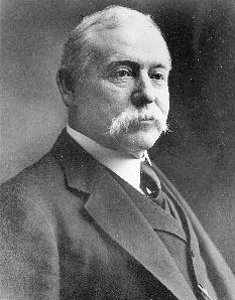
Marcus Daly, Irish-born American businessman known as one of the three “Copper Kings” of Butte, Montana, is born in Ballyjamesduff, County Cavan, on December 5, 1841.

Daly emigrates from Ireland to the United States as a young boy, arriving in New York City. He sells newspapers and works his way to California in time to join the gold rush in what is to become Virginia City, Nevada, and the fabulously rich silver diggings now known as the Comstock Lode, in 1860.

Daly gains experience in the mines of the Comstock under the direction of John William Mackay and James Graham Fair. While working in the mines of Virginia City, Daly meets and befriends George Hearst, father of William Randolph Hearst, and Lloyd Tevis, co-owners of the Ophir Mining Company. In 1872, Daly recommends purchase by the Hearst group of the Ontario silver mine, near Park City, Utah. In ten years, the Ontario produces $17 million and pays $6,250,000 in dividends.

Their business friendship extends for many years and helps establish the Anaconda Copper Mine in Butte, Montana. Daly originally comes to Butte in August 1876 to look at a mine, the Alice, as an agent for the Walker Bros. of Salt Lake City. The Walkers purchase the mine, install Daly as superintendent, and award him a fractional share of the mine.

Daly notices, while working underground in the Alice, that there are significant deposits of copper ore. He gains access into several other mines in the area and concludes that the hill is full of copper ore. He envisions an ore body several thousand feet deep, some veins of almost pure copper, and hundreds of millions of dollars. He urges his employers, the Walker Bros., to purchase the Anaconda and when they refrain, Daly purchases it himself. Daly finds his fortune on the Anaconda Copper Mine in Butte, after selling his small share of the Alice Mine for $30,000.

The Anaconda began as a silver mine, but Daly’s purchase is for the copper, found to be one of the largest deposits known at the time. However, he lacks the money to develop it, so he turned to Hearst, Haggin and Tevis. The first couple hundred feet within the mine are rich in silver, and took a few years to exhaust. By that time, Butte’s other silver mines are also playing out, so Daly closes the Anaconda, St. Lawrence, and Neversweat. Prices on surrounding properties drop and Daly purchases them. Then he re-opens the Anaconda. Due to Thomas Edison‘s development of the light bulb the world would need copper which is a very excellent conductor of electricity. Butte has copper, hundreds of thousands of tons of it, waiting to be taken from the ground.

He builds a smelter to handle the ore, and by the late 1880s, has become a millionaire several times over, and owner of the Anaconda Mining and Reduction Company. Daly owns a railroad, the Butte, Anaconda and Pacific Railroad, to haul ore from his mines to his smelter in Anaconda, a city he founds. He owns lumber interests in the Bitterroot Valley and a mansion and prized stables in the same valley, south of Missoula.

In 1894, Daly spearheads an energetic but unsuccessful campaign to have Anaconda designated as Montana’s state capital, but loses out to Helena. Daly is active in Montana politics throughout the 1890s, because of his opposition and intense rivalry with fellow copper king, and future U.S. Senator, William A. Clark. He attempts to keep Clark out of office by lavishly supporting his opponents.

Daly invests some of his money in horse breeding at his Bitterroot Stock Farm located near Hamilton, and is the owner/breeder of Scottish Chieftain, the only horse bred in Montana to ever win the Belmont Stakes.

In 1891, Daly becomes the owner of Tammany, said to be one of the world’s fastest racehorses in 1893. He also arranges the breeding of the great Sysonby, ranked number 30 in the top 100 U.S. thoroughbred champions of the 20th Century by The Blood-Horse magazine. However, Daly dies in New York City on November 12, 1900, before the horse is born.

Following his death, New York’s Madison Square Garden hosts a dispersal sale for the Bitterroot thoroughbred studs on January 31, 1901. One hundred eighty-five horses are sold for $405,525.