seamus dubhghaill

Promoting Irish Culture and History from Little Rock, Arkansas, USA


Leave a comment

Neeson & Richardson Donate Libel Payout to Omagh Bombing Victims

On September 27, 1998, film star couple Liam Neeson and Natasha Richardson announce they will donate a five-figure libel payout to a memorial fund for the victims of the Omagh bomb massacre that occurred in Northern Ireland on August 15, 1998, killing 29 people.

Neeson and Richardson win £50,000 ($85,370) in libel damages over newspaper allegations that their marriage is on the rocks. The couple sues the Daily Mirror publishers MGN for libel and malicious falsehood after the tabloid paper claimed Natasha Richardson was filing for divorce behind her husband’s back and that their marriage was a sham.

The story is published in August 1998 in London, Scotland, the Irish Republic and Northern Ireland – where Neeson was born and where his family still live.

A High Court judge in London hears that the actors – married for four years with two young sons – were shocked by the allegations which caused “an explosion of publicity worldwide.”

Neeson, who is nominated for an Academy Award for his role in the film Schindler’s List, is told about the article by his mother. She phones him in great distress from Northern Ireland after seeing the headlines while out shopping.

The actors’ solicitor, Mark Thomson, tells Mr. Justice Gray that the couple then spent several days attempting to deal with the destructive aftermath of the articles denying the allegations to friends and family.

Mirror Group Newspapers accepts “unequivocally” that the story is entirely false and apologises for the embarrassment, hurt and distress caused to the couple. “We entirely accept that there is absolutely no truth in the allegations about Mr. Neeson and Miss Richardson and that the allegations should never have been published. We apologise unreservedly to Mr. and Mrs. Neeson and their family for the distress and embarrassment they have been caused. We have agreed not to repeat the allegations and to pay substantial damages to them, which they are donating to the victims of the Omagh bombing.”

The information came from a source thought to be reliable, but it was clearly a mistake for the reporter to rely on that source, says solicitor Martin Cruddace.

Leave a comment

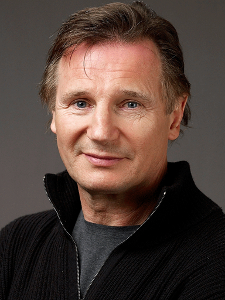
Birth of Actor Liam Neeson

Actor Liam John Neeson is born on June 7, 1952, in BallymenaCounty Antrim. Raised as a Roman Catholic, Neeson is named Liam after the local priest. He says growing up as a Catholic in a predominately Protestant town made him cautious. At age nine, he begins boxing lessons at the All-Saints Youth Club and later becomes Ulster’s amateur senior boxing champion.

Neeson first steps on stage at age eleven after his English teacher offers him the lead role in a school play, which he accepts because the girl he is attracted to is starring in it. He continues to act in school productions over the following years.

Neeson’s interest in acting and decision to become an actor is also influenced by minister Ian Paisley, into whose Free Presbyterian church Neeson would sneak. Neeson says of Paisley, “He had a magnificent presence, and it was incredible to watch him just Bible-thumping away… it was acting, but it was also great acting and stirring too.”

In 1971, Neeson is enrolled as a physics and computer science student at Queen’s University BelfastNorthern Ireland, before leaving to work for the Guinness Brewery. At Queen’s, he discovers a talent for football and is spotted by Seán Thomas at Bohemian F.C. There is a club trial in Dublin and Neeson plays one game as a substitute against Shamrock Rovers F.C. but is not offered a contract.

In 1976, Neeson joins the Lyric Players’ Theatre in Belfast for two years. He then acts in the Arthurian film, Excalibur (1981), alongside Helen Mirren. Between 1982 and 1987, he stars in five films, most notably alongside Mel Gibson and Anthony Hopkins in The Bounty (1984) and Robert De Niro and Jeremy Irons in The Mission (1986). He lands a leading role alongside Patrick Swayze in Next of Kin (1989).

Neeson rises to prominence when he stars in the title role in Steven Spielberg‘s 1993 Oscar winner Schindler’s List. He has since starred in other successful films, including the title role in the historical biopic Michael Collins (1996), the film adaptation of Victor Hugo‘s 1862 novel Les Misérables (1998), Star Wars: Episode I – The Phantom Menace as Qui-Gon Jinn (1999), the biographical drama Kinsey (2004), the superhero film Batman Begins as Ra’s al Ghul (2005), the action thriller series Taken (2008–2014), the fantasy adventure film Clash of the Titans (2010) as Zeus, the fantasy films in The Chronicles of Narnia series (2005–2010) as Aslan, and the thriller-survival film The Grey (2011). In 2016 he narrates the RTÉ One three-part documentary on the Easter Rising1916.

Neeson has been nominated for a number of awards, including an Academy Award for Best Actor, a BAFTA Award for Best Actor in a Leading Role and three Golden Globe Awards for Best Actor in a Motion Picture DramaEmpire magazine ranks Neeson among both the “100 Sexiest Stars in Film History” and “The Top 100 Movie Stars of All Time.”


Leave a comment

Birth of Irish-Australian Novelist Thomas Michael Keneally

thomas-michael-keneally

Thomas Michael Keneally, Irish-Australian novelist, playwright, and author of non-fiction, is born in Sydney, New South Wales, Australia, on October 7, 1935.

The son of Edmund Thomas and Elsie Margaret (Coyle) Keneally, he grows up in Kempsey and is educated at St. Patrick’s College, Strathfield where, subsequently, a writing prize has been named after him. Keneally enters St. Patrick’s Seminary, Manly to train as a Catholic priest. Although he is ordained as a deacon while at the seminary, he leaves without being ordained into the priesthood. He works as a Sydney schoolteacher before his success as a novelist and is a lecturer at the University of New England from 1968–1970.

Keneally is known as “Mick” until 1964 but, upon the advice of his publisher to use his real first name, begins using the name Thomas when he starts publishing. He is most famous for writing Man Booker Prize winner Schindler’s Ark (1982) which is later republished as Schindler’s List, and is later adapted to Steven Spielberg‘s Schindler’s List, which wins the Academy Award for Best Picture. Many of Keneally’s novels are reworkings of historical material, although modern in their psychology and style.

Keneally also acts in a handful of films. He has a small role in The Chant of Jimmie Blacksmith, based on his novel, and plays Father Marshall in the award-winning Fred Schepisi film The Devil’s Playground (1976).

Keneally is a strong advocate of an Australian republic, meaning the abolition of the Australian monarchy, and publishes a book, Our Republic, on the subject in 1993. Several of his Republican essays appear on the web site of the Australian Republican Movement.

Keneally is a keen supporter of rugby league football, in particular the Manly Warringah Sea Eagles club of the National Rugby League. In 2004 he gives the sixth annual Tom Brock Lecture and makes an appearance in the 2007 rugby league drama film The Final Winter.

In March 2009, the Prime Minister of Australia, Kevin Rudd, gives an autographed copy of Keneally’s biography Lincoln to President Barack Obama as a state gift. Recently Keneally has been a featured writer in the critically acclaimed Australian drama Our Sunburnt Country.