seamus dubhghaill

Promoting Irish Culture and History from Little Rock, Arkansas, USA


Leave a comment

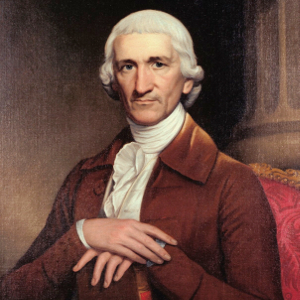
Death of Charles Thomson, Secretary of the Continental Congress

Charles Thomson, Irish-born Patriot leader in Philadelphia during the American Revolution and the secretary of the Continental Congress (1774–1789) throughout its existence, dies in Lower Merion Township, Pennsylvania, on August 16, 1824.

Thomson is born in Gorteade townland, Maghera parish, County Londonderry, to Scots Irish parents. After the death of his mother in 1739, his father emigrates to the British colonies in America with Charles and his brothers. His father dies at sea and the penniless boys are separated in America. Charles is cared for by a blacksmith in New Castle, Delaware, and is educated in New London Township, Pennsylvania. In 1750 he becomes a tutor in Latin at the Philadelphia Academy.

During the French and Indian War, Thomson is an opponent of the Pennsylvania proprietors’ American Indian policies. He serves as secretary at the Treaty of Easton (1758) and writes An Enquiry into the Causes of the Alienation of the Delaware and Shawanese Indians from the British Interest (1759), which blames the war on the proprietors. He is allied with Benjamin Franklin, the leader of the anti-proprietary party, but the two men part politically during the Stamp Act crisis in 1765. Thomson becomes a leader of Philadelphia’s Sons of Liberty. He is married to the sister of Benjamin Harrison V, another signer, as delegate, of the Declaration of Independence.

Thomson is a leader in the revolutionary crisis of the early 1770s. John Adams calls him the “Samuel Adams of Philadelphia.” Thomson serves as the secretary of the Continental Congress through its entirety. Through those 15 years, the Congress sees many delegates come and go, but Thomson’s dedication to recording the debates and decisions provides continuity. Along with John Hancock, president of the Congress, Thomson’s name (as secretary) appears on the first published version of the Declaration of Independence in July 1776.

Thomson’s role as secretary to Congress is not limited to clerical duties. Thomson is also noted for designing, with William Barton, the Great Seal of the United States. The Great Seal plays a prominent role in the January 14, 1784, ratification of the Treaty of Paris (1783). Britain’s representatives in Paris initially dispute the placement of the Great Seal and Congressional President Thomas Mifflin‘s signature, until mollified by Benjamin Franklin.

But Thomson’s service is not without its critics. James Searle, a close friend of John Adams, and a delegate, begins a cane fight on the floor of Congress against Thomson over a claim that he is misquoted in the “Minutes” that results in both men being slashed in the face. Such brawls on the floor are not uncommon, and many of them are promoted by argument over Thomson’s recordings. Political disagreements prevent Thomson from getting a position in the new government created by the United States Constitution. Thomson resigns as secretary of Congress in July 1789 and hands over the Great Seal, bringing an end to the Continental Congress.

Thomson spends his final years at Harriton House in Bryn Mawr, Pennsylvania working on a translation of the Bible. He also publishes a synopsis of the four evangelists in 1815. In retirement, Thomson also pursues his interests in agricultural science and beekeeping. According to Thomas Jefferson, writing to John Adams, Thomson becomes senile in his old age, unable to recognize members of his own household.

Leave a comment

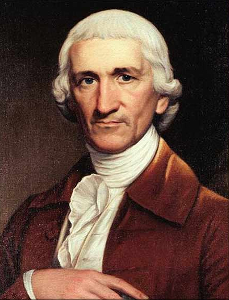
Birth of Charles Thomson, American Revolution Patriot

charles-thomson

Charles Thomson, Patriot leader in Philadelphia during the American Revolution and the secretary of the Continental Congress (1774–1789) throughout its existence, is born in Gorteade townland, Maghera parish, County Derry, on November 29, 1729.

After the death of his mother in 1739, Thomson’s father emigrates to the British colonies in America with Charles and two or three brothers. The father dies at sea, and the penniless boys are separated in America. Charles is cared for by a blacksmith in New Castle, Delaware, and is educated in New London, Pennsylvania. In 1750 he becomes a tutor in Latin at the Philadelphia Academy.

During the French and Indian War, Thomson is an opponent of the Pennsylvania proprietorsAmerican Indian policies. He serves as secretary at the Treaty of Easton (1758) and writes An Enquiry into the Causes of the Alienation of the Delaware and Shawanese Indians from the British Interest (1759), which blames the war on the proprietors. He is allied with Benjamin Franklin, the leader of the anti-proprietary party, but the two men part politically during the Stamp Act crisis in 1765. Thomson becomes a leader of Philadelphia’s Sons of Liberty. He is married to the sister of Benjamin Harrison V, another signer, as delegate, of the Declaration of Independence.

Thomson is a leader in the revolutionary crisis of the early 1770s. John Adams calls him the “Samuel Adams of Philadelphia.” Thomson serves as the secretary of the Continental Congress through its entirety. Through those 15 years, the Congress sees many delegates come and go, but Thomson’s dedication to recording the debates and decisions provides continuity. Along with John Hancock, president of the Congress, Thomson’s name appears on the first published version of the Declaration of Independence in July 1776.

Thomson’s role as secretary to Congress is not limited to clerical duties. According to biographer Boyd Schlenther, Thomson “took a direct role in the conduct of foreign affairs.” Fred S. Rolater has suggested that Charles Thomson was essentially the “Prime Minister of the United States.” Thomson is also noted for designing, with William Barton, the Great Seal of the United States. The Great Seal plays a prominent role in the January 14, 1784, ratification of the Treaty of Paris (1783). Britain’s representatives in Paris initially dispute the placement of the Great Seal and Congressional President Thomas Mifflin‘s signature, until mollified by Benjamin Franklin.

But Thomson’s service is not without its critics. James Searle, a close friend of John Adams, and a delegate, begins a cane fight on the floor of Congress against Thomson over a claim that he was misquoted in the “Minutes” that results in both men being slashed in the face. Such brawls on the floor are not uncommon, and many of them are promoted by argument over Thomson’s recordings. Political disagreements prevent Thomson from getting a position in the new government created by the United States Constitution. Thomson resigns as secretary of Congress in July 1789 and hands over the Great Seal, bringing an end to the Continental Congress.

Thomson spends his final years at Harriton House in Bryn Mawr, Pennsylvania, working on a translation of the Bible. He also publishes a synopsis of the four evangelists in 1815. In retirement, Thomson also pursues his interests in agricultural science and beekeeping. Charles Thomson dies on August 16, 1824, in Lower Merion Township, Pennsylvania. He is buried at Laurel Hill Cemetery in Philadelphia.


Leave a comment

Hercules Mulligan Cleared of Suspicions by George Washington

hercules-mulligan

Hercules Mulligan, tailor and spy during the American Revolutionary War, is cleared of suspicions of possible Loyalist sympathies when George Washington has breakfast with him on November 25, 1783, the day after the British evacuate New York City and Washington enters it at the end of the war.

Mulligan is born in Coleraine, County Londonderry to Hugh and Sarah Mulligan. The family immigrates to North America in 1746, settling in New York City. Mulligan attends King’s College, now Columbia University, in New York City. After graduating, Mulligan works as a clerk for his father’s accounting business. He later goes on to open a tailoring and haberdashery business, catering to wealthy British Crown force officers.

Mulligan is introduced to Alexander Hamilton shortly after Hamilton arrives in New York. Mulligan helps Hamilton enroll at the Elizabethtown Academy in New Jersey, and later, the College of New Jersey at Princeton, now Princeton University. After Hamilton enrolls at King’s College, he lives with Mulligan in New York City. Mulligan has a profound impact on Hamilton’s desire for revolution.

In 1765, Mulligan is one of the first colonists to join the Sons of Liberty, a secret society formed to protect the rights of the colonists and to fight British taxation. He also helps to mob British soldiers in the Battle of Golden Hill. He is a member of the New York Committee of Correspondence, a group that rallies opposition to the British through written communications. In August 1775, he and the Corsicans, a New York volunteer militia company, under fire from HMS Asia, successfully raid four British cannons in the Battery. In 1776, Mulligan and the Sons of Liberty knock down a statue of King George III in Bowling Green, melting the lead in the center to cast bullets to use against the British. Mulligan continues to fight for liberty following the Declaration of Independence.

While staying with the Mulligan family, Alexander Hamilton comes to share Mulligan’s views. Initially siding with the British before coming to New York, Hamilton is persuaded to change his views and join the Sons of Liberty. As a result, Hamilton writes an essay in 1775 in favor of independence, which causes a sensation and helps hasten the Revolution. When George Washington speaks of his need for reliable information from within New York City in 1776, after the Continental Army is driven out, Hamilton recommends Mulligan due to his placement as tailor to British soldiers and higher-ups.

This proves to be incredibly successful, with Mulligan saving Washington’s life on two occasions. The first occurs when a British officer, who requests a watch coat late one evening, tells Mulligan of their plans. “Before another day, we’ll have the rebel general in our hands.” Mulligan quickly informs Washington, who changes his plans and avoids capture.

Mulligan’s slave, Cato, is a Black Patriot who serves as spy together with Mulligan, and often acts the role of courier, in part through British-held territory, by exploiting his status as a slave, letting him pass on intelligence to the Continental Army without being stopped.

It is not known what happened to Mulligan’s slave Cato. However, on January 25, 1785, Mulligan becomes one of the 19 founding members, along with Alexander Hamilton and John Jay, of the New York Manumission Society, an early American organization founded to promote abolition of slaves.

Following the Revolution, Mulligan’s tailoring business prospers. He retires at the age of 80 and dies five years later on March 4, 1825. Mulligan is buried in the Sanders tomb behind Trinity Church. When the church is enlarged, the Sanders tomb is covered. Today, there is a tombstone located in the southwest quadrant of the churchyard bearing Mulligan’s name.