seamus dubhghaill

Promoting Irish Culture and History from Little Rock, Arkansas, USA


Leave a comment

The Brookeborough Royal Ulster Constabulary Barracks Attack

An Irish Republican Army (IRA) unit attacks Brookeborough Royal Ulster Constabulary (RUC) barracks on January 1, 1957, in one of the most famous incidents of the IRA’s Operation Harvest (Border campaign). Two IRA men are killed as they attack Brookeborough police station in County Fermanagh. The attack is a military disaster for the IRA, but it proves a major propaganda coup.

The two dead men, Seán South and Fergal O’Hanlon, are hailed as republican martyrs. Their funerals are attended by thousands of people and their lives immortalised in republican ballads.

The Brookeborough raid is the central action in the IRA’s border campaign of 1956-62, yet it is over and done within a matter of minutes. The aim is to unite Ireland by setting up “liberated zones” in Northern Ireland and overthrowing the Stormont government. The campaign is preceded by a series of raids carried out by republican splinter group Saor Uladh. An attack on Rosslea police station in County Fermanagh in November 1955 results in the death of Saor Uladh member Connie Green.

Royal Ulster Constabulary (RUC) officer Gordon Knowles finds himself on the sharp end of the assault as the republicans blow the front wall from the barracks. “I was blown right across the guard room,” he says. “The only thing I felt was like somebody hitting me in the back and that was the bullet going in through the left-hand side of the spine, round the back of the spine and lodging one inch from the back. They shone a torch in my face and said: ‘Oh, let’s go, he’s had it.'”

Knowles is lucky to be alive as medical staff discover thirteen bullet holes in his body. He recovers to resume his police career and still carries bullet splinters in his body to this day.

The Brookeborough raid, involving fourteen IRA men, is planned along identical lines to the Rosslea attack, with very different results. The IRA aims to explode a bomb in front of the police station and to seize RUC weapons.

Just two days previously, the police suffer their first death of the border campaign when Constable John Scally is killed in an attack on Derrylin barracks, another County Fermanagh border station.

Ahead of the Brookeborough attack, the men gather at the County Monaghan family home of Fergal O’Hanlon, who takes part in the raid. O’Hanlon’s sister Pádraigín Uí Mhurchadha describes the scene. “I remember Fergal, on the night, saying to my mother ‘These men, give them a good meal because there are faces here tonight you won’t see again.’ Now it turned out that he happened to be one of the men that she would not see again.”

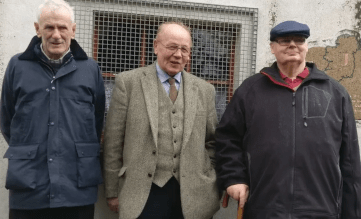
The BBC has recently spoken to three of the IRA men involved the raid.

Micheal Kelly, now in his 80s, has never given an interview before about his role in the attack. “The objective was to attack the barracks, take their guns from them and if necessary, if we had the time and space, to actually destroy the barracks,” he says.

Phil O’Donoghue is also part of the IRA unit. Today, he is honorary president of the 32 County Sovereignty Movement, which is believed to be closely aligned to the Real IRA. He insists the Brookeborough operation was about taking arms rather than killing police officers. “We had strict orders – under no circumstances were we to take on the B Specials (Ulster Special Constabulary) or RUC. We were, if at all possible, to try and take their weapons but we were not in any way to attack them.”

The IRA men arrive in Brookeborough in a stolen tipper lorry, but the driver is unfamiliar with the village and stops in the wrong place. Paddy O’Regan, from Dublin, is in the back of the lorry. His job is to assist Seán South in operating a Bren light machine gun. “When the truck actually stopped, and I got up off the floor and looked over the side of the truck I was looking into a shop – no sign of a barracks.” It is the first in a series of errors – the bomb placed by the station door fails to explode.

Barry Flynn, who has written a history of the border campaign, says he saw Brookeborough as a kind of tragic fiasco. “It became like the Keystone Cops,” he says. “There were a number of grenades thrown at the police station when they found it. One bounced back underneath the lorry and actually damaged the lorry very badly.”

RUC Sgt. Kenneth Cordner is quick to react to the attack. The truck is eventually parked up close to the barracks, allowing Sgt. Cordner a clear field of fire from an upstairs window. Using a Sten sub-machine gun, he opens up with deadly effect on the IRA men below.

Paddy O’Regan is wounded in the ensuing firefight. “We started to return fire on the barracks,” he says. “And after a while I looked down and I saw Seán South lying flat on his face and I felt two thumps in my hip. I knew I was wounded but it didn’t hurt particularly bad. It’s just like somebody hit you a couple of digs and it was just my hips started going numb.”

The order is given to withdraw, according to ex-IRA man Micheal Kelly. “Fergal, the last thing I heard him say, ‘Oh, my legs, oh, my legs!’ He was shot in the legs and bled to death. Seán South, I would say, was dead at this stage.”

The attackers flee across the border leaving the two dead men at a remote farm building where they are found by police.

Bobbie Hanvey is a well-known broadcaster and photographer. In 1957 he is just twelve years old and living across the road from the Brookeborough barracks. He remembers hiding under a bed with two of his friends as the attack unfolded. “The bedroom lit up – it was like daylight with the flames coming out of the guns. That image and the sounds of those guns and that experience has stayed with me to the present day – I’ll never forget it.”

Historian Barry Flynn explains that the Brookeborough raid is also a symbolic moment for the republican movement. The lives of the dead IRA men are subsequently remembered in two famous ballads, “Seán South from Garryowen” and the “Patriot Game.”

“People were writing the songs and, regardless of what was going to happen in the rest of the campaign, the names of Seán South and Fergal O’Hanlon were there forever as the martyrs of Brookeborough”, says Flynn.

The border campaign never again reaches the intensity of the Brookeborough incident, but police officers and IRA men continue to die. The IRA calls a ceasefire in 1962. By then it is clear that its strategy for overthrowing the Stormont government has failed.

(From: “Brookeborough: Failed IRA attack and republican legend” by Robin Sheeran and Bernadette Allen, BBC News NI, http://www.bbc.com, February 22, 2019 | Pictured: Ex-IRA men Micheal Kelly, Phil O’Donoghue and Paddy O’Regan who have a role in the Brookeborough raid)
Leave a comment

Birth of Pádraig McKearney, Provisional Irish Republican Army Volunteer

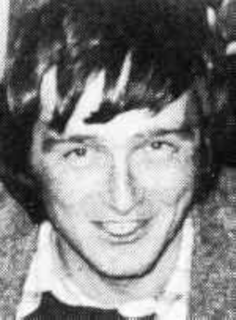
Pádraig Oliver McKearney, a Provisional Irish Republican Army (IRA) paramilitary volunteer, is born on December 18, 1954.

McKearney is raised in Moy, County Tyrone, Northern Ireland, in a staunchly Irish republican family. Both his grandfathers had fought in the Irish Republican Army during the Irish War of Independence, his maternal grandfather in south County Roscommon and his paternal grandfather in east County Tyrone. He is educated at local Catholic schools in Collegeland, County Armagh, and Moy, and later goes to St. Patrick’s Academy, Dungannon.

McKearney joins the Provisional IRA and is first arrested in 1972 on charges of blowing up the post office in Moy. He spends six weeks on remand but is released due to insufficient evidence. In December 1973 he is arrested again and later sentenced to seven years for possession of a rifle. He is imprisoned in Long Kesh Detention Centre and later in Magilligan Prison. During this time, a younger brother, Seán, also an IRA paramilitary, is killed on May 13, 1974. He is released in 1977 but is sentenced to 14 years in August 1980 after being caught by the British Army with a loaded Sten gun along with fellow IRA member Gerard O’Callaghan. That same year an older brother, Tommy McKearney, who had been sentenced to life imprisonment for the murder of an off-duty Ulster Defence Regiment (UDR) soldier who worked as a postman in 1977, nearly dies on hunger strike after refusing food for 53 days. Another brother, Kevin, and an uncle, Jack McKearney, are both murdered by Loyalist paramilitaries in revenge attacks upon the family.

On September 25, 1983, McKearney takes part in the Maze Prison escape along with 37 other prisoners. At the beginning of 1984 he rejoins IRA activity in his native East Tyrone with the Provisional IRA East Tyrone Brigade. He advocates the commencement of the “third phase” of the armed struggle, the ‘strategic defensive,’ in which the Royal Ulster Constabulary (RUC), Ulster Defence Regiment and British Army would be denied all support in selected areas following repeated attacks on their bases. In 1985 Patrick Kelly becomes commander of the Provisional IRA East Tyrone Brigade, and it is under his leadership that this strategy is pursued. Remote Royal Ulster Constabulary bases are attacked and destroyed, and building contractors who try to repair them are targeted and sometimes murdered, as occurs with the attack on the Ballygawley barracks in December 1985, which results in the death of two policemen, and The Birches police station in August 1986.

McKearney is shot dead by the British Army on May 8, 1987, during an IRA attack that he is taking part in upon Loughgall police station, which also claims the lives of seven other IRA members. His body is buried at his hometown of Moy.


Leave a comment

The Tricolour Riots

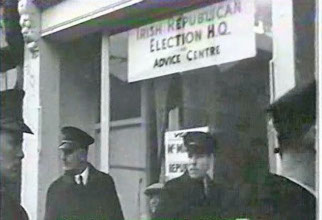
On the evening of the September 28, 1964, a detachment of the Royal Ulster Constabulary (RUC), acting on the direct instruction of Brian McConnell, the Minister of Home Affairs, attacks the Divis Street headquarters of the Republican Party (Sinn Féin had been outlawed earlier in the year) in West Belfast. Their perilous mission is to remove an Irish Tricolour.

This takes place during a general election for Westminster. Republicans have nominated Liam McMillan to contest in West Belfast. McConnell, under pressure from Ian Paisley and other unionists, holds a conference of his senior RUC officers on the morning of September 28 and orders that the tricolour flown at Liam McMillan’s headquarters be removed. Under the Flags and Emblems Display Act of 1954, it is an offence to display the tricolour anywhere in the six counties of Northern Ireland.

That evening, when it becomes known that the RUC are coming to seize the flag, more than 2,000 republican supporters block the roadway. Scores of RUC are rushed to the scene in armoured cars. The RUC, though heavily armed with sten guns, rifles, revolvers and riot batons, are made to look ridiculous by groups of children, who run about with miniature tricolour stickers which they stick on walls and police cars.

The RUC, using pickaxes, smashes down the doors of the Republican headquarters and takes the flag. They carry it away through a hail of stones and to the prolonged jeers of the people.

The following day the RUC clears Divis Street to make way for an armoured car. Their new perilous mission is to seize a new replacement tricolour. The armoured car stops outside the Republican headquarters, eight policemen emerge and begin another attack with crowbars and pickaxes. They fail to break down the door but one of them smashes the window, reaches in and pulls out the second tricolour.

By September 30, news of the events in Divis Street have spread throughout the media. Belfast begins attracting television reporters and newspaper men from all around the world. That night, thousands of republicans, armed with petrol bombs, sticks, stones and rotten vegetables, gather outside their headquarters to defend their identity and their flag. A battle begins at 11:00 PM when the RUC tries to disperse them. The television cameras are there to record all that happens. For the first time ever, people in many parts of the world are able to watch a sectarian police force in action.

When the republicans indicate that they will stand their ground, fifty RUC men, who had been held in reserve in the small streets between Falls Road and Shankill Road, are deployed but the republicans, in accordance with a pre-arranged strategy, drive them back. By midnight, the police have succeeded in sealing off Divis Street and dispersing the crowd but thirty people, including at least eighteen members of the RUC, have been injured.

One week later, on October 5, republicans carry the tricolour at the head of a parade of 5,000 people who march from Beechmount on Falls Road, through Divis Street, to an election rally near Smithfield. RUC men line the entire route but make no attempt to seize the flag.

(From: “The Tricolour Riots,” An Phoblacht (www.anphoblacht.com), September 23, 2004 edition)


4 Comments

The Gough Barracks Raid

gough-barracks

The Irish Republican Army (IRA) makes an audacious raid on Gough Barracks in Armagh, County Armagh, Northern Ireland on June 12, 1954. It marks the re-awakening of IRA activity in Northern Ireland and a re-arming that leads eventually to the 1956-1962 border campaign.

In January 1954, Leo McCormick, the Training Officer for the Dublin Brigade of the IRA, is on a visit to Armagh. As he passes Gough Barracks, the home of the Royal Irish Fusiliers, he notices that the guard on duty outside the barracks is armed with a Sten gun without a magazine. He concludes rightly that Gough Barracks is in effect being guarded by an unarmed guard.

On his return to Dublin, McCormick informs the Dublin Brigade of his chance observation. Alas, he does not see the end result of his information, as he is arrested soon after and receives four years for possession of a document.

By April, the General Head Quarters decides that they will raid Gough Barracks for arms. But first, they need more information. Eamonn Boyce, the Intelligence Officer of the Dublin Brigade, is asked to travel to Armagh and check out the barracks. He makes several trips to Armagh and soon has a detailed account of life outside the barracks. But GHQ wants more inside details. Charlie Murphy gets over this problem by asking Seán Garland to go to Armagh and enlist in the British Army. Not long after Garland’s enlistment, a stream of maps, documents, time schedules and photographs flow into GHQ for processing.

Finally, a last intelligence coup is arranged. Using Garland’s information, the IRA gets inside the barracks to have a look around. On a Saturday night in May, Boyce and Murphy slip into the barracks as “guests” at a weekly dance. With them they bring a girl, Mae Smith, who is later to become chairperson of Sinn Féin. After a few dances, Garland takes Mae outside for what his fellow soldiers assume is an hour of light passion but is in fact a detailed tour of the entire barracks.

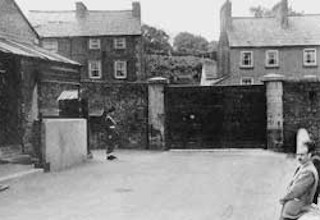
The operation is launched on June 12, 1954, from a farm just outside Dundalk. A large red cattle truck is commandeered at the last moment and nineteen IRA men, about half of the Dublin Brigade, climb in and are informed as to what their target is. It is almost 3:00 on a busy Saturday afternoon when the cattle truck and a car drive into Armagh.

Paddy Ford gets out of the car and walks over to the sentry and asks him about enlisting in the British Army. While the sentry is dissuading Ford of what he considers a foolish course of action, he looks down into the barrel of a .45 caliber Colt revolver in the perspective recruit’s hand. As the sentry is held at gunpoint, three IRA men pass him into the guardhouse. The sentry is then brought in after them. While the sentry is being tied up, a new IRA sentry, complete with British uniform, white webbing belt, regimental cap and sten gun with magazine steps out to stand guard over Gough Barracks.

As soon as the IRA sentry appears, the cattle truck drives through the gate and comes to a halt outside the arsenal door. After fumbling through 200 keys, Eamonn Boyce finds the right one and opens the armoury. Murphy races up the stairs and in the first room two British soldiers demand to know what a civilian wants inside the barracks. Murphy has some trouble getting his revolver out of his pocket and is further embarrassed when the two soldiers refuse to put up their hands. However, another IRA man arrives carrying a Thompson submachine gun, which quickly convinces them to do as they are told. Posting a Bren gun at the armoury window to command the barracks square, the IRA begins stripping the armoury.

During the course of the raid a woman, noticing something is wrong, stops a British officer in the street and urges him into the barracks to investigate. Once inside the gate the officer is taken under control and, protesting that he is an officer and a gentleman, refuses to be tied until a gun is put to his head.

An NCO then notices what is happening, gets into a lorry and drives for the gate, intending to block the exit. An IRA man stands at the gate brandishing a revolver and shouts “Back.” He forces the NCO to reverse the lorry. The NCO is placed under arrest in the guard room. By the end of the raid, the IRA has tied up 19 British soldiers and one civilian.

In less than 20 minutes the job is done. The truck carrying 340 rifles, 50 Sten guns, 12 Bren guns, and a number of small arms drives out of the barrack gates and rumbles through Armagh in the direction of the border. Eamonn Boyce and the group in the car follow after locking every gate and door for which they can find keys. At 3:25 PM the first alarm in the barracks is given but it is not until 5:00 that the general alarm is given and by that time the big red truck is long gone.

The raid for arms in Gough Barracks gains international attention. The IRA, which has been described by some as moribund since the ’40s campaign, has once more risen from its slumber to strike a blow against the forces of occupation. The raid awakes a calling in many to join the IRA and take part in the Border Campaign, which keeps alive the flame of republicanism through to the present time.

(From: “The Gough Barracks raid – Remembering the Past” by Shane Mac Thomáis, anphoblacht.com, June 9, 2005)