seamus dubhghaill

Promoting Irish Culture and History from Little Rock, Arkansas, USA


Leave a comment

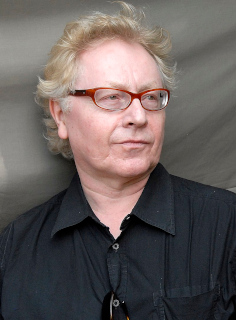
Birth of Paul Brady, Irish Singer-Songwriter

Paul Joseph Brady, Irish singer-songwriter and musician, is born in Belfast, Northern Ireland, on May 19, 1947. Interested in a wide variety of music from an early age, his work straddles folk and pop.

Brady is raised in the small town of Strabane in County Tyrone, Northern Ireland, on the border with County Donegal, Republic of Ireland. His father Seán Brady and mother Mollie Brady (née McElholm) are schoolteachers. He is educated at Sion Mills Primary School, St. Columb’s College, Derry and University College Dublin (UCD). He is featured in the documentary film The Boys of St. Columb’s.

Brady begins learning piano around age six and by the age of eleven he has begun to play guitar, spending hours of his school holidays learning every song that the Shadows had recorded. He is also influenced by Chuck Berry.

In 1963, Brady begins performing as a piano player in a hotel in Bundoran, County Donegal. In October 1964, he attends University College Dublin and performs with a number of R&B groups, covering songs by the likes of Ray Charles and James Brown. The first of these is the Inmates (late 1964–about April 1965), which evolves into the Kult (about April–December 1965), featuring Brady, Jackie McAuley (ex-Them, and future Belfast Gypsies and Trader Horne), Brendan Bonass, and Dave Pennefather. He can be seen in the documentary film Charlie Is My Darling waiting outside Dublin‘s Adelphi Cinema for the Rolling Stones‘ concert of September 3, 1965. He next joins Rootzgroup (late 1965–May 1966) and Rockhouse (about May–December 1966).

During Brady’s time at college in Dublin, the country sees a huge rise in interest in traditional Irish music. He joins the popular Irish band The Johnstons when Michael Johnston leaves in May 1967. They move to London in 1969 and subsequently to New York City in 1972 to expand their audience. Despite some success, he returns to Ireland in 1974 to join the Irish group Planxty, the band that subsequently launches the solo careers of Andy Irvine, Liam O’Flynn, Dónal Lunny, and Christy Moore.

When Planxty disbands in late 1975, Brady forms a duo with Irvine from 1976 to 1978, a partnership that produces the successful album, Andy Irvine/Paul Brady. The next few years see him establish his popularity and reputation as one of Ireland’s best interpreters of traditional songs. His versions of ballads like “Arthur McBride” and “The Lakes of Pontchartrain” are considered definitive and are still popular at concerts today. In 1975 in New York, he records three albums for Shanachie Records as guitar accompanist to resident Irish fiddlers Andy McGann, Paddy Reynolds and John Vesey. He also records a 1976 album, The High Part of the Road, for the same label with Irish fiddler Tommy Peoples.

In 1978, Brady releases his first solo album, Welcome Here Kind Stranger, which wins him critical acclaim and is voted the “Folk Album of the Year” by Melody Maker magazine. However, it proves to be his last album covering traditional material. He decides to delve into pop and rock music and releases his first album of this genre in 1981, Hard Station.

Brady releases a number of successful solo albums throughout the 1980s: True for You (1983), Back to the Centre (1985), and Primitive Dance (1987). By the end of the decade, he is recognised and accepted as a respected performer and songwriter. His songs are being covered by a number of other artists, including Santana and Dave Edmunds.

When Tina Turner hears a demo of his song “Paradise Is Here,” she records it for her Break Every Rule album of 1986. By now, he is a favourite songwriter among such artists as Bob Dylan and Bonnie Raitt, who does a duet with him on his 1991 album, Trick or Treat. A couple of his songs soon appeared on Raitt’s album Luck of the Draw, including the title track.

Dylan is sufficiently impressed by Brady’s work to name-check him in the booklet of his 1985 box set, Biograph. The actual quote is “(…) people get too famous too fast these days and it destroys them. Some guys got it down – Leonard Cohen, Paul Brady, Lou Reed, secret heroes, John Prine, David Allen Coe, Tom Waits. I listen more to that kind of stuff than whatever is popular at the moment. They’re not just witchdoctoring up the planet, they don’t set up barriers (…)”.

In 1991, Brady reaches number 5 in the Irish Singles Chart with Nobody Knows.

Since his Hard Station album (1981), Brady is on various major labels until he creates his own label, PeeBee Music, in the late 1990s. He releases three albums in the 1990s: Trick or Treat, Songs & Crazy Dreams (a remixed compilation of earlier songs) and Spirits Colliding, which are met with critical acclaim. Trick or Treat is on Fontana/Mercury Records and receives a lot of promotion. As a result, some critics consider it his debut album and note that the record benefits from the expertise of experienced studio musicians, as well as producer Gary Katz, who works with the rock group Steely Dan. Rolling Stone, after praising his earlier but less-known solo records, calls Trick or Treat Brady’s “most compelling collection.”

Brady goes on to record several other albums, fifteen in total since going solo in 1978, and collaborates with a number of other established musicians including Bonnie Raitt and Richard Thompson. In 2006, he collaborates with Cara Dillon on the track “The Streets of Derry” from her album After the Morning. He also works with Fiachra Trench.

Brady performs Irish language songs as a character in the 2002 Matthew Barney film Cremaster 3. He also plays tin whistle on the single “One” by Greg Pearle in 2008, from the album Beautiful You, a collaboration between Greg Pearle and John Illsley. This song is featured in the 2008 film Anton, directed by Graham Cantwell.

Brady’s fifteenth studio album, Hooba Dooba, is released in March 2010.

In 2017, a friendship is struck with Theo Katzman (Vulfpeck) and Brady tours Ireland in 2019 as half of this duo with Joe Dart, also of vulfpeck, Louis Cato and Lee Pardini. He continues to tour, record and collaborate with other artists. In 2019, Jimmy Buffett begins performing a cover of Brady’s hit, “The World is What you Make It.” In September 2019, Brady joins Buffett on his tour stops in both Dublin and London.

Brady releases the album Unfinished Business on his own label, PeeBee Music, licensed to Proper Music UK, in 2017.

While Brady and Andy Irvine’s planned tour of their 1976 album Andy Irvine/Paul Brady is impacted by the COVID-19 pandemic, they finish the tour in 2022. Musicians to join them on the tour include fiddle player Kevin Burke and multi-instrumentalist Dónal Lunny, both of whom had played on the original album.

In 2009, Brady receives an honorary degree of Doctor of Letters from the University of Ulster, in recognition of his services to traditional Irish music and songwriting.


Leave a comment

Irish Celtic Rock Band Horslips Disbands

horslips

Horslips, the Irish Celtic rock band regarded as the “founding fathers of Celtic rock,” disbands on October 12, 1980. The name originates from a spoonerism on The Four Horsemen of the Apocalypse which becomes “The Four Poxmen of The Horslypse.”

Barry Devlin, Eamon Carr and Charles O’Connor meet when they work at the Ark advertising company in Dublin. They are cajoled into pretending to be a band for a Harp Lager commercial but need a keyboard player. Devlin says he knows a Jim Lockhart who would fit the bill. The four enjoy the act so much that they decide to try being proper rock performers. They join guitarist Declan Sinnott, a colleague of Eamon Carr’s from Tara Telephone and, briefly, Gene Mulvaney to form Horslips (originally Horslypse) in 1970.

The band goes professional on St. Patrick’s Day 1972 having shed Mulvaney and released a single, “Johnny’s Wedding”, on their own record label, Oats. Declan Sinnott leaves soon after, primarily due to his annoyance at the group appearing in an advert for Mirinda orange drink. He is replaced by Gus Guest briefly, then Johnny Fean.

Following the release of six studio albums between 1972 and 1977, the ever-ambitious band tries to make it in the United States. In 1977 they produce Aliens, about the experience of the Irish in nineteenth-century America, which includes very little folk music. The Man Who Built America (1978), produced by Steve Katz of Blood, Sweat & Tears and The Blues Project fame, concerns Irish emigration to the United States and is commercially their most successful album. The heavier sound does bring some acceptance in America, but they lose their folk base and their freshness. Short Stories, Tall Tales (1979) is their last studio album and is panned by the record company and critics alike.

At a time when The Troubles are at its peak, Horslips plays gigs in both Northern Ireland and the Republic of Ireland without prejudice and are accepted everywhere. Their last recordings are from live performances at the Whitla Hall at Queen’s University Belfast in April and May 1980. A few months later, on October 12, 1980, they play their final gig in the Ulster Hall. They make no public announcement. They simply give an encore, The Rolling Stones‘ song “The Last Time,” and the final act is Charles O’Connor throwing his mangled fiddle into the audience. Ten years after they formed, they disband.

Although Horslips has limited commercial success when the band is playing in the 1970s, there is a revival of interest in their music in the late 1990s and they come to be regarded as one of the defining bands of the Celtic rock genre. There have since been small scale reunions including appearances on The Late Late Show and RTɑs Other Voices. The band reforms for two Irish shows in the Odyssey Arena in Belfast and the 3Arena in Dublin at the end of 2009 and have continued to play shows since then.


Leave a comment

Birth of Brian Downey, Founder & Drummer of Thin Lizzy

brian-downey

Brian Michael Downey, Irish drummer best known as the drummer and a founding member of the rock band Thin Lizzy, is born in Dublin on January 27, 1951. Along with Phil Lynott, Downey is the only constant member of the hard rock group until their break-up in 1983. Downey also co-writes several Thin Lizzy songs. Allmusic critic Eduardo Rivadavia argues that Downey is “certainly one of the most underrated [rock drummers] of his generation.”

Growing up in Crumlin, Dublin, Downey’s early musical influences come from his father who plays in a local pipe band and loves jazz, and also from his 60’s heroes: The Kinks, The Beatles, and The Rolling Stones. In his youth, Downey meets friend, co-founder, and bass guitarist Phil Lynott, who attends the same school. Before forming Thin Lizzy, Downey has been in numerous school bands, beginning with The Liffey Beats, Mod Con Cave Dwellers, and briefly The Black Eagles (with Lynott). He moves on to performing in a local band, Sugar Shack, and then is persuaded by Lynott to join him in another band, Orphanage. Upon meeting guitarist Eric Bell, the trio form Thin Lizzy. Although the line-up of musicians within the band changes over the years, with the exception of Lynott, for the next thirteen years Downey remains the only other permanent member of the band, as well as drumming on Lynott’s solo albums.

After Lynott’s death in 1986, Downey plays in the tribute Thin Lizzy line-up with John Sykes, Scott Gorham, Darren Wharton, and Marco Mendoza, but has been absent from subsequent Thin Lizzy touring bands. After John Sykes’ departure from the group in 2009, guitarist Scott Gorham creates another line-up of Thin Lizzy. Downey, Mendoza, and Wharton rejoin, along with two new members: Def Leppard guitarist Vivian Campbell and former vocalist from The Almighty, Ricky Warwick. This version of Thin Lizzy starts an extensive world tour in January 2010 and continues to tour until early 2013, with new permanent guitarist Damon Johnson eventually replacing Richard Fortus. Gorham has stated that the band members are considering recording new material, and this project eventually emerges under the Black Star Riders name, with which Downey chooses not to be involved due to the pressures of consistent touring.

Downey is a guest at the unveiling of Lynott’s statue in 2005, and drums for Gary Moore at the tribute concert that follows. Downey also appears on Moore’s 2007 album, Close As You Get, and subsequent tour.


Leave a comment

Birth of Henry Vivien Pierpont Conyngham

henry-vivien-pierpont-conyngham

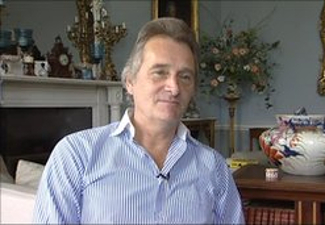
Henry Vivien Pierpont Conyngham, 8th Marquess Conyngham, Anglo-Irish nobleman who holds titles in the Peerages of Ireland and the United Kingdom, is born on May 25, 1951.

The eldest son of Frederick Conyngham, 7th Marquess Conyngham by his wife, Eileen Wren Newsom, he attends Harrow School before studying at Harvard University.

Styled Viscount Slane until 1974 and Earl of Mount Charles from 1974 until 2009, he succeeds his father in the marquessate and other titles in 2009. However, in the Republic of Ireland frequently, and erroneously, he remains referred to as Lord Mountcharles, his former courtesy title. He also inherits the U.K. peerage title Baron Minster, of Minster Abbey in the County of Kent, created in 1821 for his ancestor, the 1st marquess thereby giving the Marquesses Conyngham the automatic right to sit in the British House of Lords until 1999.

As Earl of Mount Charles, he unsuccessfully contests the Louth seat in 1992 for Fine Gael. In 1997 he stands for election to Seanad Éireann for Trinity College Dublin and runs again without success as a Fine Gael candidate for the European Parliament in 2004.

Lord and Lady Conyngham divide their time between Beauparc House and Slane Castle in County Meath. The latter is the family’s principal ancestral seat until it is badly damaged by fire in 1992. The castle has now been restored.

The Marquess Conyngham enjoys a high profile in Ireland as the author of a weekly column in the Daily Mirror. He has been dubbed the rock and roll aristocrat or the rock and roll peer owing to the very successful series of rock concerts he has hosted since 1981, held in the natural amphitheatre on the grounds of Slane Castle. These concerts have included performances by The Rolling Stones, Thin Lizzy, Queen, U2, Bob Dylan, Bruce Springsteen, David Bowie, Guns N’ Roses, Oasis, and Madonna. Lord Conyngham receives the Industry Award at the 2010 Meteor Awards. In his autobiography Public Space–Private Life: A Decade at Slane Castle, he describes his business career and the challenges of being an Anglo-Irish peer in modern Ireland, and how being Anglo-Irish has gradually become more accepted there.