seamus dubhghaill

Promoting Irish Culture and History from Little Rock, Arkansas, USA


Leave a comment

Birth of Playwright Tom Murphy

thomas-murphy

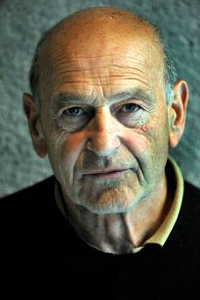
Tom Murphy, Irish playwright who has worked closely with the Abbey Theatre in Dublin and with Druid Theatre, Galway, is born in Tuam, County Galway on February 23, 1935.

Murphy attends the local Archbishop McHale College and later becomes a metalwork teacher. He begins writing in the late 1950s, saying, “In 1958, my best friend said to me, why don’t we write a play? I didn’t think it was an unusual question, because in 1958 everyone in Ireland was writing a play.” His second play, A Whistle in the Dark, is written in his Tuam kitchen on his free Friday and Saturday nights. It is entered into a competition for amateur plays, which it wins, and is eventually performed at the Theatre Royal Stratford East in London in 1961. It causes considerable controversy both there and in Dublin when it is later given its Irish premiere at the Abbey having initially been rejected by its artistic director.

Though Murphy is religious as a boy, education by the Christian Brothers leaves him largely irreligious. His 1975 play The Sanctuary Lamp is produced in the Abbey Theatre and receives a hostile reception due to its anti-Catholic nature, with theatregoers walking out and much negative criticism in the media.

Considered by many to be Ireland’s greatest living playwright, a title also often given to Brian Friel prior to his death in 2015, Murphy is honoured by the Abbey Theatre in 2001 by a retrospective season of six of his plays. His plays include the historical epic Famine (1968) which deals with the Irish Potato Famine between 1846 and spring 1847, the anti-clerical The Sanctuary Lamp (1975), The Gigli Concert (1983) and for many his masterpiece, the lyrical Bailegangaire and the bar-room comedy Conversations on a Homecoming (both 1985).

Murphy’s work is characterised by a constant experimentation in form and content from the apparently naturalistic A Whistle in the Dark to the surreal The Morning After Optimism and the spectacularly verbal The Gigli Concert. Recurring themes include the search for redemption and hope in a world apparently deserted by God and filled with suffering. Although steeped in the culture and mythology of Ireland, Murphy’s work does not trade on familiar clichés of Irish identity, dealing instead with Dostoyevskian themes of violence, nihilism and despair while never losing sight of the presence of laughter, humour and the possibilities of love and transcendence.

Leave a comment

Premiere of “The Quare Fellow”

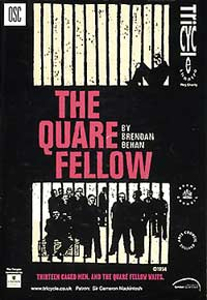
Brendan Behan’s first play, The Quare Fellow, premieres at the Pike Theatre in Dublin on November 19, 1954, to critical success. The title is taken from a Hiberno-English pronunciation of queer.

The Quare Fellow is initially offered to Dublin’s Abbey Theatre but is turned down. The play has its London première in May 1956 at Joan Littlewood‘s Theatre Workshop at the Theatre Royal Stratford East. On July 24, 1956, it transfers to the Comedy Theatre, London. In September 1956 the Abbey Theatre finally performs The Quare Fellow. It has such success that the Abbey’s artistic director, Ria Mooney, pushes the next play back to allow The Quare Fellow to run for six weeks. Its first New York performance is on November 27, 1958, at the Circle in the Square Theatre.

The play is set in Mountjoy Prison, Dublin. The antihero of the play, the Quare Fellow, is never seen or heard but rather functions as the play’s central conceit. He is a man condemned to die on the following day, for an unmentioned crime. Whatever it is, it revolts his fellow inmates far less than that of the Other Fellow, a very camp, almost Wildean, gay man.

There are three generations of prisoners in Mountjoy including boisterous youngsters who can irritate both other inmates and the audience and the weary old lags Neighbour and “methylated martyr” Dunlavin.

The first act is played out in the cramped area outside five cells and is comedic, sometimes rather like an Irish episode of Porridge. After the interval, the pace slows considerably and the play becomes much darker, as the time for the execution approaches. The focus moves to the exercise yard and to the workers who are digging the grave for the soon-to-be-executed Quare Fellow.

The play is a grimly realistic portrait of prison life in Ireland in the 1950s, and a reminder of the days in which homosexuality was illegal and the death penalty relatively common. The play is based on Behan’s own prison experiences, and highlights the perceived barbarity of capital punishment, then in use in Ireland. The play also attacks the false piety in attitudes to sex, politics and religion.

The Auld Triangle“, a song from the opening of the play, has become an Irish music standard and is known by many who are unaware of its link to The Quare Fellow.

In 1962 the play is adapted for the screen by Arthur Dreifuss and stars Patrick McGoohan, Sylvia Syms and Walter Macken. Although the film receives some favourable reviews, it is not regarded as a faithful adaptation of the play.