Tone is a French Army officer serving under GeneralJean Joseph Amable Humbert in the Irish expedition of 1798. He leaves Ireland for France in 1794, later moves to the United States, and rejoins Humbert in Paris in November 1797. At Ballinamuck, the French-led Irish forces are decisively defeated by British troops. Disguised as a peasant, he is captured on September 8, 1798.
Tone is imprisoned in the Provost prison at Dublin barracks and put on trial before a court-martial on September 21, 24 and 26, 1798. In his defence, he claims he had left Ireland before war was declared, that his imprisonment in France proved his innocence, and that he had tried to prevent the rebels from committing acts of revenge and plunder. He is, however, found guilty of high treason.
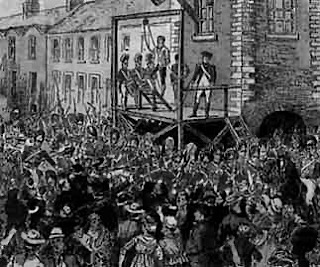
On September 29, 1798, Tone is hanged at Arbour Hill Prison and buried at Bodenstown Graveyard, County Kildare. He is unmarried but has a daughter raised by his sister Margaret.
Tone is one of roughly 200 Irish prisoners hanged after the Battle of Ballinamuck, alongside other United Irishmen and French sympathisers. The battle marks a turning point in the Irish Rebellion of 1798, leading to the repatriation of most French soldiers but the summary execution of many Irish insurgents.
In summary, Matthew Tone’s execution on September 29, 1798, is a direct consequence of his role in the French-led Irish expedition, his capture at the Battle of Ballinamuck, and the British government’s harsh response to the defeat, which sees widespread executions of captured rebels.
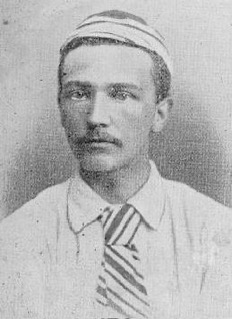
On September 16, 1920, the British double agent John Henry Gooding, operating under the alias F. Digby Hardy, makes a dramatic overture to the Irish Republican Army (IRA). Hardy, a habitual criminal with a long record of forgery, fraud, and petty crime, has been recruited by British intelligence to infiltrate the IRA’s intelligence network and capture Michael Collins.
Born in 1868 in Devonport, Plymouth, England, Hardy has a troubled life marked by multiple imprisonments, bigamy, and a career in petty crime. After deserting the Royal Navy in 1888, he adopts the alias “Frank Hall” and lives in Surrey before moving to London. By 1920, he is a known criminal with a five-year fraud sentence in 1918, partially served until his release in 1919.
Hardy approaches IRA intelligence, offering to betray his British superior, Basil Thomson, to the IRA. The plan is for him to infiltrate the IRA’s network and hand over information on Collins. However, the operation is foiled when Arthur Griffith, a leading Irish republican, intercepts Hardy’s mission.
Griffith arranges a staged meeting in Dublin attended by international journalists. Hardy is confronted and, upon presentation of evidence, confesses his mission and criminal background. The exposure embarrasses British intelligence and draws international attention.
Rather than being executed, Hardy is given until the next morning to leave Ireland. He flees, resuming petty crimes until his death in 1930. The September 16, 1920 incident becomes a notable example of how British intelligence’s reliance on unreliable agents could backfire during the Irish War of Independence.
In summary, on September 16, 1920, F. Digby Hardy (John Henry Gooding) attempts to betray his British handler to the IRA, but is exposed and forced to flee Dublin after being misled by Arthur Griffith into revealing his mission to reporters.
Casement, a founder of the Irish National Volunteers and a former British diplomat, has traveled to the United States to seek American backing for his republican cause. When that proves unsuccessful, he turns to Germany, hoping to enlist Irish soldiers in the British Army to fight alongside the Germans in World War I. His plan is to raise an “Irish Brigade” composed of Irish prisoners of war captured in Belgium and France, who are estimated to number 35,000–40,000.
The September 13 meeting in Washington is one of several contacts Casement makes with German officials, including Papen, to present his proposal. He argues that an Irish Brigade could bolster the German war effort while advancing Ireland’s independence goals. However, Papen rejects the idea, and the alliance does not materialize.
Without German support, Casement’s efforts to secure Irish military aid for the 1916 Easter Rising fails. The Rising proceeds without foreign assistance, and Casement himself is arrested by British authorities in 1916, tried for treason, and executed on August 3, 1916. Despite his execution, he remains remembered as a key figure in Irish nationalism and a symbol of resistance to British rule.
In summary, the September 13, 1914, meeting in Washington, D.C., marks a high point in Casement’s diplomatic campaign for Irish independence, but it ends in rejection, setting the stage for his later role in the Easter Rising and his martyrdom.
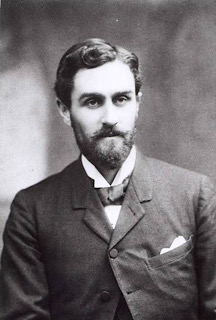
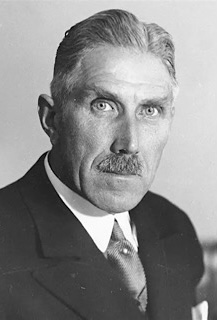
(Pictured: Sir Roger Casement (left) and Franz von Papen)
By early September 1922, the Irish Civil War has already seen the Irish Free State forces secure most large towns in County Kerry following seaborne landings in August, but rural areas and towns like Kenmare remain under republican control. The IRA has retreated to the hills after abandoning other towns, preparing for guerrilla operations. Kenmare becomes a focal point for one of the largest republican offensives in the county.
On September 9, anti-Treaty fighters launch a coordinated attack on Kenmare. During the assault, they capture 120 National Army troops, later releasing them, and seize 110 rifles and 20,000 rounds of ammunition, significantly bolstering their resources. The attack also results in the killing of local pro-Treaty officer Tom “Scarteen” O’Connor and his brother after they are taken prisoner, highlighting the lethal intensity of the conflict.
The capture of Kenmare is a major tactical victory for the IRA, allowing anti-Treaty forces to maintain a stronghold in County Kerry and continue a guerrilla campaign for the remainder of the war. It demonstrates the resilience of republican forces despite the Irish Free State’s earlier successes and foreshadows the brutal guerrilla warfare that follows in County Kerry, including ambushes, executions, and widespread disruption to civilian life.
Following the attack, the IRA continues to operate effectively in County Kerry, using Kenmare as a base for further operations. The event contributes to the prolonged and violent nature of the Irish Civil War in County Kerry, which becomes notorious for its intensity and the high number of fatalities compared to other counties. The battle also exemplifies the personal and local dimensions of the conflict, with targeted killings and the capture of troops reflecting the deep divisions within Irish society at the time.
The September 9 attack on Kenmare remains a key episode in the history of the Irish Civil War, illustrating both the strategic and human costs of the conflict in County Kerry.
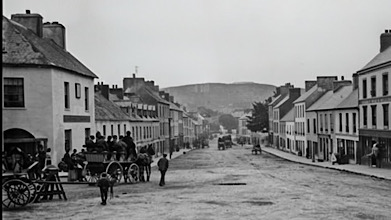
(Pictured: Main Street in Kenmare, County Kerry, September 1922)
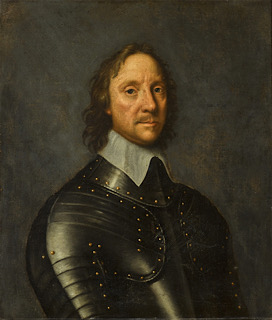
Cromwell’s death is the result of a painful urinary tract infection that leads to blood poisoning. He has been in declining health for some time, and his final days are marked by illness and discomfort. His death comes just over nine years after the Siege of Drogheda in Ireland, which begins in August 1649 and becomes one of the most infamous episodes of his military career.
The Siege of Drogheda, in which Cromwell’s forces execute thousands of Irish defenders, remains a major point of controversy in his legacy. His death in 1658 is met with celebration by many in England, as it paves the way for the restoration of the monarchy under Charles II in 1660. After his death, his body is exhumed in 1661 and publicly hanged in chains before being thrown into a pit to ensure he is dead.
Cromwell is remembered as a decisive military leader who helps restore England’s status as a leading European power, but also as a controversial figure whose actions in Ireland leave a lasting scar on Anglo-Irish relations. His death on September 3, 1658, thus marks both the end of his political and military influence and a turning point in the post-Civil War period in Britain.
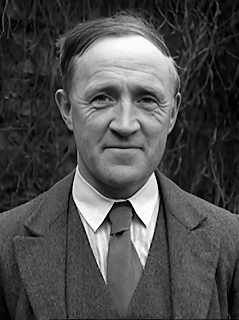
Boland is enrolled in the IRB along with his younger brothers Harry in 1904, following in the footsteps of his father. He and his brothers Harry and Ned subsequently join the Irish Volunteers when that organisation is established in 1913, serving in the same company as Arthur Griffith. When news breaks out of the Easter Rising in 1916 he immediately leaves his job, however, he is bitterly disappointed when he finds out that the order has been countermanded. When the rebellion begins in earnest on Easter Monday, he makes his way to Jacob’s Mill where he fights under Thomas MacDonagh. Following the official surrender, he is arrested and interned at Frongoch internment camp in Wales, where he comes into contact with other notable revolutionary leaders, including his brother Harry’s friend Michael Collins.
Boland is released after a general amnesty in December 1916, however, he remains involved in revolutionary circles, although he declines to rejoin the IRB, believing the organisation is no longer needed. He is arrested and imprisoned in Belfast from May to December 1918 for practising military drills in the Dublin Mountains. Meanwhile, a number of his colleagues secure their release by winning seats in the 1918 United Kingdom general election.
Boland and his brothers are opposed to the Anglo-Irish Treaty of 1921. He is Battalion Commandant of 3 Battalion, 2 Dublin Brigade (South Dublin) in Blessington, County Wicklow, but is captured early on in the Irish Civil War on July 7, 1922, and is interned until his release in July 1924. On the outside, his brother Harry dies some days after being shot, in August 1922, after two National Army officers attempt to arrest him at the Grand Hotel in Skerries, County Dublin. Boland applies to the Irish government for a service pension under the Military Service Pensions Act of 1934 and is awarded 11 and 5/12 years of service at Grade C for his service with the Irish Volunteers and the IRA between April 1, 1916 and September 30, 1923.
Following the end of the Irish Civil War, Boland helps to build up Sinn Féin as the main Republican party. While still imprisoned, he is selected to stand for Dáil Éireann as the Teachta Dála (TD) for Roscommon, Harry’s old seat, for the 1923 Irish general election, in which he is successful. He is among those in Kilmainham Gaol who go on hunger strike in October 1923. The hunger strike does not result in his release and he credits his practice of yoga with keeping him alive at the time.[3]
Boland is eventually released from the custody of the state in July 1924. Upon his release, he becomes secretary of Sinn Féin and stands on the executive of the party.
Boland is among the first in Sinn Féin to call for an end to the party’s abstentionism from DáilÉireann, believing it to be a political dead end. Party leader Éamon de Valera proposes that the party abandon this policy and take their seats in the Dáil if changes are made to the oath of allegiance to the British monarch. His proposal is defeated and de Valera and his supporters, including Boland, leave Sinn Féin. Shortly after this split, a new party emerges called Fianna Fáil, with de Valera acting as leader and the other disillusioned Republican TDs joining. Boland is vital in transferring many members from Sinn Féin to Fianna Fáil. Fianna Fáil briefly also has an abstentionist policy but in 1927 a new law forces Fianna Fáil TDs to take the oath of allegiance and take their seats in the Dáil. Fianna Fáil dismisses the oath as “an empty formula.”
Boland works alongside Seán Lemass in building up Fianna Fáil’s grassroots support and organisation, giving particular attention to the party’s rural apparatus. In the September 1927 Irish general election Fianna Fáil comes within four seats of the ruling Cumann na nGaedheal party. The latter forms a coalition of sorts with the Farmers’ Party and returns to government.
Following the 1932 Irish general election, Fianna Fáil forms a new government. Boland is appointed Government Chief Whip, a position which allows him to attend cabinet meetings but not vote at them.
Fianna Fáil remains in power with an increased mandate following the 1933 Irish general election and Boland is promoted to the position of Minister for Posts and Telegraphs. Despite being the Minister in charge of the postal service, he does not own a telephone until some time later. During his tenure, the postal service makes considerable progress. It is also during this time that the Post Office becomes a paying concern. During his time as minister, he oversees a major expansion of the telephone service in Ireland, improvements in the transmission capacity of Radio Éireann, and construction of new provincial post offices and a new central postal sorting office.
Boland is acting Minister for Justice briefly for a time when P. J. Ruttledge is ill. It is during this time that he declares the Irish Republican Army a proscribed organisation.
A cabinet reshuffle in 1936 sees Boland become Minister for Lands. The Land Act 1939 reforms land distribution, broadening the criteria by which the state can take control over undeveloped land while offering the tenant of the land more favourable terms of compensation. He is critical of the policy of the Minister for Industry and Commerce, Seán Lemass, of centralising industrial development in Dublin. He instead wishes to see a more decentralised economy based around food production. The differing viewpoint causes a rift between Boland and Lemass, but despite this Boland favoured Lemass’s policy of state intervention in the economy over Seán MacEntee‘s more laissez-faire approach.
In 1937 Boland is highly vocal during the drafting of a new constitution of Ireland by Fianna Fáil against any word which would give the Catholic Church special status, something heavily considered at the time. He declares that if the constitution elevates the position of the Catholic Church above others, it would be sectarian, anti-republican, and a hindrance to any prospects of Irish reunification. As a compromise, the term “special position” is used in the approved text of the Constitution.
Following the outbreak of World War II in 1939, known in Ireland as the Emergency, there is a cabinet reshuffle, and Boland is appointed as Minister for Justice. He takes over at a time when the IRA has once again declared war against the British state and has begun their Sabotage Campaign. He is charged with the task of crushing the organisation and preventing the IRA from drawing the Irish state into conflict with the United Kingdom. Although he always considers himself a republican, he takes a hardline against the IRA and uses his powers to order the internment of hundreds of IRA members before introducing military courts and special criminal courts.
In 1940, several imprisoned IRA members go on hunger strike but Boland refuses to grant their release. Two of the men eventually die, one of whom is the nephew of one of his Fianna Fáil colleagues. Tony D’Arcy dies at the age of 32 on April 16, 1940, as a result of a 52-day hunger strike, and Jack McNeela dies three days later after 55 days on hunger strike. These deaths spark reprisals by the IRA on the Garda Síochána. Boland subsequently introduces tougher measures by setting up a military court with the death penalty and no provision for appeal except for a review by the government. In all, twelve men are found guilty with six of them facing death and the remaining six having their sentences changed to imprisonment. Among those executed is Charlie Kerins, an acting Chief of Staff of the IRA.
As Minister of Justice, Boland is also asked to enforce policies of wartime censorship, however, finding the idea of the state censorship distasteful he establishes a censorship board to avoid accusations of bias.
During the Emergency, Boland is also responsible for the detention of several foreign agents in pursuit of Ireland’s strict policy of neutrality. During this time some 500 individuals are interned and 600 are sentenced under the newly introduced Offences against the State Act, 1939. By 1943 the IRA is in disarray, particularly after the Chief of Staff is arrested and imprisoned, leaving the organisation without leadership. Boland and Fianna Fáil feel their hardline is backed by the electorate following strong returns for the party at the 1944 Irish general election.
In 1947, Boland is among four leading Fianna Fáil figures (including de Valera) involved in the “Locke’s Distillery Scandal”, an accusation brought by Oliver J. Flanagan that foreign businessmen are bribing members of Fianna Fáil to gain the right to purchase the distillery. A tribunal of inquiry finds no evidence to support the claims, but the event taints the public’s view of Fianna Fáil.
By 1948, Fianna Fáil has been in government for an uninterrupted 16 years. With World War II finally over, the electorate seeks change and a fresh start. Arising to meet this desire is the new political party Clann na Poblachta. Led by Seán MacBride, this new party seeks to kick off a new post-war political era in Ireland, and to do this means removing Fianna Fáil from power. Many in Clann na Poblachta have republican backgrounds and in some ways, the party can be partially described as an organic reaction to Fianna Fáil and Boland’s hardline stance during the war years. Many in political circles, including inside Fianna Fáil, believe Clann na Poblachta can be a new force to reckon with.
However, de Valera always holds a reputation for being cunning in selecting the dates of general elections, and he once again cements that notion, when he calls for a general election in early 1948 before Clann na Poblachta is completely ready to contest a national election. At the 1948 Irish general election Clann na Poblachta and other Fianna Fáil opponents do well, but not as well as expected. To remove Fianna Fáil from government, every single party in the Dáil and several independents have to form the unwieldy “First Inter-Party Government.” The coalition sees Clann na Poblachta forced to work with Fine Gael, considered the traditional “enemy” of Irish republicanism. By 1951, the coalition collapses and Fianna Fáil returns to government following that year’s election, with Boland re-appointed Minister for Justice.
Boland does not seek ministerial office in 1957 when Fianna Fáil returns to power after its defeat in 1954. However, his son, Kevin, is appointed to the cabinet as Minister for Defence at the beginning of his first term in the Dáil. By this stage, Boland is beginning to be seen as an aging warhorse, with his base in Roscommon starting to slip and Fianna Fáil unhappy that he is unable to get a Fianna Fáil running mate elected alongside himself.
At the 1961 Irish general election, Boland is defeated for the first time in fourteen general election campaigns. Despite losing his Dáil seat, he subsequently secures election to Seanad Éireann. Four years later in 1965, he returns to the Seanad, this time as a nominee by the Taoiseach Seán Lemass.
In 1970, the outbreak of the Arms Crisis sees Kevin Boland resign as a Minister and as Secretary of Fianna Fáil in protest at the government’s policy on Northern Ireland and in response to the sackings of Charles Haughey and Neil Blaney from the cabinet over allegations they had arranged for weapons to be provided to the Provisional IRA. Gerald Boland, in a similar protest, resigns as a vice president and as a trustee of Fianna Fáil, although he remains a member of the party. He also articulates his loss of confidence in the leadership of TaoiseachJack Lynch.
Boland dies in Dublin at the age of 87 on January 5, 1973. He is buried in the republican plot in Glasnevin Cemetery, Glasnevin, County Dublin. His wife, Annie Boland, predeceases him in 1970. He is survived by his three daughters and four sons.
The gunmen, who are wearing workmen’s overalls, escape in a car afterward, killing Ken Campbell, a caretaker, as they leave. The people with whom Bradford had been meeting, most of them elderly, dive under tables for cover, and dozens of teenagers dancing nearby break into hysterical tears, but there are no injuries.
The killing is part of an escalation of IRA violence, both in London and in Northern Ireland, after the collapse of the prison hunger strike the previous month. The previous night an IRA bomb damages the London home of Britain’s Attorney General for Northern Ireland, Michael Havers. The home is empty and no one is seriously injured.
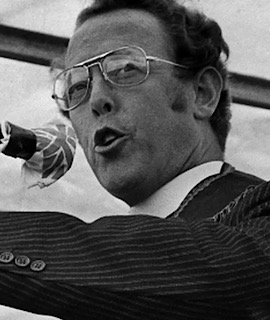
Bradford, a 40-year-old Methodist minister who is married and has a 6-year-old daughter, is shot several times, according to witnesses, and he dies almost immediately. His brother, Roy, who lives near the scene of the killing, in South Belfast, is at his side within moments. “But he was unconscious when I reached him, and he only lived for about a minute,” Roy Bradford says. News of the killing arouses fears of a Protestant reaction that could lead to serious civil unrest in Northern Ireland.
John “Jack” Hermon, the Chief Constable of the Royal Ulster Constabulary, issues an appeal to both the Protestant majority and the Roman Catholics to show “good sense and restraint.” He says security is being tightened in the province as a precautionary measure. He orders a wide-ranging search for the gunmen, who number at least three and possibly four, a point upon which the witnesses differ.
Bradford, who has been in Parliament since 1974, is an outspoken critic of the Irish nationalist guerrillas. He repeatedly calls for the reimposition of capital punishment in the province and for other strong deterrent measures.
With the Rev. Ian Paisley, another hard-line Member of Parliament, Bradford had planned to visit the United States In early 1982 to counteract the publicity of the IRA, which depends heavily on the money it receives from its American sympathizers. “There is a need for Americans to recognize that Ulster is not an occupied country,” Bradford says the previous month, “and that our political history is one of which we can be proud.”
The IRA, in a statement claiming responsibility for the killing, calls Bradford “one of the key people responsible for winding up the loyalistparamilitarysectarian machine in the North.” All twelve of Northern Ireland’s Members of Parliament – ten Protestants and two Catholics – are considered likely targets in the sectarian struggle that has claimed 2,100 lives in the province since 1969.
During the Irish Confederate Wars, like most Irish Catholics, O’Brien sides with Confederate Ireland. His services to the Catholic Confederation are highly valued by the Supreme Council. He treats the wounded and supports Confederate soldiers throughout the conflict. He is against a peace treaty that does not guarantee Catholic freedom of worship in Ireland and in 1648 signs the declaration against the Confederate’s truce with Murrough O’Brien, 1st Earl of Inchiquin, who has committed atrocities such as the Sack of Cashel against Catholic clergy and civilians, and the declaration against the Protestant royalist leader, James Butler, 1st Duke of Ormond, in 1650 who, due to his failure to resist the Cromwellian conquest of Ireland is not deemed fit to command Catholic troops. He is one of the prelates, who, in August 1650 offers the Protectorate of Ireland to Charles IV, Duke of Lorraine.
In 1651, Limerick is besieged and O’Brien urges a resistance that infuriates the Ormondists and Parliamentarians. Following surrender, he is found ministering to the wounded and ill inside a temporary plague hospital. As previously decided by the besieging army, O’Brien is denied quarter and protection. Along with Alderman Thomas Stritch and English Royalist officer Colonel Fennell, he is tried by a drumhead court-martial and sentenced to death by New Model Army General Henry Ireton. On October 30, 1651, O’Brien is first hanged at Gallows Green and then posthumously beheaded. His severed head is afterward displayed spiked upon the river gate of the city.
After the successful fight that is eventually spearheaded by Daniel O’Connell for Catholic emancipation between 1780 and 1829, interest revives as the Catholic Church in Ireland is rebuilding after three hundred years of being strictly illegal and underground. As a result, a series of re-publications of primary sources relating to the period of the persecutions and meticulous comparisons against archival Government documents in London and Dublin from the same period are made by Daniel F. Moran and other historians.
The first Apostolic Process under Canon Law begins in Dublin in 1904, after which a positio is submitted to the Holy See.
In the February 12, 1915 Apostolic decree, In Hibernia, heroum nutrice, Pope Benedict XV formally authorizes the formal introduction of additional Causes for Roman Catholic Sainthood.
During a further Apostolic Process held in Dublin between 1917 and 1930 and against the backdrop of the Irish War of Independence and the Irish Civil War, the evidence surrounding 260 alleged cases of Roman Catholic martyrdom are further investigated, after which the findings are again submitted to the Holy See.
On September 27, 1992, O’Brien and sixteen other Irish Catholic Martyrs are beatified by Pope John Paul II. June 20th, the anniversary of the 1584 execution of Elizabethan era martyr Dermot O’Hurley, is assigned as the feast day of all seventeen. A large backlighted portrait of him is on display in St. Michael’s Church, Cappamore, County Limerick, which depicts him during The Siege of Limerick.
Joyce is the eldest of three sons of Michael Joyce, an Irish Catholic from a family of tenant farmers in Ballinrobe, County Mayo, and his wife, Gertrude (née Brooke), who although born in Shaw and Crompton, Lancashire, is from a well-off AnglicanAnglo-Irish family of physicians associated with County Roscommon. The Joyces return to Ireland in 1909. William, a precocious child, attends Coláiste Iognáid SJ, a Jesuit school in County Galway, from 1915 to 1921. At the age of fourteen, he abandons Catholicism for Anglicanism, apparently after being told that all non-Catholics, including his mother, would be damned. In adult life he is nominally anglican, though his adherence to Christianity is tenuous.
The Joyces are unionists and teach their children fervent imperialism. During the Irish War of Independence, Joyce openly associates with the Black and Tans and acts as a scout for them. An acquaintance claims that his views are so extreme even loyalists dislike him. On December 9, 1921, he flees to England to join the Worcestershire Regiment and is followed to England in 1923 by the rest of the family. When he enlists, he claims to be eighteen, but after he contracts rheumatic fever, his age is discovered, and he is discharged in March 1922. For a time, he studies mathematics and chemistry at Battersea Polytechnic Institute as a pre-medical student (1922–23), but he leaves of his own accord, with a reputation for laziness and violent political views. His studies in English and history at Birkbeck College are more successful. He is a brilliant linguist and mathematician and graduates BA with first-class honours in 1927. He publishes an academic article on philology and considers progressing to an MA. He later falsely claims that his research had been plagiarised by a Jewish academic. In 1932, he enrolls at King’s College, London, for a Ph.D. in educational psychology.
Joyce is disturbed by the difference between depressed post-war Britain and the imperial ideal that he had imbibed in Galway and is mocked for his outspoken patriotism and obvious Irishness. He identifies strongly with Thomas Carlyle, an earlier angry anti-liberal from the provinces. His life is marked by repeated episodes of hero worship, followed by disillusion and bitter denunciation. In 1923, he joins the British Fascists, an organisation that has a significant Irish loyalist membership, and in 1924 he allies himself with a militant splinter group, the National Fascists. Most British fascists see themselves as Tory auxiliaries, and they often provide a security presence at conservative meetings. On October 22, 1924, while stewarding a meeting addressed by a Jewish conservative candidate, he has his face slashed and is left with a prominent scar across his right cheek. He joins the Conservative Party in 1928 and is active in the Chelsea constituency until 1930, when he is forced out because of his eccentricities and sexual misbehaviour. On April 30, 1927, he marries Hazel Kathleen Barr. They have two daughters but separate in 1935, largely because of his infidelities, heavy drinking, and temper. The marriage is dissolved in 1937.
In November 1933, Joyce abandons his Ph.D. studies to work for Sir Oswald Mosley‘s British Union of Fascists (BUF). By early 1934 he has become its paid publicity director, traveling throughout Britain to organise meetings. He is a powerful, rabble-rousing speaker, driven by an instinctive awareness that vitriolic verbal abuse gives speaker and audience a sense of power and solidarity. MI5 sees him as a compelling, though deranged, personality. On February 8, 1937, he marries Margaret Cairns White, a BUF activist from Lancashire, with whom he had cohabited since 1936.
Joyce leads a BUF faction that favours a recruitment strategy based on uncompromising ideological assertion. This is challenged by populists who prioritise marches and displays and hold that indoctrination should follow membership. In February 1937, he is BUF candidate for the London County Council in Shoreditch. The party wins 14 percent of the vote. In March 1937, he, along with many full-time BUF staff, are sacked when the BUF cuts expenses. But his dismissal also reflects Mosley’s awareness that his obsessive rhetoric repels “respectable” recruits and that he is no longer a biddable, slavish admirer of “the Leader.” He later falsely claims near-exclusive credit for the BUF’s escalating antisemitism, a view that Mosley eventually finds it convenient to adopt in order to evade his own responsibility.
In April 1937, Joyce founds the National Socialist League, helped by a wealthy patron. He supports himself as a private tutor, refusing to take Jewish pupils. He is active in various antisemitic and pro-Nazi groups such as the Right Club and engages in “peace” campaigns based on the view that British interests lay with Germany against Russia. Political marginalisation intensifies his admiration for Nazi Germany and hero worship of Adolf Hitler. By the time of the Munich crisis in 1938, he has decided that if war comes, he will go to Germany, though he also considers moving to Ireland. He renews his British passport for one-year terms in August 1938 and August 1939.
On August 26, 1939, Joyce and his wife leave London for Berlin. He is allegedly tipped off about his impending arrest and internment by an MI5 officer, to whom he had supplied information on communists. His siblings, whom he recruited into his fascist organisations, are variously penalised for his activities. At a loose end in Berlin, he is persuaded by a British associate to become a radio announcer with the English-language service of the Reichs-Rundfunk-Gesellschaft (RRG). He makes his first broadcast on September 6, 1939, and receives a contract in October. He finds in radio an outlet for his forceful style and delight in saying the unsayable, and in the early years of the war takes an exultant pride in recounting Nazi victories. His performances are admired by Joseph Goebbels, whom Joyce, to his regret, never meets. On September 26, 1940, he acquires German citizenship.
The novel experience of hearing the enemy in one’s own living room attracts wide audiences in Britain. Joyce’s practice of naming newly captured prisoners of war in his broadcasts is also a compelling motive for listening. In fact, he tries to recruit British prisoners of war as collaborators. The name “Lord Haw-Haw,” invented by the Daily Express radio critic in September 1939, initially applies to several English-language broadcasters but in time becomes associated with Joyce. He is initially a figure of fun, imitated by comedians, but there are sinister undercurrents of terrifying omnipotence, intensified by his sneering, gloating delivery and his delighted deployment of the “big lie” technique. It is widely believed that British-based fifth columnists supply him with information, that he predicts air raids, and shows minute local knowledge. In time, fear and his growing notoriety feed popular hatred of him in Britain, though his anti-British taunts allegedly win appreciative Irish audiences. He exults that he is daily committing treason and rendering himself liable to the death penalty.
In 1940, Joyce publishes a commissioned self-justifying propaganda work, Twilight over England. His representation of himself echoes that of Hitler in Mein Kampf – the provincial patriot, whose martial sacrifices are betrayed by corrupt elites, learning through poverty the hollowness of bourgeois patriotism and the need to synthesise socialism with nationalism. He shares with his hero a paranoid belief in his own ability to create an alternative reality through language and obstinacy. He dreams of becoming the English Führer.
In Berlin, the Joyces’ marriage comes under increasing strain, marked by drunken rows, domestic violence, and infidelity on both sides, though they retain a fierce mutual fascination. They divorce on August 12, 1941, but remarry on February 11, 1942, while continuing their previous behaviour. As the Axis powers begin to fail, his broadcasts become more defensive, focusing on the Soviet threat. On October 14, 1944, he is awarded the German War Merit Cross, first class. On October 22, he is sworn into the Volkssturm (territorial army) and begins drilling. The Joyces are evacuated from Berlin in March 1945, initially to Apen near the Dutch border and then to Hamburg, where he makes a last, drunken, defiant broadcast on April 30, 1945, the day of Hitler’s death. After an unsuccessful attempt to escape to Sweden, the Joyces hide at Flensburg near the Danish border. On May 28, 1945, he is shot and captured while gathering firewood.
Joyce is brought back to Britain on June 16 after Parliament passed legislation simplifying treason trial procedures. At his September 17-20 trial, he proves his American citizenship, but the court holds that his illegally acquired British passport incurred duties of allegiance. His appeals are rejected by the Court of Appeal and the House of Lords. His fate is influenced by British public opinion, and possibly by a desire to avoid antagonising the Soviet Union. In his death cell he blames the defeat of national socialism on German limitations. He also fantasises that he could have saved Hitler from his incompetent subordinates.
Joyce is hanged by Albert Pierrepoint at Wandsworth Prison on January 3, 1946. Unlike most of his fellow Nazis, he proclaims to the end his allegiance to national socialism and hatred of Jews. He corresponds cheerfully with Margaret, joking evasively about the death camps and expressing a belief that his spirit will survive, watch over her, and continue his work. To neo-Nazis he becomes a martyr. Even among those to whom his activities had been repellent, a significant body of opinion holds he should not have been condemned on a questionable and innovative technicality. The historian A. J. P. Taylor maintains that Joyce was executed for making a false declaration to obtain a passport, a misdemeanour that normally incurs a £2 fine.
In 1976, Joyce is reinterred in Galway as it is feared that a grave in England might become a fascist shrine. Thomas Kilroy‘s play Double Cross (1986) juxtaposes Joyce and Brendan Bracken as Irishmen who reinvented themselves through fantasies of Britishness. The BBC Sound Archive has recordings of some of Joyce’s broadcasts and transcripts of others, collected during the war as evidence for a future treason trial.
(From: “Joyce, William Brooke (‘Lord Haw-Haw’)” by Patrick Maume, Dictionary of Irish Biography, http://www.dib.ie, October 2009)
Seán Hales, Irish political activist and member of Dáil Éireann from May 1921 to December 1922, is shot and killed in Dublin on December 7, 1922, by republican gunmen on orders from Liam Lynch directing the Irish Republican Army (IRA) to kill, amongst others, all deputies and senators who had voted for the Public Safety Act (September 28, 1922) which established military courts with the power to impose the death penalty.
Hales is born John Hales in Ballinadee, Bandon, County Cork, on March 30, 1880, the eldest child of five sons and four daughters of Robert Hales, a farmer, and Margaret (née Fitzgerald) Hales. He is educated at Ballinadee national school and Warner’s Lane school, Bandon. After leaving school he goes to work on his father’s farm. He plays hurling with Valley Rovers GAA club and is the Munster champion in the 56-lb. weight-throwing competition. From an early age he follows in his father’s footsteps and becomes involved in the republican movement.
Hales joins the Irish Volunteers in 1915 and becomes captain of the Ballinadee company in 1916. Arrested under the Defence of the Realm Act after the 1916 Easter Rising, he is imprisoned in Frongoch internment camp in Wales. After his release, in April 1917 he becomes executive of the short-lived Liberty League promoted by Count George Plunkett. When the League merges with Sinn Féin, he helps reorganise the Volunteers. With his brothers, Tom, William, and Donal, he continues his father’s fight on behalf of evicted tenants and becomes involved with the anti-British Bandon People’s Food Committee and the anti-landlord Unpurchased Tenants’ Association. He helps in the Sinn Féin takeover of The Southern Star newspaper and is a member of the new board of directors. In 1919 he becomes battalion commander of the first (Bandon) battalion 3rd Cork Brigade of the Irish Republican Army, the name by which the Irish Volunteers increasingly became known. He leads the attack on TimoleagueRoyal Irish Constabulary (RIC) barracks in February 1920, and the ambush of an Essex Regiment patrol at Brinny in August 1920. The military patrol at Brinny manages to surprise the ambushers and Lieutenant Tim Fitzgerald of Bandon is the first Volunteer to be killed in action in west Cork. Hales then commands the assault on two truckloads of British troops at Newcestown Cross in which a British officer is killed and several soldiers are wounded.
Hales is appointed section commander of the west Cork flying column in 1920 and takes part in the major action at Crossbarry on March 19, 1921. In retaliation for the burning of the Hales home in March 1921, he leads a contingent of Volunteers and burns Castle Bernard, the residence of the Earl of Bandon. The occupant, Lord Bandon, is held hostage until General Strickland, the British OC in Cork, guarantees he will not execute Volunteers in Cork prison. The British authorities yield and there is an end to the policy of executing prisoners of war in the Cork area.
At the 1922 Irish general election, Hales is elected to the Third Dáil as a pro-Treaty Sinn Féin Teachta Dála (TD) for the same constituency. He receives 4,374 first preference votes (7.9%). Shortly afterward, the Irish Civil War breaks out between the pro-Treaty faction, who are in favour of setting up the Irish Free State and the anti-Treaty faction, who would not accept the abolition of the Irish Republic.
On December 7, 1922, Hales is killed by anti-Treaty IRA men as he leaves the Dáil. Another TD, Pádraic Ó Máille, is also shot and badly wounded in the incident. His killing is in reprisal for the Free State’s execution of anti-treaty prisoners. In revenge for Hales’ killing, four republican leaders, Joe McKelvey, Rory O’Connor, Liam Mellows and Richard Barrett, are executed the following day, December 8, 1922.
Hales is given a military funeral to the family burial place at St. Patrick’s Cemetery, Bandon.
According to information passed on to playwrightUlick O’Connor, an anti-Treaty IRA volunteer named Owen Donnelly of Glasnevin is responsible for the killing of Hales. Seán Caffrey, an anti-treaty intelligence officer told O’Connor that Donnelly had not been ordered to kill Hales specifically but was following the general order issued by Liam Lynch to shoot all deputies and senators they could who had voted for the Public Safety Act (September 28, 1922) which established military courts with the power to impose the death penalty.
A commemorative statue of Hayes is unveiled at Bank Place in Bandon in 1930.