seamus dubhghaill

Promoting Irish Culture and History from Little Rock, Arkansas, USA


Leave a comment

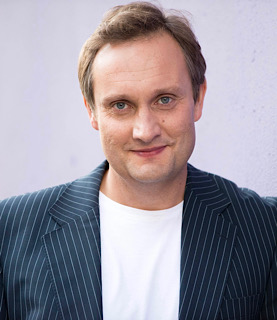
Birth of Mario Rosenstock, Actor, Comedian, Impressionist & Musician

Mario Rosenstock, Irish actor, comedianimpressionist and musician, is born in London, England, on August 31, 1970.

Rosenstock first comes to the attention of the Irish public playing the role of Dr. David Hanlon in the soap opera Glenroe in the 1990s.

However, he is now best known for the popular Gift Grub segments which have featured on The Ian Dempsey Breakfast Show on Today FM since May 1999 which Rosenstock creates alongside Paul McLoone, a radio presenter with Today FM and frontman of the Northern Irish pop-punk/new-wave band, The Undertones.

Gift Grub is a series of comic sketches, impersonations and parodies that featured Rosenstock assuming the personae of Bertie AhernRonan KeatingColin Farrell and Roy Keane among many others. He also provides the manic voice of Right Price Tiles radio spokesperson “Daft Dave.”

Rosenstock performs an impersonation of José Mourinho in a parody of a song from the musical Joseph and the Amazing Technicolor Dreamcoat. This spreads like wildfire on Internet message boards and eventually it is played on a Sky Sports broadcast. Mourinho hears the song and enjoys the impersonation so much he asks Rosenstock to perform a private show for him and the Chelsea F.C. squad. Rosenstock later releases, with Mourinho’s blessing, a single version of “José and his Amazing Technicolor Overcoat.” He also releases another song (“I Sign a Little Player or Two“) on the internet with a parody of Mourinho in an interview then breaking into song.

In 2005, Rosenstock stars as Keano in the comedy musical play I, Keano, which concerns Keane storming out of the Republic of Ireland national football squad during preparations for the 2002 FIFA World Cup.

In 2005, Rosenstock achieves the Christmas number one single in the Irish Singles Chart, with a parody of Will Young‘s song Leave Right Now (which itself is a Christmas number-one in 2003). The parody concerned Roy Keane’s controversial departure from Manchester United and his falling-out with Alex Ferguson

Between December 2007 and May 2009, Rosenstock works on a puppet comedy series entitled Special 1 TV (originally known as I’m on Setanta Sports), which is presented as a parody weekly football talk show hosted by “José Mourinho.” He voices all the puppet characters on the sketch, with the exception of “Rafael Benitez,” who is performed by Keith Burke, including the main character Mourinho, his studio co-hosts “Sven-Göran Eriksson” and “Wayne Rooney,” and regular phone-in callers like “Alex Ferguson,” “Arsène Wenger,” “Roy Keane” and “Mick McCarthy,” as well as the non-football-related characters, Nelson MandelaWillie NelsonBarack Obama and Tom Cruise.

Rosenstock receives the Outstanding Achievement Award at the 11th annual PPI (Phonographic Performance Ireland) Radio Awards in 2011.

In November 2012 his new show called The Mario Rosenstock Show starts on RTÉ2. A second series of the show begins to air in September 2013.

Rosenstock is married, with two children. His uncle, Gabriel Rosenstock, is one of Ireland’s most notable Irish language poets and member of Innti with Michael DavittNuala Ní Dhomhnaill and Liam Ó Muirthile. Rosenstock’s grandfather George is a doctor and writer from Schleswig-Holstein, Germany. He never speaks German again after the war out of shame. His grandmother is a nurse from AthenryCounty Galway.


Leave a comment

Birth of Jonathan Rhys Meyers, Actor & Model

CREATOR: gd-jpeg v1.0 (using IJG JPEG v62), quality = 82

Jonathan Rhys Meyers, Irish actor and model, is born Jonathan Michael Meyers on July 27, 1977, in Dublin.

Rhys Meyers is born to Geraldine (née Meyers) and folk musician John O’Keeffe. The family moves to County Cork when he is almost a year old. At the age of three, his father leaves the family, leaving his mother alone to care for him and his three younger brothers.

Rhys Meyers grows up with a tumultuous childhood and attends North Monastery Christian Brothers school, from which he is permanently expelled at age sixteen. Happy to be out of school, he begins spending time in a local pool hall where he is discovered by Hubbard Casting. The casting agents are talent-spotting for the David Puttnam production of War of the Buttons (1994) and ask him to appear for an audition. After three days of auditions, however, he does not get the role and gives up on his acting aspirations. Soon after the failed audition, he receives a call to audition for a national ad campaign for Knorr soup, and though embarrassed by the attention from the ad, he soon finds himself considered for a major film.

Rhys Meyers movie acting debut is a very small role in the film A Man of No Importance (1994), where his simple cast credit is as “First Young Man.” His first lead role is in the film The Disappearance of Finbar (1996). During a 6-month postponement in production, he returns home to Cork and there receives a call about the film Michael Collins (1996). He travels to Dublin to meet with director Neil Jordan and successfully wins the role of Collins’s assassin. Jordan writes about his meeting with the actor, “I have found someone to play Collins’s killer. Jonathan Rhys Meyers, from County Cork, apparently, who looks like a young Tom Cruise. He comes into the casting session with alarming certainty. Obviously gifted.”

In addition to his role in Michael Collins, Rhys Meyers is also known for his roles in the films Velvet Goldmine (1998), Bend It Like Beckham (2002), Alexander (2004), Match Point (2005), Mission: Impossible III (2006) and his television roles as Elvis Presley in the biographical miniseries Elvis (2005), for which he wins a Golden Globe Award and earns a Primetime Emmy Award nomination, as King Henry VIII in the historical drama The Tudors (2007–10), which earns him two Golden Globe Award nominations, and in the NBC drama series Dracula (2013–14) as the title character. He also stars as Bishop Heahmund in the History Channel television series Vikings.

Rhys Meyers continues to star in other films, such as Albert Nobbs in 2011. In 2013, he appears as the villain Valentine Morgenstern in The Mortal Instruments: City of Bones, based on Cassandra Clare‘s novel, The City of Bones. He appears in the 2015 film Stonewall, directed by Roland Emmerich, in 2017, stars in The 12th Man, and in 2018 wins the Best Actor award at the Manchester Film Festival for his starring role in Damascus Cover.

Rhys Meyers has been the face of several Hugo Boss advertising campaigns. He has also been involved in several charitable causes, including the Hope Foundation, and the children’s charity, Barretstown. He is married to Mara Lane, and they have one son together. He still resides in County Cork.

In 2020, Rhys Meyers is listed as number 44 on The Irish Times list of Ireland’s greatest film actors.


Leave a comment

Neil Jordan Receives Silver Bear for Best Director

neil-patrick-jordan

Neil Patrick Jordan, director of The Butcher Boy (1997), is awarded a Silver Bear for Best Director at the 48th Berlin International Film Festival on February 22, 1998.

Jordan is born in County Sligo on February 25, 1950. His first book, Night in Tunisia, wins a Somerset Maugham Award and the Guardian Fiction Prize in 1979. He also wins an Academy Award for Best Original Screenplay for The Crying Game (1992).

Jordan is educated at St. Paul’s College, Raheny. Later, Jordan attends University College Dublin, where he studies Irish history and English literature. He is raised a Catholic and is quite religious during the early stages of his life. Regarding his current beliefs, he states that “God is the greatest imaginary being of all time. Along with Einstein‘s General Theory of Relativity, the invention of God is probably the greatest creation of human thought.”

When John Boorman is filming Excalibur in Ireland, he recruits Jordan as a “creative associate.” A year later Boorman is executive producer on Jordan’s first feature, Angel, a tale of a musician caught up in the Troubles, starring Stephen Rea who subsequently appears in almost all of Jordan’s films to date. During the 1980s, he directs films that win him acclaim, including The Company of Wolves and Mona Lisa, both made in England. The Company of Wolves becomes a cult favorite.

As a writer/director, Jordan has a highly idiosyncratic body of work, ranging from mainstream hits like Interview with the Vampire to commercial failures like We’re No Angels to a variety of more personal, low-budget arthouse pictures. He is also the driving force behind the cable TV series The Borgias.

Unconventional sexual relationships are a recurring theme in Jordan’s work, and he often finds a sympathetic side to characters that audiences would traditionally consider deviant or downright horrifying. His film The Miracle, for instance, follows two characters who struggle to resist a strong, incestuous attraction, while The Crying Game makes complicated, likable characters out of an IRA volunteer and a transgender woman. Interview with the Vampire, like the Anne Rice book it is based on, focuses on the intense, intimate interpersonal relationship of two undead men who murder humans nightly, accompanied by an equally lusty vampire woman who is eternally trapped in the body of a little girl. While Lestat (Tom Cruise) is depicted in an attractive but villainous manner, his partner Louis (Brad Pitt) and the child vampire Claudia (Kirsten Dunst) are meant to capture the audience’s sympathy despite their predatory nature.

In addition to the unusual sexuality of Jordan’s films, he frequently returns to the Troubles of Northern Ireland. The Crying Game and Breakfast on Pluto both concern a transgender character, both concern the Troubles, and both feature frequent Jordan leading man Stephen Rea. The two films, however, are very different, with The Crying Game being a realistic thriller/romance and Breakfast on Pluto a much more episodic, stylized, darkly comic biography. Jordan also frequently tells stories about children or young people, such as The Miracle and The Butcher Boy. While his pictures are most often grounded in reality, he occasionally directs more fantastic or dreamlike films, such as The Company of Wolves, High Spirits, Interview with the Vampire, and In Dreams.

The critical success of Jordan’s early pictures leads him to Hollywood, where he directs High Spirits and We’re No Angels. Both are critical and financial disasters. He later returns home to make the more personal The Crying Game, which is nominated for six Academy Awards. Jordan wins the Academy Award for Best Original Screenplay for the film. Its unexpected success leads him back to American studio filmmaking, where he directs Interview with the Vampire. He also directs the crime drama The Brave One starring Jodie Foster.

Jordan also writes and directs the Irish-made film Ondine (2009), starring Colin Farrell and Alicja Bachleda-Curuś. He also directs Byzantium, an adaptation of the vampire play of the same name starring Saoirse Ronan, Gemma Arterton, and Jonny Lee Miller.

Jordan lives in Dalkey, which is a part of the larger town of Dún Laoghaire.


Leave a comment

Birth of Neil Patrick Jordan, Screenwriter & Director

neil-patrick-jordan

Neil Patrick Jordan, film director, screenwriter, novelist, and short-story writer, is born in County Sligo on February 25, 1950. His first book, Night in Tunisia, wins a Somerset Maugham Award and the Guardian Fiction Prize in 1979. He wins an Academy Award for Best Original Screenplay for The Crying Game (1992). He also wins the Silver Bear for Best Director at the Berlin International Film Festival for The Butcher Boy (1997).

Jordan is educated at St. Paul’s College, Raheny. Later, Jordan attends University College Dublin, where he studies Irish history and English literature. He is raised a Catholic and is quite religious during the early stages of his life. Regarding his current beliefs, he states that “God is the greatest imaginary being of all time. Along with Einstein‘s General Theory of Relativity, the invention of God is probably the greatest creation of human thought.”

When John Boorman is filming Excalibur in Ireland, he recruits Jordan as a “creative associate.” A year later Boorman is executive producer on Jordan’s first feature, Angel, a tale of a musician caught up in the Troubles, starring Stephen Rea who subsequently appears in almost all of Jordan’s films to date. During the 1980s, he directs films that win him acclaim, including The Company of Wolves and Mona Lisa, both made in England. The Company of Wolves becomes a cult favorite.

As a writer/director, Jordan has a highly idiosyncratic body of work, ranging from mainstream hits like Interview with the Vampire to commercial failures like We’re No Angels to a variety of more personal, low-budget arthouse pictures. He is also the driving force behind the cable TV series The Borgias.

Unconventional sexual relationships are a recurring theme in Jordan’s work, and he often finds a sympathetic side to characters that audiences would traditionally consider deviant or downright horrifying. His film The Miracle, for instance, follows two characters who struggle to resist a strong, incestuous attraction, while The Crying Game makes complicated, likable characters out of an IRA volunteer and a transgender woman. Interview with the Vampire, like the Anne Rice book it is based on, focuses on the intense, intimate interpersonal relationship of two undead men who murder humans nightly, accompanied by an equally lusty vampire woman who is eternally trapped in the body of a little girl. While Lestat (Tom Cruise) is depicted in an attractive but villainous manner, his partner Louis (Brad Pitt) and the child vampire Claudia (Kirsten Dunst) are meant to capture the audience’s sympathy despite their predatory nature.

In addition to the unusual sexuality of Jordan’s films, he frequently returns to the Troubles of Northern Ireland. The Crying Game and Breakfast on Pluto both concern a transgender character, both concern the Troubles, and both feature frequent Jordan leading man Stephen Rea. The two films, however, are very different, with The Crying Game being a realistic thriller/romance and Breakfast on Pluto a much more episodic, stylized, darkly comic biography. Jordan also frequently tells stories about children or young people, such as The Miracle and The Butcher Boy. While his pictures are most often grounded in reality, he occasionally directs more fantastic or dreamlike films, such as The Company of Wolves, High Spirits, Interview with the Vampire, and In Dreams.

The critical success of Jordan’s early pictures leads him to Hollywood, where he directs High Spirits and We’re No Angels. Both are critical and financial disasters. He later returns home to make the more personal The Crying Game, which is nominated for six Academy Awards. Jordan wins the Academy Award for Best Original Screenplay for the film. Its unexpected success leads him back to American studio filmmaking, where he directs Interview with the Vampire. He also directs the crime drama The Brave One starring Jodie Foster.

Jordan also writes and directs the Irish-made film Ondine (2009), starring Colin Farrell and Alicja Bachleda-Curuś. He also directs Byzantium, an adaptation of the vampire play of the same name starring Saoirse Ronan, Gemma Arterton, and Jonny Lee Miller.

Jordan lives in Dalkey, which is a part of the larger town of Dún Laoghaire.