seamus dubhghaill

Promoting Irish Culture and History from Little Rock, Arkansas, USA


Leave a comment

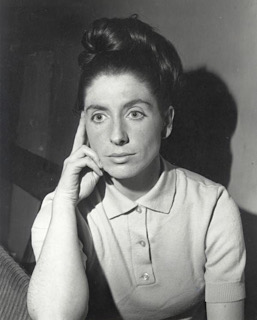
Death of Caitlín Maude, Poet, Actress & Language Revival Activist

Caitlín MaudeIrish language poetlanguage revival activist, and actress, dies in County Dublin on June 6, 1982. She is also well-known for her campaigns to improve the lives of women in Ireland.

Maude is born on May 22, 1941, in CaslaCounty Galway, and reared in the Irish language. Her mother, Máire Nic an Iomaire, is a school teacher, and she receives her primary education from her on a small island off the coast of Rosmuc. Her father, John Maude, is from Cill Bhriocáin township near Rosmuc. She attends secondary school at Coláiste Chroí Mhuire, Spiddal, an all-Irish language school in County Galway. She later credits one of her Irish language teachers there, Sister Ailbhe, as an early influence in cultivating her writing confidence.

Maude attends University College Galway, where she studies English, Irish, French, and Mathematics. She becomes a teacher, working in schools in Counties KildareMayo, and Wicklow. She also works in other capacities in London and Dublin.

Maude begins writing modern literature in Irish in secondary school and develops a rhythm of poetry closely attuned to the rhythms of the Conamara Theas dialect of Connacht Irish, spoken in her native district. Though not conventionally religious, she admits in an interview that she has a deep interest in spirituality and that this has left its mark on her poetry. She is noted as a highly effective reciter of her own verse. Géibheann is the best-known of her poems, and is studied at Leaving Certificate Higher Level Irish in the Republic of Ireland. A posthumous collected edition, Caitlín Maude, Dánta, is published in 1984, Caitlín Maude: file in 1985 in Ireland and Italy, and Coiscéim in 1985.

Maude is widely known as an actress. She acts at the university, at An Taibhdhearc in Galway and the Damer Theatre in Dublin, and is particularly successful in a production of An Triail by Máiréad Ní Ghráda at the Damer Theatre in 1964. She plays the protagonist, Máire Ní Chathasaigh, an unmarried mother who experiences family rejection, a stay in a Magdalene laundry, and ultimately murders her infant child followed by suicide. In 2017, Former Irish Minister For Justice Máire Geoghegan-Quinn cites this performance as “pathbreaking”: “Caitlín Maude played the role, when nobody talked about the issue and when, as we know, women were still devalued, still caricatured, still incarcerated and disenfranchised if they became mothers out of wedlock.” Maude herself is a playwright and co-authors An Lasair Choille with poet Michael Hartnett.

Maude is very active in the  Celtic Revival. She founds An Bonnán Buí, an Irish-speaking social club in the 1970s in Dublin. As a member of the Dublin Metropolitan Gaelgeoir community, she is active in many direct action campaigns by the language revival organization Gluaiseacht Chearta Sibhialta na Gaeltachta, including the campaign that forces the Irish State to establish a Gaelscoil (Irish-medium primary schoolScoil Santain in the suburb of Tallaght, County Dublin. A second Irish language school, Scoil Chaitlin Maude, opens in Tallaght in 1985 shortly after her death. It begins as a two-room school with 35 children and has grown to a 16 room new building serving 345 children as of 2023.

Maude is also a distinguished sean-nós singer. She makes one album in this genre, Caitlín, released in 1975 on Gael Linn Records and now available as a CD. It contains both traditional songs and a selection of readings of her poetry.

Maude marries Cathal Ó Luain in 1969. They have one child Caomhán, their son.

Maude dies of complications from cancer on June 6, 1982, at the age of 41. She is buried in Bohernabreena graveyard, which overlooks the city from the Wicklow Mountains.

In 2001, a new writers’ centre in Galway is named after her: Ionad Scríbhneoirí Chaitlín Maude, Gaillimh.

Since Maude’s death, critics in several languages have continued to study her literary works. Irish writer and The Irish Times columnist Michael Harding cites her as one of a few examples of groundbreaking women to “spin the hurt and wound of their oppression, and weave new loves songs and laments.” Irish Studies professor Sarah McKibben notes that Maude’s innovation in the poem represents an instance of recent Irish writers transgressing “literary, nationalistic, sociolinguistic and gender norms to craft new ways of writing in Irish.”

According to Louis de Paor, “Although no collection of her work was published during her lifetime, Caitlín Maude had a considerable influence on Irish language poetry and poets, including Máirtín Ó DireáinMicheál Ó hAirtnéideTomás Mac Síomóin, and Nuala Ní Dhomhnaill. That influence is a measure of the dramatic force of her personality, her exemplary ingenuity and commitment to the language, and her ability as a singer to embody the emotional disturbance at the heart of a song. Her collected poems are relatively slight, including incomplete drafts and fragments, but reveal a poetic voice confident of its own authority, drawing on the spoken language of the Connemara Gaeltacht but rarely on its conventions of oral composition or, indeed, on precedents in Irish poetry in either language. The best of her work is closer to the American poetry of the 1960s in its use of looser forms that follow the rhythms of the spoken word and the sense of the poem as direct utterance without artifice, a technique requiring a high degree of linguistic precision and formal control.”

Maude’s work has also been translated into English and Spanish. Spanish language critic Pura Coloma notes that Maude’s work played a role in preserving Connemaran culture, as she “utilizes her own style to replicate the deep rhythms and tonalities of the regional voice.”

Leave a comment

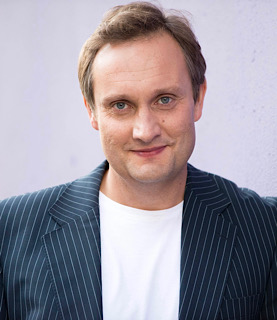
Birth of Mario Rosenstock, Actor, Comedian, Impressionist & Musician

Mario Rosenstock, Irish actor, comedianimpressionist and musician, is born in London, England, on August 31, 1970.

Rosenstock first comes to the attention of the Irish public playing the role of Dr. David Hanlon in the soap opera Glenroe in the 1990s.

However, he is now best known for the popular Gift Grub segments which have featured on The Ian Dempsey Breakfast Show on Today FM since May 1999 which Rosenstock creates alongside Paul McLoone, a radio presenter with Today FM and frontman of the Northern Irish pop-punk/new-wave band, The Undertones.

Gift Grub is a series of comic sketches, impersonations and parodies that featured Rosenstock assuming the personae of Bertie AhernRonan KeatingColin Farrell and Roy Keane among many others. He also provides the manic voice of Right Price Tiles radio spokesperson “Daft Dave.”

Rosenstock performs an impersonation of José Mourinho in a parody of a song from the musical Joseph and the Amazing Technicolor Dreamcoat. This spreads like wildfire on Internet message boards and eventually it is played on a Sky Sports broadcast. Mourinho hears the song and enjoys the impersonation so much he asks Rosenstock to perform a private show for him and the Chelsea F.C. squad. Rosenstock later releases, with Mourinho’s blessing, a single version of “José and his Amazing Technicolor Overcoat.” He also releases another song (“I Sign a Little Player or Two“) on the internet with a parody of Mourinho in an interview then breaking into song.

In 2005, Rosenstock stars as Keano in the comedy musical play I, Keano, which concerns Keane storming out of the Republic of Ireland national football squad during preparations for the 2002 FIFA World Cup.

In 2005, Rosenstock achieves the Christmas number one single in the Irish Singles Chart, with a parody of Will Young‘s song Leave Right Now (which itself is a Christmas number-one in 2003). The parody concerned Roy Keane’s controversial departure from Manchester United and his falling-out with Alex Ferguson

Between December 2007 and May 2009, Rosenstock works on a puppet comedy series entitled Special 1 TV (originally known as I’m on Setanta Sports), which is presented as a parody weekly football talk show hosted by “José Mourinho.” He voices all the puppet characters on the sketch, with the exception of “Rafael Benitez,” who is performed by Keith Burke, including the main character Mourinho, his studio co-hosts “Sven-Göran Eriksson” and “Wayne Rooney,” and regular phone-in callers like “Alex Ferguson,” “Arsène Wenger,” “Roy Keane” and “Mick McCarthy,” as well as the non-football-related characters, Nelson MandelaWillie NelsonBarack Obama and Tom Cruise.

Rosenstock receives the Outstanding Achievement Award at the 11th annual PPI (Phonographic Performance Ireland) Radio Awards in 2011.

In November 2012 his new show called The Mario Rosenstock Show starts on RTÉ2. A second series of the show begins to air in September 2013.

Rosenstock is married, with two children. His uncle, Gabriel Rosenstock, is one of Ireland’s most notable Irish language poets and member of Innti with Michael DavittNuala Ní Dhomhnaill and Liam Ó Muirthile. Rosenstock’s grandfather George is a doctor and writer from Schleswig-Holstein, Germany. He never speaks German again after the war out of shame. His grandmother is a nurse from AthenryCounty Galway.


Leave a comment

Birth of Poet Michael Longley

Michael Longley, one of Northern Ireland’s foremost contemporary poets, is born in Belfast on July 27, 1939. He is educated at the Royal Belfast Academical Institution and subsequently reads Classics at Trinity College, Dublin, where he edits the student literary magazine Icarus.

Longley is renowned for the quiet beauty of his compact, meditative lyrics. Known for using classical allusions to cast provocative light on contemporary concerns, including Northern Ireland’s “Troubles,” his poetry is also marked by sharp observation of the natural world, deft use of technique, and deeply felt emotion. His debut volume, No Continuing City (1969), heralds the arrival of a new talent from a region which has already produced recognized talents like Seamus Heaney and Derek Mahon. However, his early influences are English poets like Philip Larkin, Louis MacNeice, and the First World War poets, as well as masters from the classical tradition. The critic Langdon Hammer describes Longley’s poems as masterpieces of “lucidity, economy, sincerity…by means of meticulous, unpretentious technique.”

Longley’s work engages diverse subjects, including Homeric literature, the landscape of Carrigskeewaun, jazz, Walter Mitty, and the politics of Northern Ireland. On the public and political responsibilities of being a Northern Irish poet, he says, “Though the poet’s first duty must be to his imagination, he has other obligations, and not just as a citizen. He would be inhuman if he did not respond to tragic events in his own community, and a poor artist if he did not seek to endorse that response imaginatively.” Reviewing his Selected Poems (1993), critic Fran Brearton praises in particular Longley’s more political poems, noting his “use of a compassionate yet unsentimental voice, and an attention to detail which restores specificity at a point in history when it is most in danger of being lost in abstraction – numbers, dates, death-tolls counted beyond comprehension.”

After a 12-year publishing silence, Longley’s 1991 return, Gorse Fires, wins the Whitbread Poetry Prize. Subsequently, The Weather in Japan (2000) wins The Irish Times Literature Prize for Poetry, the Hawthornden Prize, and the T.S. Eliot Prize. Other publications include Snow Water (2004) and Collected Poems (2006). In 2001 Longley is awarded the Queen’s Gold Medal for Poetry. He is a fellow of the Royal Society of Literature.

Longley is Professor of Poetry for Ireland from 2007 to 2010, a cross-border academic post set up in 1998, previously held by John Montague, Nuala Ní Dhomhnaill, and Paul Durcan. He is succeeded in 2010 by Harry Clifton.