seamus dubhghaill

Promoting Irish Culture and History from Little Rock, Arkansas, USA


Leave a comment

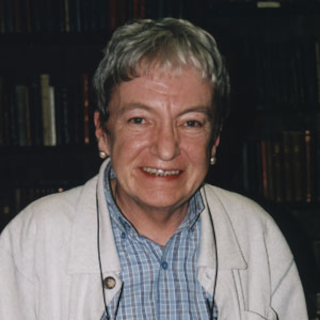
Death of Emer Colleran, Microbiologist & Environmental Advocate

Emer Colleran, Irish microbiologist, academic and an environmental advocate, dies on June 30, 2018, at University Hospital Galway. She is professor of microbiology at the National University of Ireland, Galway, a member of the Royal Irish Academy, one of Mary Robinson‘s nominees on the Council of State, and chairwoman of An Taisce, the National Trust for Ireland.

Colleran, and her twin Noreen, are born in BallinrobeCounty Mayo, on October 12, 1945, to John and Josie Colleran. One of a family of five children, her father is a school principal and her mother, also a primary school teacher, dies when she is just 11 years old. She completes her secondary education at St. Louis secondary school in Kiltimagh. She spends a lot of time outdoors as a child, particularly fishing, which sparks her interest in the environment.

On entering higher education, Colleran has a grant from the Department of Education, which requires that she do her studies through the Irish language. Her first choice, Medicine, is not available in Irish so she chooses Science. She graduates with a first-class primary degree in Science at University College Galway (now National University of Ireland, Galway) in 1967.

Colleran specialises in anaerobic digestion as a postgraduate and in 1971 becomes a postdoctoral fellow for two years at the University of Bristol in the UK.

Colleran lectures in biology at Athlone Regional Technical College (now Athlone Institute of Technology) and Galway Regional Technical College (now Galway-Mayo Institute of Technology) before her appointment as a lecturer in microbiology at NUI Galway in 1976. She is appointed Associate Professor of Microbiology by the Senate of the National University of Ireland in 1990. She is a member of the university’s governing authority for a number of years, but steps down in May 2000 in connection with the selection procedure for the new university president. In October of that year, she is appointed professor of microbiology and chair of the department at NUI Galway.

Colleran is the first director of the Environment Change Institute at NUI Galway set up under the Higher Education Authority‘s Programme for Research in Third Level Institutions in 2000. In 2010, the Environmental Change Institute and the Martin Ryan Marine Research Institute are merged to form the current day Ryan Institute at NUI Galway.

In 1973, Colleran is elected to the committee of the Galway Association of An Taisce, part of a national voluntary organisation the aims of which are conservation in Ireland through education, publicity and positive action. She serves as membership secretary and then treasurer to the Galway branch before becoming chairman. In 1981, as chairman of the Galway branch, she hits back at claims from Galway County Council that An Taisce are “an anonymous group, wielding power unfairly.” She is involved in the compilation of a controversial planning report, published by An Taisce in 1983, which highlights abuse of planning laws by city and county councillors across Ireland, and in particular in counties Galway, Mayo, DonegalKerry and Louth.

Colleran serves as Environmental Officer for An Taisce before being elected National Chairman in 1987, the first time a chairman has come from one of the western county associations. She continues to use her position to campaign against misuse of planning laws, for a clamp down on pollution of rivers and lakes, and against a move to scrap An Foras Forbartha, a body that provides independent monitoring of pollution. During her three years as chairman, until May 1990, she is particularly involved in debates over local environmental and planning issues, in particular over gold mining in the west of Ireland, a proposed airport for Clifden, and the planned sewage treatment plant at Mutton Island, County Galway.

In 1991 plans are announced for a new visitor centre, to be located at Mullaghmore in The Burren. Colleran is among those who are part of an appeal, saying that while the plan for the national park is welcomed by An Taisce, they want the visitor centre to be located three or four miles from Mullaghmore.

President Mary Robinson appoints seven new members to her Council of State in February 1991, including Colleran. Other new members appointed at the time are Monica Barnes, Patricia O’Donovan, Quintan Oliver, Rosemarie Smith, Dónal Toolan and D. Kenneth Whitaker. The new Council of State represents a wide spectrum of Irish life and is widely welcomed, although Fine Gael is disappointed that its leader John Bruton is not included.

In 1991, Colleran is one of 15 people appointed to Taoiseach Charles Haughey‘s Green 2000 Advisory Group, to determine which problems will face the environment in the next century. The group is led by Dr. David Cabot, special advisor on environmental affairs.

Colleran is appointed a member of the National Heritage Council in 1995 by the Minister for Arts, Culture and the GaeltachtMichael D. Higgins. In the same year the Minister of State at the Department of the MarineEamon Gilmore, appoints her to the chair of the Sea Trout working group to oversee the implementation of recommendations to tackle a decline in sea trout stocks, particularly in the west of Ireland.

In 2003, Colleran is elected as a member of the Royal Irish Academy.

Colleran is recognised at the annual NUI Galway Alumni Awards in 2004 when she receives the award for Natural Science, sponsored by Seavite Bodycare Ltd., which acknowledges a graduate who has made an outstanding contribution in the field of natural science.

Leave a comment

Birth of Archaeologist Etienne Andrew Rynne

Etienne Andrew Rynne, archaeologist, is born on September 11, 1932, at 20 Upper Pembroke Street, Dublin.

Rynne is one of six children (five boys and a girl) of Dr. Michael Rynne, a civil servant and diplomat, and Nathalie Rynne (née Fournier), from Auvergne, France. He has a twin brother, Michael, and is a nephew of the writer and broadcaster Stephen Rynne. He receives his early education in a number of institutions in Ireland and abroad, including Terenure College in Dublin, Clongowes Wood College in County Kildare, Coláiste na Rinne in County Waterford and École des Roches in Normandy. He then attends University College Dublin (UCD), where he graduates BA in archaeology and French (1953) and MA in archaeology (1955). He wins the prestigious National University of Ireland (NUI) travelling studentship for his thesis on Iron Age weapons.

After spending a year on the continent, Rynne returns to Ireland in 1957 to join the antiquities division of the National Museum of Ireland (NMI) in Kildare Street. One of his first assignments is to participate in the excavations at the Hill of Tara, previously headed by his old mentor at UCD, the recently deceased Professor Seán P. Ó Ríordáin. Already an expert on the Iron Age, he expands his expertise to cover Irish Celtic and early Christian art. He becomes an influential figure at the museum, remaining until 1967 and gaining much valuable experience in archaeological research, cataloguing and display, and is once described as the “true master of the Kildare Street crypt.” Intimately acquainted with the museum’s early Christian artefacts, he is particularly drawn to the eighth-century Ardagh chalice, on which he compiles extensive research notes relating to its dismantling and conservation. Although he is recognised as a leading authority on the chalice, his workload at the NMI and various academic commitments, not least his thirty-five years as editor of the North Munster Antiquarian Journal (NMAJ), prevent publication of his great work on the treasure.

During Rynne’s time at the NMI, he develops a close friendship with its director, Dr. Anthony T. Lucas, and on April 1, 1967 marries his daughter Aideen in the Church of the Miraculous Medal, Clonskeagh, Dublin. That year, he leaves the museum to take up a lectureship in archaeology at University College Galway (UCG), remaining there for thirty-one years until his retirement as professor of Celtic archaeology in 1998. During his professorship, he introduces many innovative changes at UCG, placing great emphasis on the value of well-planned field trips to historical monuments and archaeological sites around Connacht and north Clare, including Poulnabrone in his beloved Burren and Dún Aonghasa on Inishmore, which in 1991 he is first to suggest was built for ceremonial rather than defensive purposes. He often ventures further afield to sites such as the Jorvik Viking Centre, York, and the West Kennet Long Barrow in Wiltshire. Many local expeditions include small excavations, which he continues to conduct on behalf of the NMI.

Despite his heavy workload, Rynne writes close to one hundred academic papers in local and international journals, his expansive subject matter including not only archaeology but also folklore and Irish War of Independence history, the latter interest stemming from his father’s involvement in the formation of the Irish state (1917–23). His editorial tenure at the NMAJ includes the publication in 1975 and 1978 of dedicated issues on Edward MacLysaght and John Hunt respectively, and he is editor of Figures from the Past (1987), the Festschrift for Helen Maybury Roe. He also uses the national press to express his sometimes-eccentric views on various subjects, such as Irish neutrality, the American justice system and running the M3 motorway through Tara. A highly engaging and entertaining speaker, he thrives in front of an audience, be it a small group of students standing in a muddy field or an official address to the Royal Society of Antiquaries of Ireland, of which he serves as president from 1985 to 1989. His lectures are marked by his erudite and characteristically passionate delivery, complete with subtle intonation, and he is as comfortable speaking French as he is English or Irish.

Rynne’s legacy cannot be fairly assessed without reference to his largely unpopular stance in the Wood Quay controversy of the late 1970s. When Dublin’s original Viking settlement at Wood Quay is unearthed by archaeologists, he sides with the NMI, which, under the directorship of Joseph Raftery, decides to excavate only a small section of the site before handing it over to developers. This results in the destruction of much unexcavated archaeology. The NMI’s decision results in serious damage to its reputation, with Rynne one of the few archaeologists publicly supporting its unpopular stance. His loyalty to the NMI administration, which includes his father-in-law Lucas, alienates many fellow archaeologists, and is described by Patrick Wallace, then director of excavations at Wood Quay and among the many scholars who campaign to save the site, as “excessive, unnecessary and so unquestioning that it led to his being on the … wrong side during the Wood Quay court case.”

Rynne’s contribution to the history and heritage of his adopted province of Connacht and city of Galway is, however, widely acknowledged as immense. Once settled in UCG, he makes his home in the medieval town of Athenry, where he engages enthusiastically with the local community via lectures, walks and talks on the town’s famous walls and castle. Although Dublin-born, he becomes firmly entrenched in Galway’s colourful past and is instrumental in the founding of the city’s first municipal museum in Comerford House, adjacent to the Spanish Arch, in 1971. Drawing on his considerable NMI experience, he acts as honorary curator for the Galway museum for over a decade, before its move to the present purpose-built building in 2007. Ever willing to disseminate the story of Galway’s past beyond the twin towers of its university, to its citizens and the wider public, he compiles the Tourist Trail of Old Galway (1977). This signposted walking tour of Galway communicates the city’s importance in the medieval world, not only from an Irish, but also from a European and global perspective, and represents an enduring legacy to the self-styled promoter and protector of the city’s heritage.

Elected a member of the Royal Irish Academy (RIA) in 1966, Rynne is a fellow of the Society of Antiquaries of London (1975), and president of both the Cambrian Society of Wales (1999) and the Galway Archaeological and Historical Society (1989–94). Although diagnosed with heart disease in 1991, he remains active long after his retirement in 1998, continuing to publish papers on aspects of Irish archaeology up to his death.

In the summer of 2012 Rynne suffers a stroke and dies at the age of 79 on June 22, 2012, at University Hospital Galway. He is survived by Aideen, his wife of forty-five years, and their four sons and one daughter. A fifth son pre-deceases him. He is buried in the New Cemetery, Athenry.

(From: “Rynne, Etienne Andrew” by Frank Cullen, Dictionary of Irish Biography, http://www.dib.ie, June 2018)


Leave a comment

Birth of Emer Colleran, Microbiologist & Environmental Advocate

Emer Colleran, Irish microbiologist, academic and an environmental advocate, is born in Ballinrobe, County Mayo, on October 12, 1945. She is professor of microbiology at the National University of Ireland, Galway, a member of the Royal Irish Academy, one of Mary Robinson‘s nominees on the Council of State, and chairwoman of An Taisce, the National Trust for Ireland.

Colleran, and her twin Noreen, are born to John and Josie Colleran. One of a family of five children, her father is a school principal and her mother, also a primary school teacher, dies when she is just 11 years old. She completes her secondary education at St. Louis secondary school in Kiltimagh. She spends a lot of time outdoors as a child, particularly fishing, which sparks her interest in the environment.

On entering higher education, Colleran has a grant from the Department of Education, which requires that she do her studies through the Irish language. Her first choice, Medicine, is not available in Irish so she chooses Science. She graduates with a first-class primary degree in Science at University College Galway (now National University of Ireland, Galway) in 1967.

Colleran specialises in anaerobic digestion as a postgraduate and in 1971 becomes a postdoctoral fellow for two years at the University of Bristol in the UK.

Colleran lectures in biology at Athlone Regional Technical College (now Athlone Institute of Technology) and Galway Regional Technical College (now Galway-Mayo Institute of Technology) before her appointment as a lecturer in microbiology at NUI Galway in 1976. She is appointed Associate Professor of Microbiology by the Senate of the National University of Ireland in 1990. She is a member of the university’s governing authority for a number of years, but steps down in May 2000 in connection with the selection procedure for the new university president. In October of that year, she is appointed professor of microbiology and chair of the department at NUI Galway.

Colleran is the first director of the Environment Change Institute at NUI Galway set up under the Higher Education Authority‘s Programme for Research in Third Level Institutions in 2000. In 2010, the Environmental Change Institute and the Martin Ryan Marine Research Institute are merged to form the current day Ryan Institute at NUI Galway.

In 1973 Colleran is elected to the committee of the Galway Association of An Taisce, part of a national voluntary organisation the aims of which are to conservation in Ireland through education, publicity and positive action. She serves as membership secretary and then treasurer to the Galway branch before becoming chairman. In 1981, as chairman of the Galway branch, she hits back at claims from Galway County Council that An Taisce are “an anonymous group, wielding power unfairly.” She is involved in the compilation of a controversial planning report, published by An Taisce in 1983, which highlights abuse of planning laws by city and county councillors across Ireland, and in particular in counties Galway, Mayo, Donegal, Kerry and Louth.

Colleran serves as Environmental Officer for An Taisce before being elected National Chairman in 1987, the first time a chairman has come from one of the western county associations. She continues to use her position to campaign against misuse of planning laws, for a clamp down on pollution of rivers and lakes, and against a move to scrap An Foras Forbartha, a body that provides independent monitoring of pollution. During her three years as chairman, until May 1990, she is particularly involved in debates over local environmental and planning issues, in particular over gold mining in the west of Ireland, a proposed airport for Clifden, and the planned sewage treatment plant at Mutton Island, County Galway.

In 1991 plans are announced for a new visitor centre, to be located at Mullaghmore in The Burren. Colleran is among those who are part of an appeal, saying that while the plan for the national park is welcomed by An Taisce, they want the visitor centre to be located three or four miles from Mullaghmore.

President Mary Robinson appoints seven new members to her Council of State in February 1991, including Colleran. Other new members appointed at the time are Monica Barnes, Patricia O’Donovan, Quintan Oliver, Rosemarie Smith, Dónal Toolan and D. Kenneth Whitaker. The new Council of State represents a wide spectrum of Irish life and is widely welcomed, although Fine Gael is disappointed that its leader John Bruton is not included.

In 1991, Colleran is one of 15 people appointed to Taoiseach Charles Haughey‘s Green 2000 Advisory Group, to determine which problems will face the environment in the next century. The group is led by Dr. David Cabot, special advisor on environmental affairs.

Colleran is appointed a member of the National Heritage Council in 1995 by the Minister for Arts, Culture and the Gaeltacht, Michael D. Higgins. In the same year the Minister of State at the Department of the Marine, Eamon Gilmore, appoints her to the chair of the Sea Trout working group to oversee the implementation of recommendations to tackle a decline in sea trout stocks, particularly in the west of Ireland.

In 2003 Colleran is elected as a member of the Royal Irish Academy.

Colleran is recognised at the annual NUI Galway Alumni Awards in 2004 when she receives the award for Natural Science, sponsored by Seavite Bodycare Ltd., which acknowledges a graduate who has made an outstanding contribution in the field of natural science.

Colleran dies on June 30, 2018, at University Hospital Galway.