seamus dubhghaill

Promoting Irish Culture and History from Little Rock, Arkansas, USA


Leave a comment

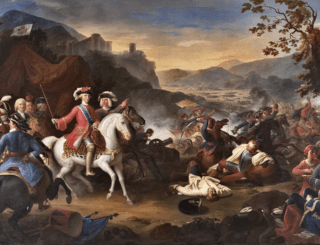
Irish Brigade of Spain Fights at the Battle of Velletri

On August 12, 1744, during the War of the Austrian Succession between Austria and the Kingdom of Naples, the Irish Brigade of Spain fights at the Battle of Velletri, in Italy, against an Austrian army commanded by Irishman Field Marshal Count Maximillian Ulysses Browne, of Limerick.

On June 17, as darkness falls, 12,000 troops move toward the fortifications of Monte Piccolo. At dawn the Walloon grenadiers of the Spanish regiments occupy the battery of Monte Piccolo, while other troops occupy the Artemisio Male, La Fajola and set fire to the Pratoni del Vivaro, the commander of the Monte Piccolo garrison, Jan. Pestaluzzi, is captured, probably drunk in a farmhouse of winemakers. The next day, Jean Thierry du Mont, comte de Gages, gives the order to withdraw and preserve only the Artemisio ridge line.

The surprise nighttime attack of Browne’s Austrians on Velletri on August 12 overruns the advanced Irish picquets commanded by Lt. Burke, who is killed, and capture much of King Charles III of Spain‘s royal entourage. But Burke’s men rally to make a fighting retreat, joined by members of the relief guard commanded by Capt. Slattery. The delaying tactics of the picquets allow the rest of the Brigade, along with a regiment of Walloons, to form a line to meet the Austrians. Still, the Irish are heavily outnumbered and suffer tremendous casualties as the Austrians push them. At Velletri’s gates they make a stand. Col. MacDonald of the Hibernia regiment and over 40 other Irish officers are killed, along with several hundred of the red-coated Irish soldiers. But they exhaust the Austrians, as well. With the rest of the Spanish army now rallied behind them, the remaining Irish and Walloons lead a bayonet charge that drives the Austrians from the field. So impressively did the Irish fight, the King of Spain awards each regiment a motto for their flags: “In Omneim Terram ex hivit sonos corum” (Their sound hath gone forth into all the earth). And to each regiment he also grants a sobriquet: To Irlanda, “El Famoso“; to Ultonia, “El Immortal“; and to Hibernia, “La Culumna Irlanda” (“The pillar of Ireland”).

Raimondo di Sangro takes part in the Battle of Velletri, distinguishing himself for his courage and skill. Act 3 of the drama Don Álvaro o la fuerza del sino by Ángel de Saavedra, 3rd Duke of Rivas, and the opera La forza del destino by Giuseppe Verdi, based on Saavedra’s play, is set during the Battle of Velletri.

(Pictured: Charles VII of Naples at the Battle of Velletri by Camillo Guerra, oil on canvas, 1850)

Leave a comment

Death of John Comyn, Archbishop of Dublin

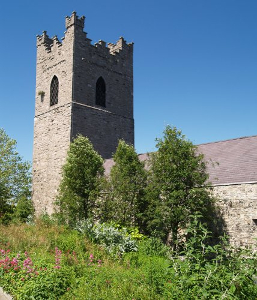
st-audoens-church

John Comyn, Archbishop of Dublin, dies on October 25, 1212, and is buried in Christ Church Cathedral.

Born in England in 1150, Comyn is chaplain to King Henry II of England and on his “urgent” recommendation is elected Archbishop of Dublin following the death of St. Laurence O’Toole in 1180. He has been a Benedictine monk at the Evesham Abbey.

In 1181, he is elected to the archbishopric of Dublin by some of the clergy of Dublin, who have assembled at Evesham for the purpose. He is not then a priest, but is subsequently, in the same year, ordained such, at Velletri, and on Palm Sunday is consecrated archbishop by Pope Lucius III. The following year the pope grants him manors and lands in and around Dublin, which subsequently form the Manor of St. Sepulchre, which remains under the authority of the Archbishop of Dublin until the 19th century. The pope also, in an effort to protect the Dublin archbishopric from claims from Canterbury, extends certain privileges to Comyn, which intensifies the rivalry between the sees of Dublin and Armagh for the Primacy of Ireland.

Comyn waits three years before visiting Ireland, until he is sent there by King Henry to prepare the reception of his son, Prince John. The king grants him lands and privileges which make him a Lord of Parliament. After his arrival in Ireland, John grants Comyn the Bishopric of Glendalough, with all its appurtenances in lands, manors, churches, tithes, fisheries, and liberties, although Comyn never has an opportunity to take this up in his lifetime. Under Pope Urban III, Comyn carries out a number of reforms of the Irish church to bring it into line with the church in England and in continental Europe.

In 1189, Archbishop Comyn assists at the coronation of King Richard I. The following year he demolishes the old parish church of St. Patrick, south of Dublin, and erects a new building, next to his Palace of St. Sepulchre, which he elevates to the status of a collegiate church, and which later becomes St. Patrick’s Cathedral. This enables him to rule in his own Liberty, without the interference of mayor and citizens. About the same time, he enlarges the choir of Christ Church Cathedral.

Prince John grants Comyn further legal rights throughout the country of Ireland, while Comyn also receives the church and lands of All Hallows, to the northeast of Dublin. Between Lusk and Swords, he founds the convent of Grace Dieu, which later becomes wealthy through grants from the Anglo-Norman prelates and magnates. However, when Hamo de Valoniis is appointed Justiciar of Ireland he seizes some of these lands for the treasury, with a good portion for himself, and a dispute arises which causes Comyn to flee for his own safety to Normandy. Comyn appeals to Pope Innocent III, who settles the dispute, but John is angered by the actions of Comyn and does not reconcile himself with him until 1206.

Comyn dies six years later and is buried in Christ Church Cathedral, where a marble monument is erected to his memory. Two years later William Piro, Bishop of Glendalough, dies, whereupon the union of the sees granted by King John takes place.

(Pictured: St. Audoen’s Church, the only remaining authentic medieval church in Dublin, built by Archbishop John Comyn around 1190)


Leave a comment

John Comyn Elected Archbishop of Dublin

John Comyn is elected Archbishop of Dublin and consecrated by the pope at Velletri on March 21, 1181. He is the first Englishman to be appointed to an Irish see.

He is chaplain to King Henry II of England and on his “urgent” recommendation is elected Archbishop of Dublin following the death of St. Laurence O’Toole in 1180. He has been a Benedictine monk at the Evesham Abbey.

In 1181, some of the clergy of Dublin assemble at Evesham and Comyn is elected to the archbishopric of Dublin. He is not then a priest but is subsequently ordained such later in the year at Velletri and on Palm Sunday, March 21, is consecrated archbishop by Pope Lucius III. The following year the pope grants him manors and lands in and around Dublin, which subsequently form the Manor of St. Sepulchre which remains under the authority of the Archbishop of Dublin until the 19th century. The pope also, in an effort to protect the Dublin archbishopric from claims from Canterbury, extends certain privileges to Comyn, which intensifies the rivalry between the sees of Dublin and Armagh for the Primacy of Ireland.

Comyn waits three years before visiting Ireland, until he is sent there by King Henry to prepare the reception of his son, Prince John. The king grants him lands and privileges which make him a Lord of Parliament. After his arrival in Ireland, John grants Comyn the Bishopric of Glendalough, although Comyn never has an opportunity to take this up in his lifetime. Under Pope Urban III, Comyn carries out a number of reforms of the Irish church to bring it into line with the church in England and in continental Europe.

In 1189, Archbishop Comyn assists at the coronation of King Richard I. The following year he demolishes the old parish church of St. Patrick, south of Dublin. He then erects a new building, next to his Palace of St. Sepulchre, which he elevates to the status of a collegiate church and later becomes St. Patrick’s Cathedral. This enables him to rule in his own Liberty, without the interference of mayor and citizens. Around this time, he enlarges the choir of Christ Church Cathedral.

Prince John grants Comyn further legal rights throughout the country of Ireland, while Comyn also receives the church and lands of All Hallows to the northeast of Dublin. Between Lusk and Swords, he founds the convent of Grace Dieu Abbey, which later becomes wealthy through grants from the Anglo-Norman prelates and magnates. However, when Hamo de Valoniis is appointed Justiciar of Ireland he seizes some of these lands for the treasury and himself. A dispute arises which causes Comyn to flee for his own safety to Normandy. Comyn appeals to Pope Innocent III, who settles the dispute, but John is angered by the actions of Comyn and does not reconcile himself with him until 1206.

Comyn dies six years later on October 25, 1212, and is buried in Christ Church Cathedral, where a marble monument is erected to his memory. Two years later William Piro, Bishop of Glendalough, dies whereupon the union of the sees granted by King John takes place.