Lucien Bull, a pioneer in chronophotography, is born in Dublin on January 5, 1876. Chronophotography is defined as “a set of photographs of a moving object, taken for the purpose of recording and exhibiting successive phases of motion.”
Born in Dublin to British father, Cornelius Bull, and French mother, Gabrielle Joune, Bull lives his younger years in Dublin where he attends school and lives at home with his parents. In 1894, Bull moves to France to visit his aunts. After several months, Bull eventually settles in the area and becomes an assistant to Étienne-Jules Marey in 1895. At the time, Marey is working on the cinematographic, which is a camera that is shaped like a rifle and takes pictures of moving objects from a rotating plate. This eventually becomes known as the “gun camera.”
This camera is designed to investigate the study of motion. Basically, the “gun camera” is designed to take an object in motion and snap still shots. By taking these still shots, each movement made by the object is captured and then studied to analyze movement patterns that were unable to be studied before. The first successful film is taken in 1904 when Bull is able to film the flight of a fly at 1,200 frames per second.
As a result of Marey’s death in May 1904, Bull becomes head of the Marey Institute, which forms part of the Collège de France. While remaining with the Marey Institute, Bull is naturalized as a French citizen in 1931. After a few years, Bull eventually introduces a few papers on a wide variety of subjects ranging from spark illuminations, high-speed motion-picture photography, original studies of insect and bird flight, and electrocardiography and muscle and heart functions.
In 1933, Bull is put in charge of research, National Office of Research and Invention in France. In 1948 he becomes President of the Institute of Scientific Cinematography in Paris. His work is eventually listed by Dr. W. Hinsch in Research Film for December 1953.
Born in Ireland around 1721, Hogun migrates to North Carolina, then a British colony, in 1751. Settling in Halifax County, he raises a family and establishes himself as a prominent local figure.
In November 1779, Hogun is sent south in command of the North Carolina Brigade to the aid of General Benjamin Lincoln, who is facing an anticipated British assault at Charleston, South Carolina. The march south, through one of the worst winters ever, is a severe one and Hogun’s numbers are reduced by the time he reached Charleston on March 3, 1780. Before the end of the month, British General Henry Clinton’s men are besieging the city. The Americans, though outnumbered more than two to one, have a few successes but soon they are running low on food and ammunition.
At a council of war May 11, the decision is made to surrender. The surrender the following day is one of the worst American defeats of the war — more than 2,500 men become British prisoners. The British hastily build a prison on Haddrel’s Point, a peninsula in Charleston’s harbor, to hold the prisoners, but the site is incomplete, and conditions are harsh.
Generals McIntosh, Lincoln, and Scott, and other high-ranking officers accept parole from the British and depart. Generals William Moultrie and Hogun refuse, preferring to stay with their men. The British are trying to recruit colonial soldiers to serve them in the West Indies. In spite of his flagging health, Hogun fears some of his men might weaken if he departs.
As winter sets in, Hogun’s condition worsens. On January 4, 1781, he passes away and was buried near the prison. Like so many other Irish-born soldiers before and after him, James Hogun had given his last full measure of devotion to his adopted country.
Fallon’s upbringing and his early impressions of Athenry and the surrounding landscape are intimately described in his poetry. After passing the civil service exams in 1923 he moves to Dublin to work in the Customs House. In Dublin he becomes part of the circle of George William Russell (Æ) who encourages his literary ambitions and arranges for the publication of his early poetry. His early poetry, short stories, and literary criticism are published in The Dublin Magazine and The Bell.
He forms close friendships with Seumas O’Sullivan, editor of The Dublin Magazine, the poets Austin Clarke, Robert Farren, F.R. Higgins, and Patrick McDonagh and later the novelist James Plunkett. In 1939, Fallon leaves Dublin to serve as a Customs official in County Wexford, living in Prospect House, near Wexford Town with his wife, Dorothea (née Maher) and his six sons. During this time, he becomes a close friend of the painter Tony O’Malley.
Fallon is a regular contributor to Radio Éireann in the 1940s and 1950s, serving variously as a journalist, scriptwriter, and literary critic. A number of his short stories and early dramatic pieces are broadcast by the station during the 1940s. The first of Fallon’s verse plays for radio, Diarmuid and Gráinne, is broadcast by Radio Éireann in November 1950. This is followed by The Vision of Mac Conglinne (1953), Two Men with a Face (1953), The Poplar (1953), Steeple Jerkin (1954), A Man in the Window (1955), Outpost (1955), The Wooing of Étain (1955), Deirdre’s King (1956), The Five Stations (1957), The Hags of Clough (1957), The Third Bachelor (1958), At the Bridge Inn (1960), and Lighting up Time (1961).
Three plays adapted from Irish mythology, Diarmuid and Gráinne, The Vision of Mac Conglinne, and Deirdre’s King receive particular contemporary critical acclaim. The landscape, mythology, and history of Ireland, interwoven with classical themes and religious symbolism, are frequent themes in his poetry and dramatic works.
A number of his radio plays are later broadcast on the BBC Third Programme, and, in translation, in Germany, Holland, and Hungary. A stage play, The Seventh Step, is staged at The Globe Theatre in Dublin in 1954. A second stage play, Sweet Love ’till Morn, is staged in the Abbey Theatre in 1971. Fallon also writes dramatic pieces for television such as A Sword of Steel (1966) and The Fenians (1967), the latter produced by James Plunkett.
Fallon retires from the Civil Service in 1963, returning to Dublin before moving to Cornwall in 1967 to live with his son, the sculptor Conor Fallon and his daughter-in-law, the artist Nancy Wynne-Jones. He and his wife return to Ireland in 1971. He spends his last years in Kinsale. He is visiting his son Ivan Fallon in Kent at the time of his death on October 9, 1974.
While his poetry has previously appeared in The Dublin Magazine, The Bell, The Irish Times, and a number of anthologies, his first volume of collected poetry, Poems, incorporating a number of previously unpublished poems, is not produced until 1974, months before his death. Three volumes of his poetry, edited by his son, the journalist and critic Brian Fallon, are published after his death – Poems and Versions (1983), Collected Poems (1990), with an introduction by Seamus Heaney, and A Look in the Mirror and Other Poems (2003), with an introduction by Eavan Boland. In 2005, three of Fallon’s verse plays, The Vision of Mac Conglinne, The Poplar, and The Hags of Clough are published in a single volume. A selection of his prose writings and criticism edited by Brian Fallon, A Poet’s Journal, is published in the same year.
The first edition of the Irish Independent, flagship publication of Independent News & Media (INM) and Ireland’s largest-selling daily newspaper, is printed on January 2, 1905.
The Irish Independent is formed in 1905 as the direct successor to the Daily Irish Independent, an 1890s pro-Parnellite newspaper, and is launched by William Martin Murphy, a controversial Irish nationalist businessman, staunch anti-Parnellite and fellow townsman of Charles Stewart Parnell‘s most venomous opponent, Bantry’s Timothy Michael Healy.
During the Great Dublin Lockout of 1913, in which Murphy is the leading figure among the employers, the Irish Independent vigorously sides with its owner’s interests, publishing news reports and opinion pieces hostile to the strikers, expressing confidence in the unions’ defeat and launching personal attacks on the leader of the strikers, James Larkin. The Irish Independent describes the 1916 Easter Rising as “insane and criminal” and famously calls for the shooting of its leaders. In December 1919, during the Irish War of Independence, a group of twenty Irish Republican Army (IRA) men destroy the printing works of the paper, angered at its criticism of the IRA’s attacks on members of the Dublin Metropolitan Police and British government officials. In 1924, the traditional nationalist newspaper, the Freeman’s Journal, merges with the Irish Independent. Until October 1986 the paper’s masthead over the editorial contains the words “incorporating the Freeman’s Journal.”
For most of its history, the Irish Independent is seen as a nationalist, Catholic, anti-Communist, newspaper which gives its political allegiance to the Pro-Treaty party Cumann na nGaedheal and later its successor party, Fine Gael. During the Spanish Civil War, the Irish Independent‘s coverage is strongly pro-Franco, and the paper criticizes the De Valera government for not intervening on behalf of the Spanish Nationalists.
In the 1970s, the Irish Independent is taken over by former Heinz chairman Tony O’Reilly. Under his leadership, it becomes a more populist, market liberal newspaper — populist on social issues but economically right-wing. By the mid-nineties its allegiance to Fine Gael has ended. In the 1997 general election, it endorses Fianna Fáil under a front-page editorial entitled “It’s Payback Time.” While it suggests its headline refers to the fact that the election offers a chance to “pay back” politicians for their failings, its opponents suggest that the “payback” actually refers to its chance to get revenge for the refusal of the Rainbow Coalition to award the company a mobile phone licence.
In late 2004, Independent Newspapers moves from their traditional home in Middle Abbey Street to a new office, “Independent House” in Talbot Street, with the printing facilities already relocated to the Citywest business park near Tallaght.
On September 27, 2005, a fortnight after the paper publishes its centenary edition, it is announced that editor Vinnie Doyle will step down after 24 years in the position. He is replaced by Gerry O’Regan, who has until then been editor of the Irish Independent‘s sister paper, the Evening Herald. The newspaper’s previous editor Stephen Rae is also formerly editor of the Evening Herald and is appointed editor in September 2012. Fionnan Sheahan is appointed editor in January 2015.
In January 2008, at the same time as completing the purchase of Today FM, Ireland’s last national radio station independent of Denis O’Brien and state broadcaster RTÉ, O’Brien increases his INM shareholding to become the company’s second-largest shareholder behind Tony O’Reilly. In May 2008, O’Brien ousts O’Reilly and acquires a majority shareholding. Traditionally a broadsheet newspaper, it introduces an additional compact size in 2004 and in December 2012, following O’Brien’s takeover, it is announced that the newspaper will become compact only.
(Pictured: the first edition of the Irish Independent)
South is born in 1928 in Limerick where he is educated at Sexton Street Christian Brothers School, later working as a clerk in a local wood-importing company called McMahon’s. South is a member of a number of organisations including the Gaelic League, Legion of Mary, Clann na Poblachta, and Sinn Féin. In Limerick he founds the local branch of Maria Duce, a social Catholic organisation, where he also edits both An Gath and An Giolla. He receives military training as a lieutenant of the Irish army reserve, the LDF which later becomes the FCA (An Fórsa Cosanta Áitiúil or Local Defence Force), before he becomes a volunteer in the Irish Republican Army.
South is a devout Catholic, being a member of An Réalt, the Irish-speaking chapter of the Legion of Mary, and a conservative, even by the standards of the day. He is also a member of the Knights of Columbanus.
On New Year’s Day 1957, fourteen IRA volunteers cross the border into County Fermanagh to launch an attack on a joint RUC/B Specials barracks in Brookeborough. During the attack a number of volunteers are injured, two fatally. South and Fergal O’Hanlon die of their wounds as they are making their escape. They are carried into an old sandstone barn by their comrades which is later demolished by a British army jeep. Stone from the barn is used to build a memorial at the site.
The attack on the barracks inspires two popular rebel songs: “Seán South of Garryowen” and “The Patriot Game.” “Seán South of Garryowen,” is written by Sean Costelloe from County Limerick to the tune of another republican ballad “Roddy McCorley” and is made famous by The Wolfe Tones. The popularity of this song leads to the misconception that South is from Garryowen, a suburb in Limerick city. In fact, South is actually from 47 Henry Street in Limerick.
South is also mentioned in The Rubberbandits song “Up Da Ra”, which pokes fun at the concept of armchair republicanism using the literary device of the unreliable narrator.
There is a plaque dedicated to Seán South outside his birthplace on Henry Street, Limerick.

 Lucien Bull, a pioneer in chronophotography, is born in Dublin on January 5, 1876. Chronophotography is defined as “a set of photographs of a moving object, taken for the purpose of recording and exhibiting successive phases of motion.”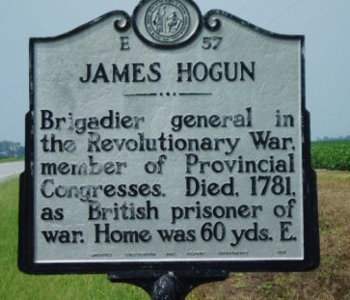


 seamus dubhghaill