
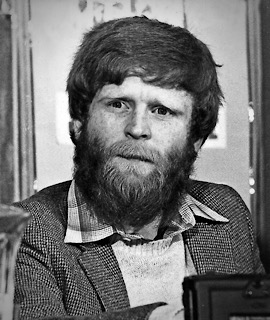
The Blanket Protest begins on September 14, 1976, in the H-Blocks of HM Prison Maze (also known as Long Kesh Detention Centre) in Northern Ireland, initiated by Kieran Nugent (pictured), the first republican convicted under the new regime after the British government’s decision to end Special Category Status.
Special Category Status, introduced in 1972 after a 35‑day hunger strike by Irish Republican Army (IRA) prisoners, grants convicted paramilitary offenders the rights and treatment of prisoners of war — no prison uniforms, no forced labour, and separate accommodation. In March 1976, the British government announces that those convicted after March 1, 1976, will lose this status and be treated as ordinary criminals. They are to be moved from the “Cages” to the newly built H‑Blocks, designed to enforce the policy of criminalisation and to portray republicans as common criminals.
On September 14, 1976, Nugent refuses to wear the prison uniform, instead wrapping himself in a blanket. This act of defiance quickly spreads: other IRA and Irish National Liberation Army (INLA) prisoners join, refusing to wear uniforms and sometimes going naked. The protest is a peaceful civil disobedience campaign aimed at restoring political prisoner status and rejecting the criminalisation of republicans.
The British authorities enforce uniform compliance through cell confinement and deny association rights. In response, the protest evolves into the “dirty protest” (also called the “no‑wash protest”) in 1978, where prisoners refuse to shower or use lavatories, smear walls with excrement, and defecate in cells to protest perceived brutality and denial of political recognition.
The Blanket Protest becomes a key phase in the prison struggle during the Troubles, symbolising the refusal to accept the criminalisation of political prisoners. It sets the stage for the 1980–1981 hunger strikes, which draw international attention and result in ten deaths, including Bobby Sands, who is elected to Parliament during his fast.
In summary, the September 14, 1976, start of the Blanket Protest marks the beginning of a sustained campaign of non‑violent resistance by republican prisoners to defend their political prisoner status against the British government’s criminalisation policy.


