
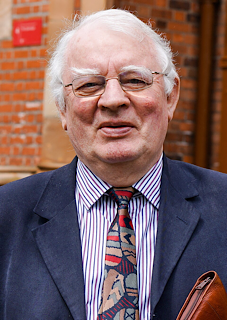
Joseph Austin Currie, a prominent Northern Irish civil rights activist and politician, dies on November 9, 2021, at his residence in Derrymullen, County Kildare. He is the co-founder of the Social Democratic and Labour Party (SDLP), and later a Fine Gael Teachta Dála (TD) in the Republic of Ireland, known for his advocacy against discrimination and for children’s rights.
Currie is born on October 11, 1939, in Coalisland, County Tyrone, Northern Ireland, the eldest of eleven children in a Catholic family. He attends St. Patrick’s Academy, Dungannon and later graduates in modern history and politics from Queen’s University Belfast (QUB). His upbringing in a working class Catholic family amidst systemic discrimination deeply influences his later activism.
Currie becomes a key figure in Northern Ireland’s civil rights movement. On June 20, 1968, he famously occupies a council house in Caledon, County Tyrone, in protest of housing discrimination that favors Protestants over Catholic families. This act of civil disobedience helps catalyze the first major civil rights marches in Northern Ireland, including the August 24, 1968, Dungannon march, and highlights systemic inequalities in housing and public services.
At age 24, Currie was elected as a Nationalist Party MP for East Tyrone in the Parliament of Northern Ireland in 1964, becoming one of its youngest members. He retains this seat in subsequent elections until the suspension of the Parliament in 1972. In 1970, he co-founds the Social Democratic and Labour Party (SDLP) with figures like John Hume and Gerry Fitt, promoting constitutional nationalism, social democracy, and cross-community cooperation. He serves as SDLP Chief Whip and briefly as Minister for Housing, Local Government, and Planning in the short-lived 1974 Northern Ireland Executive, which collapses amid unionist opposition and a strike by the Ulster Workers’ Council. Despite numerous attacks on his home and assaults on his family during the Troubles, he maintains a commitment to non-violent politics and cross-community dialogue.
After relocating to County Kildare due to the threats and violence in Northern Ireland, Currie joins the Fine Gael party in 1989. He is elected as Teachta Dála (TD) for Dublin West, serving from 1989 to 2002. In 1990, he runs for the Irish presidency, receiving approximately 17% of first-preference votes and being eliminated in the first count, leading to Mary Robinson winning as Ireland’s first female president. From 1994 to 1997, he is appointed Minister of State responsible for Children’s Rights, becoming the first Irish government minister with dedicated responsibilities for children.
Currie marries Annita Lynch in 1968, with whom he has five children, including Emer Currie, who is elected to the Dáil in the same constituency in 2024. He endures multiple threats and attacks during the Troubles, reflecting his dedication to confronting sectarian violence and discrimination. He continues to campaign for civil rights and justice for victims of the Troubles even after retiring from electoral politics in 2002. He publishes an autobiography, All Hell Will Break Loose, in 2004, detailing his political life and experiences.
Currie dies on November 9, 2021, at his residence in Derrymullen, County Kildare, at the age of 82. He is buried at St. Malachy Church Graveyard in Dungannon, County Tyrone, Northern Ireland. He is remembered as a courageous advocate for civil rights, a co-founder of the SDLP, and a pioneering politician in both Northern Ireland and the Republic of Ireland.


