seamus dubhghaill

Promoting Irish Culture and History from Little Rock, Arkansas, USA


Leave a comment

U2 Fights to Save Hanover Quay Recording Studio

u2

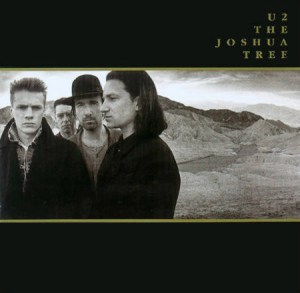
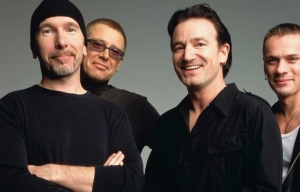
On January 29, 2002, at a public hearing at the Gresham Hotel, rock superstars U2 battle to save their recording studios at Hanover Quay in the Grand Canal Dock area of Ringsend, a southside inner suburb of Dublin, from being pulled to the ground.

The Dublin Docklands Development Authority wants to clear the way for a major new leisure development on a Hanover Quay site which contains a number of buildings including the band’s one-story recording studio. Talks between the band and the Dublin Docklands Development Authority fail to result in a compromise.

Citing the multi-million-pound records sales and musical heritage that have resulted from their use of the Hanover Street site since 1994, the band members submit to An Bord Pleanála (Irish Planning Appeals Board) a formal, nine page objection to the proposed plan. The band recorded their All That You Can’t Leave Behind album and a portion of their Pop album at the studio.

In addition to U2’s complaint, three other parties raise formal objections, including businessman Harrie Crosbie, millionaire businessman and Point Depot owner, who also owns small business premises at the Hanover Quay site.

In a statement released in the evening, the band says that while they love the docklands and are very happy with their present studio, they “appreciate that change is inevitable and often for the best.” They disclose that they are continuing discussions with the Dublin Docklands Development Authority but would consider moving to another location in the vicinity should a suitable property be offered.

The hearing continues into a second day.

Ultimately, on June 17, 2002, U2 loses the battle to save the Hanover Quay recording studio from demolition when An Bord Pleanála gives the go-ahead for the redevelopment of the Hanover Quay site. The band later reaches an agreement with the Dublin Docklands Development Authority for a replacement studio building which allows them to remain in the docklands area.


Leave a comment

Death of Irish Songwriter Percy French

percy-french

Percy French, one of Ireland’s foremost songwriters and entertainers of his day, dies of pneumonia in Formby, England, on January 24, 1920.

French is born at Cloonyquin House, near Tulsk, County Roscommon. He is educated at Foyle College, Derry, and writes his first successful song, Abdul Abulbul Amir, while studying at Trinity College Dublin in 1877. The song is sold for £5 to an unscrupulous publisher and later becomes hugely popular and is falsely claimed by other authors.

He graduates from Trinity as a civil engineer in 1881 and joins the Board of Works in County Cavan as an “Inspector of Drains.” It is said that he writes his best songs during this period. French is also a prolific painter of landscape watercolours and during this period he considers art to be his true vocation. When he becomes well-known later in his life, his paintings from his time as a civil engineer become fashionable and sought after.

When the Board of Works reduces its staff around 1887, French turns to journalism as the editor of The Jarvey, a weekly comic paper. Upon the failure of the paper, he embarks on a long and successful career as a songwriter and entertainer. It is around this time that he marries Ethel Kathleen Armitage-Moore, second daughter of William Armytage-Moore, brother of Countess of Annesley. Tragically, at the age of 20, she dies during childbirth along with her daughter.

percy-french-statue

French becomes renowned for composing and singing comic songs and gains considerable distinction with such songs as Phil the Fluther’s Ball, Slattery’s Mounted Foot, and The Mountains of Mourne. One of his most famous songs is Are Ye Right There Michael, a song that ridicules the state of the rail system in rural County Clare. The song causes such embarrassment to the rail company that it lead to an ultimately unsuccessful libel action against French. It is said that he arrives late for the libel hearing and, when questioned by the judge on his lateness, he responds, “Your honour, I travelled by the West Clare Railway,” which results in the case being thrown out.

French takes ill while performing in Glasgow and dies of pneumonia on January 24, 1920, at the age of 65 at the home of his cousin, Canon Richardson of Green Lea, in Formby. He is buried in the churchyard of St. Luke’s Parish Church, Formby in Merseyside. A statue of him sitting on a park bench can be found in the town center of Ballyjamesduff in honour of him and his famous song, Come Back Paddy Reilly to Ballyjamesduff.


Leave a comment

Van Morrison Inducted Into Rock & Roll Hall of Fame

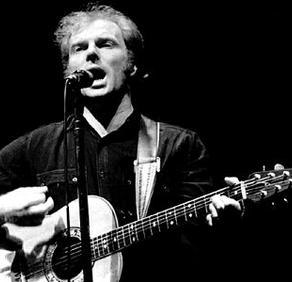
van-morrisonVan Morrison, known as “Van the Man” to his fans, is inducted into the Rock and Roll Hall of Fame in Cleveland, Ohio, on January 23, 1993.

Born George Ivan Morrison in Belfast in 1945, Morrison has received six Grammy Awards (1996-2007), the 1994 Brit Award for Outstanding Contribution to Music, and has been inducted into the Irish Music Hall of Fame (September 1999) and the Songwriters Hall of Fame (June 2003). In 2015 he is knighted by Queen Elizabeth II for his musical achievements and his services to tourism and charitable causes in Northern Ireland.

Morrison’s influence can readily be heard in the music of a diverse array of major artists and according to The Rolling Stone’s Encyclopedia of Rock and Roll, “his influence among rock singers/song writers is unrivaled by any living artist outside of that other prickly legend, Bob Dylan. Echoes of Morrison’s rugged literateness and his gruff, feverish emotive vocals can be heard in latter day icons ranging from Bruce Springsteen to Elvis Costello.”

Morrison is inducted into the Hall along with luminaries Ruth Brown, Cream, Creedence Clearwater Revival, The Doors, Frankie Lymon & The Teenagers, and Etta James. In his induction speech of Morrison, the Band’s Robbie Robertson says, “In the tradition of the great Irish poets and the great soul singers, he is the Caruso of rock and roll.” Morrison becomes notable as the first living inductee into the Rock and Roll Hall of Fame not to attend his own ceremony. Robertson accepts the award on Morrison’s behalf.

This “Caruso of rock and roll” and magnificent songwriter is also one of the most curmudgeonly live performers in rock and roll history. The satirical Onion newspaper writes of him, “Morrison deserves a spot in the Rock Hall based on his record-breaking streak of 4,256 consecutive shows performed without cracking a smile.”


Leave a comment

Death of Phil Lynott

phil-lynott

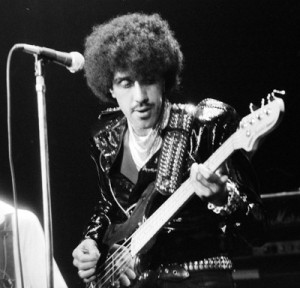
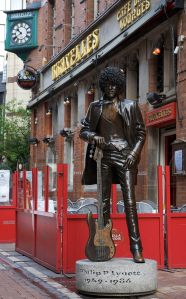
Philip Parris “Phil” Lynott, Irish musician, singer, songwriter, and a founding member, principal songwriter, lead vocalist, and bassist of Thin Lizzy, dies on January 4, 1986, in Salisbury, Wiltshire, England.

Born in West Bromwich, Staffordshire, England on August 20, 1949, Lynott goes to live with his grandmother, Sarah Lynott, in Crumlin, Dublin, when he is four years old. He is introduced to music through his uncle Timothy’s record collection and becomes influenced by Motown and The Mamas and the Papas.

Growing up in Dublin in the 1960s, Lynott fronts several bands as a lead vocalist, most notably teaming up with bassist Brendan ‘Brush’ Shiels to form Skid Row in early 1968. It is during this period that Lynott learns to play the bass guitar.

Toward the end of 1969, Lynott, now confident enough to play bass himself in a band, teams with Brian Downey, Eric Bell, and Eric Wrixon to form Thin Lizzy. The band’s first top ten hit comes in 1973 with a rock version of the well-known Irish traditional song “Whiskey in the Jar.” With the release of the Jailbreak album in 1976, Lynott and Thin Lizzy become international superstars on the strength of the album’s biggest hit, “The Boys Are Back in Town.” The song reaches the Top 10 in the United Kingdom, No. 1 in Ireland, and is a hit in the United States and Canada.

Having finally achieved mainstream success, Thin Lizzy embarks on several consecutive world tours. However, the band suffers from personnel changes. By the early 1980s, Thin Lizzy is starting to struggle commercially and Lynott starts showing symptoms of drug abuse, including regular asthma attacks. After the resignation of longtime manager Chris O’Donnell, Lynott decides to disband Thin Lizzy in 1983.

phil-lynott-statue

In 1984, Lynott forms a new band, Grand Slam, with Doish Nagle, Laurence Archer, Robbie Brennan, and Mark Stanway. The band tours various clubs but suffers from being labeled a poor version of Thin Lizzy due to the inclusion of two lead guitarists. Grand Slam disbands at the end of the year due to a lack of money and Lynott’s increasing addiction to heroin.

Lynott’s last years are dogged by drug and alcohol dependency leading to his collapse on December 25, 1985, at his home in Kew. He is taken to Salisbury Infirmary where he is diagnosed as suffering from septicemia. His condition worsens by the start of the new year, and he is put on a respirator. He dies of pneumonia and heart failure due to septicemia in the hospital’s intensive care unit on January 4, 1986, at the age of 36.

Lynott’s funeral is held at St. Elizabeth of Portugal Church, Richmond, London, on January 9, 1986, with most of Thin Lizzy’s ex-members in attendance, followed by a second service at Church of the Assumption, Howth, on January 11. He is buried in St. Fintan’s Cemetery, Sutton, Dublin.