seamus dubhghaill

Promoting Irish Culture and History from Little Rock, Arkansas, USA


Leave a comment

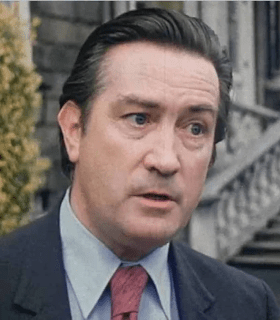
Death of Justin Keating, Politician, Broadcaster & Journalist

Justin Pascal Keating, Irish Labour Party politician, broadcaster, journalist, lecturer and veterinary surgeon, dies at Ballymore Eustace, County Kildare, on December 31, 2009. In later life he is president of the Humanist Association of Ireland.

Keating is twice elected to Dáil Éireann and serves in Liam Cosgrave‘s cabinet as Minister for Industry and Commerce from 1973 to 1977. He also gains election to Seanad Éireann and is a Member of the European Parliament (MEP). He is considered part of a “new wave” of politicians at the time of his entry to the Dáil.

Keating is born in Dublin on January 7, 1930, a son of the noted painter Seán Keating and campaigner May Keating. He is educated at Sandford Park School, and then at University College Dublin (UCD) and the University of London. He becomes a lecturer in anatomy at the UCD veterinary college from 1955 until 1960 and is senior lecturer at Trinity College Dublin from 1960 until 1965. He is RTÉ‘s head of agricultural programmes for two years before returning to Trinity College in 1967. While at RTÉ, he scripts and presents Telefís Feirme, a series for the agricultural community, for which he wins a Jacob’s Award in 1966.

In the 1950s and 1960s Keating is a member of the communist Irish Workers’ Party. He is first elected to the Dáil as a Labour Party Teachta Dála (TD) for the Dublin County North constituency at the 1969 Irish general election. From 1973 to 1977 he serves in the National Coalition government under Liam Cosgrave as Minister for Industry and Commerce. In 1973 he is appointed a Member of the European Parliament from the Oireachtas, serving on the short-lived first delegation.

During 1975 Keating introduces the first substantial legislation for the development of Ireland’s oil and gas. The legislation is modelled on international best practice and intended to ensure the Irish people would gain substantial benefit from their own oil and gas. Under his legislation the state could by right acquire a 50% stake in any viable oil and gas reserves discovered. Production royalties of between 8% and 16% with corporation tax of 50% would accrue to the state. The legislation specifies that energy companies would begin drilling within three years of the date of the issue of an exploration license.

Keating loses his Dáil seat at the 1977 Irish general election but is subsequently elected to Seanad Éireann on the Agricultural Panel, serving there until 1981. He briefly serves again in the European Parliament from February to June 1984 when he replaces Séamus Pattison.

In the aftermath of President of Iran Mahmoud Ahmadinejad‘s “World Without Zionism” speech in 2005, Keating publishes an op-ed in The Dubliner magazine, expressing his views on Israel. The article starts by claiming that “the Zionists have absolutely no right in what they call Israel.” He then proceeds to explain why he thinks Israel has no right to exist, claiming that the Ashkenazi Jews are descended from Khazars.

Keating dies at Ballymore Eustace, County Kildare, on December 31, 2009, at the age of 79, one week before his 80th birthday. Tributes come from the leaders of the Labour Party and Fine Gael at the time of his death, Eamon Gilmore and Enda Kenny, as well as former Fine Gael leader and Taoiseach John Bruton.


Leave a comment

Birth of Patrick Sarsfield Donegan, Fine Gael Politician

Patrick “Paddy” Sarsfield Donegan, Irish Fine Gael politician, is born on October 29, 1923, in Monasterboice, County Louth. He serves as a Senator for the Agricultural Panel from 1957 to 1961, a Teachta Dála (TD) from 1954 to 1957 and 1961 to 1981 and a government minister from 1973 to 1977

Donegan is the son of Thomas Francis Donegan, a publican and farmer, and Rose Ann Donegan (née Butterly). He is educated at Fieldstown and Tenure national schools, a Christian Brothers school in Drogheda, County Louth, and Castleknock College, a voluntary Vincentian secondary school for boys in Castleknock, County Dublin. After working as a buyer of malting barley for Guinness, he purchases and successfully develops a seed merchant’s and milling company. His extensive farming interests include the breeding of Belgian Blue and Limousin cattle, at a time when continental breeds are new to Ireland.

Bypassing the customary apprenticeship on local government bodies prior to a career in national politics, Donegan is elected as a Fine Gael TD for the Louth constituency at the 1954 Irish general election. He loses his seat at the 1957 Irish general election but is elected to Seanad Éireann as a Senator for the Agricultural Panel. He regains his Dáil seat at the 1961 Irish general election.

In the Fine Gael–Labour Party coalition government which takes office after the 1973 Irish general election, Donegan is appointed as Minister for Defence. In October 1976, he makes a speech on an official visit to the opening of new kitchen facilities in an army barracks at Mullingar, County Westmeath in which he describes as a “thundering disgrace” President Cearbhall Ó Dálaigh‘s refusal to sign the Emergency Powers Bill 1976. Ó Dálaigh had instead exercised his powers under Article 26 of the Constitution of Ireland to refer it to the Supreme Court. The Taoiseach, Liam Cosgrave, refuses Donegan’s resignation. On October 21, Fianna Fáil proposes a motion in the Dáil calling on the minister to resign, which is defeated. Ó Dálaigh views the refusal to remove the minister as an affront to his office by the government and resigns on October 22, 1976.

In December 1976, Donegan is appointed as Minister for Lands. In February 1977, this office is restructured as the Minister for Fisheries. He serves in cabinet until the government loses office after the 1977 Irish general election.

Donegan retires from politics at the 1981 Irish general election. He dies at his home in County Louth on November 26,2000, following a long illness. Tributes in the Dáil are led by John Bruton as Fine Gael leader. He is buried in his hometown of Monasterboice, County Louth.


Leave a comment

Birth of Pádraic Ó Máille, Founder Member of Sinn Féin

Pádraic Ó Máille, Irish politician, is born in Kilmilkin, in the Maam Valley (Irish: Gleann an Mháma) of County Galway on February 23, 1878. He is a founder member of Sinn Féin and of the Conradh na Gaeilge in Galway. He is a member of the Irish Volunteers from 1917 to 1921.

Before entering politics Ó Máille is a farmer. He is elected as a Sinn Féin Member of Parliament (MP) for Galway Connemara at the 1918 Irish general election.

In January 1919, Sinn Féin MPs who had been elected in the Westminster elections of 1918 refuse to recognise the Parliament of the United Kingdom and instead assemble at the Mansion House in Dublin as a revolutionary parliament called Dáil Éireann. Ó Máille is re-elected as a Sinn Féin Teachta Dála (TD) for the Galway constituency at the 1921 Irish elections.

Ó Máille supports the Anglo-Irish Treaty and votes in favour of it. He is re-elected as a pro-Treaty Sinn Féin TD for Galway at the 1922 Irish general election, and is elected as a Cumann na nGaedheal TD for Galway at the 1923 Irish general election. In the subsequent Irish Civil War, he is targeted for assassination by anti-Treaty forces and is shot and badly wounded in Dublin in December 1922.

Ó Máille is critical of the proposed Irish Boundary Commission and resigns from Cumann na nGaedheal and founds a new political party called Clann Éireann in 1926.

Ó Máille loses his seat at the June 1927 Irish general election and is unsuccessful at the September 1927 Irish general election. He later joins Fianna Fáil, the party which emerges from the anti-Treaty side in the civil war, and contests the 1932 Irish general election for that party in the Dublin County constituency but is not elected.

On each of these occasions Ó Máille is subjected to a smear campaign by his former party colleagues who his pro-Treaty stance during the civil war against him. It is alleged that he had personally selected his fellow county man Liam Mellows for execution. These smears persist despite denials from the Mellows family and from Ó Máille himself. In fact, Mellows is executed in reprisal for the attack on Ó Máille and Sean Hales on December 8, 1922.

Ó Máille serves as a Fianna Fáil Senator in Seanad Éireann from 1934 to 1936. He is re-elected to the new Seanad in 1938 on the Agricultural Panel. From 1939 until his death in 1946 he is re-appointed to the Seanad as a nominee of the Taoiseach Éamon de Valera. He is Leas-Chathaoirleach (Deputy chairman) of the Seanad from May to November 1938.

Ó Máille dies on January 19, 1946. Accorded a guard of honour by the Dublin brigade, he is buried at Glencullen Cemetery, County Dublin.


Leave a comment

Death of Pat Upton, Labour Party Politician & Veterinarian

Pat Upton, Irish Labour Party politician and veterinarian, dies of a heart attack on February 22, 1999.

Upton is born in Kilrush, County Clare and educated at St. Flannan’s College in Ennis, at University College Galway, and at University College Dublin (UCD) where he receives a doctorate in veterinary medicine. He then works as a lecturer.

Upton is first elected to public office as a Labour Party member of Dublin County Council for Terenure at the 1991 Irish local elections, where he serves until the Council’s abolition in 1994, and then as a member of South Dublin County Council until 1999.

Upton unsuccessfully contests the Dublin South-Central constituency at the 1989 Irish general election. However, he is then elected to the 19th Seanad on the Agricultural Panel and becomes the Labour Party’s leader in Seanad Éireann.

At the 1992 Irish general election, Upton stands again in Dublin South-Central, and in Labour’s “Spring Tide” surge at that election, he tops the poll with nearly 12,000 first-preference votes, a remarkable 1.48 quotas. He is re-elected at the 1997 Irish general election with a considerably reduced vote.

In the 28th Dáil Upton is appointed as Labour’s spokesperson on Justice, Equality and Law Reform. A leading critic of Labour’s 1999 merger with the Democratic Left, he nonetheless becomes the party’s spokesman on communications and sport after the merger.

Upton is a member of the Parliamentary Assembly of the Council of Europe in 1994–95.

Upton dies suddenly of a heart attack on February 22, 1999, at the UCD Veterinary College, where he is an occasional lecturer. He is taken to St. Vincent’s Hospital, and his death is officially confirmed. He is survived by his wife and their four children. Politicians of all parties pay glowing tributes to him for his outspoken but “erudite and incisive” contributions to politics and to Irish culture.

The by-election for Upton’s Dáil seat in Dublin South-Central is held on October 27, 1999, and won for the Labour Party by his sister Mary Upton.

Following Upton’s death, the University College Dublin branch of the Labour party is named in his honour due to his involvement with the college. It has since been renamed to honour the Spanish Civil War veteran Charlie Donnelly.


Leave a comment

Death of Bernard Cowen, Fianna Fáil Politician

Bernard Francis Cowen, Irish Fianna Fáil politician who serves as Minister of State for Disadvantaged Areas from March 1982 to December 1982, dies on January 24, 1984, at Donnybrook, Dublin. He serves as a Teachta Dála (TD) for the Laois–Offaly constituency from 1969 to 1973 and 1977 to 1984. He is a Senator for the Agricultural Panel from 1973 to 1977.

Born on January 29, 1932, in Clara, County Offaly, Cowen is the son of Christy Cowen, a cattle dealer and a Fianna Fáil member who served as a member of Offaly County Council from 1932 until his death in 1967. He is educated at Clara National School and subsequently attends Tullamore CBS. After completion of his secondary schooling, he works in the family business which includes a public house and a butcher shop. He later becomes an auctioneer.

Cowen first becomes involved in politics in 1967, when he is co-opted onto Offaly County Council, following the death of his father. Later that year he heads the poll in the Tullamore area and retains his seat until his death.

Cowen is first elected to Dáil Éireann as a Fianna Fáil TD for Laois–Offaly constituency at the 1969 Irish general election. Fianna Fáil returns to government for the fourth successive time following a general election, however, as a new TD, he remains on the backbenches. He loses his seat at the 1973 Irish general election as a Fine GaelLabour coalition government is formed. However, he is subsequently elected to the 13th Seanad for the Agricultural Panel.

Cowen returns to the Dáil following the 1977 Irish general election, when Fianna Fáil returns to power in a landslide. Once again, he remains on the backbenches.

In 1979, Jack Lynch resigns as Taoiseach and Leader of Fianna Fáil. Cowen supports the bid of Charles Haughey for the leadership. Haughey wins the subsequent leadership election. In spite of offering his support, Cowen fails to secure promotion to ministerial office.

A period of political instability follows with three general elections being held throughout 1981 and 1982. Cowen retains his seat in all of these elections. In March 1982, he is finally promoted to junior ministerial level, when he is appointed Minister of State at the Department of Agriculture with special responsibility for disadvantaged areas. He holds that position until December of the same year, when Fianna Fáil loses power.

While attending a meeting of Offaly County Council in January 1984, Cowen is taken ill. He is taken to St. Vincent’s Hospital in Dublin where he dies several days later on January 24, 1984. He is survived by his wife, Mary, and three sons. The consequent by-election for his seat in the 24th Dáil, is won by his second son, Brian, who goes on to serve as Taoiseach from 2008 to 2011. In 2011, Cowen’s youngest son, Barry, is elected to the seat previously held by his father and brother, having previously been an Offaly County Councillor for the Tullamore electoral area.