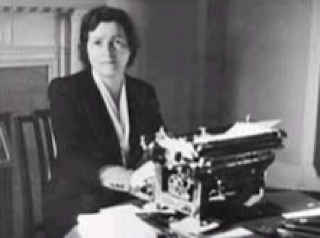
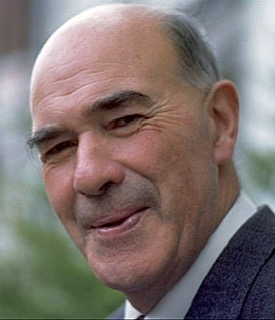
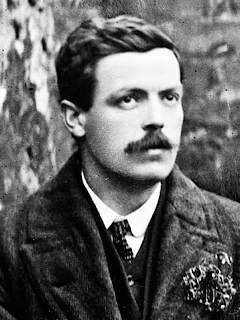
O’Connell is one of eleven children of farmer John O’Connell and Mary Ann O’Connell (née O’Sullivan). She is educated in County Kerry, and emigrates to Chicago in 1904 where she trains to be a secretary. She leaves a well-paid commercial job in 1912 to become secretary to the American delegation of the Gaelic League in New York City. She works closely with Thomas Ashe and Diarmuid Lynch on fund-raising and handles their secret Irish Republican Brotherhood (IRB) correspondence. She returns to Ireland briefly in 1915 to attend the Gaelic League Oireachtas na Gaeilge and ardfheis, voting in favour of the politicisation of the organisation. During the same visit she brings money and messages to the Irish Volunteers from John Devoy. She attends the New York Irish Race Convention, going on to work for the Friends of Irish Freedom. In this position she organises and collects for the “victory fund” for Irish independence. She is also a typist for Clan na Gael. After the 1916 Easter Rising, she becomes a member of Cumann na mBan in the United States, raising money for the widows and children of those killed or wounded during the Rising. It is through this work that she becomes a close friend of Arthur Griffith and his family.
Éamon de Valera requests that O’Connell join his “consular staff” on October 2, 1919, to support his tour of the United States. She works closely with him during this tour, traveling with him, assisting with speeches and dealing with his private and public correspondence. She is privy to secrets of the independence movement due to handling Harry Boland‘s correspondence as well. In November 1920, she returns to Ireland with de Valera and goes into hiding immediately. From February 1921 she lives at his secret headquarters at Strand Road, living in dangerous conditions until a truce is called in the Irish War of Independence. After this she lives with de Valera at Dr. Farnan’s house at Merrion Square and later in Blackrock. On June 22, 1921, she is arrested with him, and they are both released the next day. She is a member of the delegation that meets David Lloyd George in July 1921, and shares de Valera’s opposition to the Anglo-Irish Treaty. She joins de Valera and her sister Teresa in Suffolk Street in June 1922 when the Irish Civil War breaks out.
When fighting ends in Dublin in July 1922, she travels south, working closely with Dorothy Macardle, Robert Brennan, and Erskine Childers establishing a publicity department and publishing Poblacht na hÉireann. In September 1922, she returns to Dublin, and goes into hiding at 11 Upper Mount Street. She is a loyal follower of de Valera throughout the civil war, and is present at his arrest in Ennis in August 1923. She acts as his messenger and agent during his imprisonment, working with him on an Irish translation of shorthand which they later abandon. During this time she also works for the Sinn FéinTD for Mayo NorthP. J. Ruttledge.
O’Connell is present at the first meeting of the provisional organising committee of de Valera’s new political party, Fianna Fáil. During this time she continues to travel with de Valera, nationally and internationally. There are rumours regarding the nature of their relationship, leading to de Valera vehemently denying any impropriety in Dáil Éireann in 1928. The letter between O’Connell and de Valera’s wife, Sinéad, are cited as evidence there is no intimate relationship between O’Connell and de Valera. She resigns from her permanent civil service position of personal secretary to the Taoiseach when de Valera is defeated in 1948, returning in 1951 when he regains power. For her involvement in the Irish War of Independence, she is awarded an Irish military pension.
The ban comes after just eight months of Dáil Éireann’s existence, which begins on January 21, 1919, when Sinn Féin MPs refuse to take their seats in Westminster and instead convene a separate parliament in Dublin. The British initially underestimate its significance, but events change rapidly.
Sinn Féin’s attempt to raise funds (the Dáil Loan) in August 1919 for the republican cause is seen as a move to legitimise an independent administration, undermining British control. Also, some Irish Volunteers members swear allegiance to Dáil Éireann, which is seen as a political act with potential to inspire wider resistance. The summer of 1919 also sees a surge in attacks, prompting Dublin Castle to respond with suppression measures.
The proclamation takes effect nationwide, including all counties and major boroughs such as Dublin, Belfast, Cork, Limerick, Derry, and Waterford. Within days, police raids and searches target Sinn Féin headquarters and members’ homes. The Harcourt Street headquarters in Dublin is raided, leading to arrests of figures like Patrick O’Keefe and Ernest Blythe. Similar searches occur in Belfast, Derry, Omagh, and Ballycastle, uncovering literature, weapons, and ammunition in some cases.
The ban is a major blow to Sinn Féin’s political prestige, but it also hardens the resolve of many republicans. Historians note that the suppression turned some moderate politicians into “extremists” and increased the likelihood of militarisation. Despite the crackdown, the Dáil continues to operate in secret, meeting in multiple Dublin locations to maintain the Irish Republic’s political legitimacy.
In short, the September 12, 1919 declaration marks a turning point in the Irish War of Independence, shifting the conflict from political negotiation to open confrontation.
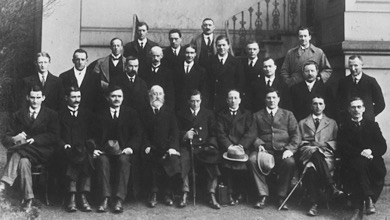
(Pictured: Members of the First Dáil Éireann seated and standing outside the Mansion House in Dublin on January 21, 1919)
Burke is born into an influential Drogheda family, the Burkes of Duleek Street. His father, also named Christopher Patrick Burke, is a gas works secretary, and his mother is Mary McQuillan. The family lives initially on Coola Street before moving to Duleek Street after his father’s death in 1906.
Raised in a well-off household, Burke’s early years are shaped by the nationalist and cultural revival movements of the time, including the Gaelic League, which fosters physical resilience and republican ideals. His family connections, including to fellow revolutionary Thomas Burke, provide him with early exposure to Sinn Féin and Irish Volunteers activities.
Burke operates under the nom de guerre “Seán Jones” (also “Seaghan Mac Seaghan”) and is captured on at least one occasion by British forces, later released in a prisoner exchange.
During the Irish Civil War, Burke undertakes a 23-day hunger strike, reflecting his continued commitment to republican resistance against the Irish Free State.
In 1932, Burke is brought to court by his older brother, Michael, after assaulting him in the family home on Duleek Street, Drogheda. The house had been left to Michael in the will of their aunt Jane McQuillan, who died in 1919, leaving the premises to him, but requiring his mother and two sisters, Mary “Maise” and Christina Mary “Tena”, to be supported there. However, Burke insists on living there, along with his brother Joseph, leading to a family dispute. The Justice rules that the will gives Michael Burke the ownership of the house and the tenants subject to the charges set out in it. He fines Burke five shillings.
After this, Burke goes into the dairy business with his brother Joseph, and builds a house on the family farm in Bryanstown, County Meath. He dies from coronary occlusion at the age of 65 in his home on June 23, 1964. His sister, Christina Mary “Tena” Burke is present at his death. His requiem mass is celebrated at St. Mary’s Church in Drogheda. His republican comrades attend the funeral, and the Mayor of Drogheda and members of the Drogheda Corporation walk in the cortége wearing their robes of office.
Burke’s contributions to the IRA’s armament production and his steadfast republican stance cements his place in Irish revolutionary history. His life bridges the technical skills of a craftsman with the political resolve of a nationalist leader, making him a notable figure in the struggle for Irish independence.
In 1921, McCaughey’s family moves to the Ardoyne district in north Belfast. Hus father is a founding member of the Irish republican Dungannon Clubs and organizes the first branch of Sinn Féin in County Tyrone. As a teenager he joins the Gaelic League and Sinn Féin and also becomes a long time student and teacher of the Irish language in the Glens of Antrim. He joins the IRA in 1935 and in 1938 is promoted to Officer Commanding (O/C) of its Northern Command, headquartered near the town of Carrickmore, County Tyrone, which is the ancestral home of Joseph McGarrity and Patrick McCartan, both leaders of the Irish republican organization Clan na Gael. In December 1939, he is arrested and imprisoned at the Curragh Camp. After being released in 1940 he returns to the Northern Command of the IRA. He is held in high regard and is considered to be one of the best officers of the northern IRA. At the time of his arrest in Rathmines, Dublin, on September 2, 1941, he is acting Chief of Staff.
In September 1941, McCaughey is found guilty by a Dublin court of having detained and assaulted Stephen Hayes, IRA Chief of Staff, who was accused of being a spy for the Irish Free State government. Hayes escapes and later testifies against him at a Military Court. He is sentenced to death by firing squad. His sentence is commuted to a life sentence of penal servitude.
Imprisoned in Portlaoise Prison on July 24, 1941, McCaughey joins other IRA prisoners in the ongoing blanket protest. Refusing to wear a criminal’s prison clothes, he is kept in solitary confinement and spends nearly five years naked except for a blanket. This form of resistance by Irish republican prisoners is also used in the 1980s blanket protests in the Maze prison (also known as “Long Kesh”) and the HM Prison Armagh (women’s prison) in Northern Ireland. He and other Irish republican prisoners endure years of hardships. Sitting month after month, year after year in bleak solitary cells, they are taken out once a week for a bath, and for the rest of the week live the life of an animal trapped in a burrow. That they do not go mad is a remarkable comment on mans capacity for survival. During his almost five years in Portlaoise, he Is never permitted to have visitors.
McCaughey commences a hunger strike on April 19, 1946. After ten days, he stops taking water and dies on May 11, 1946, the twenty-third day of his protest. An inquest is held in the prison at which the prison doctor admits that during his over four and a half years of imprisonment that McCaughey had never been allowed out in the fresh air or sunlight and that “he would not treat his dog the way Seán McCaughey had been treated in Portlaoise.”
McCaughey is the last person to die on hunger strike in the Irish state. There is a long history of hunger striking in Ireland – within the 20th century a total of 22 Irish republicans die on hunger strike with survivors suffering long-term health and psychological effects. Four men die during the 1920 Cork hunger strike. The largest hunger strike in Irish history is the 1923 Irish hunger strikes, during which five men die. Ten men die during the 1981 Irish hunger strike.
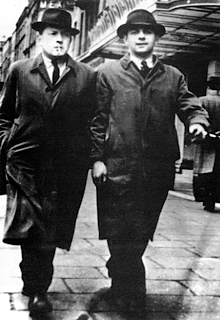
(Pictured: Seán McCaughey (right) and Charlie McGlade, O’Connell Street, Dublin, 1941)
O’Riordan is born at 37 Pope’s Quay, Cork, County Cork, on November 11, 1917, the youngest of five children. His parents come from the West Cork Gaeltacht of Ballingeary–Gougane Barra. Despite his parents being native speakers of the Irish language, it is not until he is interned during World War II that he learns Irish.
As a teenager, O’Riordan joins the republican youth movement, Fianna Éireann, and then the Irish Republican Army (IRA). Much of the IRA at the time is inclined toward left-wing politics. A lot of its activity at the time involves street fighting with the quasi-fascistBlueshirt movement, and he fights the Blueshirts on the streets of Cork in 1933–34. He Is friends with left-wing inclined republicans such as Peadar O’Donnell and Frank Ryan, and in 1934, he follows them into the Republican Congress – a short-lived socialist republican party.
O’Riordan joins the Communist Party of Ireland (1933) in 1935 while still in the IRA and works on the communist newspaper The Irish Workers’ Voice. In 1937, following the urgings of Peadar O’Donnell, several hundred Irishmen, mostly IRA or ex-IRA men, go to fight for the Spanish Republic in the Spanish Civil War with the XVth International Brigade. They are motivated in part by enmity towards the 800 or so Blueshirts, led by Eoin O’Duffy who went to Spain to fight on the “nationalist” side in the Irish Brigade. He accompanies a party led by Frank Ryan. In the Republic’s final offensive of July 25, 1938, he carries the flag of Catalonia across the River Ebro. On August 1 he is severely injured by shrapnel on the Ebro front. He is repatriated to Ireland the following month, after the International Brigades are disbanded.
In 1938, O’Riordan is offered an Irish Army commission by the Irish Free State but chooses instead to train IRA units in Cork. As a result of his IRA activities during World War II, he is interned in the Curragh Camp from 1939 until 1943 where he is Officer Commanding of the Cork Hut and partakes in Máirtín Ó Cadhain‘s Gaelic League classes as well as publishes Splannc (Irish for “Spark”, named after Vladimir Lenin‘s newspaper). He is secretary of the “Connolly group,” composed of leftist internees. Following his release from internment, he terminates his IRA membership.
In 1944, O’Riordan is founding secretary of the Liam Mellows Branch of the Labour Party. This branch becomes infamous for what is regarded during the period as its controversial nature and becomes an intractable enemy of Branch Chair Timothy Quill. The branch is initially established by former members of the Curragh Camp’s Communist Group, including Bill Nagle and Jim Savage. During this time, the Irish Transport and General Workers’ Union (ITGWU) disaffiliates from the Labour Party and the National Labour Party is established on the basis that communists have infiltrated the party. Quill, who is made branch chair by the Labour Party, allegedly has O’Riordan and his fellow members expelled, with the branch being dissolved. O’Riordan later accuses Quill of antisemitism and both Quill and Timothy J. Murphy of “red-baiting.” In 2001, he claims that any attempt to raise the issue of defence of communist Spain “was shouted down at Labour Party Conferences.” In 1945, he is a founding secretary of the Cork Socialist Party.
O’Riordan subsequently works as a bus conductor in Cork and is active in the ITGWU. He stands as a Cork Socialist Party candidate in the 1946 Cork Boroughby-election, placing third behind Fianna Fáil‘s Patrick McGrath and Fine Gael‘s Michael O’Driscoll with 3,184 votes. Afterward, he moves to Dublin where he lives in Victoria Street with his wife Kay, and continues to work as a bus conductor and remains active in the ITGWU.
In 1948, O’Riordan is a founding secretary of the Irish Workers’ League and general secretary thereafter, and of its successor organisation the Irish Workers’ Party from 1962 to 1970.
O’Riordan meets and befriends folk musician Luke Kelly, and the two develop a “personal-political friendship.” Kelly endorses him for election, and holds a rally in his name during campaigning in 1965.
In all O’Riordan runs for election five times, campaigning throughout for the establishment of a socialist republic in Ireland but given Ireland’s Catholic conservatism and fear of communism, he does so without success. He does, however, receive playwright Seán O’Casey‘s endorsement in 1951. O’Casey writes: “Mr. O’Riordan is his own message. He has nothing to sell but his soul. But he hasn’t done that, though he will be told he’ll lose it by holding on to it.”
O’Riordan’s participation in the Spanish Civil War is always an important part of his political identity. In 1966, he attends the International Brigades’ Reunion in Berlin and is instrumental in having Frank Ryan’s remains repatriated from Germany to Ireland in 1979.
O’Riordan is a member of the Irish Chile Solidarity Committee and attends the 1st Party Congress of the Communist Party of Cuba in 1984. He also campaigns on behalf of the Birmingham Six and attends their appeal trial in 1990. He serves between 1970 and 1983 as General Secretary of the Communist Party of Ireland (CPI) and from 1983 to 1988 as National Chairman of the party publishing many articles under the auspices of the CPI. Hus staunchly pro-Soviet direction of the party leads to a number of members leaving to form the EurocommunistIrish Marxist Society.
O’Riordan’s last major public outing is in 2005 at the re-dedication of the memorial outside Dublin’s Liberty Hall to the Irish veterans of the Spanish Civil War. With other veterans, he Is received by President of IrelandMary McAleese. He is also presented with Cuba’s Medal of Friendship by the Cuban Consul Teresita Trujillo to Ireland on behalf of Cuban President Fidel Castro.
In 1969, according to Soviet dissident Vasili Mitrokhin, O’Riordan is approached by IRA leaders Cathal Goulding and Seamus Costello with a view to obtaining guns from the Soviet KGB to defend Irish republican areas of Belfast during the communal violence that marked the outbreak of the Troubles. Mitrokhin alleges that O’Riordan then contacts the Kremlin, but the consignment of arms does not reach Ireland until 1972. The operation is known as Operation Splash.
In the meantime, the IRA has split into the Provisional IRA and the Official IRA and it is the latter faction who receives the Soviet arms. Mitrokhin’s allegations are repeated in Boris Yeltsin‘s autobiography. After the split in the Republican movement, O’Riordan unsuccessfully attempts to bring about a reunification of the two sides.
O’Riordan’s book, Connolly Column: The Story of the Irishmen who fought for the Spanish Republic, 1936–1939, published in 1979, deals with the Irish volunteers of the International Brigade who fought in support of the Spanish Republic against Francisco Franco in the Spanish Civil War (1936–39). An updated version of the book is reprinted in 2005 and is launched by the Lord Mayor of Dublin, Cllr. Michael Conaghan at a book launch at SIPTU headquarters, Liberty Hall. The book is the inspiration for Irish singer-songwriter Christy Moore‘s famous song Viva la Quinta Brigada.
In 1991, O’Riordan’s wife, Kay Keohane of Clonakilty, County Cork dies at their home at the age of 81. He continues to live in their family home before moving to Glasnevin in 2000 to be close to his son Manus who lives nearby. In 1999, he describes himself as an atheist and believes that communism will rise again. He lives there until falling ill in November 2005 and is taken to the Mater Hospital. His health rapidly deteriorates and he quickly develops Alzheimer’s disease. Soon afterward he is moved to St. Mary’s Hospital in the Phoenix Park where he spends the final few months of his life, before his death at the age of 88 on May 18, 2006. Then Labour Party leader Ruairi Quinn praises O’Riordan after his death, saying, “As leader of the Labour Party I had the honour of ensuring he received a special citation at our 2001 national conference. Michael O’Riordan stood out against the tide of Irish conservatism and clerical domination that kept Ireland backward and isolated in the 1930s, 1940s and 1950s.”
O’Riordan’s funeral at Glasnevin Crematorium is attended by over a thousand mourners. Following a wake the previous night at Finglas Road, hundreds turn up outside the house of his son and traffic grinds to a halt as family, friends and comrades – many of whom are waving the red flag of the Communist Party of Ireland – escort O’Riordan to Glasnevin Cemetery. A secular ceremony takes place led by Manus O’Riordan (Head of Research at SIPTU) with contributions from O’Riordan’s family, Communist Party general secretary Eugene McCartan and IBMT representative Pauline Frasier.
MacNeill is one of five children born to Archibald McNeill, a Roman Catholic working-class baker, sailor and merchant, and his wife, Rosetta McNeill (née McAuley), also a Catholic. He is raised in Glenarm, an area which “still retained some Irish-language traditions.” His niece is nationalist and teacher, Máirín Beaumont.
MacNeill marries Agnes Moore on April 19, 1898. The couple has eight children, four sons and four daughters (though the 1911 census entry for MacNeill notes eleven children, seven of whom are still alive).
The Gaelic League is from the start strictly non-political, but in 1915, a proposal is put forward to abandon that policy and become a semi-political organisation. MacNeill strongly supports this and rallies to his side a majority of delegates at the 1915 Oireachtas. Douglas Hyde, a non-political Protestant, who had co-founded the League and been its president for 22 years, resigns immediately afterward.
Through the Gaelic League, MacNeill meets members of Sinn Féin, the Irish Republican Brotherhood (IRB), and other nationalists and republicans. One such colleague, The O’Rahilly, runs the league’s newspaper An Claidheamh Soluis, and in October 1913 asks MacNeill to write an editorial for it on a subject broader than Irish language issues. He submits a piece called “The North Began,” encouraging the formation of a nationalist volunteer force committed to Irish Home Rule, much as the unionists had done earlier in the year with the Ulster Volunteers to thwart Home Rule in Ireland. In July 1915, he comments on the threat that the unarmed nationalists in Ulster might face: “…a demented…English driven Orange Army would be let loose upon the helpless Catholic people of Ulster, who would be driven out of the province or massacred where they stood.”
Bulmer Hobson, a member of the IRB, approaches MacNeill about bringing the idea to fruition, and, through a series of meetings, MacNeill becomes chair of the council that forms the Irish Volunteers, later becoming its chief of staff. Unlike the IRB, he is opposed to the idea of an armed rebellion, except in resisting any suppression of the Volunteers, seeing little hope of success in open battle against the British army.
The Irish Volunteers have been infiltrated by the Irish Republican Brotherhood, which plan on using the organisation to stage an armed rebellion, to separate Ireland from the United Kingdom and establishing an Irish Republic. The entry of the UK into World War I is, in their view, a perfect opportunity to do that. With the cooperation of James Connolly and the Irish Citizen Army, a secret council of IRB officials plan a general rising at Easter 1916. On the Wednesday before Easter, they present MacNeill with a letter, allegedly stolen from high-ranking British staff in Dublin Castle, indicating that the British are going to arrest him and all the other nationalist leaders. Unbeknownst to MacNeill, the letter—called the Castle Document—is a forgery.
When MacNeill learns about the IRB’s plans, and when he is informed that Roger Casement is about to land in County Kerry with a shipment of German arms, he is reluctantly persuaded to go along with them, believing British action is now imminent and that mobilization of the Irish Volunteers will be justified as a defensive act. However, after learning that the German arms shipment has been intercepted and Casement arrested, and having confronted Patrick Pearse, who refuses to relent, MacNeill countermands the order for the Rising by sending written messages to leaders around the country, and placing a notice in the Sunday Independent cancelling the planned “manoeuvres.” This greatly reduces the number of volunteers who report for duty on the day of the Easter Rising.
Pearse, Connolly and the others agree that the uprising will go ahead anyway, but it begins one day later than originally intended to ensure that the authorities are taken by surprise. Beginning on Easter Monday, April 24, 1916, the Rising lasts less than a week. After the surrender of the rebels, MacNeill is arrested although he has taken no part in the insurrection. The rebel leader Tom Clarke, according to his wife Kathleen, warns her on the day before his execution, “I want you to see to it that our people know of his treachery to us. He must never be allowed back into the National life of this country, for so sure as he is, so sure will he act treacherously in a crisis. He is a weak man, but I know every effort will be made to whitewash him.”
In 1923, MacNeill, a committed internationalist, is also a key member of the diplomatic team that oversees Ireland’s entry to the League of Nations.
MacNeill’s family is split on the treaty issue. One son, Brian, takes the anti-Treaty side and is killed in disputed circumstances near Sligo by Free State troops during the Irish Civil War in September 1922. Two other sons, Niall and Turloch, as well as nephew Hugo MacNeill, serve as officers in the Free State Army. One of his brothers, James McNeill, is the second and penultimate Governor-General of the Irish Free State.
In 1924, the three-man Irish Boundary Commission is set up to settle the border between Northern Ireland and the Irish Free State. MacNeill represents the Irish Free State. He is the only member of the Commission without legal training and has been described as being “pathetically out of his depth.” However, each of the Commissioners is selected out of political expediency rather than for any established competence or insight into boundary making. On November 7, 1925, a conservative British newspaper, The Morning Post, publishes a leaked map showing a part of eastern County Donegal (mainly The Laggan district) that is to be transferred to Northern Ireland, the opposite of the main aims of the commission. Perhaps embarrassed by that, especially since he said that it had declined to respect the terms of the Treaty, MacNeill resigns from the commission on November 20. Hus performance in the Boundary Commission has been deemed highly negative in a 2025 study The Root of All Evil: The Irish Boundary Commission.
On November 24, 1925, MacNeill also resign as Minister for Education, a position unrelated to his work on the commission.
On December 3, 1925, the Free State government agrees with the governments in London and Belfast to end its onerous treaty requirement to pay its share of the United Kingdom’s “imperial debt” and, in exchange, agrees that the 1920 boundary will remain as it is, overriding the commission. This angers many nationalists and MacNeill is the subject of much criticism, but in reality, he and the commission have been sidestepped by the intergovernmental debt renegotiation. In any case, despite his resignations, the intergovernmental boundary deal is approved by a Dáil vote of 71–20 on December 10, 1925, and MacNeill is listed as voting with the majority in favour. He loses his Dáil seat at the June 1927 Irish general election.
MacNeill is an important scholar of Irish history and among the first to study Early Irish law, offering both his interpretations, which at times are coloured by his nationalism, and translations into English. He is also the first to uncover the nature of succession in Irish kingship, and his theories are the foundation for modern ideas on the subject.
MacNeill is a contributor to the Royal Irish Academy‘s Clare Island Survey, recording the Irish place names of the island. His disagreements and disputes with Goddard Henry Orpen, particularly over the latter’s book Ireland under the Normans, generate controversy.
MacNeill retires from politics completely and becomes Chair of the Irish Manuscripts Commission. In his later years he devotes his life to scholarship and publishes several books on Irish history. He dies in Dublin of natural causes, aged 78, on October 15, 1945. He is buried in Kilbarrack Cemetery.
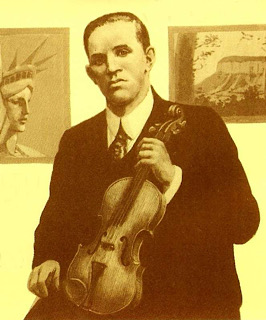
Morrison grows up in a community steeped in traditional Irish culture especially music and at the age of seventeen he is employed by the Gaelic League to tutor the Connacht style of step dancing at the Gaelic League school in County Mayo.
In 1915, at the age of 21, Morrison immigrates to the United States and settles in New York City. In 1918, he wins the fiddle competition at the New York Feis. He becomes associated with other leading Irish musicians such as Michael Coleman and Paddy Killoran, who are also from County Sligo.
Morrison is one of the leading Irish music teachers in New York in the 1930s and 1940s. In addition to the fiddle, he can play the flute, tenor banjo and button accordion, and teaches hundreds of young Irish American students to play traditional music.
The Sligo style of fiddle music Morrison plays is typically highly ornamented and fast, with a fluid bowing style. Recordings of his playing are imported to Ireland in great numbers, and have an extraordinary impact. In many areas, local playing styles fall into disuse because of the popularity of the style and repertoire of Morrison and Michael Coleman. This repertoire includes predominantly reels, rather than jigs and hornpipes, and are often played by Irish musicians in the same order as on the original recordings. According to Séamus Mac Mathúna, “More than thirty years after Coleman’s death … one seldom hears ‘Bonny Kate’ without ‘Jenny’s Chickens.’ ‘Tarbolton’ is inevitably followed by ‘The Longford Collector’ and the ‘Sailor’s Bonnet.'” The great Canadian fiddler Jean Carignan was is influenced by Morrison. Morrison is well regarded by Frankie Gavin: “the approach he had to fiddle playing and the approach he had to any tune he touched just…can’t be beaten…nobody can play like that today.”
Morrison dies on November 11, 1947, and is interred, like many of his great musical contemporaries, in Saint Raymond’s Cemetery in the Bronx.
Carrigan is born to Irish parents in Glasgow, but moves to Denny, Stirlingshire, following the early death of his father. He is a trained tailor to trade but also attends classes in history and literature and is proficient in French and Latin, studies the Irish language, and is a Gaelic Leaguer.
Carrigan becomes president of his local branch of the United Irish League (UIL) in Denny in 1898 and later becomes a member of the Irish Republican Brotherhood (IRB). In 1905, he becomes the Chairman of Sinn Féin‘s first ever cumann in Scotland, the Éire Óg Craobh Cumann. In 1916, he is the official Scottish representative to the IRB.
On April 28, 1916, his 34th birthday, during an evacuation of the General Post Office (GPO) in Dublin under the command of The O’Rahilly, Carrigan is shot and killed by British soldiers on Moore Street. He is buried in the St. Paul’s section of Glasnevin Cemetery in Dublin.
Ó Direáin is born on November 26, 1910, in Inis Mór, Aran Islands, County Galway, the eldest of the three sons and one daughter of Seán Ó Direáin, a small farmer, and Mairéad Ní Dhireáin (widow of Labhrás Mac Confhaola), both of Inis Mór. His father dies in 1917, aged forty-three, leaving his mother to rear a family of four on less than 20 acres of land. Educated at the local national school, he leaves Aran to join the post office in Galway in January 1928.
Ó Direáin is involved with the Irish language movement during the late 1920s and 1930s, during which time he is secretary of the Galway branch of the Gaelic League and writes for and acts on the stage of the Taibhdhearc Theatre. In July 1937 he moves to Dublin to work as a clerical officer in the Department of Posts and Telegraphs and later in the Department of Education. Inspired by a lecture given by the poet and Gaelic scholar Tadhg Ó Donnchadha, he begins writing poetry in Irish in the winter of 1938. Unlike Ó Donnchadha, however, who advocates and practises a poetry based on traditional Gaelic metres, he favours a rhythmically measured form of free verse. He publishes his first collection, Coinnle geala, in 1942, quickly followed by Dánta aniar (1943), both at his own expense. In 1949, a volume of selected poems, Rogha dánta, is one of the first books published by the newly founded Irish language publisher Sáirséal agus Dill.
These books herald not just a new voice, but a new generation of modern poets in Irish, distinct in outlook and ambition from most of the revivalist poets who precede them. The leading figures of this generation, Ó Direáin, Seán Ó Ríordáin and Máire Mhac an tSaoi, all publish poems in various Irish language journals during the 1940s, though the latter two poets do not produce their first collections until the 1950s. Ó Direáin’s poetry is less thematically and linguistically adventurous than that of Ó Ríordáin (whom he nevertheless defends in print against the dogmatic criticism of Ó Ríordáin’s traditionalist detractors), and less consciously indebted to tradition than that of Mhac an tSaoi.
Ó Direáin’s early lyrics celebrate the traditional virtues of island life and mourn its passing because of increasing modernisation and population shifts toward the major cities. One of the best known of these poems, “Stoite“ (“Uprooted”), sets up a gloomy contrast between a traditional life in tune with nature’s rhythms, destined to endure in communal memory, and the fruitless urban existence of the contemporary office worker. This theme of uprootedness haunts his work throughout the 1950s and early 1960s. During this period he publishes his two most significant collections, Ó Mórna agus dánta eile (1957) and Ár ré dhearóil (1962), both of which take their titles from ambitious, and uncharacteristically long, poems. Ó Mórna, a poem of which there are two published versions, charts the colourful life of a proud, amoral tyrant, a figure based loosely on traditional accounts of a hard-living nineteenth-century landlord’s agent from Aran. Ó Mórna represents, in the poet’s view, the timeless Übermensch whose will to power is boundless and awesome. Ár ré dhearóil (“Our wretched era”) is an excoriation of the loveless hedonism of a middle-class Dublin populated by lonely bachelors, bitter spinsters, and immoral, though free-spirited and well-educated, women. The poem, which ends with an ominous if oblique warning against the threat of nuclear annihilation, bears some comparison with T. S. Eliot‘s “The waste land.” Eliot, Ezra Pound and W. B. Yeats are key influences alongside the canonical figures of seventeenth- and eighteenth-century Gaelic poetry. His strong social conscience is registered early on in poems such as “An Stailc“ (“The strike“). His life-long adherence to traditional nationalist values and his scornful attitude to what he perceives as the mercenary embrace of American-style capitalism in the changing economic climate of Ireland in the 1960s is most trenchantly voiced in poems such as “Éire ina bhfuil romhainn” (“Ireland in times ahead”) and “Mar chaitheamar an choinneal” (“As we spent the candle”).
Ó Direáin is an active member of the Irish language literary groups Cumann na Scríbhneoirí and Cumann na hÉigse, and publishes essays on a variety of topics throughout the 1940s and 1950s in magazines such as Ar Aghaidh, An Glór, Comhar and Feasta. A selection of mostly autobiographical essays, Feamainn Bhealtaine (1961), casts valuable light on the Aran of his youth and early adulthood. He is registrar for the National College of Art (1948–55), where he gets to know such prominent artists as Seán Keating, Maurice MacGonigal and Nano Reid, whose artwork adorns Rogha Dánta. From 1955 until his retirement from the civil service in 1975, he is a staff officer in the Department of Education. Cloch choirnéil appears in 1966, followed by Crainn is cairde (1970) and Ceacht an éin (1979).
The most comprehensive selection of Ó Direáin‘s poetry, Máirtín Ó Direáin: dánta 1939–1979 (1980), edited by Eoghan Ó hAnluain, covers all but two final volumes, Béasa an túir (1984) and Craobhóg dán (1986), neither of which add much of major significance to his oeuvre. A bilingual selection, Selected poems: Tacar dánta (1984), includes translations by Tomás Mac Síomóin and Douglas Sealy. In 1969, Ó Direáin delivers a series of lectures on his own work at University College Dublin (UCD), later edited by Eoghan Ó hAnluain as Ón ulán ramhar siar (2002), which provides useful background information on many individual poems. He receives the Irish American Cultural Institute (IACI) award in 1967 and is made a member of the Irish Academy of Letters in 1970. In 1977, he receives an honoraryDoctor of Letters degree from the National University of Ireland and the Ossian-Preis of the Freiherr von Stein Foundation in Hamburg. He is a full-time visiting lecturer in the department of Irish at University College Galway for the academic year 1978–79. He was also a member of Aosdána.
Ó Direáin marries Áine Colivet, a Dubliner of French extraction, in 1945. Their only child, Niamh, is born in 1947. He dies in Dublin on March 19, 1988.
A selection of Ó Direáin’s essays, An chuid eile díom féin, edited by Síobhra Aiken, and a bilingual volume of poems Máirtin Ó Direáin: Selected poems/ Rogha dánta, translated by Frank Sewell, are both published in 2018.
(From: “Ó Direáin, Máirtín” by Caoimhín Mac Giolla Léith, Dictionary of Irish Biography, www dib.ie, October 2009, last revised March 2021)
O’Hanrahan is the son of Richard Hanrahan, a cork cutter, and Mary Williams. His father appears to have been involved in the 1867 Fenian rising. The family moves to Carlow, County Carlow, where he is educated at Carlow Christian Brothers School and Carlow College Academy. On leaving school he works various jobs including a period alongside his father in the cork-cutting business. In 1898, he joins the Gaelic League and in 1899 founds the League’s first Carlow branch and becomes its secretary. Also in 1899 he helps found a working men’s club in Carlow. By 1903 he is in Dublin, where he is working as a proofreader for the Gaelic League printer An Cló Cumann. He publishes journalism under the by-lines “Art” and “Irish Reader” in several nationalist newspapers, including Sinn Féin and the Irish Volunteer. He is the author of two novels, A Swordsman of the Brigade (1914) and When the Norman Came (published posthumously in 1918).
In 1903, O’Hanrahan becomes involved in Maud Gonne’s and Arthur Griffith‘s campaign against the visit of King Edward VII to Ireland. The encounter with Griffith leads O’Hanrahan to join the newly formed Sinn Féin. He also becomes a member of the Irish Republican Brotherhood (IRB). In November 1913, he joins the Irish Volunteers. He is later employed as an administrator on the Volunteers headquarters staff. He is made quartermaster general of the 2nd Battalion. He and the commandant of the 2nd Battalion, Thomas MacDonagh, become close friends.
During the Easter Rising O’Hanrahan is second in command of Dublin’s 2nd Battalion under MacDonagh. He fights at Jacob’s Biscuit Factory, though the battalion sees little action other than intense sniping throughout Easter week, as the British Army largely stays clear of the impregnable factory dominating the road from Portobello Barracks on one side and Dublin Castle on the other. When the situation becomes desperate O’Hanrahan tells MacDonagh they “were inviting destruction of the factory by incendiary shells, and also of the surrounding thickly populated area.” MacDonagh orders a break-out amidst the chaos and confusion. O’Hanrahan leads “with some difficulty” the garrison out of the factory through New Bride Street gate.
O’Hanrahan is executed by firing squad on May 4, 1916 at Kilmainham Gaol. His brother, Henry O’Hanrahan, is sentenced to penal servitude for life for his role in the Easter Rising. After his execution, his mother and three sisters open a shop near Mountjoy Prison where they develop a secret line of communications between prisoners and their visitors.