seamus dubhghaill

Promoting Irish Culture and History from Little Rock, Arkansas, USA


Leave a comment

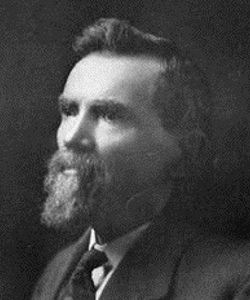
Death of Liam Lynch, Chief of Staff of the Irish Republican Army

Liam Lynch, Chief of Staff of the Irish Republican Army (IRA), is mortally wounded by Irish Free State troops in County Tipperary on April 10, 1923, as they try to avoid capture. He is transported to St. Joseph’s Hospital in Clonmel but dies there that night.

Lynch is born on November 9, 1893, in Barnagurraha, Anglesboro, County Limerick, the fifth child among six sons and a daughter of Jeremiah Lynch, farmer, and Mary Lynch (neé Kelly). The family is politically active. His father’s brother, John, had taken part in the Fenian Rising of 1867 and his mother had been joint secretary of the Ballylanders branch of the Ladies’ Land League.

Lynch attends Anglesboro national school (1898–1909). In 1910 he moves to Mitchelstown, County Cork, to take up a three-year apprenticeship in the hardware store of P. O’Neill on Baldwin Street. He remains there until the autumn of 1915. While in Mitchelstown he is a member of the Gaelic League and the Ancient Order of Hibernians. He also joins the Irish Volunteers. In 1914, when that organisation splits, he does not immediately join the militant rump. He then moves to Fermoy, County Cork, where he works in the store of Messrs J. Barry & Sons Ltd. His move coincides with a period of inactivity as neither Volunteer faction is very active nor is he known. Consequently, he does not take part in the 1916 Easter Rising, but it is a turning point for him. On May 2, 1916, he watches as the Kent family are led through Fermoy, having been captured by British soldiers. Richard Kent dies from a wound sustained that day and Thomas Kent is executed a week later. Lynch becomes a committed Volunteer at this point.

Once committed, Lynch’s enthusiasm and aptitude ensures that he quickly attains positions of responsibility. From early 1917 he is first lieutenant in the small Fermoy company. In September 1917, the Irish Volunteers in east Cork are reorganised. Nine local companies are formed into the Fermoy battalion, and he is elected adjutant. In April 1918, at the height of the conscription crisis, he briefly quits his job to concentrate on organising the Volunteers. In May he is lucky to escape arrest during the sweep that accompanies the “German plot.” When the immediate danger ends, he returns to Barry & Sons.

In January 1919, at the beginning of the Irish War of Independence, the Volunteer organisation in Cork undergoes a major restructuring. Three brigades are established, and Lynch becomes brigade commandant of Cork No. 2. In April he visits Irish Republican Army GHQ in Dublin to discuss plans and to seek arms. It is a frustrating experience as the GHQ has few guns and are cautious about action. Throughout the summer of 1919 he presses GHQ to authorise attacks on British targets as a method of acquiring arms and to prevent boredom and stagnation setting in among his men. Finally, GHQ sanctions attacks if the primary aim is the capture of arms. In response, on September 7, 1919, twenty-five men from the Fermoy company, led by Lynch, ambush fourteen British soldiers on their way to service in the Wesleyan church in Fermoy. Fifteen rifles are captured, one soldier killed, and three wounded. Lynch is shot in the shoulder, probably by one of his own men. As a result, he has to leave his job and hides out in Waterford for a time. A series of arrests follow, among those is Lynch’s close friend, Michael Fitzgerald, who dies on hunger strike in Cork County Gaol in 1920.

Lynch spends the early months of 1920 at GHQ in Dublin. During this time, he is offered the position of deputy chief of staff, but turns it down, preferring to return to Cork. Although not an articulate speaker, he impresses those he meets. His organisational talents, attention to detail, ability to inspire, and intolerance for those who waste meetings endlessly discussing side issues, are noted. He has a low tolerance for politicians and at all times considers the military wing of the movement to be of primary importance. He is engaged to Bridie Keyes, but marriage is postponed pending a final settlement of hostilities.

On June 26, 1920, Lynch, Seán Moylan, and two colleagues capture Major-General Cuthbert Lucas while he is fishing on the Munster Blackwater. He gives a false name when he is arrested on August 12, 1920, at City Hall, Cork, with Terence MacSwiney, Lord Mayor of Cork, and ten others. All but MacSwiney are released four days later. He then sets about organising a flying column within the brigade. Ernie O’Malley arrives from headquarters to train the men. This column achieves a major coup on September 28, 1920, when they briefly capture the British Army barracks at Mallow, leaving with a large booty of rifles, ammunition, and two machine guns. The British respond to this increase in activity and the war settles into a pattern of ambush and counter-ambush. The Mallow battalion suffers severe losses in February 1921 and Lynch himself narrowly escapes when four are killed during an encounter at Nadd in March 1921.

In early 1921 Lynch seeks to encourage greater cooperation between the various brigades in the south. Senior brigade officers meet on three occasions to discuss cooperation and a plan to import arms from Italy. The importation project fails, but the First Southern Division is formed on April 26, 1921, bringing eight brigades from Cork, Kerry, Waterford, and west Limerick together. He is elected divisional commandant, making him the most powerful officer outside GHQ. His influence is further increased by his appointment as Southern Divisional Centre and Supreme Council member of the clandestine Irish Republican Brotherhood (IRB) in March 1921.

Lynch is wary when the truce is called in July 1921. He works hard to maintain order in his division and to achieve a state of readiness in case the negotiations fail. For him the Anglo-Irish Treaty is a failure. When the Supreme Council of the IRB meets on December 10, 1921, he is the only voice against the agreement. He is among the officers who insist that an army convention should be called to discuss the treaty, effectively asserting that the army no longer accepts a position subordinate to the Dáil. The army, he believes, is the army of the Republic, and no civilian body can order it to abandon the Republic. The provisional government tries to ban this convention, but it goes ahead on March 26, 1922, and elects an army executive. Lynch is elected Chief of Staff. Between March and June, he works hard to prevent a civil war. He believes unity can be maintained, even under the Treaty, if a republican constitution can be enacted. He also cooperates with Michael Collins in promoting Irish Republican Army (IRA) activity in Ulster. In his adherence to the idea of a republic, the practicalities of politics have little impact on his consciousness, and he is dismissive of the popular support for the Treaty. He is horrified at the thought of civil war but fails to see that his position is leading almost inexorably in that direction. Distrusted as too moderate by Liam Mellows and Rory O’Connor, he is locked out of the Four Courts for a time.

When the Four Courts are attacked, Lynch immediately leaves his headquarters at the Clarence Hotel to travel south. He is briefly detained, before reaching Kingsbridge Station, and has a meeting with Eoin O’Duffy. He is disgusted when Free State figures later claim that he was released, having promised not to take arms against the government. The most plausible explanation of the incident appears to be that O’Duffy interpreted Lynch’s comments, merely indicating disappointment that a war had started, as constituting a statement of intent not to involve himself.

Lynch’s initial actions seem designed to avoid full-scale conflict. He does not order an attack on Dublin, nor does he attempt to seize Limerick. He chooses a containment strategy, seeking to hold a line from Limerick to Waterford for the republican forces. This fails, as the government sends troops in from the rear by sea. The republicans have no urban base when Lynch abandons Fermoy on August 11, 1922. He continues to meet individuals who seek a way to end the war, but intransigence has set in, and he insists that armed struggle will only end with a republic or absolute defeat. As early as August many republicans believe the war is lost and urge a reassessment of tactics, but Lynch rejects all such calls. Operating from secret headquarters in Santry, he orders the shooting of pro-Treaty politicians in retaliation for the execution of republican prisoners.

Under war conditions it is impossible for the army executive to meet regularly, and this leaves Lynch in almost complete control. As the pro-surrender lobby grows within the republican forces, he delays a meeting of the executive, claiming with some justification that it is too dangerous. He leaves Santry and attends a meeting of the Southern Division Council in the last days of February 1923. Sixteen of the eighteen officers there tell him that the military position is hopeless. This forces the calling of an executive meeting on March 6, 1923. No agreement is reached. He strongly favours fighting on, but a motion from Tom Barry, calling for an immediate end to hostilities, is barely rejected. Another meeting is arranged for April 10. On that morning a group, including Lynch and Frank Aiken, suddenly find themselves in danger of capture in a farmhouse on the slopes of the Knockmealdown Mountains in County Tipperary. They flee and are pursued. During the chase Lynch is shot in the abdomen. It seems clear that he is shot by the pursuing Free State soldiers, although Irish historian Meda Ryan has considered the theory that he may have been shot by one of his own in order to remove the major stumbling block to surrender. His colleagues are forced to abandon him, and he is captured. Initially the Free State troops believe they have caught Éamon de Valera. He is taken first to a public house in Newcastle, County Tipperary, and then to St. Joseph’s Hospital in Clonmel, but dies from his wound at 8:45 p.m. that evening. His last request is to be buried beside Michael Fitzgerald in Kilcrumper Cemetery, Fermoy, County Cork. On hearing of Lynch’s death, Ernie O’Malley writes, “You who were a living force are now a battle cry.” O’Malley is wrong, however, as the peace faction within republicanism is strengthened by his death and Aiken orders the suspension of activities on April 27.

In 1935, a massive memorial, consisting of a 60-foot-tall round tower, guarded by four bronze Irish Wolfhounds, is erected at Goatenbridge, County Tipperary, near the site of his capture. It is unveiled on April 7, 1935. Separate annual commemorations are held at Goatenbridge and Kilcrumper. Three biographies have been written and the Liam Lynch memorial pipe band is based in his native Anglesboro. The Lynch family possess a substantial collection of private correspondence.


Leave a comment

Patrick Maher’s Remains Returned to County Limerick

The dying wish of Irish Republican Army (IRA) volunteer Patrick Maher is fulfilled on October 19, 2001, when his remains are brought from Dublin to his native County Limerick for burial the following day with full military honours. He is executed in Mountjoy Prison on June 7, 1921 following his alleged part in the rescue of IRA man Seán Hogan from a heavily guarded train in Knocklong, County Limerick, in May 1919, which results in the death of two Royal Irish Constabulary (RIC) officers. Maher always protests his innocence. He is 32 years old at the time of his death.

Maher, a native of County Limerick born around 1889, is hanged along with Edmond Foley for his alleged involvement in the rescue of Seán Hogan at Knocklong Railway Station on May 13, 1919 in which two RIC officers are killed.

Unlike Foley, Maher has no direct involvement in the rescue. He merely works at the station grading poultry and eggs and he is at a crossroads three miles away at the time of the ambush. He strongly protests his innocence. Two civilian juries fail to reach a verdict. He is finally convicted of involvement by a military court-martial and sentenced to death.

In a final message to other members of the IRA, Foley and Maher write:

“Fight on, struggle on, for the honour, glory and freedom of dear old Ireland. Our hearts go out to all our dear old friends. Our souls go to God at 7 o’clock in the morning and our bodies, when Ireland is free, shall go to Galbally. Our blood shall not be shed in vain for Ireland, and we have a strong presentiment, going to our God, that Ireland will soon be free and we gladly give our lives that a smile may brighten the face of ‘Dear Dark Rosaleen.’ Farewell! Farewell! Farewell!”

Maher is one of a group of men hanged and buried in Mountjoy in the period 1920–21, commonly referred to as the Forgotten Ten. In 2001 Maher and the other nine, including Kevin Barry, are exhumed and given a full State funeral. He is the only one of the Ten not to be buried in Glasnevin Cemetery, Dublin. In accordance with his wishes and those of his family, he is buried at Ladywell Graveyard in Ballylanders, County Limerick.


Leave a comment

State Funeral in Honour of the “Forgotten Ten”

On October 14, 2001, the first multiple state funeral is held in honour of the “Forgotten Ten,” a term applied to ten Irish Republican Army (IRA) volunteers who were executed by British forces in Mountjoy Prison, Dublin, following courts martial for their role in the Irish War of Independence.

Based upon military law at the time, they are buried within the prison precincts, their graves unmarked in the unconsecrated ground. The names of the Forgotten Ten are Kevin Barry, Thomas Whelan, Patrick Moran, Patrick Doyle, Bernard Ryan, Thomas Bryan, Frank Flood, Thomas Traynor, Edmond Foley, and Patrick Maher. The hangman is John Ellis.

Following the Irish War of Independence, Mountjoy Prison is transferred to the control of the Irish Free State, which becomes the State of Ireland in 1937. In the 1920s, the families of the dead men request their remains be returned to them for proper burial. This effort is joined in the later 1920s by the National Graves Association. Through the efforts of the Association, the graves of the men are identified in 1934, and in 1996 a Celtic cross is erected in Glasnevin Cemetery, Dublin, to commemorate them.

The campaign to rebury the men drags on for 80 years from their deaths. Following an intense period of negotiations, the Irish government relents. Plans to exhume the bodies of the ten men are announced on November 1, 2000, the 80th anniversary of the execution of Kevin Barry. On October 14, 2001, the Forgotten Ten are afforded full state honours, with a private service at Mountjoy Prison for the families of the dead, a Requiem Mass at St. Mary’s Pro-Cathedral and burial in Glasnevin Cemetery.

According to The Guardian, some criticise the event as glorifying militant Irish republicanism. It coincides with the Fianna Fáil Ardfheis. The progress of the cortège through the centre of Dublin is witnessed by crowds estimated as being in the tens of thousands who break into spontaneous applause as the coffins pass. On O’Connell Street, a lone piper plays a lament as the cortège pauses outside the General Post Office (GPO), the focal point of the 1916 Easter Rising. In his homily during the Requiem Mass, Cardinal Cahal Daly, a long-time critic of the IRA campaign in Northern Ireland, insists that there is a clear distinction between the conflict of 1916–22 and the paramilitary-led violence of the previous 30 years:

“The true inheritors today of the ideals of the men and women of 1916 to 1922 are those who are explicitly and visibly committed to leaving the physical force tradition behind… Surely this state funeral can be an occasion for examination of conscience about the ideals of the men who died, and about our responsibility for translating those ideals into today’s realities.”

In his graveside oration Taoiseach Bertie Ahern echoes these sentiments and also pays tribute to the Ten:

“These 10 young men were executed during the War of Independence. The country was under tremendous pressure at the time. There was a united effort. Meanwhile, elected by the people, Dáil Éireann was developing, in spite of a war going on. Democracy was being put to work. Independent civic institutions, including the Dáil courts, were beginning to function. Before their deaths, the ten had seen the light of freedom. They understood that Ireland would be free and independent.”

The state funeral, broadcast live on national television and radio, is only the 13th since independence. Patrick Maher is not reburied with his comrades. In accordance with his wishes, and those of his family, he is reinterred in Ballylanders, County Limerick.

A feature length Irish language documentary on the re-interments, An Deichniúr Dearmadta (The Forgotten Ten) airs on TG4 on March 28, 2002.

(Pictured: The grave of nine of the Forgotten Ten in Glasnevin Cemetery, Dublin)


Leave a comment

Death of Texas Politician John Thomas Browne

John Thomas Browne, Irish-born merchant and politician, dies in Houston, Texas on August 19, 1941. He serves on the Houston City Council, serves two terms as Mayor of Houston, and serves three terms in the Texas House of Representatives.

Browne is born March 23, 1845 in Ballylanders, County Limerick to Michael and Winifred (Hennessy) Browne. His family emigrates to the United States in October 1851. Not long after arriving in New Orleans, his father dies. In 1852, Winifred relocates with her five children to Houston to be closer to family of her mother.

Browne spends much of the 1850s on Spann Plantation in Washington County, Texas at the behest of Father Gunnard, where he also receives an education. At age fourteen in 1859, he leaves the plantation and finds work hauling bricks in Madison County, Texas. He returns to Houston to first work as a baggage hauler, then performs messenger duties for Commercial and Southwestern Express Company before settling in at the Houston and Texas Central Railroad.

Browne joins Company B of the Second Texas Infantry in the Confederate States Army during the American Civil War. He serves in Houston, detached from his unit, maintaining employment with the Houston and Texas Central Railroad, but in a new capacity as a fireman. He is briefly dispatched to the defense of Galveston, Texas. He is officially released from military duty in Houston on June 27, 1865.

Browne returns to messenger service in Houston after the Civil War. He works for Adams Express Company, then for Southern Express Company. He transitions into the grocery business first as a bookkeeper and clerk for H.P. Levy.

Browne is elected to the Houston City Council, representing the Fifth Ward while chairing the Finance Committee in 1887. He runs for Mayor of Houston in 1892 and wins in a landslide: 3900 to 600.

Browne’s first term as Mayor of Houston begins the same year as the Panic of 1893. He had campaigned on a platform of balancing the budget. The City of Houston runs budget deficits during Browne’s first term, but these deficits are proportionately lower than those in previous years. Browne is an advocate for lowering municipal utility bills through municipal ownership of the utilities. However, Browne abandons this option due to excessive costs for building a new waterworks and electrical power plant. He refocuses his efforts on a policy of dedicating all capital spending on street paving and sewerage.

Browne proposes converting the Houston Volunteer Firefighters to a professional department under municipal management. The City of Houston would be required to buy existing equipment and horses from the volunteer department, but can lease firehouses rather than buy them. The Houston City Council drafts an ordinance and passes it.

Browne represents Houston in the Texas House of Representatives from 1897 to 1899, and again in 1907. He is a member of the Ancient Order of Hibernians and the Knights of Columbus.

John Thomas Browne dies on August 19, 1941 of pneumonia in Houston. He is buried at Glenwood Cemetery in Houston. He is survived by six children and thirty-eight grandchildren. In 1979 his former residence in the Fifth Ward is used by an Italian American-owned grocery, Orlando’s Grocery.


Leave a comment

Birth of Merchant & Politician John Thomas Browne

John Thomas Browne, Irish-born merchant and politician, is born in BallylandersCounty Limerick, on March 23, 1845. He serves on the Houston City Council, serves two terms as Mayor of Houston, and serves three terms in the Texas House of Representatives.

Browne’s family emigrates to the United States in October 1851. His father dies not long after they arrive in New Orleans. In 1852, his mother relocates with her five children to HoustonTexas, to be closer to the family of her mother. Browne spends much of the 1850s on Spann Plantation in Washington County, Texas, at the behest of Father Gunnard, where he also receives an education. At age fourteen in 1859, he leaves the plantation and finds work hauling bricks in Madison County, Texas. He returns to Houston to first work as a baggage hauler, then performs messenger duties for Commercial and Southwestern Express Company before settling in at the Houston and Texas Central Railroad.

Browne joins the Confederacy, officially serving in Company A, 36 Texas Cavalry. He serves in Houston, detached from his unit, maintaining employment with the Houston and Texas Central Railroad, but in a new capacity as a fireman. He is briefly dispatched to the defense of Galveston, Texas. He is officially released from military duty in Houston on June 27, 1865.

Browne returns to messenger service in Houston after the Civil War. He works for Adams Express Company, then for Southern Express Company. He transitions into the grocery business first as a bookkeeper and clerk for H.P. Levy. Browne marries Mary Jane “Mollie” Bergin on September 13, 1871. They are the first marriage to be recorded at Annunciation Catholic Church. In 1872, Browne and Charles Bollfrass start a business as wholesale and retail grocers with $500 in capital. By the early 1890s, this grocery is amassing about $340,000 in annual sales. He is also a member of the Ancient Order of Hibernians and the Knights of Columbus.

Browne is elected to the Houston City Council, representing the Fifth Ward while chairing the Finance Committee in 1887. He runs for Mayor of Houston in 1892 and wins in a landslide. Browne’s first term as Mayor of Houston begins the same year as the Panic of 1893. He has campaigned on a platform of balancing the budget. The City of Houston runs budget deficits during Browne’s first term, but these deficits are proportionately lower than those in previous years. Browne had been an advocate for lowering municipal utility bills through municipal ownership of the utilities, however estimates for the City of Houston to build its own waterworks and electrical power plant go up to a range $500,000 to $900,000. Browne abandons this option while favoring a policy of dedicating all capital spending on street paving and sewerage. The Browne administration also hires a city planning expert to study demands based hypothetically on a population of 75,000.

Mayor Browne proposes converting the Houston Volunteer Firefighters to a professional department under municipal management. The City of Houston would have to buy existing equipment and horses from the volunteer department, but could lease firehouses and not be required to buy them. Houston City Council drafts an ordinance and passes it.

In April 1895, the Texas Supreme Court ruling in Higgins v. Bordages, “held that special assessment tax liens were unenforceable against urban homesteads.” The City of Houston imposes special tax levies for road and sewerage projects on owners of property abutting the sections of street being improved. The ruling effectively removes the only tool the city has for enforcing payment of the special assessments by homeowners. Road construction contractors stop all work because they fear the city will not pay them. Many homeowners stop paying their assessment bills.

To meet this immediate revenue crisis, the Browne administration devises a plan to issue $500,000 in municipal bonds to be sold over a three to four year period. The Labor Council opposes the bonding measure and organizes to defeat the measure when the referendum makes it to the ballot. The City of Houston has to find another way to compensate for $300,000 in uncollected taxes.

Browne represents Houston in the Texas House of Representatives from 1897 to 1899, and again in 1907.

John Thomas Browne dies August 19, 1941 died of pneumonia in Houston and is buried at Glenwood Cemetery.