seamus dubhghaill

Promoting Irish Culture and History from Little Rock, Arkansas, USA


Leave a comment

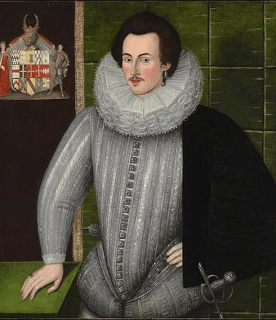
Charles Blount, 8th Baron Mountjoy, Becomes Lord Deputy of Ireland

Charles Blount, 8th Baron Mountjoy, English nobleman and soldier, becomes Lord Deputy of Ireland under Queen Elizabeth I on January 21, 1600.

Blount is born in 1563, the second son of James, 6th Baron Mountjoy, and Catherine, only daughter of Sir Thomas Legh. He is among the most distinguished of the family, succeeding as 8th Baron Mountjoy on the death in 1594 of his unmarried elder brother William, 7th Baron Mountjoy. The good fortune of his youthful and handsome looks find favour with Queen Elizabeth I which arouses the jealousy of Robert Devereux, 2nd Earl of Essex, leading to a duel between the two courtiers, who later become close friends.

Blount is returned to the House of Commons as MP for St. Ives, Cornwall in 1584 and for Bere Alston in 1586 and 1593, before entering the House of Lords in 1594. Between 1586 and 1598, he spends most of his time on the Continent, serving in the Netherlands and Brittany. He joins Lord Essex and Sir Walter Raleigh in their expedition to the Azores in 1597, along with his distant cousin, Sir Christopher Blount.

The downfall of Lord Essex does not damage Blount’s career. After the failure of his rebellion, Essex shocks many by denouncing his sister Penelope, who is Blount’s mistress, as a traitor, which inevitably raises the question of his own possible involvement. But the Crown, anxious to retain Blount’s services, and also to show as much leniency as possible to the defeated rebels, simply ignore the accusation.

On February 24, 1600, Blount lands in Ireland as Lord Deputy following Lord Essex and in the ensuing years brings the Nine Years’ War to an end. The leader of the rebellion, Hugh O’Neill, Earl of Tyrone, writes about Blount’s “refined manners” that he would lose a whole season of campaigning “while waiting until breakfast is prepared to his mind!” Despite this, Blount proves that he is quite qualified to pursue the war.

In early 1600, Blount dispatches Sir Henry Docwra with an army of 4,200 troops to land at Culmore to erect a fortress commanding the shores of Lough Foyle in the northwest of Ulster. To prevent Hugh O’Neill from sending a strong force to repulse Dowcra’s forces, Blount advances in force from Dublin to Newry causing O’Neill to fear a southern advance into Tyrone.

Blount aims to avoid the mistakes of previous Lords-Deputy. After the Battle of Moyry Pass, he has it cleared, and a garrison is established there. It had long been a problem for English forces advancing into Ulster from the south. He also establishes posts with garrisons at Mountnorris and Armagh.

On July 13, 1601, Blount and his army along with Turlough McHenry O’Neill of the Fews who had recently switched to the English side in the war, have a stand-off with Hugh O’Neill’s forces at the River Blackwater. After a few shots in vain from either side, O’Neill’s forces withdraw, and Blount sends his forces to occupy the ruined Blackwater fort destroyed by O’Neill in 1595. Later O’Neill’s forces attack Blount’s camp before withdrawing. In response, the Lord-Deputy sends his forces across the river where they find strong artificially fortified fords, which would have held out against the English.

By July 15, 1601, the Lord-Deputy has secured the surrender of O’Neill’s ally Hugh Magennis. That month, he has a new fort near the old Blackwater fort erected.

Blount reports to the council in England that O’Neill is determined to prevent his forces from advancing into Tyrone and toward Dungannon. As such, he initiates a policy of burning large quantities of corn to induce a famine to drive the rebels out of their strongholds.

Blount sets about trying to entice Hugh’s forces to come out and attack by fetching some materials for the new fort from the Tyrone side of the river as well as burning more corn. Further skirmishes between Blount and O’Neill’s forces ensue during the summer of 1601.

Spanish forces land in Munster in August 1601, forcing Blount to send his forces southward leaving O’Neill remaining in his unbroken heartland of Tyrone. The Spanish arrival culminates in the Siege of Kinsale that December, which sees a major defeat of the rebels and their allies.

O’Neill during this time has also moved south to assist some of his allies, however, after some serious defeats at the hands of the forces of Richard Burke, 4th Earl of Clanricarde of Connacht, he is in no place to offer any effective resistance once Blount marches once more to Tyrone in the summer of 1602.

Blount advances to the location he found the previous summer at the River Blackwater, which commands safe and secure passage into Tyrone, previously inaccessible, and sets about erecting a new fort. Having observed this, O’Neill burns his capital at Dungannon and flees to his last refuge in Glenconkeyne.

Advancing northward through Tyrone, Blount erects a fort in the townland of Magheralamfield, afterward known as Mountjoy Castle. He also christens the new fort at the Blackwater Charlemont Fort after himself.

Once in Tyrone, Blount carries out a campaign of devastation throughout it resulting in the mass hunting of rebels, spoiling of corn, the burning of houses and the killing of churls so as to force the submission of O’Neill and his remaining allies. Most symbolically, Blount has the inauguration site of the O’Neill’s at Tullyhogue Fort destroyed.

On March 30, 1603, six days after the death of Elizabeth and the accession of James I, O’Neill makes peace with Blount, signing the Treaty of Mellifont. Blount continues in office with the more distinguished title of Lord-Lieutenant. He declares amnesty for the rebels and grants them honourable terms, which causes some severe criticism from England. He shows similar moderation in putting down the abortive risings in Cork, Waterford and Wexford, where the aldermen, apparently with some vague idea of gaining greater toleration for Roman Catholics, refuse to proclaim the new King. In Cork, three insurgents are hanged after a summary trial, but the rest are acquitted or pardoned.

As part of the Plantation of Ulster, the majority of the barony of Loughinsholin is detached from County Tyrone and made part of the newly created County Londonderry. The rest of Loughinsholin along with the northern parts of Dungannon barony are merged to create the short-lived barony of Mountjoy. It is later amalgamated with the barony of Dungannon.

On his return to England, Blount serves as one of Sir Walter Raleigh’s judges in 1603, and in the same year King James I appoints him Master-General of the Ordnance as well as creating him Earl of Devonshire, granting him extensive estates. He is one of the founder members of the Spanish Company re-founded by royal charter in 1605.

Toward the end of Blount’s life, on December 26, 1605, at Wanstead House near London, in a ceremony conducted by his chaplain William Laud, afterward Archbishop of Canterbury, he marries his long-time mistress Lady Penelope, formerly wife of Robert Rich, 3rd Baron Rich (later 1st Earl of Warwick) and sister of Robert Devereux, 2nd Earl of Essex.

Blount leaves no legitimate children, and so his hereditary titles become extinct at his death on April 3, 1606, at Savoy House, London.


Leave a comment

The Battle of Moyry Pass

The Battle of Moyry Pass begins on September 20, 1600, ending on October 9, in counties Armagh and Louth, in the north of Ireland, during the Nine Years’ War. It is the first significant engagement of forces following the cessation of arms agreed in the previous year between the Irish leader Hugh O’Neill and the English Crown commander, Robert Devereux, 2nd Earl of Essex.

The battle is fought by the armies of O’Neill and Charles Blount, 8th Baron Mountjoy, a follower of the late Earl of Essex. Mountjoy is determined to pierce O’Neill’s heartland in central and western Ulster by the Moyry Pass. In the course of the two-week assault the English troops establish a garrison near Armagh, taking heavy casualties, and Mountjoy retires with difficulty to Dundalk.

Mountjoy’s strategy for putting down O’Neill’s rebellion is gradually to constrict his territory in Ulster with a ring of fortified garrisons on the borders. To this end, he lands seaborne forces at Derry in the north of the province and at Carrickfergus in the east of Ulster. In September 1600, Mountjoy moves north from Dublin and concentrates at Dundalk in order to mount an expedition further into Ulster and re-establish a garrison at Armagh, which position had been evacuated by the English Crown forces after O’Neill’s victory at the Battle of the Yellow Ford in 1598.

On September 17, 1600, Mountjoy sets out from Dundalk, intending to march to Newry and then on to Armagh. The Moyry Pass (or “Gap of the North”) is the sole point of entry to Ulster as much of the terrain is wooded and mountainous, and it has been well fortified by O’Neill with trenches and barricades. There are three lines of trenches, barricaded with earth and stone, and on the flanks the Irish have made further earth and stone works and “plashed” (twisted) the branches of low-growing trees in order to provide cover for themselves and prevent the English occupying the heights on either side of the Pass.

The English reach the pass on September 20 and set up camp just outside, to the south on Faughart Hill. Taking advantage of a misty day on the 25th, an officer named Thomas Williams (who had commanded the Blackwater Fort during the Battle of the Yellow Ford) makes a sortie into the pass. After heavy fighting he identifies the Irish defence works and returns to the English camp with 12 dead and 30 wounded. For six days heavy rain holds up the fighting, until the weather clears on October 2. The weather is important because the matchlock muskets of the day do not work in wet conditions. On October 2, Sir Samuel Bagnall leads his regiment of infantry into the Pass at the head of four other regiments. The English breach the first barricade, and Thomas Bourke’s regiment leads the way to the second and third lines of defence. The English take the second line only to find themselves in a trap, with gunfire concentrated from three sides. They try to dislodge the Irish from their remaining positions for three more hours before retreating, with the Irish in close pursuit. The English admit 46 killed and 120 wounded, but it is thought that they understated their losses throughout the campaign.

On October 5, Mountjoy sends two regiments on a flanking march over the hill to the west, with one further regiment supported by horsemen advancing up the centre of the Pass. No significant gains are made, and the regiments turn back, reporting casualties of 50 dead and 200 wounded.

By October 9 the privy councilor Geoffrey Fenton complains, “we are now but where we were in the beginning.” Mountjoy retires to Dundalk on either October 8 or 9, but on October 14 word reaches the English camp that O’Neill has abandoned the Pass and retreated to a crannog stronghold at Lough Lurcan. The most likely explanation for O’Neill’s withdrawal from his position of strength is that he is short of ammunition and food and fears a flanking attack on his rear from Newry.

Mountjoy occupies the Moyry Pass on October 17 and dismantles O’Neill’s earthworks. He marches on to Carrickban, just outside Newry, and by Sunday, November 2, sets up camp at Mountnorris, halfway between Newry and Armagh. There he builds an earthwork fort and leaves a garrison of 400 men under the command of Captain Edward Blaney. He then marches back to Dundalk via Carlingford, but is attacked on November 13 by O’Neill, close to the Fathom Pass. Mountjoys men force their way through, and the Lord Deputy claims the army lost 15–20 killed and 60–80 wounded, but a later report suggests the losses are much heavier, with 80 killed.

The battle of Moyry Pass is a stalemate as Mountjoy cannot take the Pass and O’Neill cannot keep it. Mountjoy does establish a garrison at Mountnorris, but has to retire to Dundalk after taking substantial casualties. Mountjoy claims his force lost only 200 men killed and 400 wounded in the fighting from September 20 to November 13, though this may be a considerable underestimate. More, he says, died of disease. The Irish casualties are given by the English as an incredible 900–1,200 killed and wounded, but this is questionable given that the Irish were in a strong defensive position of their own choosing, behind the protection of fieldworks. These figures probably say more about what Mountjoy wanted Queen Elizabeth I to hear than about the actual casualty figures. The following year Mountjoy builds Moyry Castle to secure the pass.

(Pictured: View of the entrance to the Moyry Pass looking north from Faghart Hill)


2 Comments

Hugh O’Neill’s Army Defeated at the Battle of Kinsale

On December 24, 1601, Hugh O’Neill, Earl of Tyrone, and his Spanish and Irish allies are defeated by the English at the Battle of Kinsale, one of the most important battles in Irish history. With the able assistance of his main ally, Hugh Roe “Red” O’Donnell, he is fighting to defend Gaelic Ireland against the forces of Elizabeth I of England.

O’Neill, along with O’Donnell, train an army and before long they find a powerful ally, King Phillip III of Spain. King Phillip is more than keen to help the Irish for two reasons. Firstly, he wants revenge for the famous defeat of his Spanish Armada in 1588 and secondly, he sees Ireland as a terrific foundation from which he can invade England.

King Phillip agrees to the request of O’Neill and O’Donnell to send a large army to help them defeat the English. For several years prior they had held the English at bay from the strongholds in Ulster, beating them at Yellow Ford in 1598 and Moyry Pass in 1600. But if they are to ever drive the English back across the Irish Sea, they have to come out from the hills and passes and meet them in open battle. King Phillip eventually sends his army of 4,800 men to Kinsale in County Cork, thirteen miles south of Cork, arriving on September 21, 1601. They are surrounded by the English army, led by Charles Blount, 8th Baron Mountjoy, and George Carew, 1st Earl of Totnes, the President of Munster.

The landing of the Spanish army is not where O’Neill would have hoped as he and O’Donnell are located in the northern county of Donegal. He had sent a message asking them to land further north, so they might join forces and march against the English, but that message either never arrives or arrives too late. Now O’Neill and O’Donnell face a long march to join with their allies, and the English are much closer to Kinsale than they.

Before the Irish can get there, Mountjoy’s army has laid siege to the Spaniards at Kinsale. To leave their northern strongholds holds many dangers for the Irish chieftains, but leave they do, marching their army 250 miles to Kinsale to put the future of Gaelic Ireland to the test on the battlefield, a march which many say is one of the greatest marches to date in Irish History.

On the morning of December 24, O’Neill moves to attack Mountjoy’s army. There is no coordination between O’Neill’s army and the Spanish in Kinsale, under Don Juan del Águila. The Spaniards make no attempt to attack in force or even create a diversion. O’Neill’s army, especially his cavalry, which perform badly, are not ready to meet the English in this sort of combat. The battle lasts only an hour, with Irish losses of 1,200 soldiers whereas the English lose only twenty. The critical battle of the Nine Years’ War has been lost.

Afterwards, O’Donnell flees to Spain where he lives comfortably until he dies a few months later, said to have been poisoned by a spy of Carew’s named Blake.

Hugh O’ Neill surrenders to the English in 1603 and later returns to Ulster, where Lord Mountjoy treats him respectively well. However, most of his lands and authority are non-existent. In 1607, he goes to Spain with a number of family members and supporters, most of whom are lesser chieftains, and this becomes famously known as the Flight of the Earls. The power of the Gaelic chiefs in Ireland become a thing of the past.