seamus dubhghaill

Promoting Irish Culture and History from Little Rock, Arkansas, USA


Leave a comment

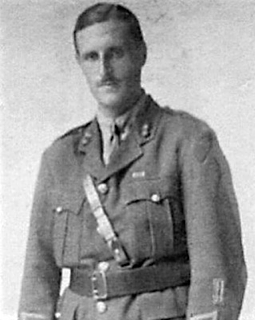
Death of RIC Detective Oswald Ross Swanzy

Royal Irish Constabulary (RIC) Detective Oswald Ross Swanzy is shot dead by Cork Irish Republican Army (IRA) volunteers while leaving church in Lisburn, County Antrim, on August 22, 1920.

Swanzy lives at 31 Railway Street and attends Morning Service at the Cathedral. At 1:06 p.m. as he is walking past the entrance to the Northern Bank (now Shannon’s Jewelers), he is shot by the IRA and dies at the scene.

A 39-year-old single man from County Monaghan, he had been a member of the police for 15 years. His funeral takes place at Mount Jerome Cemetery, Harold’s Cross, Dublin three days later.

In February 1921, a memorial is erected in the north wall of the Cathedral by his mother and sister. The brass tablet mounted in Irish Oak bears the following inscription:

“In proud and loving memory of Oswald Ross Swanzy DI Royal Irish Constabulary who gave his life in Lisburn on Sunday, August 22, 1920, and his gallant comrades who, like him, have been killed in the unfaltering discharge of their duty and in the service of their country. Be thou faithful unto death and I will give you a crown of life.”

In his book, Police Casualties in Ireland 1919 to 1922, Royal Ulster Constabulary (RUC) Inspector Richard Abbott says the decision to kill Swanzy is taken by Michael Collins himself who believes the officer had been the leader of the party of unidentified men who killed Tomás Mac Curtain, the Lord Mayor of Cork and Commandant of Cork Number One Brigade of the IRA.

With the help of RIC Sergeant Matt McCarthy, who had provided Collins with information in the past, Swanzy is traced to Lisburn. The Intelligence Officer of B Company of the IRA’s First Cork Battalion, Sean Culhane, is then sent to Belfast to link up with local IRA activists. On the day of the attack, Culhane and a number of Belfast IRA men leave the city in a taxi and make their way to Lisburn.

Culhane and Roger McCorley, a Belfast member of the IRA, walk up to Swanzy and shoot him at close range. They, along with their accomplices, then run in pairs along Castle Street with another man in the middle of the road. They continue to fire as they make their way to the taxi which is waiting outside the Technical College.

The vehicle starts to move off before McCorley reaches it and he is forced to throw himself into the car. As he does so he lands in a heap on the back floor of the car and accidentally fires a round from his revolver inside the taxi.

A member of the public notes the taxi’s number as it leaves Lisburn and the driver is arrested later that afternoon. He tells police he works for the Belfast Motor Cab and Engineering Co. at Upper Library Street. At 11:45 a.m., he says he had been sent to the Great Northern Railway Station in Great Victoria Street to collect a fare who wanted to “take a run along the County Down coast.” The taxi driver is later tried for the killing of Swanzy but is found not guilty.

The IRA killing of Detective Inspector Swanzy leads to bitter sectarian rioting in Lisburn. A number of Catholics are murdered and others assaulted and terrorised as their homes and businesses are burned by mobs on the rampage. Journals kept at the time recall how groups of people wait at Lambeg to attack Catholics fleeing the town on the main Belfast Road. This forces many to leave Lisburn by way of the mountain route into the city as columns of smoke rise into the air above the town.

Workers at local mills are also called upon to sign the following declaration: “I…. …hereby declare I am not a Sinn Féiner nor have any sympathy with Sinn Féin and do declare I am loyal to king and country.” Violence also sweeps across Belfast in the wake of the Market Square attack.

A total of 22 people are killed in one week and on August 24 the authorities swear in a number of special constables to try to regain control of the situation. This is the first time since the start of the IRA campaign in 1919 that Special Constables have to be used.

(From: “Assassination of Detective Inspector Oswald Ross Swanzy,” Lisburn.com)


Leave a comment

The Donegall Street Bombing

The Donegall Street bombing takes place in Belfast, Northern Ireland on March 20, 1972, when, just before noon, the Provisional Irish Republican Army (IRA) detonates a car bomb in Lower Donegall Street in Belfast City Centre when the street is crowded with shoppers, office workers, and many schoolchildren.

Seven people are killed in the explosion, including two members of the Royal Ulster Constabulary (RUC), who say they had evacuated people to what was considered to have been a safe area following misleading telephone calls, which had originally placed the device in a nearby street. The Provisional IRA Belfast Brigade admits responsibility for the bomb, which also injures 148 people, but claims that the security forces had deliberately misrepresented the warnings in order to maximise the casualties. This is one of the first car bombs the IRA uses in their armed campaign.

On Monday, March 20, 1972, at 11.45 a.m., a local carpet dealer receives a telephone call warning that a bomb will explode in Belfast city centre’s Church Street which is crowded with shoppers, office workers on lunch breaks, and schoolchildren. British Army troops and the RUC are alerted and immediately begin to evacuate the people into nearby Lower Donegall Street. The second call to The Irish News newspaper seven minutes later also gives Church Street as the location for the device. A final call comes at 11:55 a.m. advising the News Letter newspaper that the bomb is instead placed outside its offices in Lower Donegall Street where the crowds have been sent. Thus, the warning arrives too late for the security forces to clear the street. Staff working inside the News Letter building are told by the caller that they have 15 minutes in which to leave the building, but they never have a chance to evacuate.

At 11:58 a.m. a 100-pound gelignite bomb explodes inside a green Ford Cortina parked in the street outside the offices of the News Letter, shaking the city centre with the force of its blast, and instantly killing the two RUC constables, Ernest McAllister (31) and Bernard O’Neill (36), who had been examining the vehicle. The remains of the two policemen are allegedly found inside a nearby building. Minutes earlier they had been helping to escort people away from Church Street.

The explosion sends a ball of flame rolling down the street and a pall of black smoke rising upward. The blast wave rips into the crowds of people who had run into Donegall Street for safety, tossing them in all directions and killing another four men outright: Ernest Dougan (39), James Macklin (30), Samuel Trainor (39) and Sydney Bell (65). Trainor is also an off-duty Ulster Defence Regiment (UDR) soldier and a member of the Orange Order. A seriously wounded pensioner, Henry Miller (79) dies in hospital on April 5. Most of the dead are mutilated beyond recognition. With the exception of Constable O’Neill, who is a Catholic, the other six victims are Protestants.

The explosion blows out all the windows in the vicinity, sending shards of glass into people’s bodies as they are hit by falling masonry and timber. The ground floor of the News Letter offices and all buildings in the area suffer heavy damage. The News Letter library in particular sustains considerable damage with many priceless photographs and old documents destroyed. Around the blast’s epicentre, the street resembles a battlefield. About one hundred schoolgirls lay wounded on the rubble-strewn, bloody pavement covered in glass and debris, and screaming in pain and fright. A total of 148 people are injured in the explosion, 19 of them seriously. Among the injured are many of the News Letter staff.

One of the wounded is a child whose injuries are so severe a rescue worker at the scene assumes the child has been killed. A young Czech art student, Blanka Sochor (22), receives severe injuries to her legs. She is photographed by Derek Brind of the Associated Press as a British Paratrooper holds her in his arms. Passerby Frank Heagan witnesses the explosion and comes upon what is left of two binmen who had been “blown to pieces.” He adds that “there was blood everywhere and people moaning and screaming. The street was full of girls and women all wandering around.” The injured can be heard screaming as the ambulances transport them to hospital. Emergency amputations are performed at the scene.

While the security forces and firemen pull victims from the debris in Donegall Street, two more bombs go off elsewhere in the city centre, however, nobody is hurt in either attack. On the same day in Derry, a British soldier, John Taylor, is shot dead by an IRA sniper. In Dublin, Chief of Staff of the Irish Republican Army, Seán Mac Stíofáin, suffers burns to his face and hands after he opens a letter bomb sent to him through the post. Cathal Goulding, head of the Official Irish Republican Army, also receives a letter bomb but escapes injury by having dismantled the device before it exploded.

This is amongst the first car bombs used by the Provisional IRA during The Troubles in its militant campaign to force a British military withdrawal and reunite the six counties of Northern Ireland with the rest of the island of Ireland. It is part of the IRA’s escalation of violence to avenge the Bloody Sunday killings in which 13 unarmed Catholic civilian men were killed by the British Army’s Parachute Regiment when the latter opened fire during an anti-internment demonstration held in Derry on January 30, 1972.

The bombing is carried out by the North Belfast unit of the Provisional IRA’s Third Battalion Belfast Brigade. The OC of the Brigade at that time is the volatile Seamus Twomey, who orders and directs the attack.

On March 23, the IRA admits responsibility for the bomb with one Belfast Brigade officer later telling a journalist, “I feel very bad when the innocent die.” The IRA, however, tempers the admission by claiming that the caller had given Donegall Street as the correct location for the bomb in all the telephone calls and that the security forces had deliberately evacuated the crowds from Church Street to maximise the casualties. The IRA’s official statement claiming responsibility for the blast is released through the Irish Republican Publicity Bureau.

The IRA follows the Donegall Street attack two days later with a car bomb at a carpark adjacent to the Belfast Great Victoria Street railway station and close to the Europa Hotel. Seventy people are treated in hospital for injuries received mainly by flying glass, but there are no deaths. The blast causes considerable damage to two trains, parked vehicles, the hotel, and other buildings in the area.

Although many members of the Provisional IRA are rounded up by police in the wake of the Donegal Street attack, none of the bombers are ever caught nor is anyone ever charged in connection with the bombing.