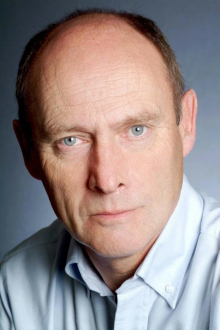
Duggan is the son of Irish immigrants. His mother works as a cook while his father is a school secretary. He was educated at Douai School, Woolhampton, Berkshire. He studies experimental psychology for two years at the University of Edinburgh but leaves school feeling unsatisfied and decides to try his hand at acting. Prior to making it as an actor, he sells bone china to U.S. soldiers stationed in Germany.
Duggan makes his television debut in 1976 in an episode of The Flight of the Heron, followed by single episodes of Sutherland’s Law and The New Avengers (1976) and ITV‘s Playhouse (1977). He then appears in an adaptation of The Eagle of the Ninth, and his first film is Sweeney 2 in the following year. In 1979 he begins a nine-year stint as Detective Sergeant Albert “Cheerful Charlie” Chisholm in the popular TV series Minder.
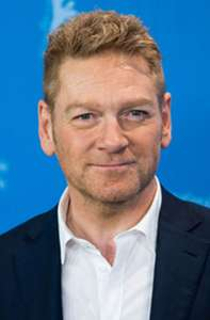
Branagh is the middle of three children of working-class Protestant parents Frances (née Harper) and William Branagh, a plumber and joiner who runs a company that specialises in fitting partitions and suspended ceilings. He lives in the Tiger’s Bay area of the city and is educated at Grove Primary School.
Northern Ireland is brought under direct rule from Westminster on May 29, 1974, following the collapse of Northern Ireland’s first power-sharing assembly the previous day.
The power-sharing assembly’s leader, Brian Faulkner, and fellow members resign on May 28. The collapse follows a seven-day general strike organised by militant unionists opposed to the Sunningdale Agreement. Over the week leading up to the collapse industrial production comes to a halt with power cuts of up to eighteen hours. Rubbish is not collected and there are reports that undertakers refuse to bury the dead.
In 1973, the British Government under Edward Heath held talks at Sunningdale in Berkshire with the government of the Irish Republic and three political parties – the Official Unionists led by Faulkner, the nationalist Social Democratic and Labour Party (SDLP), and the non-sectarian Alliance Party. They agree to set up a power-sharing executive for Northern Ireland and, eventually, a Council of Ireland involving the Republic with limited jurisdiction over issues of joint concern between north and south.
The declaration also recognises the wishes of unionists to remain within the United Kingdom and nationalists for a united Ireland. Both sides agreed the will of the majority should be respected. But hardline loyalists, led by Harry West, Ian Paisley and William Craig, do not attend most of the talks at Sunningdale, and when the proposals are announced, they criticise them strongly.
The new executive formally comes into power on January 1, 1974, but soon runs into trouble. Anti-power sharing unionists do their best to disrupt proceedings and eighteen members including Paisley are forcibly removed by the police.
In February, a general election sees Labour returned to power in Westminster and eleven of the twelve seats in Northern Ireland won by unionists opposed to the deal under the umbrella of the United Ulster Unionist Council. Of those supporting the executive, only Gerry Fitt is elected as the UUUC wins more than 50% of the vote.
With the Sunningdale executive teetering on the edge, the coup de grâce is delivered by the loyalist Ulster Workers’ Council, which organises a seven-day strike after the assembly approves the agreement in the week prior to the collapse of the power-sharing assembly. Devolved government is not re-established in Northern Ireland until 1998.
(Pictured: Ulster Workers’ Council (UWC) strike outside the Northern Ireland Parliament Buildings, commonly known as Stormont)
The Northern Ireland Assembly Bill resulting from the White paper becomes law on May 3, 1973, and elections for the new assembly are held on June 28. Republicans boycott the elections and the Irish Republican Army (IRA) continued its campaign of opposition throughout the outcome.
After the Assembly elections, negotiations between the pro-White Paper parties on the formation of a “power-sharing Executive” begin. The main concerns are internment, policing, and the question of a Council of Ireland. On November 21, an agreement is reached on a voluntary coalition of pro-agreement parties. This new power-sharing Executive take up office and have its very first meeting on January 1, 1974. The Ulster Unionist Party (UUP) is deeply divided – its Standing Committee votes to participate in the executive by a margin of only 132 to 105.
Provisions for a Council of Ireland exist in the Government of Ireland Act 1920, but these have never been enacted. Unionists resent the idea of any “interference” by the Republic of Ireland in their newly established region. In 1973, after agreement has been reached on the formation of an executive, agreement is sought to re-establish a Council of Ireland to stimulate co-operation with the Republic of Ireland. Talks are held between December 6-9 in the Berkshire town of Sunningdale between the British Prime MinisterEdward Heath, the Irish TaoiseachLiam Cosgrave and the three pro-agreement parties. On December 9, a communiqué announcing the agreement is issued, which later becomes known as the “Sunningdale Agreement.”
In January 1974, the Ulster Unionist Party narrowly votes against continued participation in the Assembly and Brian Faulkner resigns as leader. He is succeeded by the anti-Sunningdale Harry West. In March 1974, pro-agreement unionists withdraw their support for the agreement, calling for the Republic of Ireland to remove the Articles 2 and 3 of its constitution first. These Articles are not revised until the Good Friday Agreement of 1998.
Following the defeat of a motion condemning power-sharing in the Northern Ireland Assembly, the Ulster Workers’ Council, a loyalist organisation, calls a general strike for May 15. After two weeks of barricades, shortages, rioting, and intimidation, Faulkner resigns as chief executive and the Sunningdale Agreement collapses on May 28, 1974.
(Pictured: Unionist Party leader and designated leader of Ulster’s new executive, Brian Faulkner, sits with SDLP leader Gerry Fitt and John Hume, during talks at Sunningdale, Berkshire, to establish a Council of Ireland.)
As an heir to the Guinness brewing fortune and a handsome, charming young man, Bryan is an eligible bachelor. One of London’s “Bright Young Things,” he is an organiser of the 1929 “Bruno Hat” hoax art exhibition held at his home in London. Also, in 1929 he marries the Hon. Diana Mitford, one of the Mitford sisters, and has two sons with her. The couple become leaders of the London artistic and social scene and are dedicatees of Evelyn Waugh‘s second novel Vile Bodies. However, they divorce in 1933 after Diana deserts him for British fascist leader Sir Oswald Mosley.
Guinness remarries happily in 1936 to Elisabeth Nelson, of the Nelson publishing family, with whom he has nine children.
During World War II, Guinness serves for three years in the Middle East with the Spears Mission to the Free French, being a fluent French speaker, with the rank of major. Then in November 1944 Guinness succeeds to the barony when his father, posted abroad as Resident Minister in the Middle East by his friend Winston Churchill, is assassinated in Cairo.
After the war, Lord Moyne serves on the board of the Guinness corporation as vice-chairman (1947-1979), as well as the Guinness Trust and the Iveagh Trust, sitting as a crossbencher in the House of Lords. He serves for 35 years as a trustee of the National Gallery of Ireland and donates several works to the gallery. He writes a number of critically applauded novels, memoirs, books of poetry, and plays. With Frank Pakenham he seeks the return of the “Lane Bequest” to Dublin, resulting in the 1959 compromise agreement. He is invested as a Fellow of the Royal Society of Literature.
Lord Moyne dies of a heart attack on July 6, 1992, at Biddesden House, his home in Wiltshire, and is succeeded by his eldest son Jonathan. He is buried at Ludgershall, Wiltshire, England.



 seamus dubhghaill