seamus dubhghaill

Promoting Irish Culture and History from Little Rock, Arkansas, USA


Leave a comment

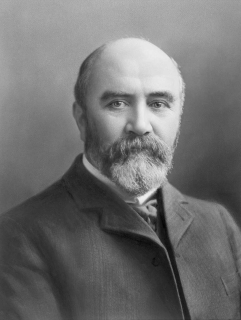
Birth of Sir John Purser Griffith, Civil Engineer & Politician

Sir John Purser Griffith, a Welsh-born Irish civil engineer and politician, is born at Holyhead, Wales, on October 5, 1848.

Griffith is educated at Trinity College Dublin and gains a licence in civil engineering in 1868. He serves a two-year apprenticeship under Dr. Bindon Blood Stoney, the Engineer in Chief of the Dublin Port and Docks, before working as assistant to the county surveyor of County Antrim. He returns to Dublin in 1871 and works as Dr. Stoney’s assistant, becoming the Chief Engineer in 1898 before retiring in 1913.

Griffith serves as president of the Institution of Civil Engineers of Ireland between 1887 and 1889 and of the Institution of Civil Engineers between 1919 and 1920. He is elected Commissioner of Irish Lights in 1913 and is a member of the Royal Commission on Canals and Waterways between 1906 and 1911.

Griffith purchases and drains the bogland at Pollagh, part of the Bog of Allen. A peat fueled power station is built which drives an excavator and excess peat is taken via the Grand Canal for sale in Dublin. The site is sold to the Turf Development Board in 1936 who use it as a basis for all of their later peat fueled power stations. The area is now a nature reserve.

Griffith receives a knighthood in 1911 and becomes vice-president of the Royal Dublin Society in 1922. He serves as Honorary Professor of Harbour Engineering at Trinity College, his alma mater, and receives an honorary M.A.I. degree from the University of Dublin in 1914. From 1922 he is an elected member of the Seanad Éireann, the Irish Free State senate, until its abolition in 1936. In the 1930s he and Sarah Purser endow the Purser Griffith Travelling Scholarship and the Purser Griffith Prize to the two best performing students in European Art History at University College Dublin.

Griffith dies at Rathmines Castle in Dublin on October 21, 1938.


Leave a comment

Death of Sir John Purser Griffith, Civil Engineer & Politician

Sir John Purser Griffith, Irish civil engineer and politician, dies at Rathmines Castle in Dublin on October 21, 1938.

Griffith is born on October 5, 1848, in Holyhead, Wales. He is educated at Trinity College Dublin and gains a license in civil engineering in 1868. He serves a two-year apprenticeship under Dr. Bindon Blood Stoney, the Engineer in Chief of the Dublin Port and Docks, before working as assistant to the county surveyor of County Antrim. He returns to Dublin in 1871 and works as Dr. Stoney’s assistant, becoming the Chief Engineer in 1898 before retiring in 1913.

Griffith serves as president of the Institution of Civil Engineers of Ireland between 1887 and 1889 and of the Institution of Civil Engineers between 1919 and 1920. He is elected Commissioner of Irish Lights in 1913 and is a member of the Royal Commission on Canals and Waterways between 1906 and 1911.

Griffith purchases and drains the bogland at Pollagh, part of the Bog of Allen. A peat fueled power station is built which drives an excavator, with excess peat being taken by the Grand Canal for sale in Dublin. The site is sold to the Turf Development Board in 1936 who uses it as a basis for all of their later peat fueled power stations. The area is now a nature reserve.

Griffith receives a knighthood in 1911 and becomes vice-president of the Royal Dublin Society in 1922. He serves as Honorary Professor of Harbour Engineering in Trinity College, his alma mater, and receives an honorary M.A.I. degree from the University of Dublin in 1914. From 1922 he is an elected member of the Seanad Éireann, the Irish senate, until its abolition in 1936. In the 1930s he and his niece, Sarah Purser, endow the Purser Griffith Travelling Scholarship and the Purser Griffith Prize to the two best performing students in European Art History at University College Dublin.

Griffith dies at Rathmines Castle in Dublin on October 21, 1938, having rightly earned the epithet ‘Grand Old Man of Irish engineering.’ A portrait in oils by his niece Sarah Purser, RHA, hangs in the Museum Building in Trinity College Dublin.


1 Comment

Final Barge Journey on the Grand Canal

barge-51m

The last barge on the Grand Canal makes its final journey to Limerick on May 27, 1960 carrying a cargo of Guinness. The impressive broad-beamed barge carrying the number 51M casts off from Dublin‘s James Street Harbour marking the end of a way of life on the canal which has existed since the construction of the waterway in the early 1800s.

For some 160 years freight barges ply the canal bringing cargoes to and from Dublin, Limerick, Waterford and canal-side villages across the midlands from Sallins to Shannon Harbour. The spine of the waterways system is the Grand Canal which crosses mid-Kildare in a southwest direction from Hazelhatch to west of Ticknevin.

Typically a crew of four men live on the boats on voyages which can take up to four days from Dublin to Limerick. The crew is comprised of the Master or skipper, the Engineman, Deck man and Greaser. Although a seemingly idyllic job the boatmen worked hard in all weather, sometimes sailing through the night.

The canal cargo business is always under pressure from the railways but tonnages of bulk goods (barrels of porter, turf, coal, sand, gravel, and grain and flour) where speed is not important remain high. Competition from the motor lorry in the 1920s and 1930s causes tonnages to fall severely. The canals get a brief respite during the Emergency years (1939-45) when they are pressed into service to transport turf from the Bog of Allen to Dublin city where it is stored in massive clamps at Phoenix Park.

As part of a rationalisation in the post-war decades, the Government brings out the shareholders of the Grand Canal Company and amalgamates its operations with Córas Iompair Éireann (CIÉ), a newly formed semi-state entity with a mandate to take over all transport services in Ireland. CIÉ has enough on its hands trying to keep the railway system viable and it is clear that the days of canal freight are numbered. In November 1959 CIÉ announces that the Grand Canal will close to cargo boats on December 31 of that year.

The Guinness brewery asks for a stay of a few months so it can complete alternative arrangements for road deliveries. The definitive final voyage from Dublin begins on the afternoon of May 27, 1960 when 51M casts off at James Street Harbour bound for the Guinness depot in Limerick.

51M escapes the wrecker’s torch and is kept in service though a succession of canal authorities as a maintenance boat for the canals. In May 2010, fifty years after it carried the last commercial cargo from Dublin to Limerick, the canal boat 51M retraces its historic journey, once again carrying a number of original Guinness casks as its cargo.