seamus dubhghaill

Promoting Irish Culture and History from Little Rock, Arkansas, USA


Leave a comment

Birth of Éamon de Valera, Third President of Ireland

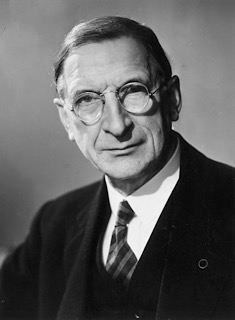
Éamon de Valera, Irish politician and patriot, is born George de Valero on October 14, 1882, in Lennox Hill, a neighborhood on the Upper East Side of Manhattan in New York City. He serves as Taoiseach (1932–48, 1951–54, 1957–59) and President of Ireland (1959–73). An active revolutionary from 1913, he becomes president of Sinn Féin in 1917 and founds the Fianna Fáil party in 1926. In 1937, he makes his country a sovereign state, renamed Ireland, or Éire. His academic attainments also inspire wide respect. He becomes chancellor of the National University of Ireland in 1921.

De Valera is the son of Catherine Coll, who is originally from Bruree, County Limerick, and Juan Vivion de Valera, described on the birth certificate as a Spanish artist born in 1853. His father dies when he is two years old. He Is then sent to his mother’s family in County Limerick, and studies at the local national school and at Blackrock College, Dublin. He graduates from the Royal University of Ireland and becomes a teacher of mathematics and an ardent supporter of the Irish language revival. In 1913, he joins the Irish Volunteers, which had been organized to resist opposition to Home Rule for Ireland.

In the 1916 Easter Rising in Dublin, de Valera commands an occupied building and is the last commander to surrender. Because of his American birth, he escapes execution by the British but is sentenced to penal servitude. Released in 1917 but arrested again and deported in May 1918 to England, where he is imprisoned, he is acclaimed by the Irish as the chief survivor of the uprising and in October 1917 is elected president of the Irish republican and democratic socialist Sinn Féin political party, which wins three-fourths of all the Irish constituencies in December 1918.

After a dramatic escape from HM Prison Lincoln in February 1919, de Valera goes in disguise to the United States, where he collects funds. He returns to Ireland before the Irish War of Independence ends with the truce that takes effect on July 11, 1921, and appoints plenipotentiaries to negotiate in London. He repudiates the Anglo-Irish Treaty of December 6, 1921, that they signed to form the Irish Free State, however, primarily because it imposes an oath of allegiance to the British crown.

After Dáil Éireann ratifies the treaty by a small majority in 1922, de Valera supports the republican resistance in the ensuing Irish Civil WarW. T. Cosgrave’s Irish Free State ministry imprisons him, but he is released in 1924 and then organizes a republican opposition party that does not sit in Dáil Éireann. In 1927, however, he persuades his followers to sign the oath of allegiance as “an empty political formula,” and his new Fianna Fáil (“Soldiers of Destiny”) party then enters the Dáil, demanding abolition of the oath of allegiance, of the governor-general, of the Seanad Éireann (senate) as then constituted, and of land-purchase annuities payable to Great Britain. The Cosgrave ministry is defeated by Fianna Fáil in 1932, and de Valera, as head of the new ministry, embarks quickly on severing connections with Great Britain. He withholds payment of the land annuities, and an “economic war” results. Increasing retaliation by both sides enables de Valera to develop his program of austere national self-sufficiency in an Irish-speaking Ireland while building up industries behind protective tariffs. In the new Constitution of Ireland, ratified by referendum in 1937, the Irish Free State becomes Ireland, a sovereign, independent democracy tenuously linked with the British Commonwealth (under the Executive Authority (External Relations) Act 1936) only for purposes of diplomatic representation.

De Valera’s prestige is enhanced by his success as president of the council of the League of Nations in 1932 and of its assembly in 1938. He also enters negotiations with British Prime Minister Neville Chamberlain in which he guarantees that he will never allow Ireland to be used as a base for attacking Britain in the event of war. This culminates in the Anglo-Irish defense agreement of April 1938, whereby Britain relinquishes the naval bases of Cobh, Berehaven, and Lough Swilly (retained in a defense annex to the 1921 treaty), and in complementary finance and trade treaties that end the economic war. This makes possible de Valera’s proclamation in September 1939, upon the outbreak of World War II, that Ireland will remain neutral and will resist attack from any quarter. In secret, however, de Valera also authorizes significant military and intelligence assistance to both the British and the Americans throughout the war. He realizes that a German victory will imperil Ireland’s independence, of which neutrality is the ultimate expression. By avoiding the burdens and destruction of the war, de Valera achieves a relative prosperity for Ireland in comparison with the war-torn countries of Europe, and he retains office in subsequent elections.

In 1948, a reaction against the long monopoly of power and patronage held by de Valera’s party enables the opposition, with the help of smaller parties, to form an interparty government under John A. Costello. Ironically, this precarious coalition collapses within three years after Ireland becomes a republic by means of the repeal of the Executive Authority (External Relations) Act 1936 and the severance of all ties with the British Commonwealth, an act de Valera had avoided. De Valera resumes office until 1954, when he appeals unsuccessfully for a fresh mandate, and Costello forms his second interparty ministry. No clearly defined difference now exists between the opposing parties in face of rising prices, continued emigration, and a backward agriculture. De Valera claims, however, that a strong single-party government is indispensable and that all coalitions must be weak and insecure. On this plea he obtains, in March 1957, the overall majority that he demands.

In 1959, de Valera agrees to stand as a candidate for the presidency. He resigns his position as Taoiseach and leader of the Fianna Fáil party. In June he is elected president, and is reelected in 1966. He retires to a nursing home near Dublin in 1973 and dies there on August 29, 1975.

De Valera’s career spans the dramatic period of Ireland’s modern cultural and national revolution. As an anticolonial leader, a skillful constitutionalist, and a symbol of national liberation, he dominates Ireland in the half century following the country’s independence.

(From: “Éamon de Valera, president of Ireland,” Encyclopedia Britannica, http://www.britannica.com, last updated August 14, 2025)
Leave a comment

Beginning of the Battle of Kilmallock

The Battle of Kilmallock begins on July 25, 1922, in County Limerick, ending on August 5. It is one of the largest engagements of the Irish Civil War.

The battle consists of ten days of fighting in the countryside around Kilmallock in County Limerick, in which the National Army of the Irish Free State, advancing south from Limerick city, find their path blocked by anti-Treaty IRA troops, dug into a number of villages at BruffBruree and Patrickswell. The fighting end with the retreat of the anti-Treaty fighters and the occupation of Kilmallock by Free State forces.

The prelude to the battle is the fall of Limerick city to Free State forces. The Republican forces in the city under Liam Deasy withdraw from their positions after a week of fighting and concentrate in Kilmallock and the nearby towns of Bruff and Bruree. The Free State forces, advancing south from the city, find their path blocked by the Republicans dug in at the three hilltop towns.

The National Army’s attempt to break through this position produces the only “line battle” of the war with the two sides facing each other along clear front-lines. The Kilmallock-Bruff-Bruree triangle sees some of the war’s most intense fighting.

Whereas in the fighting in Dublin, Limerick and Waterford, Free State troops equipped with artillery overcome Anti-Treaty resistance relatively easily, at Kilmallock they have a much harder time. The main reason for this is that the Free State troops, most of whom are new recruits, are facing some of the best of the IRA forces without an advantage in numbers or firepower. General Eoin O’Duffy complains of shortage of arms and ammunition. He estimates that while his forces have about 1,300 rifles, the Republicans could muster over 2,000. He is also critical of the quality of the troops at his disposal, whom he describes as, “a disgruntled, undisciplined and cowardly crowd.”

The Republicans know this and are confident of success. Nevertheless, the Republican commanders have their own issues with logistical support and lack of co-operation between forces from different counties. Deasy’s command includes Volunteers from counties Limerick itself, Cork and Kerry, all of whom have their own commanders. They have three improvised armoured cars, some mortars and heavy machine guns but no artillery.

O’Duffy draws up plans for the advance on Kilmallock with the assistance of his second-in-command Major General W. R. E. Murphy who had been a lieutenant colonel in World War I. His experience in the trenches has a major effect on his approach – pre-disposing him to cautious advances and use of trenches for cover.

The Republican forces have the better of the first clashes. On Sunday, July 23, Free State forces take Bruff and begin their advance on Kilmallock, but are twice beaten back by determined Republican resistance. The following day, the Republicans manage to retake Bruff in a counter-attack, taking 76 prisoners. As a result of this setback, O’Duffy calls off the advance for the time being and waits for reinforcements.

National Army forces quickly retake Bruff after reinforcements arrive. However, things get worse for the National Army as the week goes on. They make slow progress in taking the Republican strongpoints, and their casualties also mount. On Tuesday, July 25, a unit of the Dublin Guard under Tom Flood is ambushed on a narrow road. They fight their way clear, but only after losing four men. Three more Free State soldiers are killed two days later. On July 30, Major General Murphy launches an attack to take Bruree. The Dublin Guards attack the town from the southeast, supported by armoured cars and an 18-pound field gun. The Republicans hold out for five hours until Free State artillery is brought into action. At least 13 Free State soldiers and nine Anti-Treaty fighters are killed in the action and more are wounded before the Free State troops secure Bruree.

The Republican commander, Deasy, knows how important Bruree is to the defence of Kilmallock and draws up plans to recapture the town using three armoured cars, trench mortars and machine guns. On August 2, Republicans capture Patrickswell south of Limerick. The armoured cars then attack Bruree, taking Free State forces by surprise. One car attacks Commandant Flood’s headquarters at the Railway Hotel. The Commandant and his men manage to escape out the back of the building under the cover of Lewis gun fire. The second armoured car rams the front door of another post in the school house, which persuades the twenty-five troops inside to surrender.

However, when Free State reinforcements, along with armoured cars arrive, the Republican counter-attack stalls. The Free State reinforcements are led by Commandant General Seamus Hogan, who personally leads his forces, riding in the armoured car nicknamed “The Customs House.” Having failed to secure the surrender of the town, Republican forces retreat.

Having held Bruree against a Republican counterattack, Free State forces prepare to capture Kilmallock itself, but anticipate there will be heavy fighting. Republican Adjutant General Con Moloney comments on August 2, “Up to yesterday we have had the best of the operations there [the Kilmallock area]. There will, I fear, be a big change there now as the enemy have been reinforced very considerably.” In the 3rd Western Division area they have all but disbanded, unwilling to fight Free Staters, destroy roads, and now discouraged by the Catholic church.

On Thursday, August 3, a force of 2,000 Free State troops, backed up by armoured cars and artillery, advance on Kilmallock from Bruree, Dromin and Bulgaden. Seven hundred troops arrive the next day with an armoured car and a field gun. By Saturday, the town is surrounded by Free State forces. The Dublin Guard are also on hand to prevent Republican forces from escaping. Three miles away, Free State artillery is deployed and shells Republican forces on Kilmallock Hill and Quarry Hill. The two hills are soon controlled by Free State forces.

The National Army has, therefore, assembled sufficient force to smother resistance at Kilmallock. They are still, however, expecting hard fighting before they take the town. To their surprise, when the Free State troops enter the town, they encounter only light resistance from a Republican rearguard (volunteers from Cork). Most of the Republican troops have already abandoned their positions and retreated to Charleville.

They departed not because the Free State troops are stronger, but because they have been outflanked by Free State seaborne landings on the coasts of County Kerry and County Cork on August 2 and 8 respectively. The landings in Cork and Kerry force Commandant General Deasy to release units from this area to return home to their own areas. Although the landings in Cork occur after the retreat from Kilmallock, the subsequent loss of brigades from Cork adds to Commandant General Deasy’s problems. The final phase of the fighting in County Limerick comes when the Free State advance south is held up at Newcastle West. Another day of heavy fighting ensues in which the National Army troops have to bring up armoured cars and artillery to dislodge the Republicans, who reportedly lose up to 12 men before they retreat in the direction of Cork.

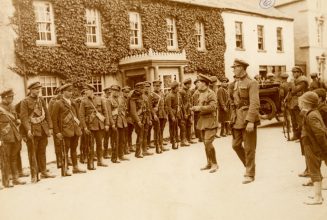
(Pictured: National Army troops lined up for a roll call during the Irish Civil War with local children casting an eye over the proceedings)


Leave a comment

Alleged Marriage of Catherine Coll & Juan Vivion de Valera

catherine-and-eamon-de-valera

Allegedly, Catherine Coll and Juan Vivion de Valera are married in St. Patrick’s Church, Greenville, New Jersey on September 19, 1881. They are the parents of Irish statesman and politician Éamon de Valera, who serves as the 3rd President of Ireland and Taoiseach.

Catherine Coll is born on December 21, 1856, in Bruree, County Limerick and emigrates to New York City in 1879. She first takes a job with a wealthy French family that is living in Manhattan. This is where she allegedly meets Juan Vivion de Valera (born 1854), a Spanish sculptor who comes to the home of her employers to give music lessons to the children.

It is alleged that Vivion de Valera, always in poor health, leaves his young family behind in 1885 and travels to Colorado, hoping that perhaps the healthier air will help him out only to die within a few months.

Though Éamon de Valera’s official biography (Longford/O’Neill, Hutchinson, London, 1970) states that his parents were married at St. Patrick’s Church on September 19, 1881, the parish records show no record of any Coll–de Valera wedding either at St. Patrick’s or any church, nor were any civil records found, in the vicinity during the period from 1875 to 1887. Also, initially de Valera is not registered in his father’s name.

However, not merely is there no record of the wedding. No record exists of the existence of a “Juan Vivion de Valera” anywhere in the United States: no birth certificate, no baptismal certificate (if he was a Catholic), no marriage certificate and no death certificate. While it is possible that he was born abroad and so either had a foreign birth certificate or was not registered, the absence of a death certificate for someone stated definitely in Éamon de Valera’s family history to have died in the United States has puzzled researchers. Some scholars have questioned whether Juan Vivion de Valera ever existed.

There has been a mischievous suggestion that he was related to the French painter Achille Devéria as Éamon de Valera “was known to be particularly fond of his works.” This claim is hardly likely given that Devéria was a painter of erotica, and de Valera nothing if not a prude. It should also be noted that Devéria died in 1857, at least 20 years before Éamon de Valera was born.

It has also been alleged by some that Catherine Coll invented Juan de Valera to give her son legitimacy.

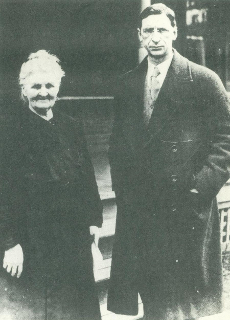
(Pictured: Irish republican leader and founder of Fianna Fail, Éamon de Valera, with his mother Catherine Coll, April 01, 1927)


2 Comments

Birth of John Gubbins, Racehorse Breeder & Owner

john-gubbins

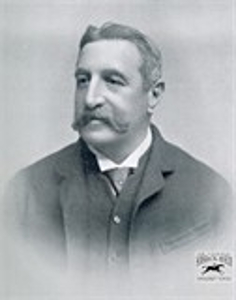
John Gubbins, breeder and owner of racehorses, is born on December 16, 1838 at the family home in Kilfrush, County Limerick. He is fourth son of Joseph Gubbins by his wife Maria, daughter of Thomas Wise of Cork.

Of three surviving brothers and five sisters, the third brother, Stamer, breeds horses at Knockany after distinguishing himself in the Crimean War. He dies at the age of 46 on August 7, 1879, after a horse falls on him while “schooling” over fences.

John Gubbins, after being educated privately, inherits the Knockany property from his brother and purchases the estate of Bruree, County Limerick. A fortune is also left him by an uncle, Francis Wise of Cork. Settling at Bruree in 1868, he builds kennels and stables and purchases horses and hounds. He hunts the Limerick country with both stag and fox hounds, and is no mean angler, until forced to stop by the operations of the Land League in 1882.

From his youth he takes a keen interest in horse racing. At first his attention is mainly confined to steeplechasers, and he rides many winners at Punchestown Racecourse and elsewhere in Ireland. He is the owner of Seaman when the horse wins the grand hurdle race at Auteuil, but sells him to Lord Manners before he wins the Grand National at Liverpool in 1882. Usna is another fine chaser in his possession. Buying the stallions Kendal and St. Florian, he breeds, from the mare Morganette, Galtee More by the former and Ard Patrick by the latter. Galtee More wins the 2000 Guineas Stakes and the St. Leger Stakes as well as the Epsom Derby in 1897, and is afterwards sold to the Russian government who later pass him on to the Prussian government. The Prussian government also purchases Ard Patrick just days before he wins the Eclipse Stakes in 1903, when he defeats Sceptre and Rook Sand after an exceptionally exciting contest.

Other notable horses bred by John Gubbins are Blairfinde, winner of the Irish Derby, and Revenue. In 1897 he heads the list of winning owners and is third in the list in 1903. In 1903 Gubbins is rarely seen on a racecourse due to failing health and sells his horses in training. In 1905, however, his health apparently improving, he sends some yearlings to Cranborne, Dorset, to be trained by Sir Charles Nugent, but before these horses can run he dies of bronchitis at Bruree on March 20, 1906.  His final instructions are, “As I aspired to breed fast horses, please see that my hearse is pulled at speed on my final journey.” Gubbins is buried in the private burial ground at Kilfrush.

In 1889 he marries Edith, daughter of Charles Legh, of Addington Hall, Cheshire. She predeceases him without issue. His estates pass to his nephew, John Norris Browning, a retired naval surgeon.